When to Stop Cleaning Personalized Jewelry at Home
Stop home jewelry cleaning when a part looks loose, an accent seems unstable, or a surface change is unexplained; document before doing more.
Stop cleaning personalized jewelry at home when a connection looks loose, an accent appears unstable, a surface changes unexpectedly, or gentle dry wiping does not resolve the concern. More rubbing, liquid, tools, or improvised products can alter the condition before it is understood. Place the piece safely, photograph it, record what happened, and ask for product-specific guidance.
Know the difference between residue and uncertainty
Ordinary surface dust may lift with a clean soft lint-free cloth. Uncertainty begins when you cannot tell whether a mark is residue, a surface change, a lifted edge, or a moving component. That is the point to pause.
Do not keep wiping because the first attempt “almost worked.” Repeated pressure can make the before-and-after condition harder to document. Do not scrape inside engraving with a pin or hard brush.
Set a one-pass rule for uncertainty: use one clean area of cloth with light pressure, inspect, and stop if the result is unclear. The rule prevents a series of increasingly forceful attempts that no longer count as routine care.
The Amorieva care guidance emphasizes keeping pieces dry, avoiding perfume and household chemicals, wiping gently, and storing separately. A home routine should remain inside that published boundary.
Stop for loose-looking connections or accents
Place the jewelry on a light-colored cloth and inspect it without pulling. If a chain connection looks open, a charm hangs differently, or an accent shifts under ordinary movement, stop. Cleaning is not a method for testing structural stability.
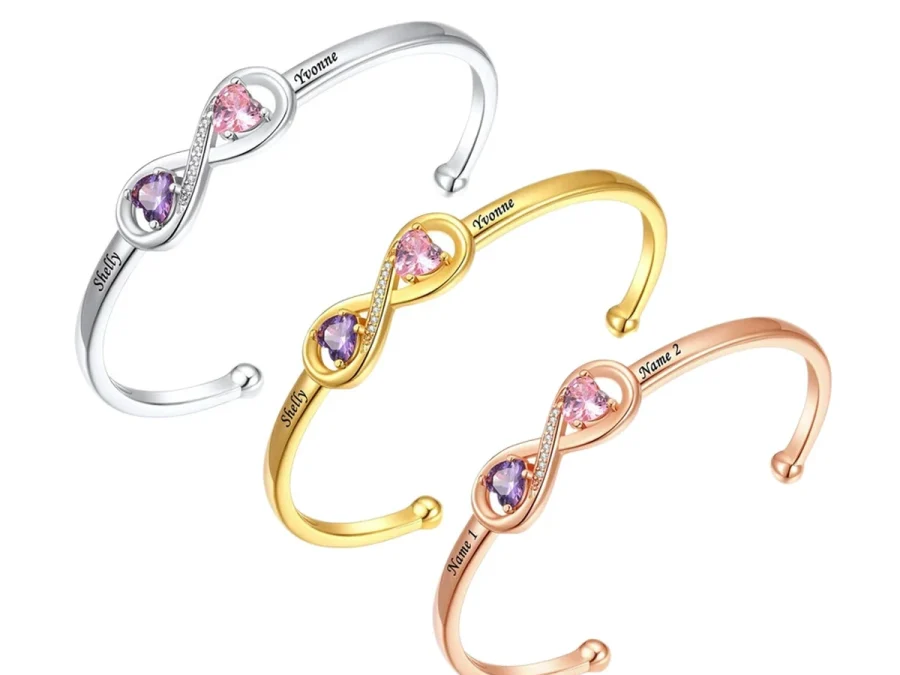
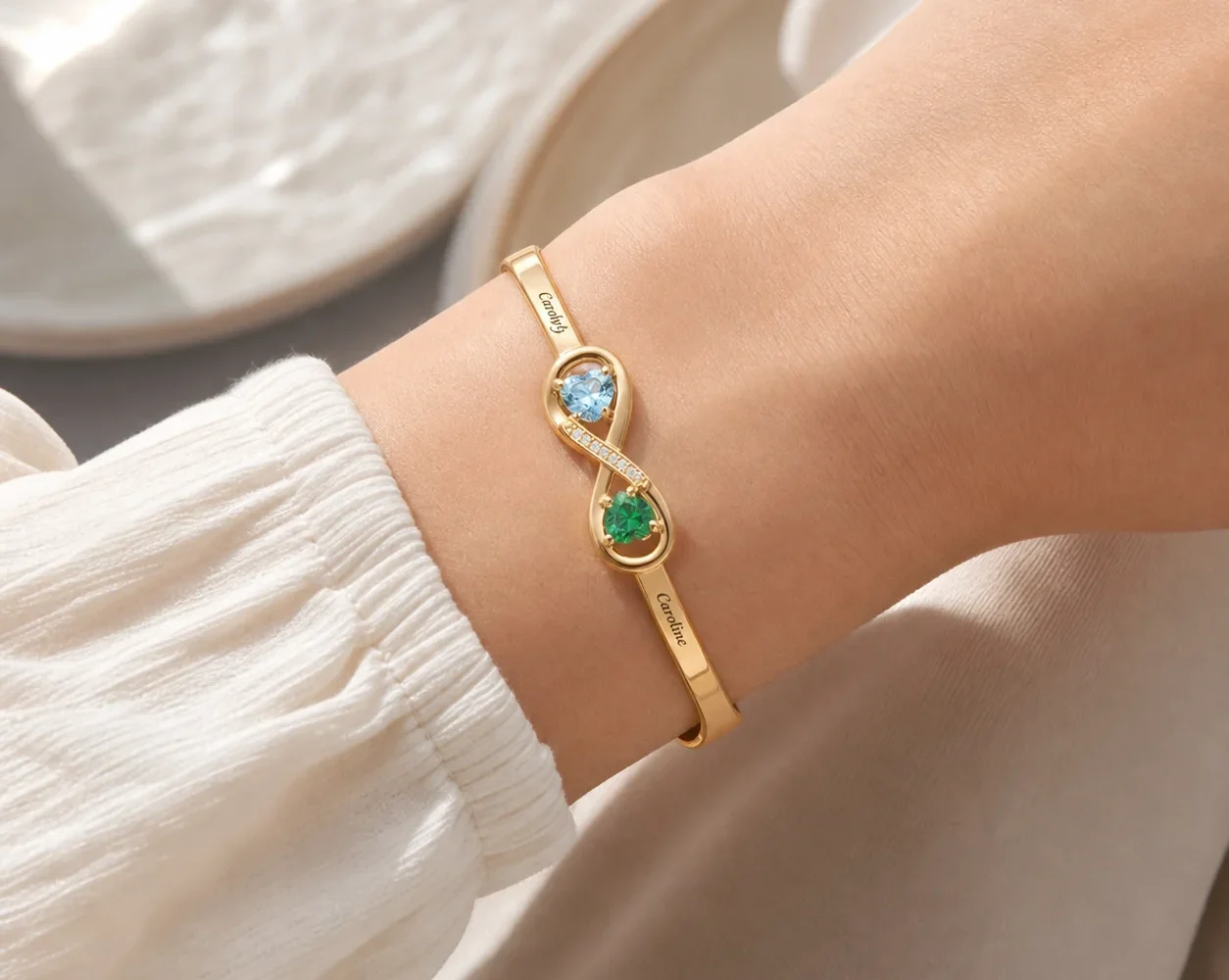
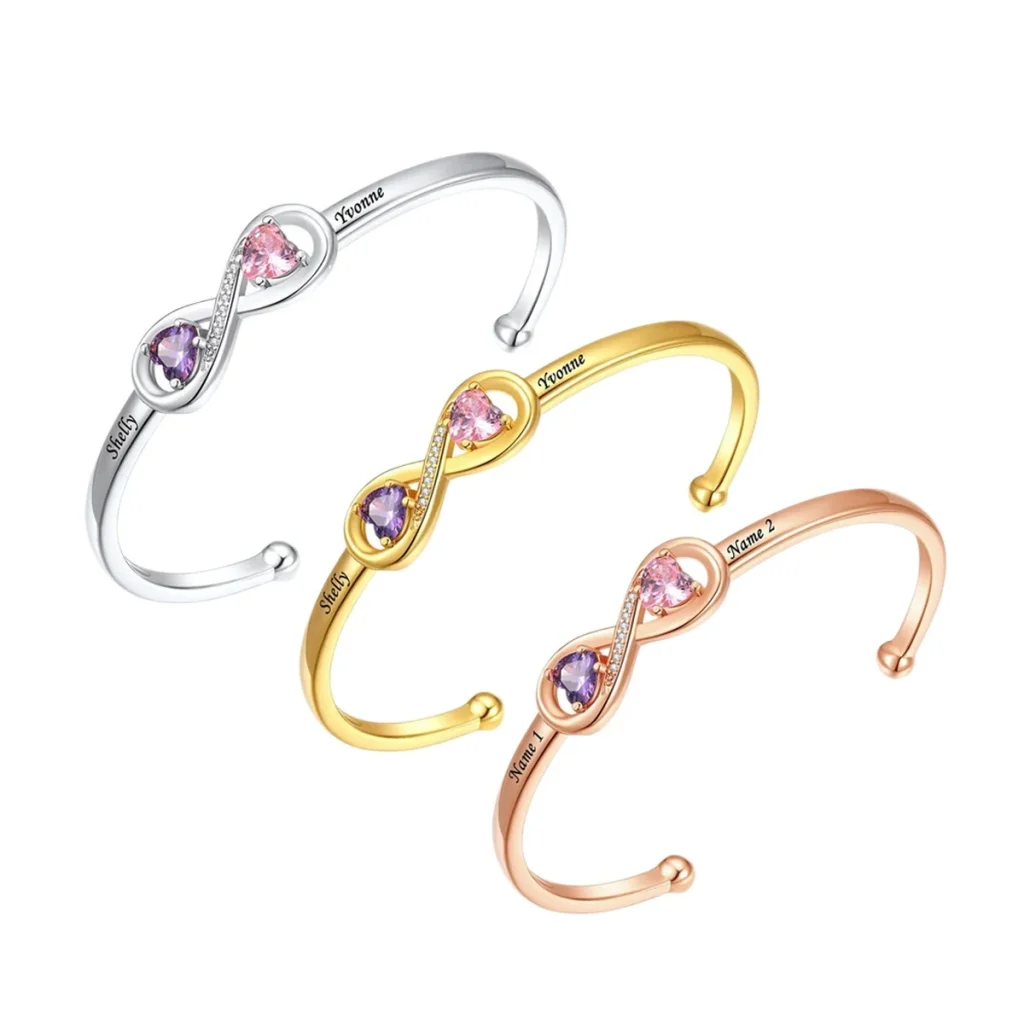
The Open Heart Birthstone Cuff has two engraved ends and two simulated birthstone accents on a plated copper-base adjustable cuff. Support both ends during inspection. Do not twist an accent or bend the opening to see whether a part will move further.
Photograph the complete item, then a medium view locating the concern, and finally a close detail. Add a clean ruler beside the piece when scale helps, without touching the affected area.
Stop for an unexplained surface change
A new patch, edge, line, discoloration, or texture change deserves documentation before another cleaning step. Check the piece under bright indirect light and from more than one angle. Digital images and reflections can change apparent tone, so preserve neutral views.
Record recent exposures: water, sweat, lotion, perfume, cleaning product, pool water, saltwater, or contact with another object. Include only what you know. Do not diagnose the material response from appearance alone.
If a cloth itself contains unknown residue from a prior task, stop using it. A clean-looking cloth may carry furniture polish, cosmetics, or household product.
Check whether the apparent change follows the cloth stroke. If it does, stop immediately and preserve both the piece and cloth information. Do not continue on another area to see whether the same thing happens.
Stop when the method is becoming more aggressive
Pause before adding a stronger formula, more pressure, heat, soaking, an abrasive pad, a motorized tool, or a sharp object. Escalation often happens gradually: one wipe becomes scrubbing, then a second product, then an attempt to reach a recess.
Use a stopping checklist:
- The concern remains after a light dry wipe.
- A part moves or looks loose.
- The surface changes during cleaning.
- You cannot identify what touched the piece.
- The next step requires an unverified product or tool.
- You no longer have a clear original-condition photograph.
Any one item is enough to pause. Put the jewelry in separate dry storage and preserve the cloth or product information when relevant.
Ask another person to photograph while you leave the item untouched when possible. Use indirect light, a plain background, and a sequence from full item to close detail. Avoid filters that exaggerate color or texture.
Document and ask a precise question
Use the current Amorieva FAQ for the support path. Provide the order reference, product name, observed condition, exposure timeline, cleaning steps already taken, and labeled photos. Ask what care step is appropriate rather than requesting a predetermined outcome.
Do not continue experimenting while waiting. Keep the piece dry and separated. If more information is requested, answer from the record instead of reconstructing the sequence from memory.
A concise timeline can include last normal wear, discovered condition, exposure you know about, first wipe, and time photographed. Unknown facts should remain marked unknown. A careful record is more useful than a confident guess.
Current products vary in metal construction, plating, accents, and moving parts. Compare the collection for the exact item rather than applying one product’s advice to every piece.
Common questions
Should I keep rubbing if a mark becomes lighter?
Stop if the condition is uncertain or the surface changes. More pressure can obscure what happened. Photograph the current state and ask for product-specific guidance.
Can I push a loose accent back into place?
Do not press, twist, or test it. Place the jewelry flat, document the full piece and close detail, and seek guidance before further handling.
What information should I record?
Note the product, observed area, recent exposures, time sequence, cloth or method used, and every step already taken. Keep original, uncropped photographs.
Stopping is part of responsible care
A good home routine includes knowing when not to continue. Gentle wiping suits ordinary dry residue; loose components, unstable accents, and unexplained changes call for documentation and a pause. Preserving the condition and timeline gives product-specific guidance a clearer starting point than another improvised attempt.