What to Do When a Personalized Necklace Snags on Clothing
Release a necklace snag by stopping movement, supporting the piece, relaxing the fabric, and inspecting the chain and clasp before wearing it again.
If a personalized necklace snags on clothing, stop moving and do not pull the chain or fabric harder. Support the pendant and chain with one hand, relax the garment with the other, and locate the exact thread, loop, or edge holding the piece. Release it only when you can work without pressure on the neck. Afterward, inspect every affected link and the clasp before wearing the necklace again.
Make personal safety the first step
Move away from doors, moving equipment, exercise machines, pets, or anything else that can increase tension. If the necklace is caught close to the throat or movement makes it tighten, ask another person for help. Do not continue walking, dressing, or operating equipment while trying to free it.
Support the necklace’s weight so the caught point is not carrying the pendant. Sit or stand still in good light. A mirror can help with a front snag; a trusted helper is safer for a catch behind the neck. Never place scissors, pliers, or another sharp tool close to skin while the necklace is being worn.
If the situation involves active machinery or immediate risk, prioritize getting the person clear rather than preserving the jewelry or garment. Ordinary fabric-snag guidance is not a substitute for workplace emergency procedures.
Reduce fabric tension before touching the chain
Pinch or gather the garment near the snag so the textile becomes loose. Then identify what is caught: a knitted loop around a link, a lace opening around the pendant, a zipper edge, or a raised seam. The goal is to create slack in the fabric, not to stretch the chain until the textile lets go.
When the caught fiber is clearly visible and loose, gently reverse the path it took. Lift the fabric loop over the same jewelry edge rather than dragging the pendant through a tighter opening. Work in very small movements. If resistance increases, stop and reassess.
If you cannot see the snag, unclasp the necklace or remove the garment only when either action can be done without tightening the piece. Lay both on a flat surface before separating them. Do not cut a thread while the jewelry is against the body, and do not sacrifice a structural garment thread without understanding what it holds.
Inspect the necklace before putting it back on
Place the released necklace on a clean, dry, light-colored surface. Follow the chain from end to end and look for a link that is stretched, twisted, separated, or sitting differently from neighboring links. Open and close the clasp gently without forcing it. Check the connection points where the chain meets the clasp and where the pendant or accent meets its support.
Do not straighten a questionable link with household pliers, glue a connection, or bend a clasp back into place. A home repair can hide damage or create a new weak point. Photograph any visible change in good light and keep the necklace unworn until the condition can be evaluated.
If no damage is visible, lift the piece slowly over the flat surface and watch whether the chain moves evenly. Unusual stiffness, a gap, or a clasp that no longer closes normally is a reason to stop. The current Amorieva FAQ can guide the next support step without promising a particular repair or outcome.
Understand the product without blaming the design
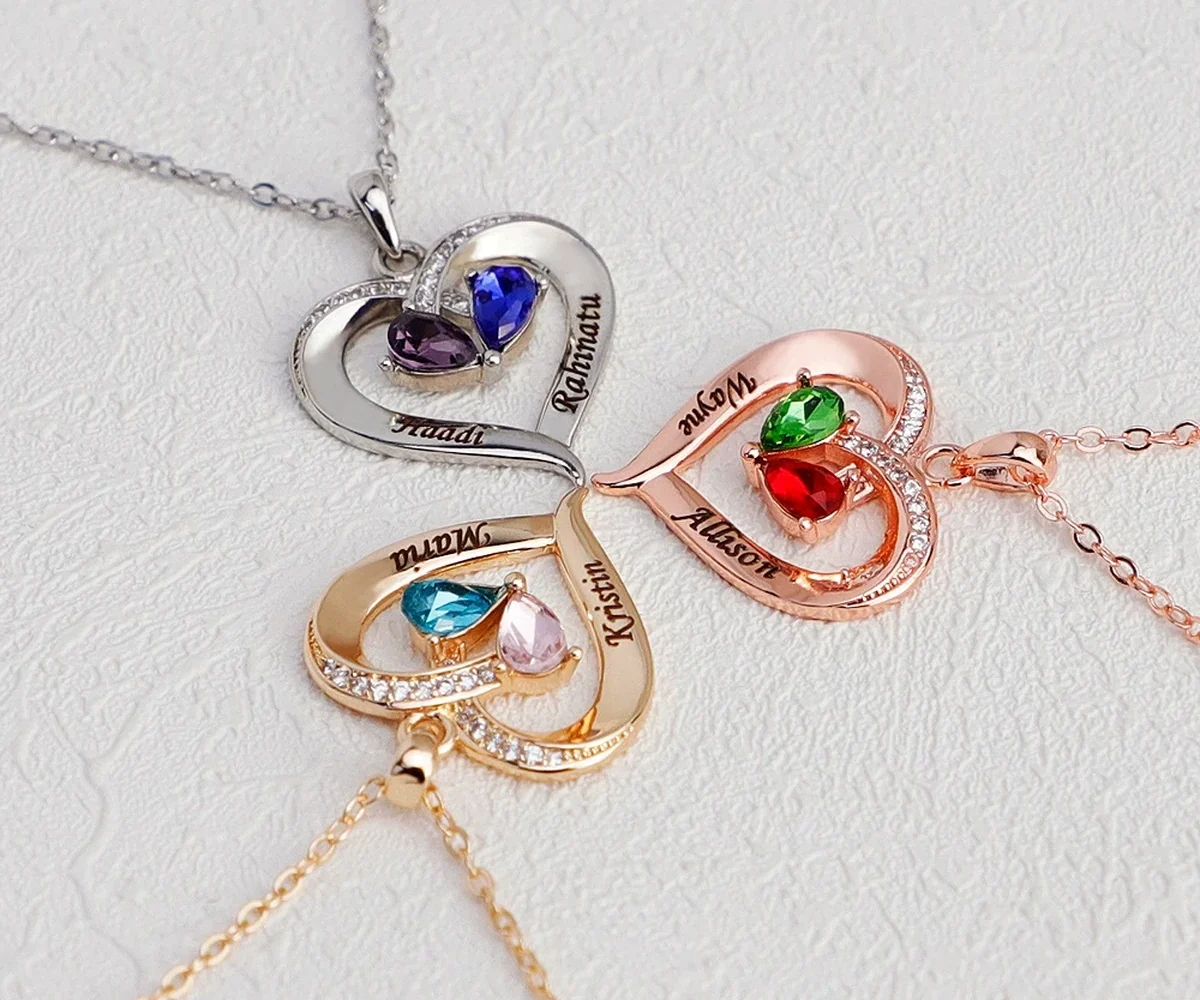
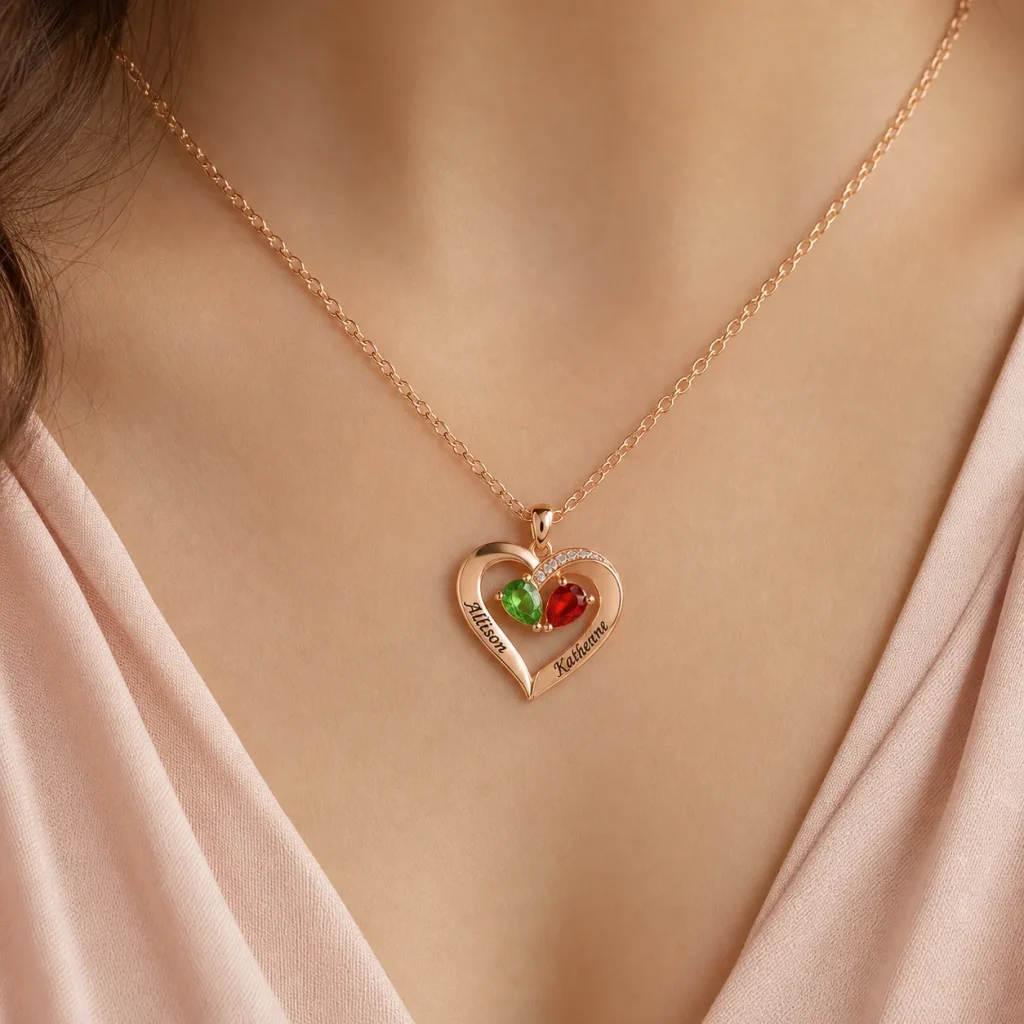
The Two-Tone Teardrop Story Necklace has a copper necklace section, a stainless-steel pendant, plated surfaces, and crystal accents. Its documented chain length is approximately 45 cm plus a 5 cm extender, and it carries a fixed two-name, two-month personalization structure.
Those facts help a buyer compare length and construction, but they do not predict how every knit, scarf, collar, or lace panel will interact with the necklace. A product image can show wearing position on one model; it cannot guarantee the same position on every body or neckline. Treat a snag as a specific interaction between the piece, fabric, movement, and fit.
Lower the chance of another snag
Fasten the necklace after pulling a knit top, scarf, or high collar over the head. Remove it before changing clothes. Check that loose hair, drawstrings, lanyards, and layered chains are not wrapped around the clasp or extender. For open-weave fabric, textured sweaters, or lace, test the outfit and necklace while standing still before wearing them together for a full day.
Remove plated personalized jewelry for exercise and store it separately rather than tucking it inside clothing. Follow the current jewelry care guidance: keep the piece dry, avoid perfume and household chemicals, wipe gently with a soft lint-free cloth, and store it away from pieces that can catch or scratch it.
Common questions
Should I pull the fabric away from the necklace?
No. Pulling both sides increases tension. Gather the fabric toward the snag, support the necklace, and gently reverse the visible loop only when it can move freely.
Can I wear the necklace again if it looks normal?
Inspect the full chain, clasp, and connection points first. If movement is uneven or any link looks open, stretched, or twisted, keep it off and document the condition rather than testing it on your neck.
Does a snag mean the necklace is defective?
Not necessarily. Fabric structure, layering, fit, and movement can all cause a catch. Evaluate the actual piece for visible damage instead of inferring a cause from the snag alone.
Release first, inspect second, reuse only when sound
The safest response to a clothing snag is calm and mechanical: stop, support, create fabric slack, and separate the materials without force. Then inspect and document before the necklace goes back on. If a different chain length or format better suits textured clothing, compare the current choices in the Amorieva collection using written specifications rather than guessing from a styled image.