How to Measure Ring Size When Your Knuckle Is Wider
Measure both the knuckle and finger base, compare a ring that already fits, and choose a fixed size without forcing it over the widest point.
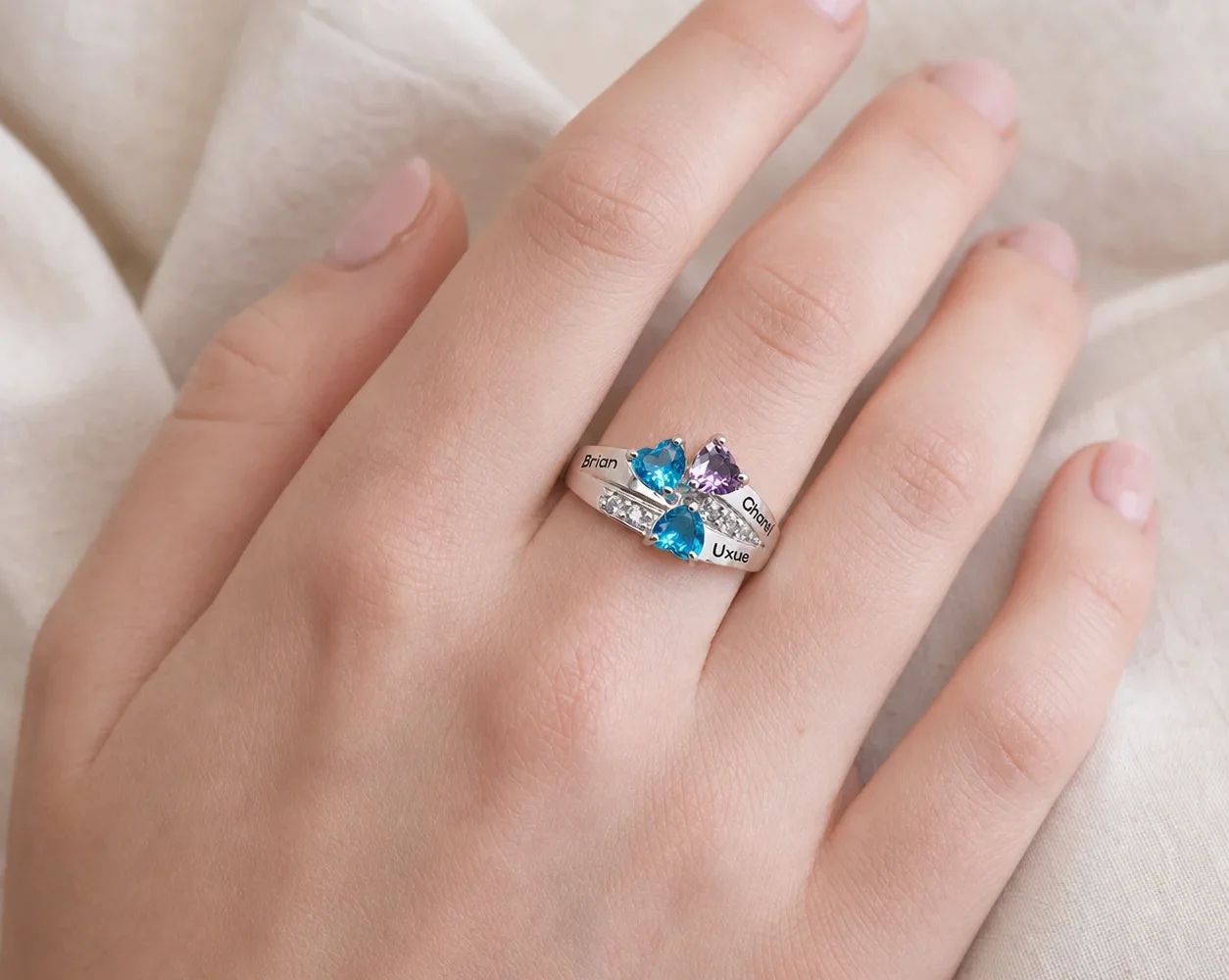
Choosing a ring size for wide knuckles means measuring both the knuckle and the finger base instead of treating the finger as one circumference. A fixed ring must pass the widest point without force and then sit securely enough at the base for ordinary wear. Repeat the measurements under normal conditions, compare a ring that already fits the same finger, and choose only within the product’s available sizes.
Treat the knuckle and finger base as two fit checkpoints
A measurement taken only at the finger base can produce a size that feels comfortable once in place but will not pass the knuckle. A measurement taken only around the knuckle can produce a ring that passes easily but rotates or feels loose at the base. Neither number should be ignored.
Start with the method in the at-home ring-size guide, then add a second record for the knuckle’s widest point. Use the same units and the same measuring tool for both. The goal is not to average two numbers automatically; it is to understand the actual path the ring must travel and where it will rest.
Finger shape varies, so no universal formula can select the correct size from the gap between those measurements. A local jeweler’s sizing rings can provide a more realistic test because they must move over the knuckle and settle at the base.
Repeat under ordinary, comparable conditions
Hands can change temporarily with temperature, activity, and time of day. Measure more than once when your hands feel ordinary—not immediately after exercise, in unusually cold conditions, or when the finger feels noticeably different from normal.
Record the hand, finger, time, knuckle result, and base result each time. Do not combine measurements from different fingers. Even matching fingers on opposite hands can fit differently, especially when one hand is dominant.
If the results vary substantially, do not choose whichever number makes the preferred product available. Repeat the process or use professional sizing help. A personalized ring is prepared from confirmed details, so uncertainty is a reason to pause rather than a reason to force a convenient answer.
Use a ring that already fits as a movement test
A plain ring that fits the intended finger can add practical evidence. Notice how much resistance it meets at the knuckle, whether it needs a slight twist, and how it behaves once seated. It should not require painful force, and it should not slide off during ordinary hand movement.
Measure that ring’s inside diameter using the established guide, making sure the ruler crosses the true center and excludes the metal edges. Compare the result with your finger measurements and the current size chart. A ring from another finger, a flexible band, or an open adjustable design is not a reliable stand-in for a fixed ring on this finger.
Also consider the personalized design’s visual top. A ring with a decorative face may make ordinary rotation more noticeable than a plain band. Do not use tape, glue, bending, or another home modification to compensate for an uncertain size.
Apply the evidence to Family Constellation
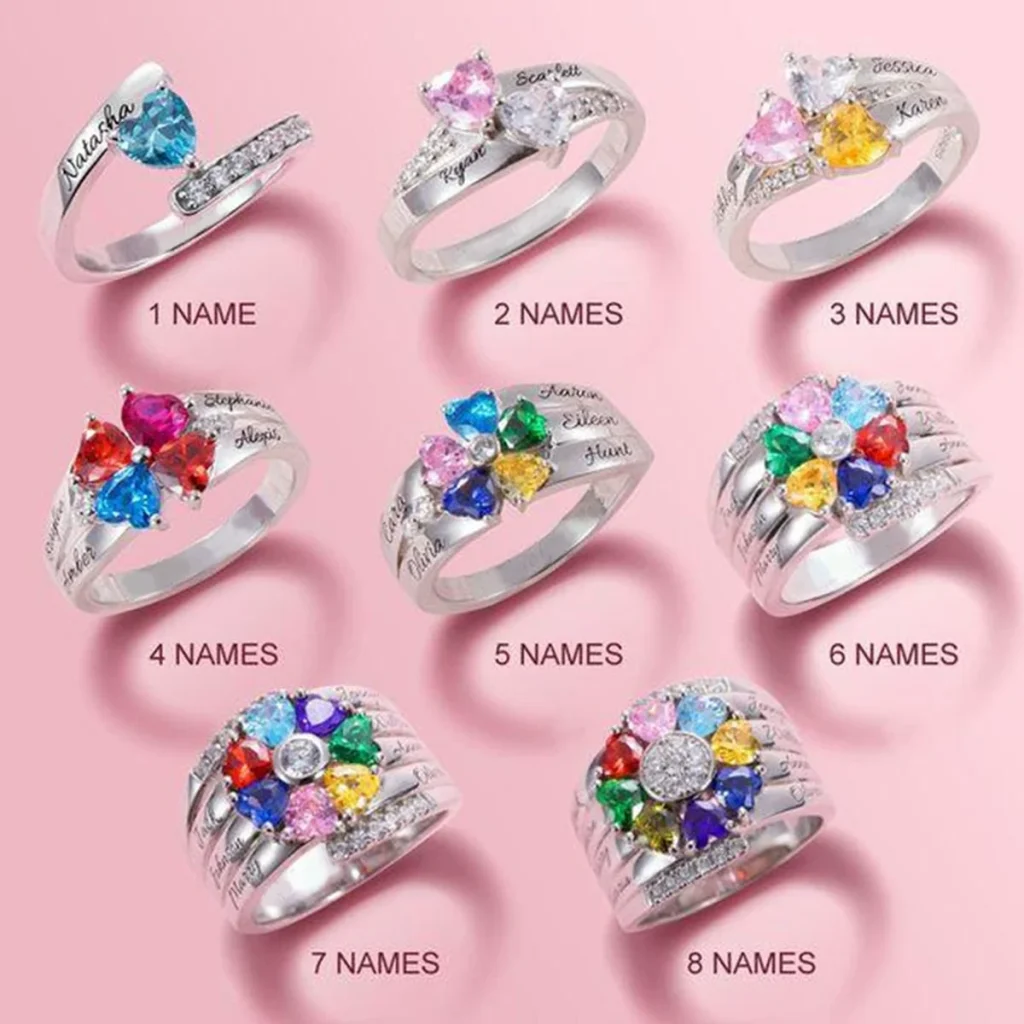
The Family Constellation Name Ring currently offers fixed US sizes 6 through 10. It supports name engraving and one to eight simulated birthstone accents. It is not described as an adjustable ring, and the current product does not promise resizing.
Choose the size only after confirming the exact hand and finger. Keep the size decision separate from the number of names or accents. Adding more represented people changes the personalization plan, not the measured finger.
If none of the available sizes passes the knuckle and sits acceptably at the base, do not force the closest option. Compare a non-ring format in the current collection. For a product-specific fit question, check the current FAQ and provide the exact product name, intended finger, and measurements.
Use a wider-knuckle sizing record
- Confirm the exact hand and finger that will wear the ring.
- Measure the finger base more than once.
- Measure the knuckle’s widest point with the same method.
- Compare a fixed ring that already fits that finger, when available.
- Test passage and resting fit without force.
- Choose only from the current US 6 through 10 range.
- Pause when results conflict instead of inventing an average.
Common questions
Should I always size up for a wide knuckle?
No automatic rule fits every finger. The ring must pass the knuckle, but sizing up too far may leave it unnecessarily loose at the base. Compare both checkpoints and, when possible, test with sizing rings.
Is twisting a ring over the knuckle acceptable?
A gentle natural turn may help some well-fitting rings pass, but painful force is not a fit test. Stop if the finger or ring is under strain.
What if the correct fit falls between available sizes?
Repeat the measurements and seek product-specific or professional sizing guidance. Do not assume that a fixed personalized ring can be adjusted or resized later.
Choose for the whole route onto the finger
A wider knuckle makes ring sizing a two-point decision. The best evidence combines repeated base and knuckle measurements with the real movement of a ring on the intended finger. Respect both checkpoints, stay within the documented size range, and choose another format when a fixed ring cannot meet them comfortably without force.