How to Choose a Non-Abrasive Cloth for Plated Jewelry
Choose a clean, dry, untreated lint-free cloth for gentle plated-jewelry care, and learn which cloth labels and residues should make you pause.
The best cloth for plated jewelry is not necessarily the one with the most persuasive “jewelry polishing” label. For routine surface care, choose a clean, dry, soft, lint-free, untreated cloth with no trapped grit or unknown cleaning compound. Use it with light pressure, and stop if a mark does not lift easily. A cloth can remove ordinary surface contact; it cannot promise to restore plating that has changed.
Read the cloth description before touching the jewelry
Look for plain language such as soft, lint-free, non-abrasive, dry use, and untreated. A smooth microfiber or other tightly woven soft cloth may be suitable when it is clean and contains no added product. The fiber name alone is not a guarantee: a cloth that has collected dust, cosmetics, or cleaning residue is no longer a clean care tool.
“Polishing cloth” can mean something different. Some polishing cloths are impregnated with compounds designed to remove oxidation or change a metal surface. That may be appropriate for a material covered by the cloth manufacturer’s instructions, but it should not be assumed safe for an electroplated finish. If the packaging does not clearly identify what is in the cloth and which finishes it supports, do not experiment on a personalized piece.
Also reject a cloth with a coarse weave, stiff seams, decorative printing, exposed tags, or visible particles. Paper towels and general household rags are poor default choices because their texture and previous use are not controlled for delicate plated surfaces.
Inspect cleanliness, texture, and treatment separately
Hold the cloth under bright light. Check both sides and the edges for crumbs, fibers, hardened spots, or makeup. Run a clean fingertip lightly across it; the surface should feel even, without scratchy sections. Smell is not a reliable treatment test, so a cloth that has no odor can still contain an unknown compound.
Keep a dedicated jewelry cloth in a dry container away from household cleaners. Folding it protects the working faces, but mark which sections have already been used. When the cloth becomes visibly soiled, rough, or uncertain, replace or clean it according to its own instructions before it returns to jewelry duty.
Do not “test” an unknown cloth by rubbing a hidden plated area. A hidden area still has the same finish, and damage there is still damage. The safer test is documentary: read the cloth instructions, compare them with the product care guidance, and choose a plain untreated option when compatibility is unclear.
Match the cloth to a gentle wiping task
Set the piece on a clean, padded, dry surface away from a sink. Wash and thoroughly dry your hands. Support the component being wiped so the chain, engraving, or accent setting is not pulled through the fabric.
Make one or two light passes over accessible broad surfaces. Lift and reposition the cloth instead of sawing back and forth across an edge. Around engraving, use a clean flat section rather than pushing fibers into recessed letters. Around raised accents, wipe the surrounding surface without snagging or pressing beneath the setting.
If light residue transfers to the cloth and the surface looks even, stop. If a mark remains, pressure is not the next step. Additional rubbing can turn a gentle routine into abrasion. Photograph an unexplained surface change and seek product-specific guidance.
Use the documented construction of the piece
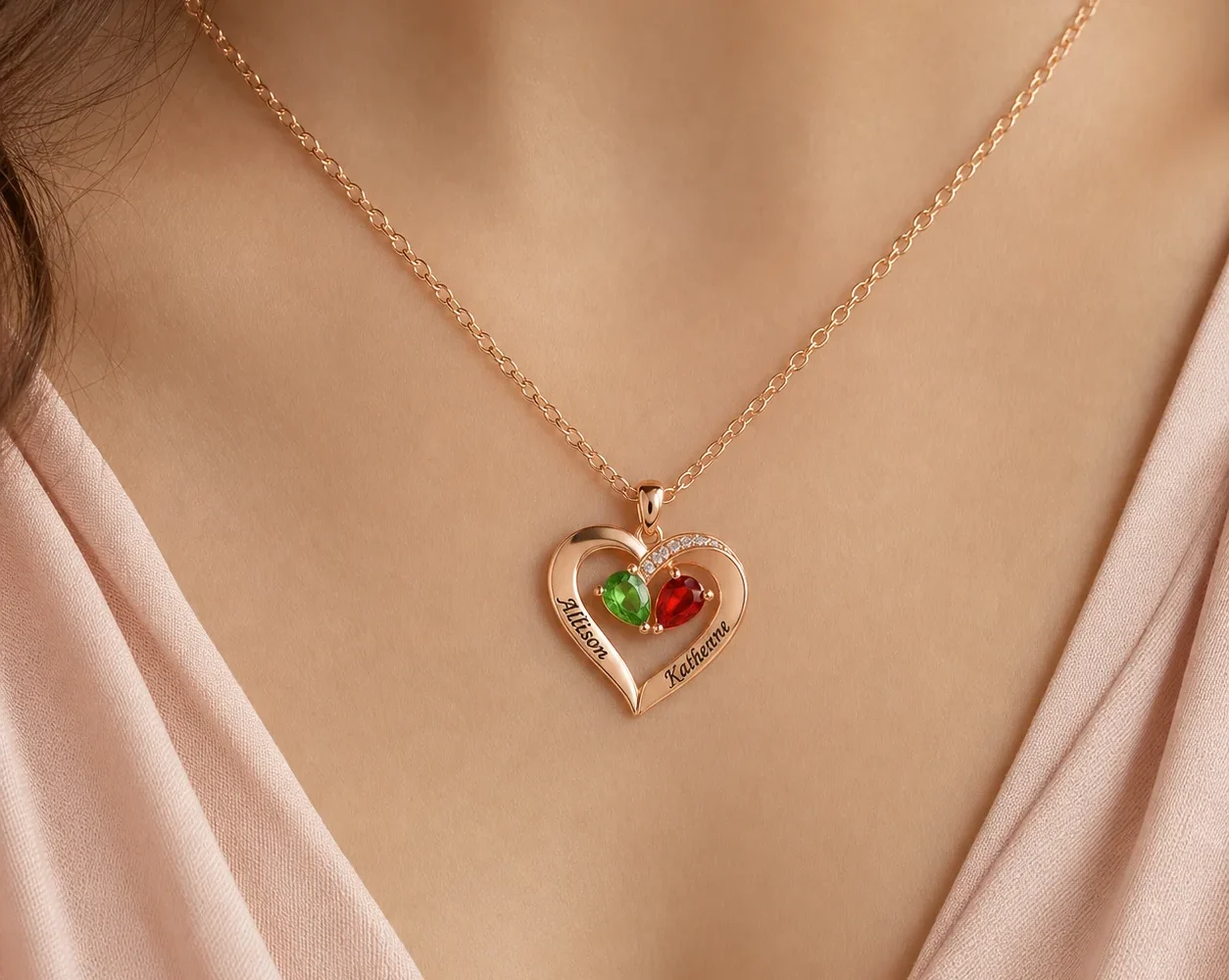
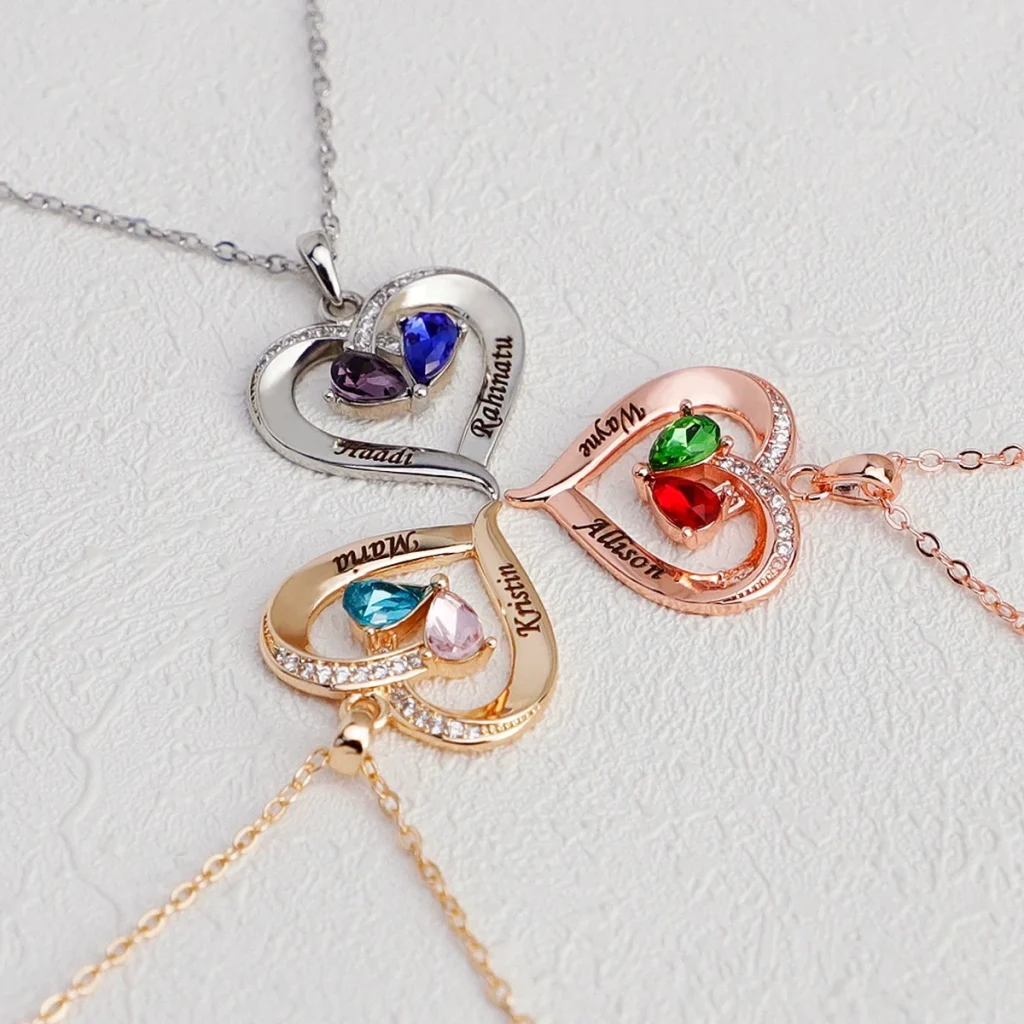
The Two-Tone Teardrop Story Necklace is a plated copper-base design with a stainless-steel pendant component. Its current personalization uses exactly two engraved names and two simulated birthstones, with a crystal-set or smooth engraved heart accent choice.
Those separate surfaces and raised details are reasons to support the pendant rather than pull it through a cloth. They are not reasons to apply a stronger polish. Follow the current Amorieva jewelry-care guidance: keep plated pieces dry, limit contact with perfume and household chemicals, wipe gently, and store separately.
If a product page, cloth label, and general online tip disagree, give the exact product instructions priority. The Amorieva FAQ is a stable place to check current care language. A different design in the current collection may use a different base material or structure, so do not assume one cloth treatment applies identically to every piece.
Use a six-point cloth checklist
- Clean: no dust, grit, cosmetics, or transferred residue.
- Dry: no water, spray, or cleaning solution added.
- Soft: an even surface without stiff edges or rough seams.
- Lint-free: no loose fibers likely to catch around details.
- Untreated: no polishing compound unless specifically approved.
- Dedicated: stored away from household cleaning cloths.
The checklist chooses the tool; light pressure and a clear stopping point complete the method. “Soft cloth” should describe the entire process, not just the fabric.
Common questions
Can I use an eyeglass cloth?
Possibly, if it is clean, dry, soft, lint-free, and untreated. A cloth that has lens-cleaning spray or skin oils on it should not move directly from glasses to plated jewelry.
Is a silver polishing cloth safe for plating?
Do not assume so. A cloth intended to polish solid silver may contain compounds or abrasives that are not appropriate for a plated surface. Check both sets of instructions first.
Can a cloth remove scratches or faded plating?
No restoration should be promised. Stop after gentle surface wiping; persistent scratches, uneven color, or visible finish change need assessment rather than harder rubbing.
Choose restraint along with the cloth
A plain, documented, clean cloth is a better starting point than a powerful-sounding polishing product. Pair it with a dry workspace, supported components, light passes, and an early stopping point. That combination helps routine care remain routine and prevents an ordinary wipe from becoming an unplanned surface treatment.