Personalized Family Jewelry Without Dangling Charms
Compare fixed-structure family jewelry through a clustered ring, an open cuff, and connected engraved bands when dangling charms do not suit the recipient.
Personalized jewelry without dangling charms can organize a family story in a fixed cluster, an open-ended cuff, or connected engraved bands. Start with the recipient’s actual wearing habits, then compare fit certainty, family capacity, name visibility, and month fields. A fixed visual structure reduces independent movement, but it should not be described as universally safer or suitable for every routine.
Define what “without dangling” should solve
The recipient may dislike moving charms, prefer a cleaner outline, work with their hands, layer fewer pieces, or simply favor connected designs. Write the reason down because it affects the shortlist. Someone avoiding wrist movement may prefer a necklace, while someone who does not wear pendants may prefer a ring.
Do not assume the absence of hanging elements removes all fit, contact, or care questions. Raised accents, open ends, pendant edges, and ring clusters still need appropriate use and gentle handling.
Ask what the recipient dislikes about dangling elements. Sound, visual movement, contact with clothing, and difficulty reading names are different concerns. A clustered ring solves separate movement but places the story on the hand. A connected necklace changes the location entirely. The reason should determine the comparison.
Choose a clustered ring for one compact focal area
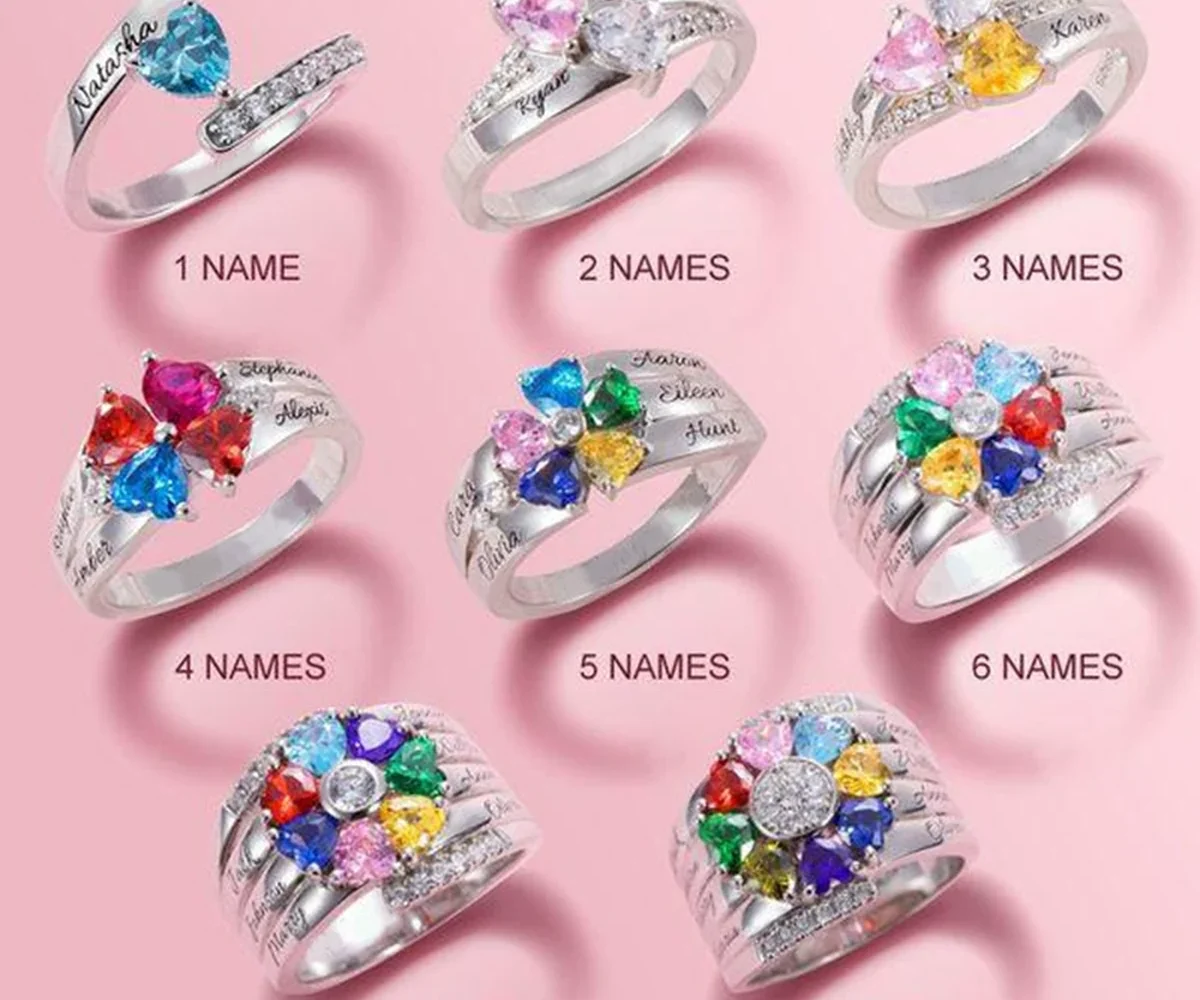
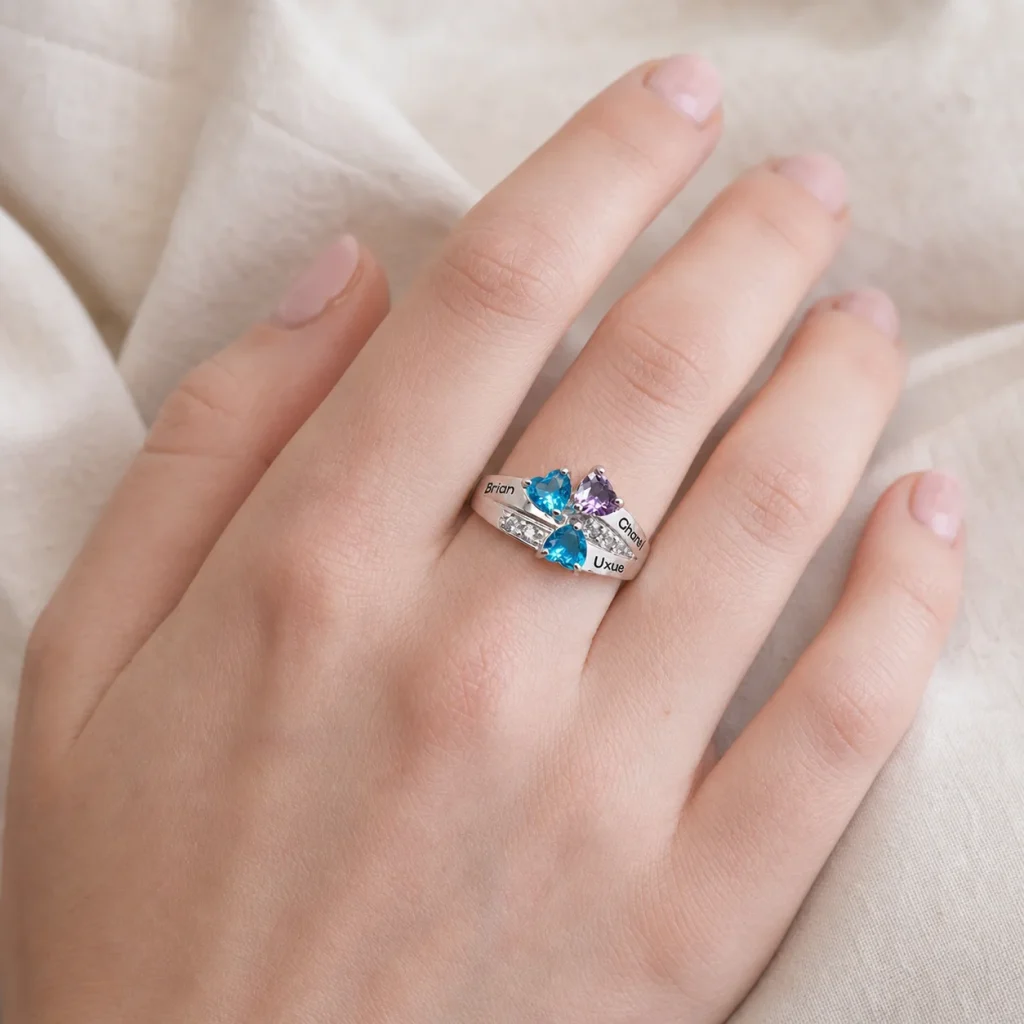
The Family Constellation Name Ring currently supports one to eight simulated birthstone accents, name or short engraving, and US sizes 6 through 10. It gathers the colors into one compact cluster rather than placing them on individual charms.
This can suit a regular ring wearer who likes hand-centered personalization and has a confirmed size for the intended finger. The cluster grows visually denser with more accents. The product does not currently offer a three-tone selector, so compare its actual fields rather than importing finish choices from other designs.
Choose an open cuff for a fixed two-person composition
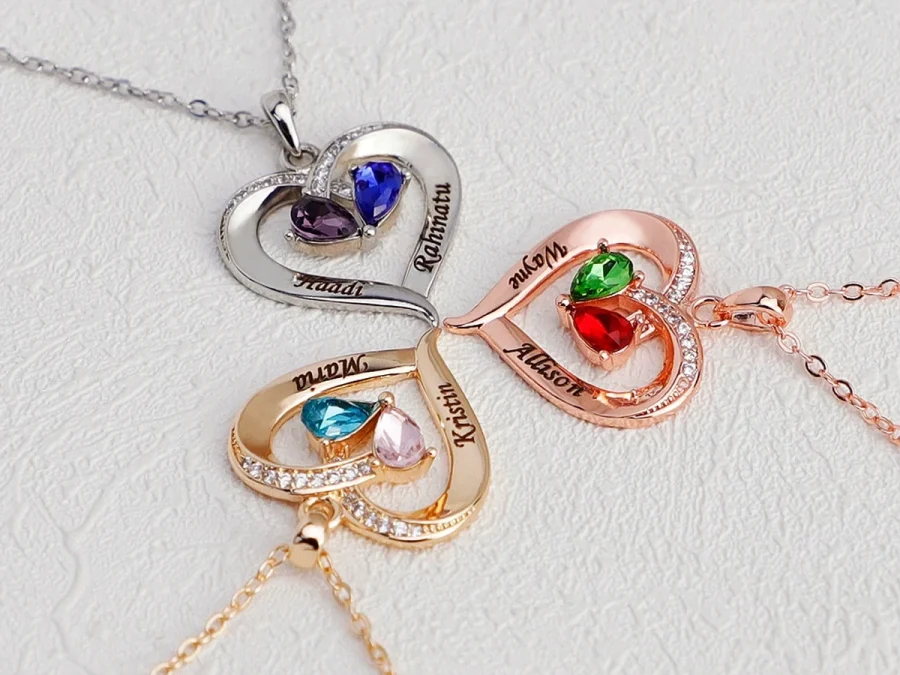
The Open Heart Birthstone Cuff uses two personalized ends in one plated copper-base cuff. It is designed for exactly two engraved names and two simulated birthstones and offers three finish tones.
The cuff has no dangling name charms, but its open structure still requires a fit judgment. Compare it with a cuff the recipient already uses and avoid treating adjustability as universal sizing. It is relevant only when exactly two people tell the intended story.
Notice that “fixed” does not mean “one solid block.” The two personalized ends remain visually distinct, and the open center is part of the outline. This can suit someone who wants each of two people readable without separate suspended pieces.
Choose connected bands for a unified pendant
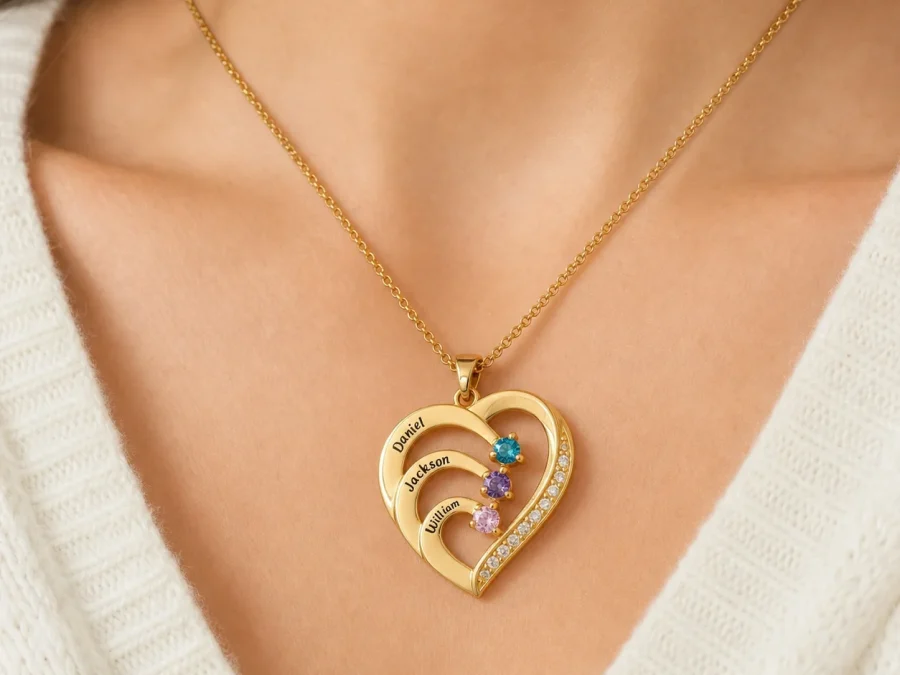
The Family Embrace Heart Necklace builds one heart from connected curved bands. It supports one to six engraved name-and-month pairs in three finish tones. The outer silhouette remains unified while the internal detail changes with count.
This format may fit someone who wears pendants but dislikes independently hanging elements. Compare the recorded chain length and heart scale with an existing necklace. A connected design can still move as a whole during wear, so it is not a promise against catching or contact.
Use a structure-first scorecard
- Recipient regularly wears the selected format.
- Ring size, cuff fit, or necklace length is sufficiently known.
- Current capacity matches the confirmed people.
- Name and month fields fit the intended story.
- The fixed outline suits the recipient at ordinary scale.
- The recommended plated-jewelry care routine is realistic.
Eliminate any design that fails a required row, then compare the remaining current options through the Amorieva collection. Do not award extra points to a structure for unsupported performance claims.
Run a normal-day simulation. Consider getting dressed, commuting, typing, caregiving, and storing the piece. Do not predict absolute performance; simply identify which format the recipient already handles comfortably. A familiar ring wearer may accept a cluster more readily than a new cuff, while a pendant wearer may prefer connected bands.
Then compare name readability. The ring combines accent color with a short engraving, the cuff creates two personalized ends, and the necklace places names on connected bands. Choose the way the recipient wants people represented, not only the absence of movement.
Common questions
Does fixed jewelry never move or catch?
No such promise should be made. A fixed composition lacks separate dangling charms, but the complete ring, cuff, or pendant still moves with the wearer and environment.
Which fixed design supports the most family accents?
Among these examples, the Family Constellation ring supports one to eight simulated birthstones. It also requires a confirmed US size from 6 through 10.
Can the cuff represent three people?
The current Open Heart cuff is a fixed two-person design. Choose a connected necklace or clustered ring whose verified capacity supports three people.
Choose a stable outline for the right reason
Removing dangling charms narrows the visual structure, not every practical question. Decide whether a cluster, cuff, or connected heart belongs in the recipient’s routine, then verify fit and capacity. The best shortlist is the one whose fixed shape and current fields both support the same family story.
Save the reason for choosing the fixed structure with the order brief. It will help a second reviewer avoid reintroducing a charm design based only on color or price.