How to Compare Personalized Family Jewelry Silhouettes
Compare family jewelry by its overall outline first: connected bands, compact clusters, branching charms, or separate pieces, then review personalization.
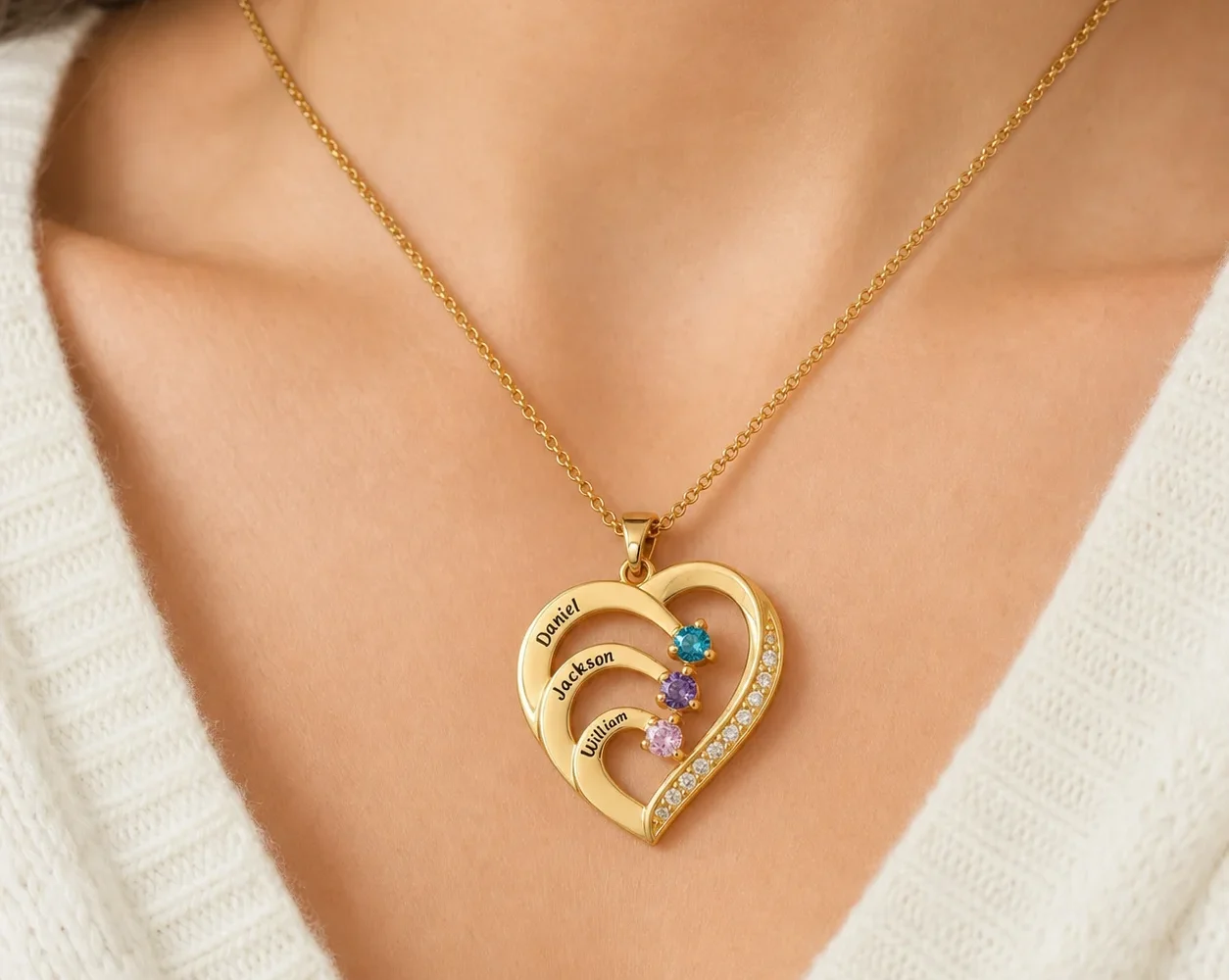
Personalized family jewelry silhouettes are the overall shapes a design creates before you read an engraving or identify a color. Compare connected bands, a compact cluster, branching elements, and separate interlocking pieces at ordinary viewing size. The silhouette determines visual presence and how the family story is organized, while names, months, and finish tone refine that structure later.
Begin with a black-outline test
Imagine each product image reduced to a solid outline. Ask whether you see one heart, a rounded cluster, several hanging branches, or pieces that divide into a set. This removes the distraction of finish color and helps reveal which structure the recipient already wears.
View the design both enlarged and at expected everyday scale. Enlarged images explain details but can make every curve and opening feel more dramatic. The ordinary outline is what will coordinate with clothing and other jewelry.
Create four quick labels before browsing: “one connected shape,” “compact cluster,” “separate moving elements,” and “divided shared set.” Ask the recipient or a close observer which label best describes jewelry they already choose. A plain-language answer can narrow the silhouette before product names influence the decision.
Read connected bands as one continuous family form
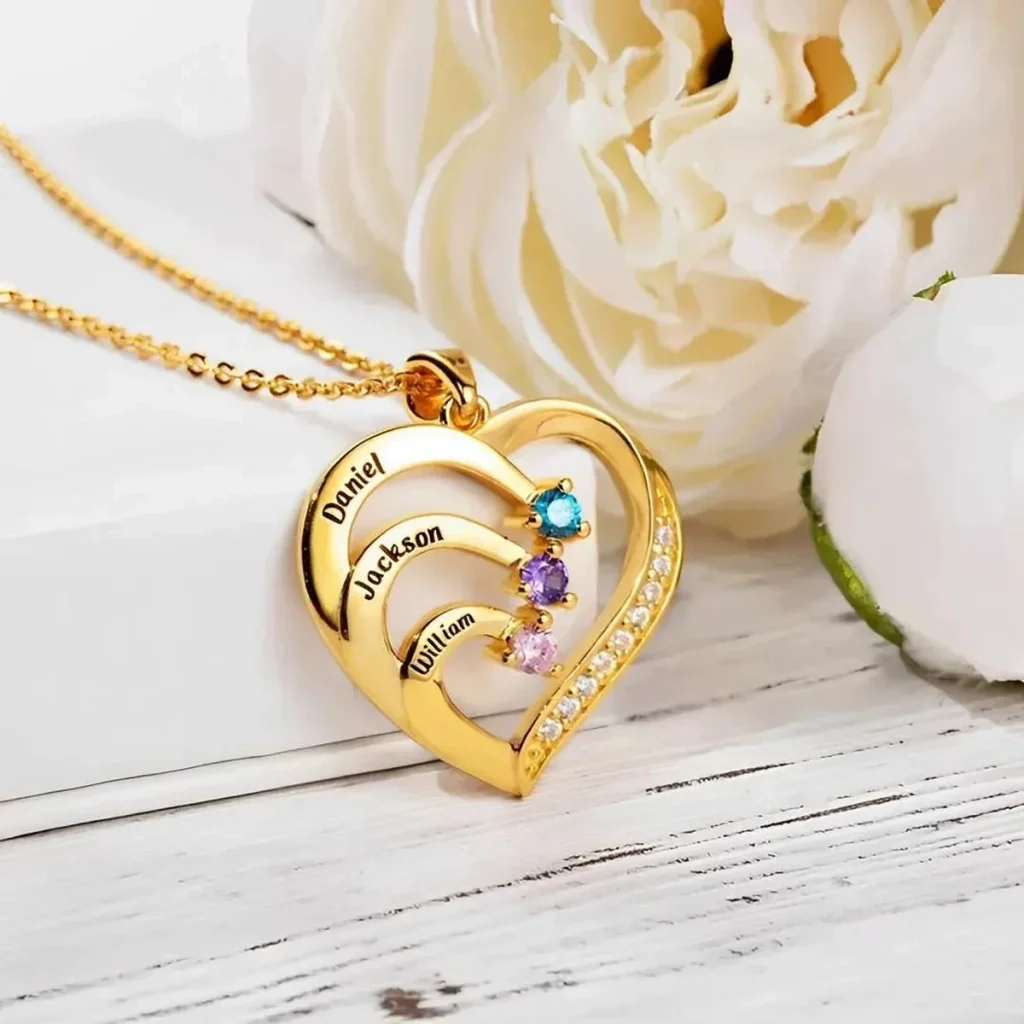
The Family Embrace Heart Necklace uses curved engraved bands to build a connected heart silhouette. It currently supports one to six loved ones, with a name and simulated birthstone selection for each, and offers three plated finish tones.
This structure can suit a recipient who prefers one unified pendant instead of visibly separate name beads or charms. As more bands are used, the internal detail becomes denser, but the outer heart remains the main outline. Confirm that the one-to-six capacity fits before selecting it for shape alone.
Contrast clusters, branches, and separate pieces
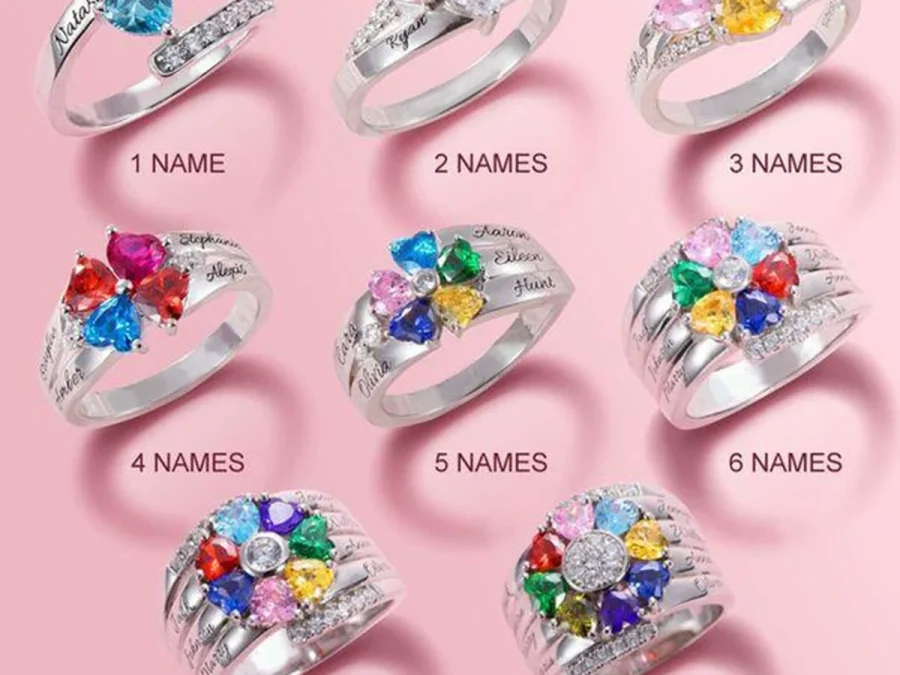
A clustered ring compresses one to eight month accents into a small hand-centered focal area. The silhouette reads as a compact composition rather than a line of people. Review the Family Constellation Name Ring only when a US size from 6 through 10 is confirmed.
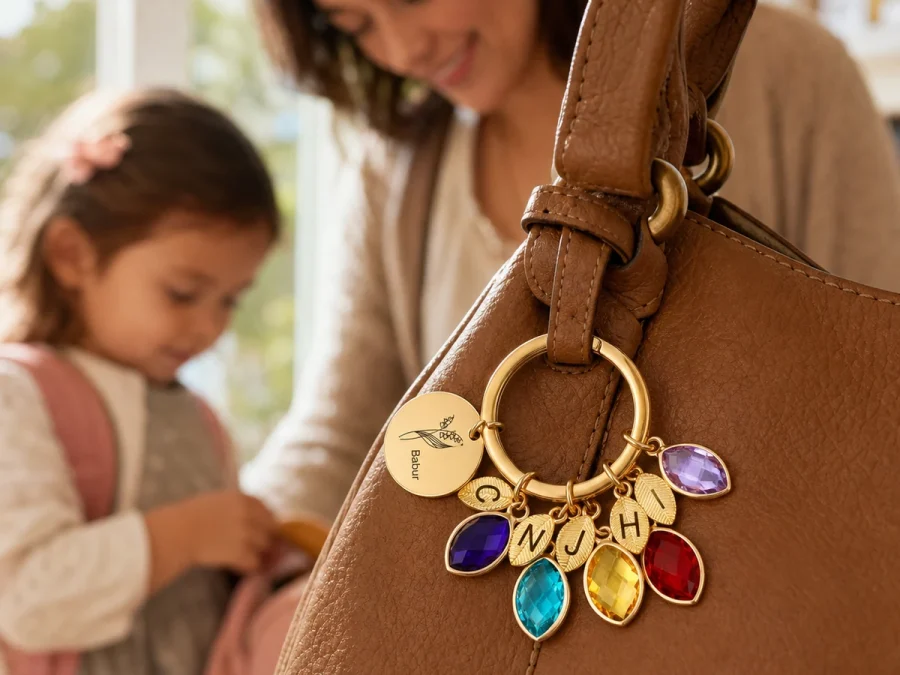
A family branch design uses distinct leaves and accents around a bangle or keyring, creating movement and an intentionally divided outline. A puzzle necklace separates two or three engraved heart pieces among wearers. These shapes tell different stories even before their fields are filled.
Do not treat one silhouette as more meaningful. Ask whether the recipient prefers one connected shape, a compact cluster, individually readable elements, or a shared set.
Compare negative space and visual density
Negative space is the open area inside and around the design. An open cuff and a curved heart may feel lighter because the outline includes visible gaps. A high-count cluster or classic name-bead pendant may feel fuller. Product images can help compare these relationships without guaranteeing the exact impression on every body.
Trace the outline on paper at approximate scale or view the image from several feet away. If the shape still appeals when names and colors are not legible, the silhouette is doing useful work. If interest disappears, the decision may actually depend on specific personalization rather than outline.
Repeat the test with the intended family count. A one-band or two-band view may feel more open than a six-band configuration. A two-piece puzzle creates a different complete outline from three pieces. Use the correct count image whenever available and mark any visual uncertainty rather than extrapolating from a different configuration.
Add product fields only after the shape survives
Once two silhouettes remain, compare family capacity, name visibility, month fields, size certainty, and format. Use the Amorieva collection to verify the live choices rather than assuming every heart supports the same number of people or accents.
Prepare the names and months through the personalization guide. A shape that looks right but cannot support the required people should leave the shortlist; do not compress names into unsupported fields.
Take a screenshot of each final candidate at the same apparent size and remove surrounding page elements. Compare only the shapes for one minute, then restore product information and verify capacity. This two-pass method keeps silhouette from being overwhelmed by badges, text, or a preferred finish.
Finally, ask how the outline behaves as a story. Connected bands keep names within one heart; branches preserve separate people; a cluster emphasizes the whole; puzzle pieces distribute the relationship. The recipient’s answer should come before tone and accent choices.
Common questions
Is silhouette the same as necklace or bracelet format?
No. Format describes where or how the item is used. Silhouette describes its visible outline, such as connected bands, a cluster, branches, or separate interlocking pieces.
Will a higher name count change the outline?
It can increase interior density or change the number of elements. Review the current examples for the intended count, while avoiding a promise about exact final placement.
Should finish tone affect the first comparison?
Compare shape first, then tone. A preferred color can make an unsuitable outline look attractive temporarily, while the structure determines the design’s lasting visual organization.
Choose the shape that tells the story at a glance
A silhouette is the design’s first sentence. Connected bands say “one composition,” branches say “distinct people,” a cluster says “gathered color,” and separate pieces say “shared relationship.” Select the sentence that fits the recipient, then make every name, month, and field inside it exact.