Family Ring or Necklace for Someone Who Works With Their Hands?
Compare a family ring and necklace for someone with hands-on work by checking workplace rules, hand contact, ring size, necklace habits, and care.

For someone who works with their hands, choose a family ring only when workplace rules allow it, ring size is confirmed, and the recipient is comfortable removing and storing it when needed. Choose a necklace only when neck jewelry is also permitted and already part of their routine. Job-specific rules take priority; this guide compares jewelry habits rather than providing occupational safety instructions.
Ask about rules before style
Workplaces, tools, sports, and hobbies can have specific jewelry restrictions. Ask the recipient or consult the applicable rules before choosing a ring or necklace. Do not assume a necklace is acceptable merely because it is away from the hands.
Identify whether jewelry must be removed, covered, limited by task, or left at home. Then ask where a removed personal piece could be stored securely. A beautiful design is not practical if the wearer has no reliable way to follow the rules.
Keep this discussion general and defer to the actual workplace, supervisor, equipment guidance, or trained safety authority for the setting.
Ask about changing tasks, not only the job title. The same person may spend one day at a desk and another using tools, gloves, food-preparation areas, or equipment. The most restrictive regular task may determine whether jewelry is worn during work.
Map hand contact and ring habits
Observe whether the recipient already wears rings during ordinary non-work hours. Note handwashing, gloves, tools, gardening, cooking, exercise, and hobbies. Frequent contact does not produce one automatic answer, but it identifies how often the ring may need removal.
Confirm which finger and a current size. A remembered size from years ago or a different finger is not enough. Use the ring-size guide and repeat the check.
If the correct size cannot be verified for a surprise, a ring becomes a higher-uncertainty choice. Do not estimate from photographs.
Plan a removal point before choosing the ring. A dry closable case in a secure personal area is more dependable than a loose pocket or counter. If no such place exists, wearing the ring only outside work may be the clearer plan.
Evaluate the family ring accurately
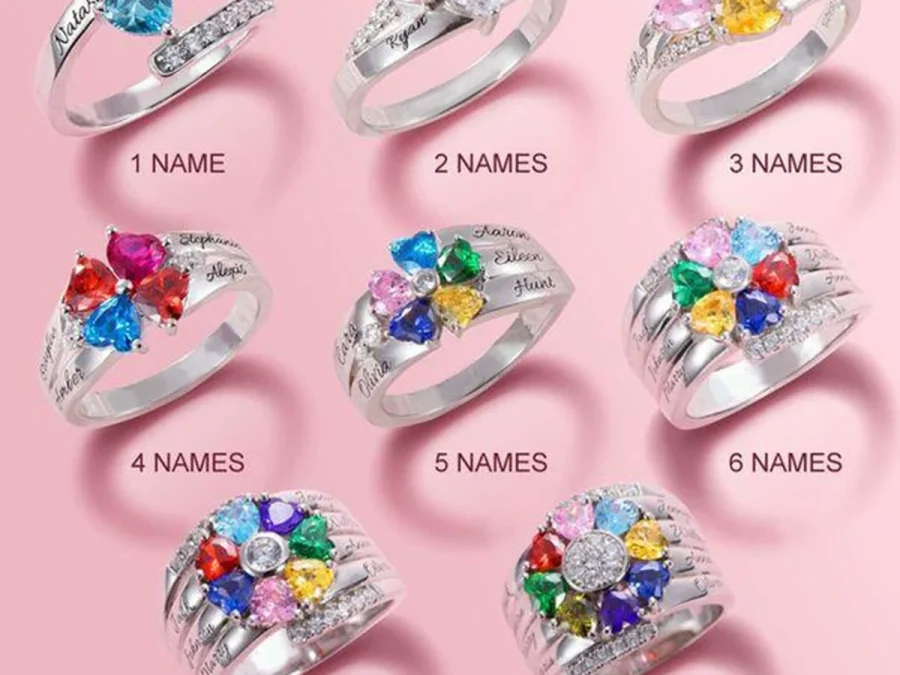
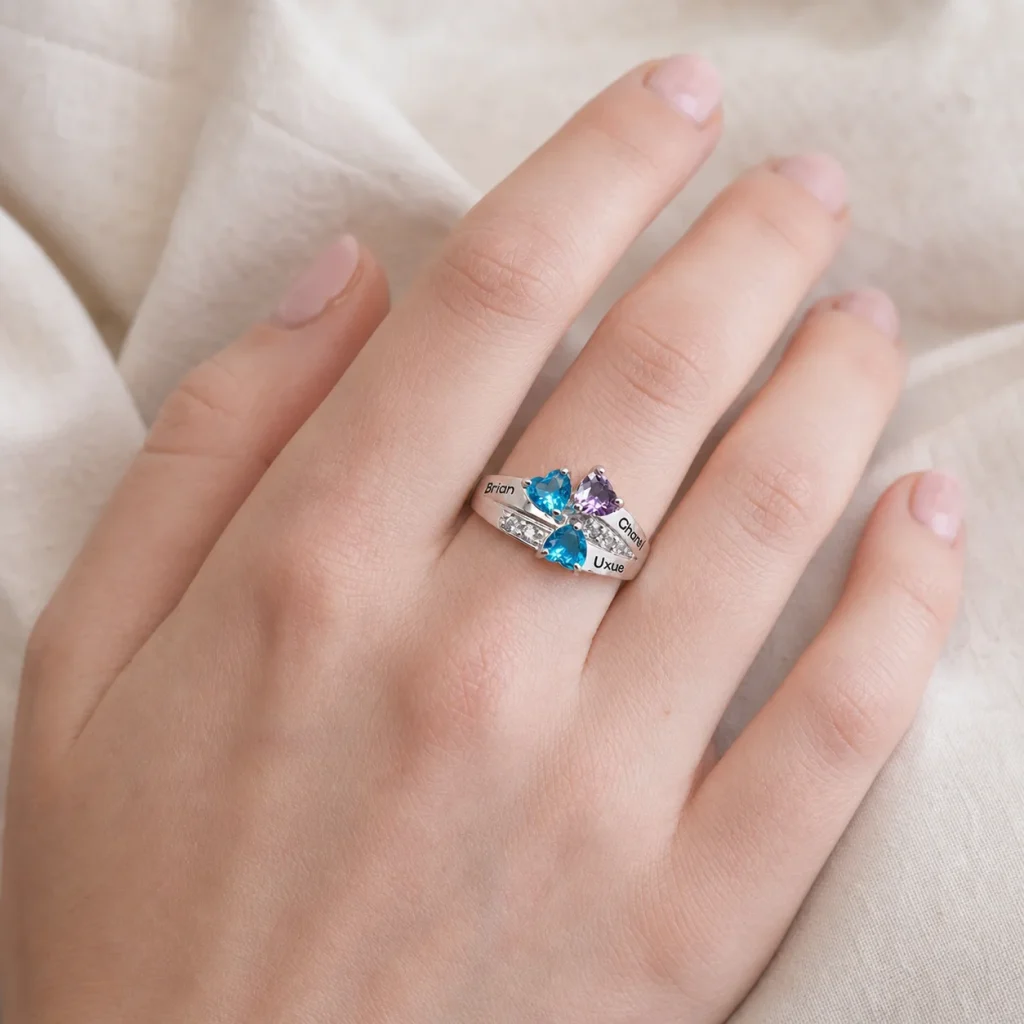
The Family Constellation Name Ring supports one to eight simulated birthstone accents with name or short engraving in current US sizes 6–10. It keeps the family cluster visible to the wearer on the hand.
That position may suit someone who loves rings outside work and has a secure removal routine. It may be less practical when hand jewelry is frequently restricted or the person dislikes taking pieces on and off.
The ring does not currently show a three-tone selector. Its plated construction should be kept dry, removed for showering, swimming, and exercise, and protected from perfume and household chemicals.
Evaluate a necklace without assuming it is exempt
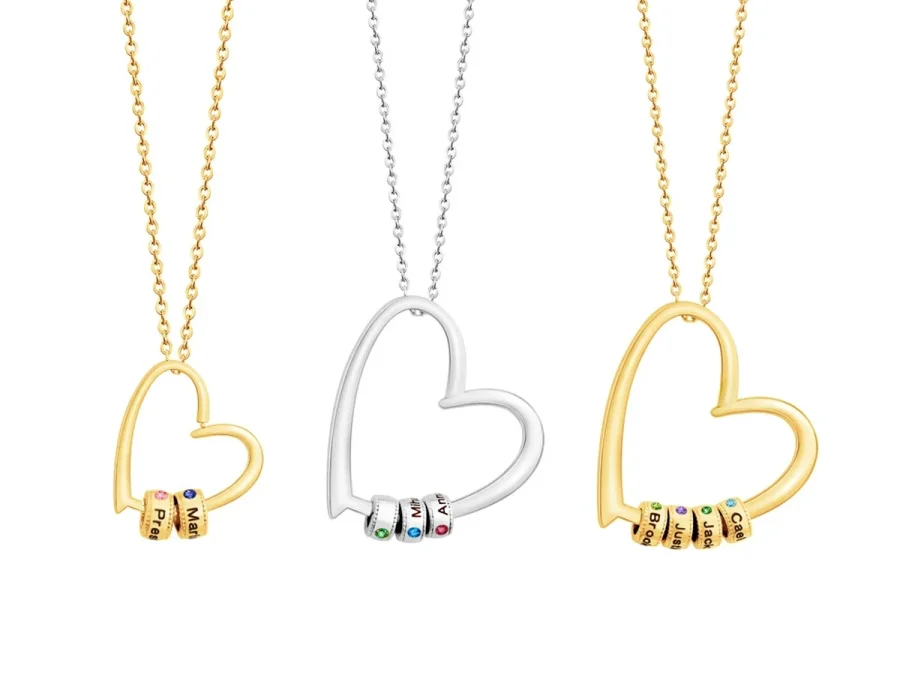
A necklace moves the personalization away from direct hand use. The Family Embrace Heart Necklace supports one to six names and simulated birthstone selections in a single heart composition.
It can fit a recipient who already wears necklaces and whose work or hobbies allow them. Compare its approximately 50 cm chain plus 5 cm extender and 22 mm pendant with familiar pieces. Loose neck jewelry may have its own restrictions in some settings, so check rather than infer.
If neither wearable format fits the workday, the person could wear jewelry outside work or choose a carried format. The current collection offers structures for different routines.
For a surprise, ask one question about format and one about rules without revealing the design. “Are rings or necklaces allowed during your regular tasks?” and “Which do you wear on days off?” provide more useful evidence than asking whether they like jewelry generally.
Create a work-and-off-hours table
Use two columns. Under work or hobby time, record rules, contact, removal, and storage. Under off-hours, record rings or necklaces actually worn, preferred family information, and care habits.
A ring may lose the work column but clearly win off-hours. A necklace may be permitted yet still lose because the recipient never wears pendants. The decision should reflect both contexts rather than requiring daily wear.
Review the care guidance for either plated format and make a dry storage plan.
Include the family roster in the table as a separate row. A ring’s up-to-eight accent capacity and a necklace’s up-to-six paired capacity can change the shortlist independently of work habits. Do not simplify the family to make the easier work format fit.
Recheck the plan when duties or hobbies change. A format chosen for one schedule may move to off-hours later, and that does not reduce its personal meaning.
Common questions
Is a necklace always safer for hands-on work?
No universal statement fits every workplace or hobby. Neck jewelry may have separate restrictions. Follow the rules for the actual setting.
Should I buy a ring if it will be worn only off duty?
It can still be a good fit if the recipient enjoys rings, the size is confirmed, and limited wear matches expectations. Daily wear is not required for meaning.
Which design holds more family members?
The current constellation ring supports up to eight simulated birthstone accents; Family Embrace supports up to six name-and-month pairs. Capacity should follow the complete roster.
Choose for the real schedule
Start with applicable rules, then compare hand contact, size certainty, necklace habit, removal, and storage. A family ring can belong to off-hours; a necklace can work when neck jewelry is permitted and welcomed. The right format fits the recipient’s actual schedule without making jewelry compete with the demands of their work.