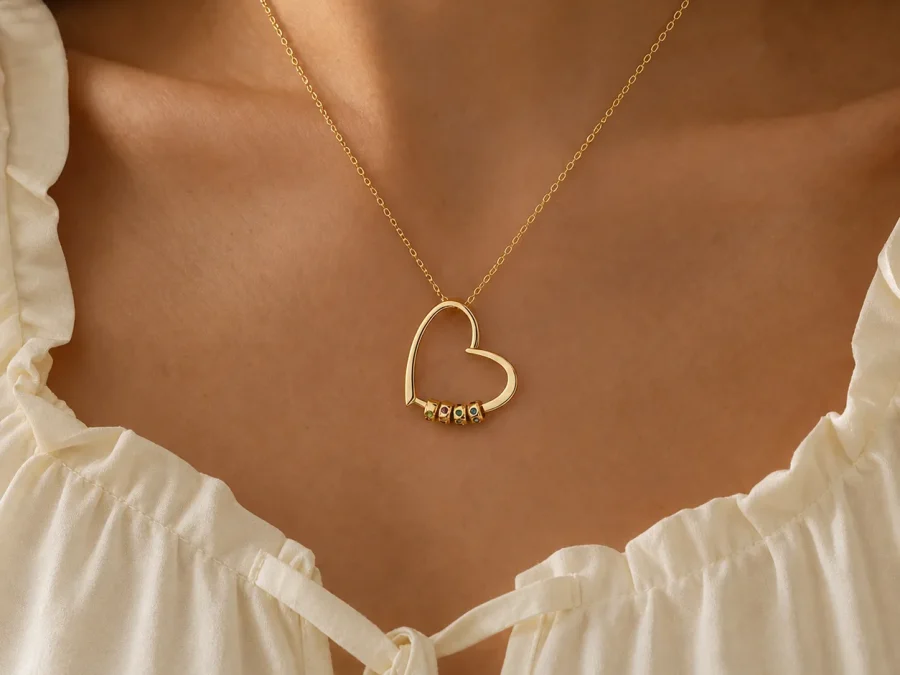
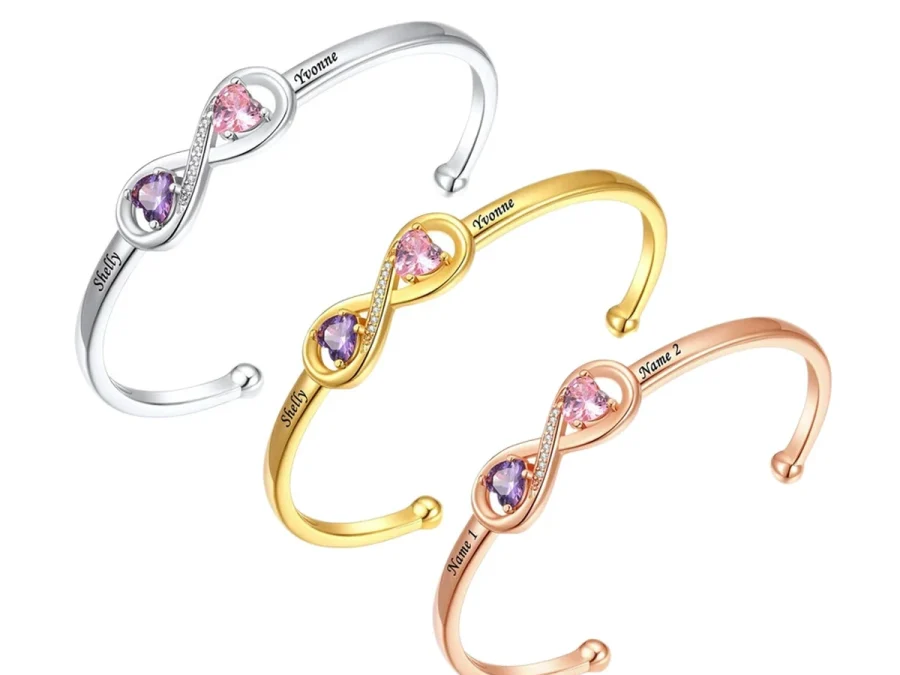
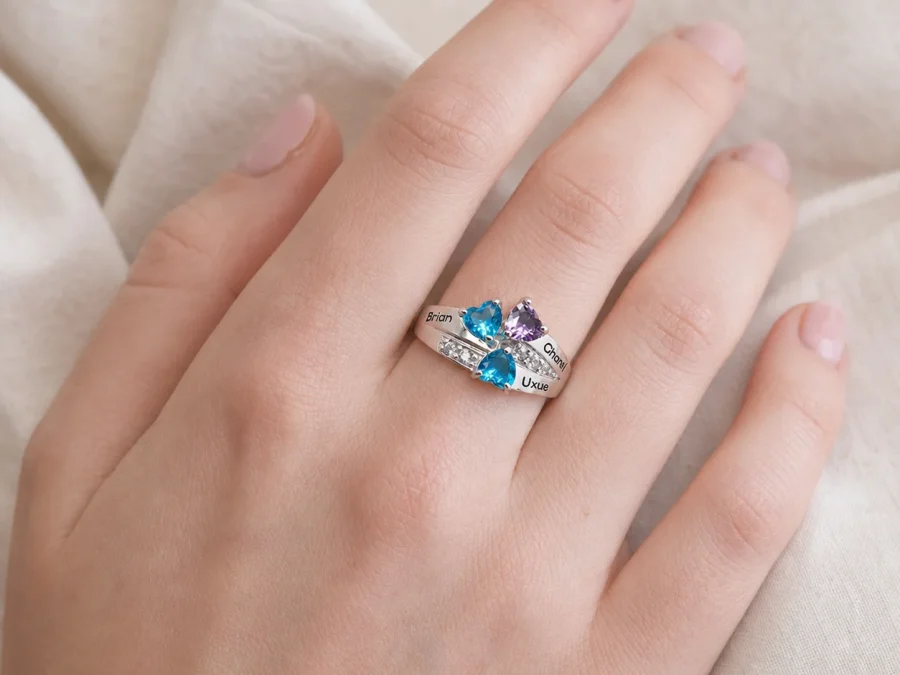
Due Date or Birth Date: Which Month Should Baby Jewelry Use?
Use a baby's actual recorded birth month for conventional birthstone labeling, or choose the due month only as an honestly described family symbol.

For conventional baby birthstone jewelry, use the baby’s actual recorded birth month rather than the estimated due month. A due month can still be meaningful to a family, especially after a long pregnancy journey, but it represents an expectation or memory rather than the child’s conventional birthstone month. Decide which story the jewelry will tell, describe it honestly, and confirm the detail before placing a permanent personalized order.
Understand what the two dates represent
An estimated due date is a planning estimate made before birth. The actual birth date records when the baby was born. When those dates fall in different months, they answer different questions: one describes the anticipated arrival, and the other identifies the child’s birthday.
Birthstone traditions are generally organized by calendar month. GIA’s birthstone overview presents January through December associations, so the conventional label follows the month of the recognized birth date. The tradition does not turn an earlier due-month estimate into the baby’s actual birth month.
This is a labeling distinction, not a judgment about which date has more emotional importance. A family may remember both. The key is not to call a due-month choice the baby’s conventional birthstone if the child was born in another month.
Choose from three honest planning paths
Use the actual birth month when the goal is a recognizable birthstone record for the child. This is the clearest choice for a piece expected to remain understandable as the child grows.
Use the due month only when the family intentionally wants to commemorate the pregnancy timeline, and describe it as the due-month symbol. A private note might say, “We carried April in our plans and met you in May.” That preserves both meanings without rewriting the birth record.
Wait when the baby has not yet arrived and the gift is meant to use the actual birthstone month. Ordering from the estimate creates an avoidable risk if the birth crosses into another month. Planning the design in advance is reasonable; submitting the permanent month field can wait until the date is known.
If the gift is a surprise, confirm the choice with a parent or guardian. Do not infer that the due month is preferred because it appeared in an announcement, and do not assume the actual month is emotionally uncomplicated for every family.
Keep the name and month as one verified pair
Write the baby’s approved display name and the selected month on the same line. If the child’s name has not been announced or finalized, do not use a placeholder as though it were confirmed engraving. The same caution applies to spelling, punctuation, and shortened forms.
For a piece representing several children, create one row per child. An older sibling’s established month should not influence which month is assigned to the baby. Review the family birthstones by month guide only after each calendar month is confirmed; the chart cannot decide which personal date the family wants to represent.
A useful order sheet has four columns: approved name, recognized birth date, selected month, and confirmation source. Keep an optional due-month story in a separate note so it cannot accidentally be copied into the wrong product field.
Apply the choice to the Family Constellation ring
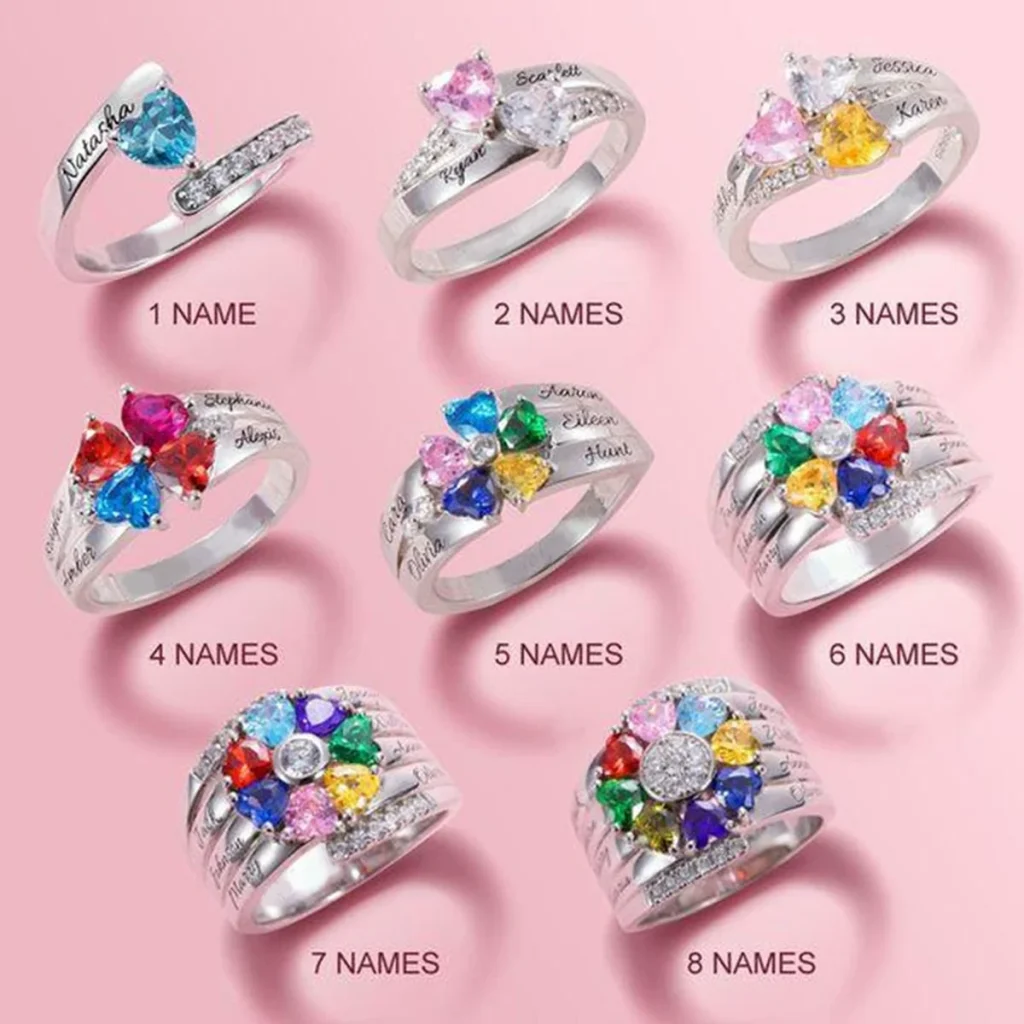
The Family Constellation Name Ring supports US sizes 6 through 10, one to eight simulated birthstone accents, and name or short engraving. Its colored accents are selected through birth-month choices; they should not be described as confirmed natural gems.
The ring can represent a baby alone or place the baby within a larger confirmed family list. Keep the count, name order, and month order aligned. It does not currently offer three plated-tone choices, so do not add an assumed finish selection to the planning sheet.
Ring size belongs to the wearer, not the baby being represented. Confirm the intended wearer’s size independently from the child’s name-and-month details. A correct birth month cannot compensate for an unverified fit.
Review the meaning immediately before ordering
Ask three questions at the final review:
- Are we using the actual recorded birth month or an intentionally chosen due month?
- Would the recipient describe that meaning in the same way?
- Do the approved name, month, and position match on the live form?
Then follow the current personalization steps and read the entries aloud from the first row to the last. A separate digital proof is not promised, so the buyer’s pre-submission check matters. Save the final list for comparison when the order arrives.
Common questions
Is it wrong to use the due month?
No, if the family deliberately wants that pregnancy memory and describes it as a due-month symbol. It should not be presented as the baby’s conventional birthstone month when the recorded birth occurred elsewhere.
What if the baby arrived only a few hours into a new month?
The conventional choice follows the recognized calendar date and actual birth month, even when the margin is small. A family can still honor the due month separately if that history matters.
Should I order before the birth as a surprise?
Only if the chosen information is already final and the family accepts what it represents. If the goal is the actual name and birth month, waiting removes the risk of permanently using an estimate.
Name the story accurately before making it permanent
The due month remembers expectation; the actual birth month identifies the child in the conventional birthstone system. Either can carry family meaning, but they are not interchangeable labels. Confirm the intended story, pair the month with the approved name, and browse the current Amorieva collection only after the information is ready for a permanent form.