What Personal Information Does a Birthstone Reveal?
A birthstone accent may suggest a calendar month, while visible names and context can reveal more. Use consent and display choices before personalizing.
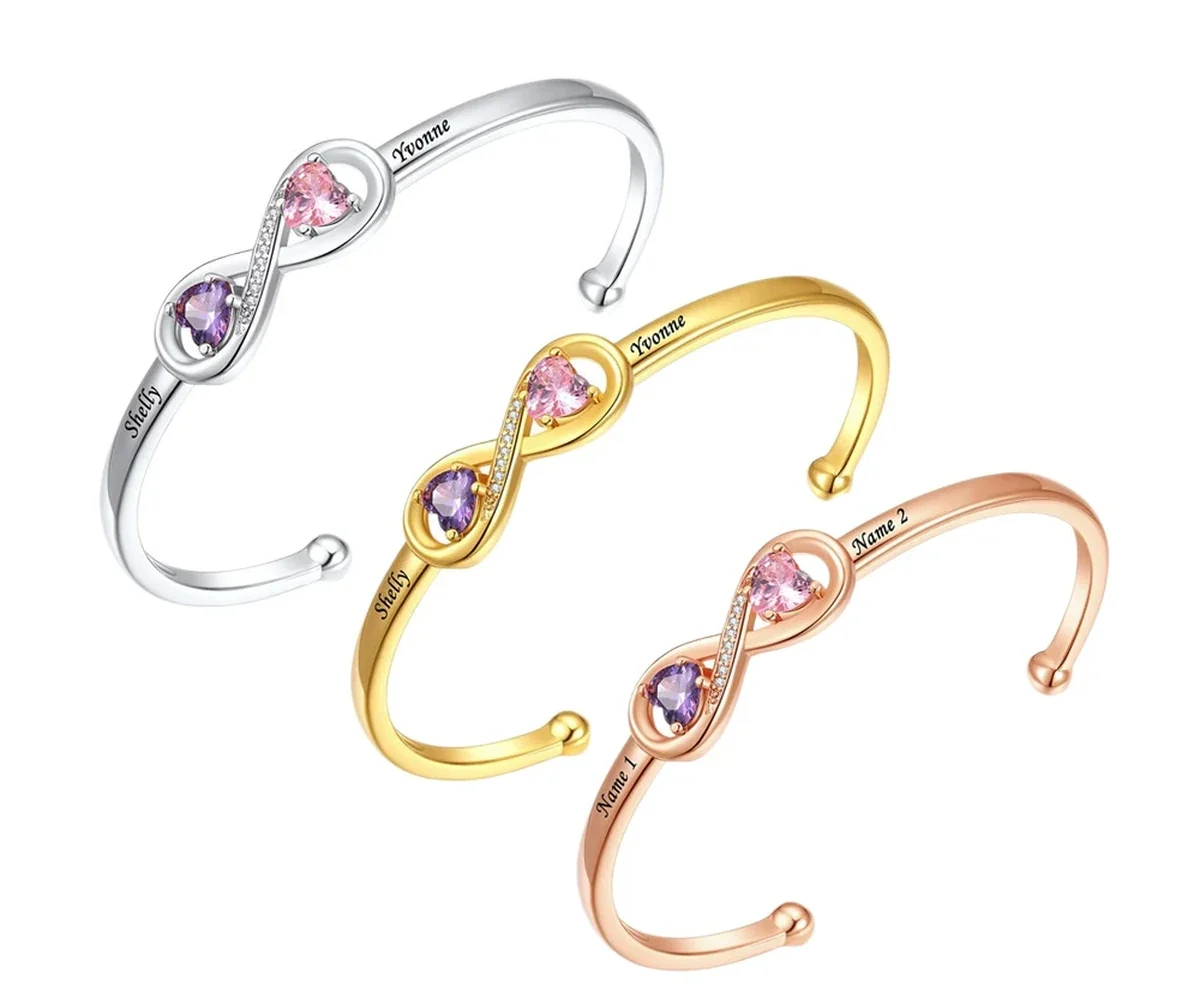
For birthstone jewelry privacy, a visible month-color accent may suggest a birth month to someone who recognizes the convention, but it does not by itself provide a full date or birth year. Engraved names, piece order, repeated colors, and the wearer’s public explanation can reveal more context. Ask consent before displaying another person’s name and month together.
Separate what the accent shows from what people infer
A colored accent is a small visual cue. Many viewers will see only a color. Someone familiar with birthstone traditions may infer a month, although recognized associations and alternatives can vary by place and era.
The inference is not a complete date. It does not state the day, year, age, location, or legal identity. However, other information can combine with it. A first name, a parent’s public post, and a birthday message can make the month easier to connect to one person.
Privacy decisions should therefore consider the whole display context rather than asking whether one color is anonymous on its own.
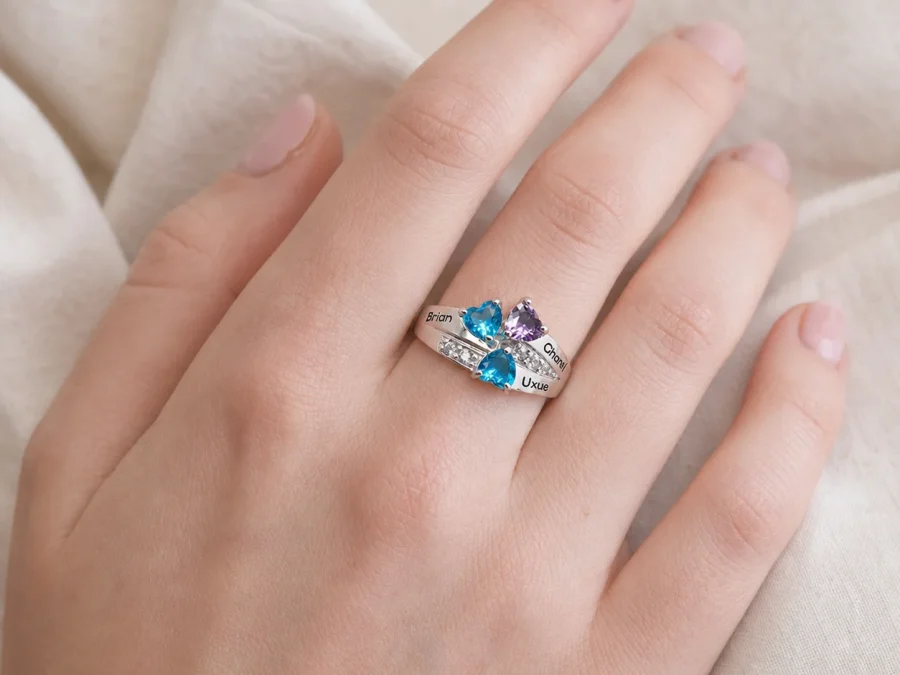
Create a simple audience map: household, friends, coworkers, school community, and public online viewers. The same two-name cuff may feel comfortable at home and too revealing in a public post. The wearer can choose different display habits by context.
Names usually communicate more directly than colors
An engraving can show a full first name, nickname, initials, or another approved display form. A distinctive name may identify someone within a local social circle even without a surname. Two names on one family piece can also suggest a relationship.
Ask the represented person or guardian which form is comfortable for visible use. Initials can reduce direct disclosure but may also be less personally meaningful. A nickname can protect a legal name while still being recognizable to friends.
Do not publish or explain the full mapping online simply because the jewelry is visible. The wearer can choose how much of the family key to share.
When several represented people have the same month, repetition may reveal a shared month but still not a full date. Avoid adding ages or birth years to a caption merely to explain why the colors match.
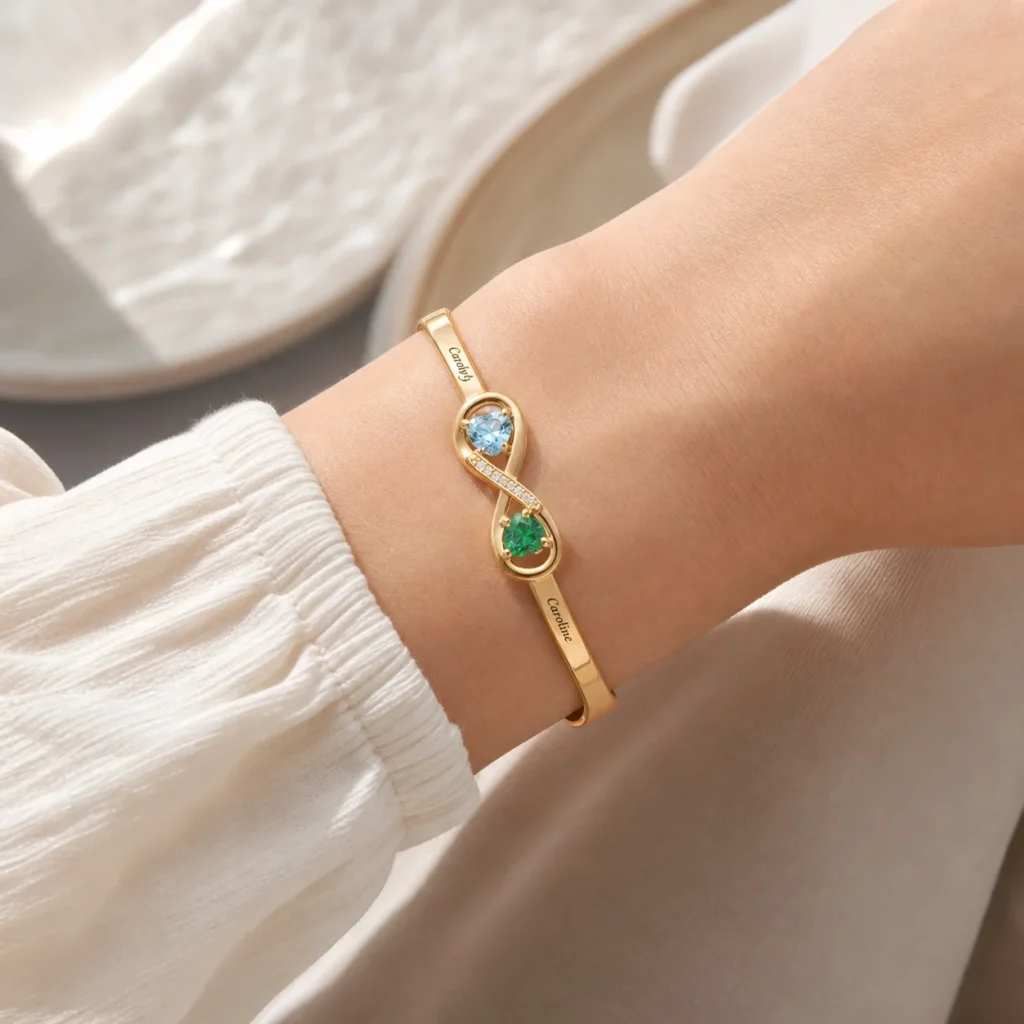
Review a fixed two-person cuff
The Open Heart Birthstone Cuff supports exactly two engraved names and two selected birth months with simulated birthstone accents. It offers three plated tone choices on an adjustable copper-base open cuff.
The two positions can make a relationship legible: viewers may see two names and two month cues at once. That can be the point of the gift, but both people should be comfortable with the visible combination.
Plan End A and End B with approved display names. Keep full birth dates and years only in the private verification sheet. Enter the product’s month labels without adding private date details in a general note.
Use a display-context checklist
Before ordering, ask:
- Who will wear the piece and in which settings?
- Are both represented people comfortable with visible names?
- Would initials or familiar display names be more appropriate?
- Does the wearer plan to explain the month mapping publicly?
- Will photographs be shared, and with whom?
- Does work or school make visible family information sensitive?
The Amorieva personalization process can guide accurate field entry, but consent and public context remain decisions for the people involved.
If the recipient wants family symbolism with less visible text, compare other structures in the current collection. No design removes every possible inference, so choose a level of disclosure the wearer understands.
Keep the private verification sheet separate from photos of the finished piece. The sheet contains full dates for accuracy; the visible design needs only approved names, selected months, and positions. Do not photograph both together for convenience.
Share images with the same care as the object
A close photograph can make engraving easier to read than it is at ordinary distance. Before posting, check the image at full size and consider cropping or choosing an angle that does not expose every name. Avoid attaching full birthdays in the caption.
Editorial family scenes and product examples are not a record of your order. Your personalized photographs create a new context because the entered names are real to your family. Decide whether the moment should remain private.
Amorieva’s family-story perspective values names as connection, but connection does not require public disclosure.
Common questions
Can someone know my full birthday from one birthstone accent?
The accent may suggest a month to someone who knows the convention, but it does not state day or year. Other public information could make a fuller inference easier.
Are initials private enough for every situation?
Initials reduce direct naming but can still be understood in context. Consider the wearer’s audience, public photos, workplace, and how the family explains the piece.
Should I ask a child before using the child’s name?
When age permits, include the child and guardian in the decision. Use a guardian-approved display form and avoid exposing private legal information merely because the field allows text.
Choose the information, not just the color
A month accent reveals little in isolation, but names and context can turn it into a readable family map. Decide what the wearer wants visible, obtain consent from represented people, and keep full date records private. Personalization works best when the family controls both the meaning of the piece and the audience that receives its explanation.