What Does a Personalization Capacity Limit Really Mean?
Understand personalization capacity as a product boundary, compare current Amorieva name and accent counts, and move larger stories to a fitting design.
Personalized jewelry capacity limits are design boundaries: the maximum number of names, accents, leaves, or pieces that the current product is configured to accept. They are not invitations to squeeze extra people into a note. Count the intended family story first, compare it with the live fields, and select another design when the count exceeds the supported structure.
Capacity describes more than available space
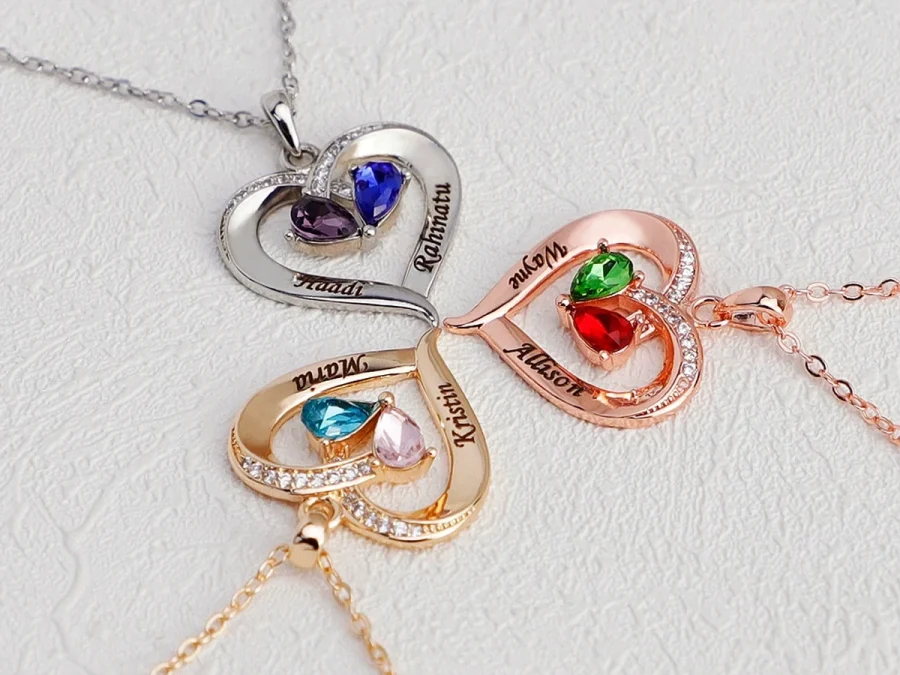
A limit can reflect the number of visible positions, required pairings, pendant configuration, or how the customization form organizes data. One product may pair every name with a month; another may accept names only; a third may provide one name on each physically separate piece.
That is why a generic text field cannot substitute for another personalization position. Adding “please include Jordan too” in a note does not create another engraved band, leaf, bead, stone, or heart segment.
Read capacity together with information type. “Up to eight” may mean eight name beads on one product and eight simulated birthstone accents with one short engraving on another. The counts are not interchangeable.
Capacity should also be read at the minimum. A fixed two-person product is not automatically suitable for one person with a blank second position. A two-piece puzzle set is not a one-piece necklace with an optional add-on. Minimum and maximum both describe the complete configured structure.
Compare the current Amorieva structures
Current verified capacities include:
- Twisted Heart: one to five names with selected months.
- Two-Tone Teardrop and Open Heart Cuff: exactly two names and two months.
- Family Embrace: one to six names with selected months.
- Gathered Hearts: one to eight name beads, with no month fields.
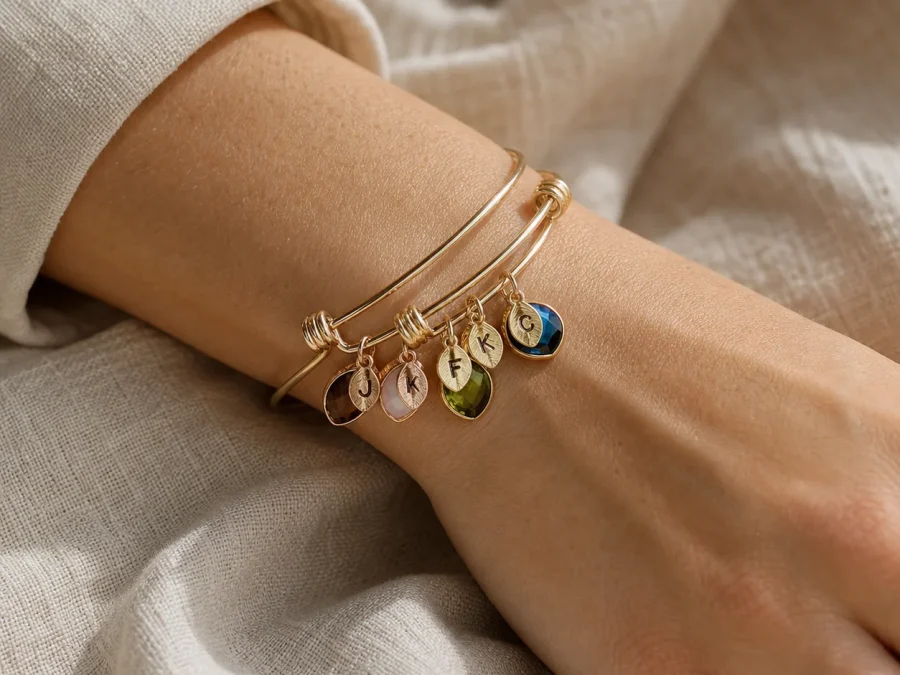
- Family Branch: one to five name leaves with selected months.
- Family Constellation Ring: one to eight simulated accents with a name or short engraving.
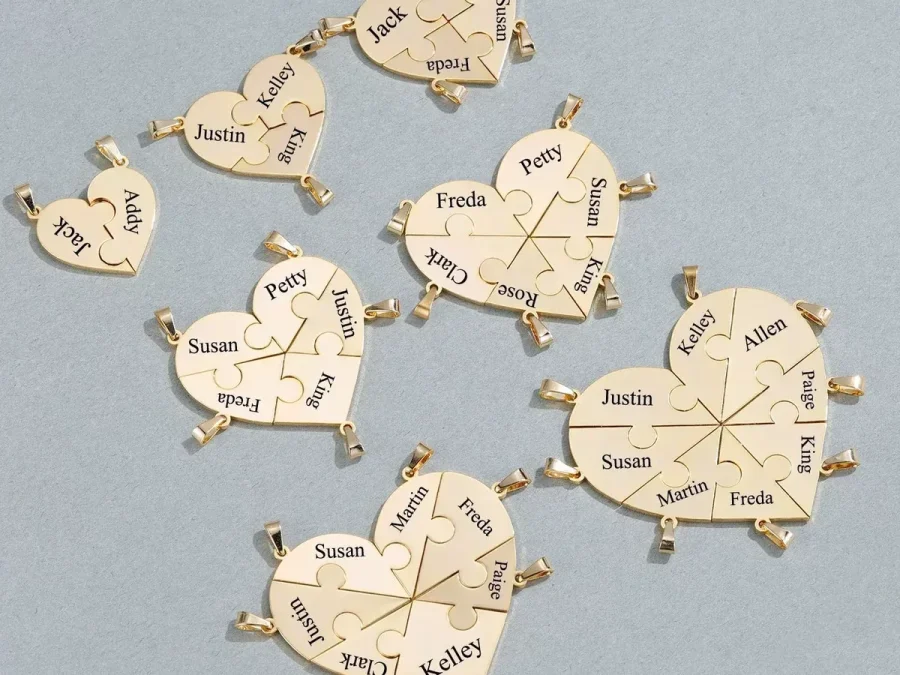
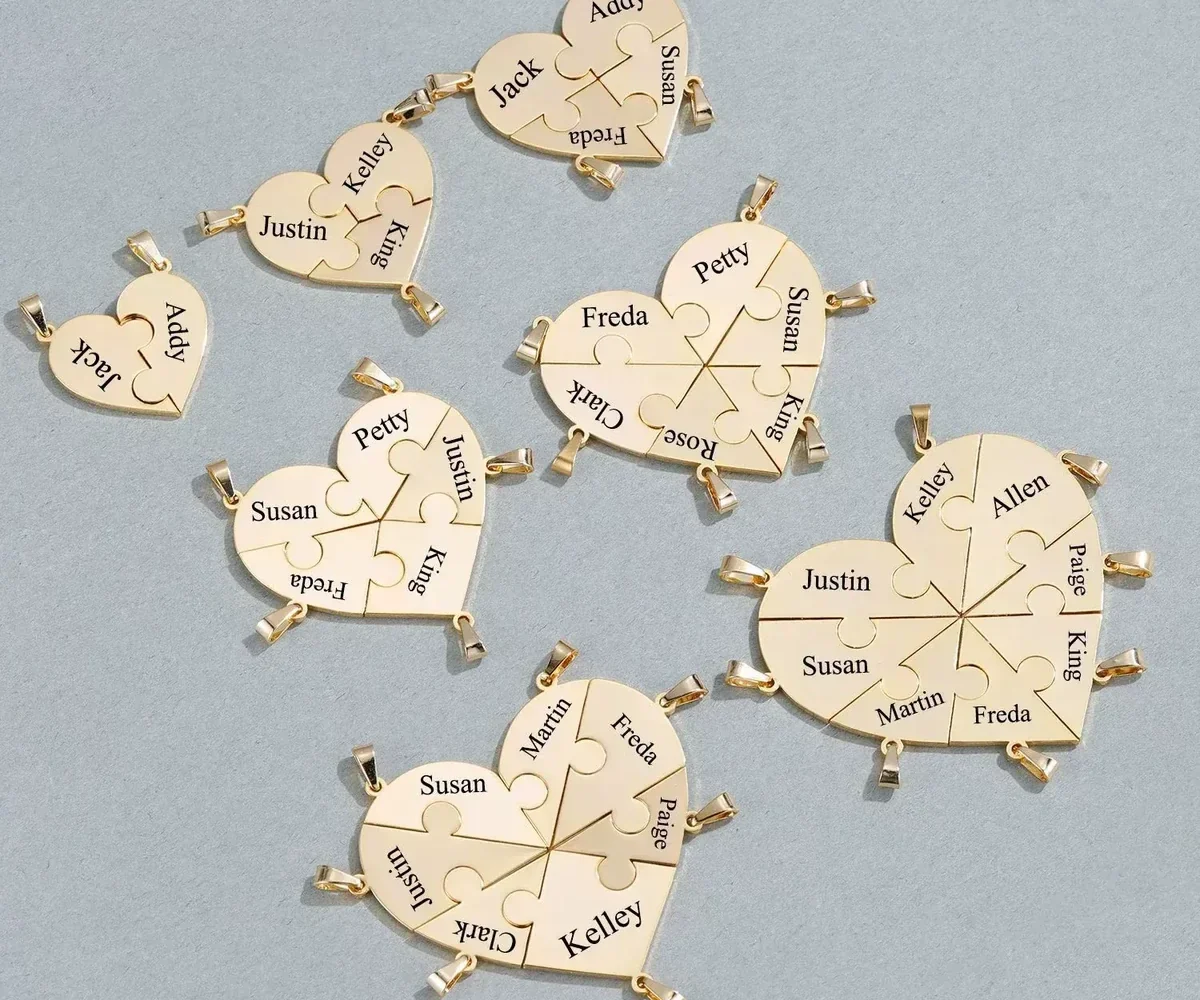
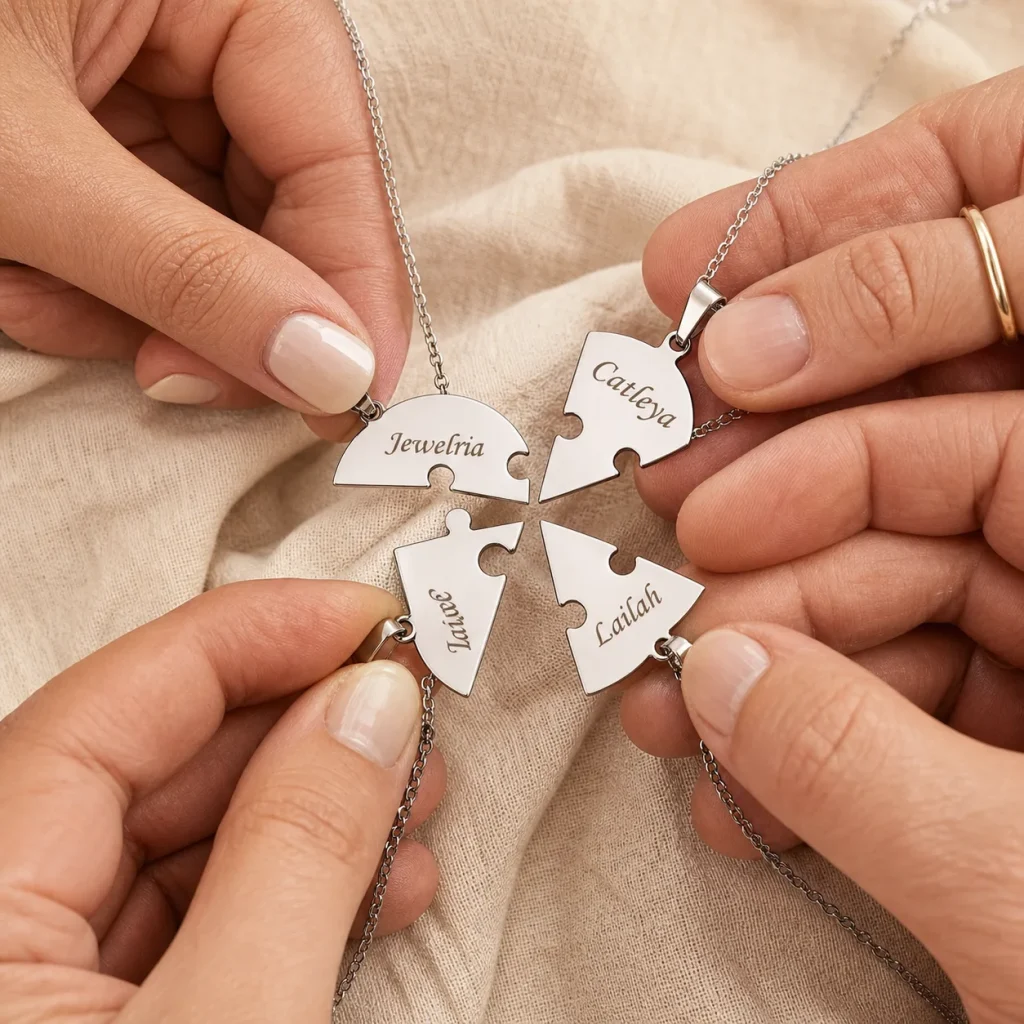
- Together Heart Puzzle: two or three pieces, one name per piece.
The current Amorieva collection is the place to verify live products and selectors before ordering. Retired or draft designs should not be treated as available capacity.
Make a matrix with products as rows and data types as columns: names, month accents, separate pieces, size, and wearer count. A blank cell means the product does not offer that information type; it is not a request to fill the gap through Special Note.
Use the puzzle necklace as a physical example
The Together Heart Puzzle Necklace has two- or three-piece layouts. Each interlocking heart piece carries one engraved name and is worn on its own chain. There is no birthstone field. A four-person group does not fit by placing two names on one segment or asking for a fourth segment in a note.
The correct response is to change the product decision, not compress the people. Choose another structure that supports four names, or redefine the group only when the represented people agree on a meaningful reason.
Capacity also affects ownership. Two or three puzzle pieces mean two or three individual wearers. A one-to-eight-name pendant can represent more people but remains one object for one wearer. Count alone does not answer who receives what.
Combined dimensions also change between the two- and three-piece puzzle layouts. That does not turn the larger configuration into a better gift. It simply reflects an additional physical segment for an additional wearer.
Resolve an over-capacity story responsibly
Use this sequence:
- Write the inclusion rule before naming a product.
- List every person required by that rule.
- Decide what each person needs: name, month, accent, or separate piece.
- Compare both count and field type with current products.
- Choose the design that supports the complete list.
- If no design fits, select another gift instead of hiding exclusions.
The family necklace name-count guide can help examine inclusion and readability. The personalization process can then guide accurate entry within the chosen limit.
Do not split a long name across two positions or combine two people into one line without explicit support. Technical text capacity and visual personalization capacity are different boundaries.
When an over-capacity decision is emotional, pause the product search and revisit the scope with the recipient. A different family branch, a second coordinated item, or a non-jewelry gift may be honest solutions. Quietly shrinking names or removing a person is not a neutral technical fix.
Common questions
Can a Special Note add one more name?
Do not assume it can. The note does not create another physical personalization position. Follow the live count and use the note only for its stated purpose.
Does an eight-stone ring show eight separate names?
The Family Constellation ring supports one to eight simulated birthstone accents with a name or short engraving. It is not the same information structure as eight individual name beads.
Should I omit someone to fit the product?
Only when the inclusion rule itself supports that scope and the represented people would understand it. Otherwise, choose a larger-capacity or different-format gift rather than making an unexplained exclusion.
Let the family story choose the capacity
A capacity limit protects the logic of a design. Count the people, identify the information each needs, and respect the current field structure. When the story is larger, move it to a product designed for that size rather than treating a note as hidden space. Accurate scope is part of thoughtful personalization, not an obstacle to it.