Does a Time Zone Change Which Birthstone Month You Use?
Choose a birthstone month across time zones by using the confirmed calendar date the represented person or family recognizes and documenting the choice.
A time zone can change the calendar date used to describe the same moment, but it does not automatically create a new birthstone rule. For conventional birthstone jewelry, use the confirmed calendar date—and therefore the month—that the represented person or family recognizes. When a birth occurred near midnight or records use different zones, agree on that reference before selecting a permanent month label.
Why one birth moment can produce two dates
Calendar dates belong to locations and time zones. A birth recorded shortly after midnight in one place may correspond to the previous date somewhere else. Families can also encounter different dates when a hospital record, later certificate, family announcement, or converted digital timestamp uses a different zone.
The astronomical moment has not changed; only the calendar description has. Birthstone charts are organized by named months. GIA’s overview of birthstones by month, for example, presents the tradition as a January-through-December system. It does not establish which jurisdiction’s date a family must use for a cross-time-zone personalization decision.
That distinction matters because there is no need to calculate a universal “true” month for a gift. The practical question is which date the person celebrates, records, or recognizes as their birthday.
Choose one reference and make it explicit
Use this sequence when the dates disagree:
- Ask the represented adult which birthday date they use.
- For a child, confirm the date with the parent or guardian who manages the family record.
- Compare the date normally celebrated with the document or source being used for the gift.
- Write the chosen month beside the person’s exact name before opening the product page.
If everyone already recognizes one date, use that month unless the represented person asks for something else. If the family intentionally observes two dates, discuss which meaning the jewelry should carry. A gift can follow a family convention without claiming that convention is legally or culturally universal.
Do not silently convert a date because the buyer lives in another zone. The recipient’s location at the time of the gift does not rewrite the calendar date they have long used for their birthday.
Keep birthstone months separate from zodiac boundaries
A birthstone month is a calendar-month label. Zodiac signs use date ranges and belong to a different tradition. A question about whether someone born near midnight was in one zone or another should not be answered by switching to a zodiac sign, and a zodiac boundary does not decide which January-through-December selector to choose.
This separation keeps the order auditable. Record “March” because the recognized birthday is March 1, for example, rather than recording a sign and expecting the product to translate it. The existing family birthstones by month guide can help identify the month system, but the buyer must still supply the correct personal date.
Apply the decision to the ring fields
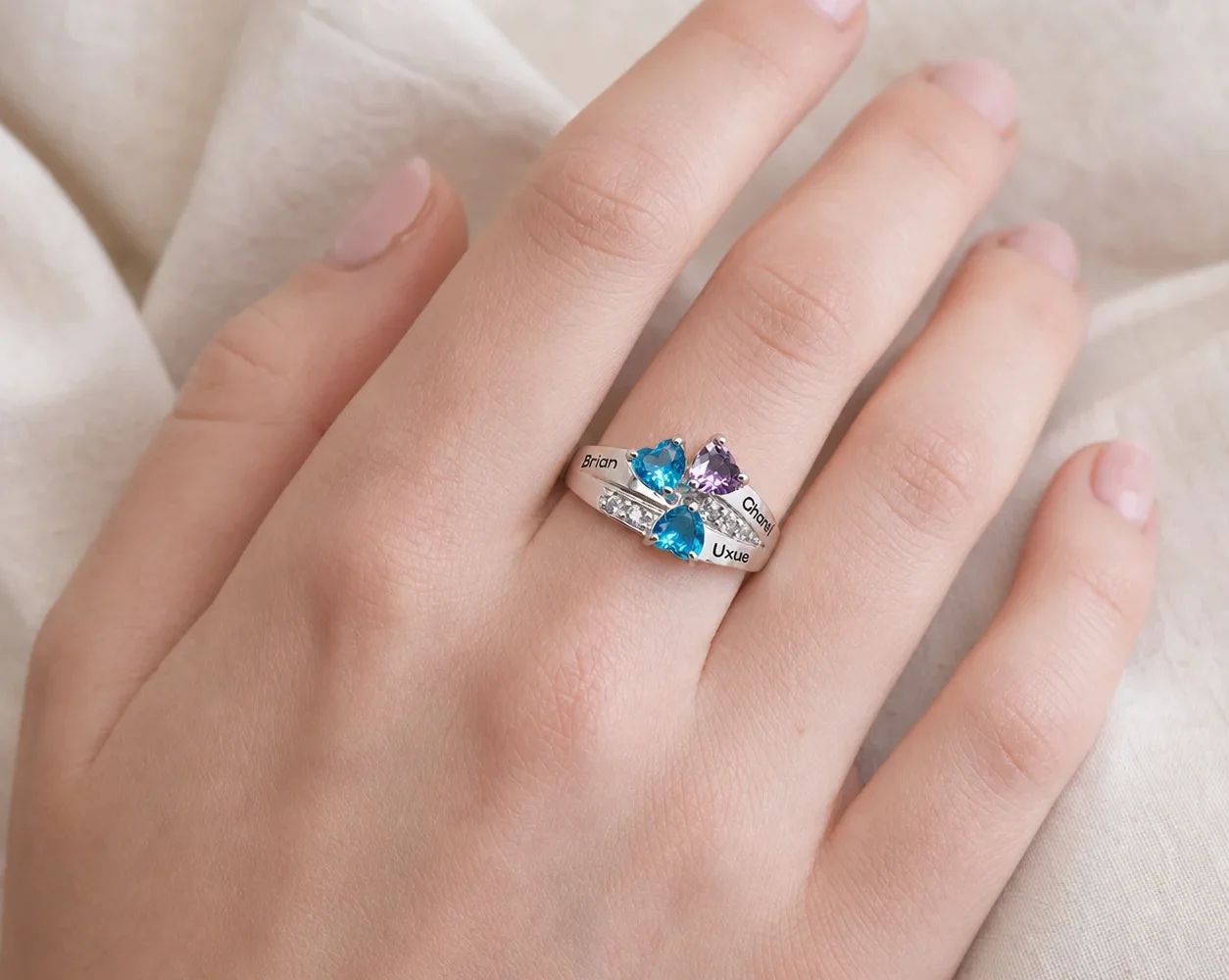
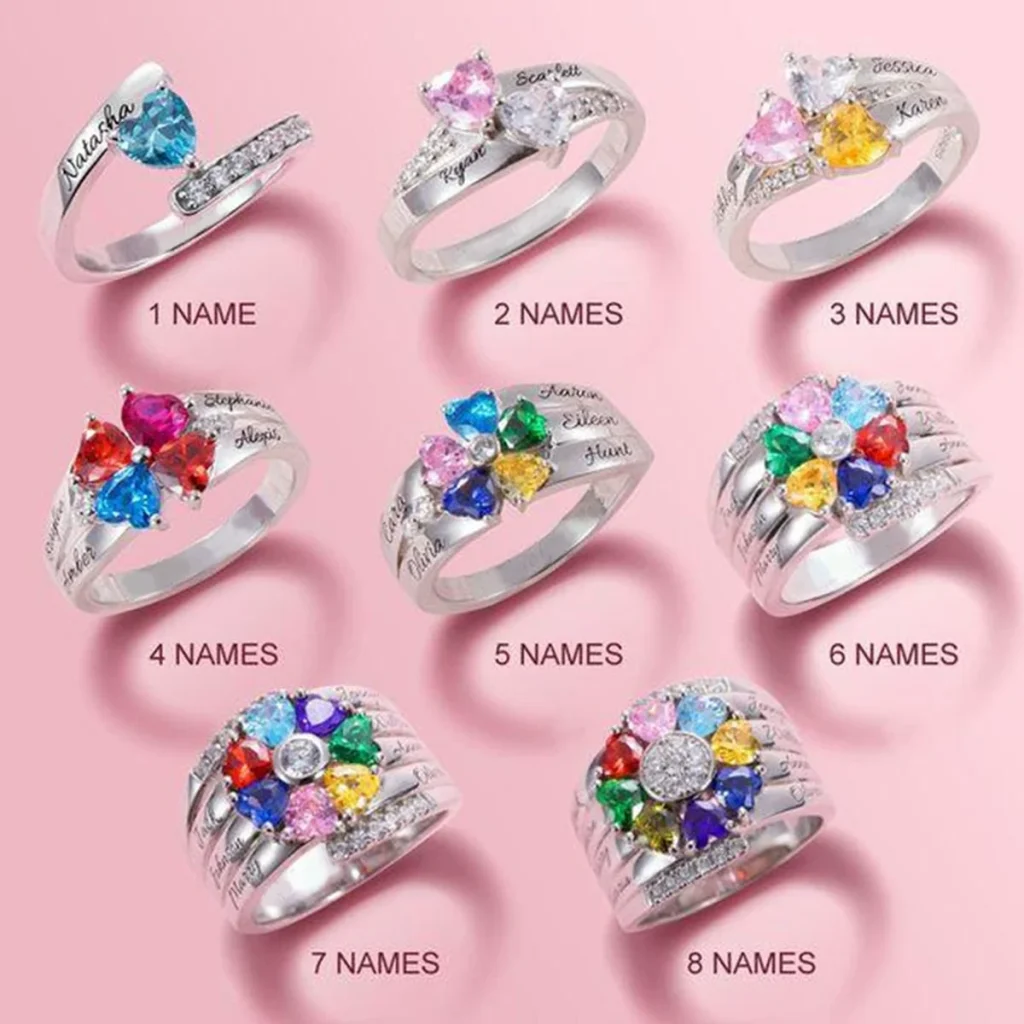
The Family Constellation Name Ring supports US sizes 6 through 10, one to eight simulated birthstone accents, and name or short engraving. Its current choices use birth months for the colored accents. The ring does not currently offer a three-tone finish selector, so time-zone uncertainty should not be mixed with an option the product does not have.
Make a two-column list: approved name on the left, confirmed month on the right. Keep the rows in the intended order. If the ring represents several people, resolve every time-zone question separately; one person’s record does not determine another’s.
Use the current ordering steps to review the live fields. Save the decision source in your private order notes, such as “birthday celebrated as March 1 in birthplace time.” That explanation is for your accuracy and does not need to become engraving.
Know when to pause instead of guessing
Pause when the represented person and official or family records disagree, when an old announcement converted the timestamp without explaining the zone, or when the gift giver is unsure which date is celebrated. A surprise does not justify choosing a month at random. Ask a trusted person who knows the established birthday practice, or wait until the recipient can decide.
Also avoid presenting a jewelry decision as legal advice. Government records, citizenship matters, astrology, and family celebrations can use dates for different purposes. The jewelry only needs one honest, documented month selection.
Common questions
Should I use the birthplace time zone?
Often the recognized birth record and celebrated birthday already follow the birthplace date, but do not assume that is universal. Use the confirmed date the represented person or family recognizes.
What if one zone says January 31 and another says February 1?
Ask which date is actually used for the birthday, then choose January or February consistently from that answer. Do not combine two month accents unless the person intentionally wants both and the design meaning is clearly agreed.
Does daylight saving time change the birthstone?
Not by itself. It may affect how a historical timestamp converts, but the personalization decision still follows the confirmed calendar date and month the person recognizes.
Use one recognized date, not an invisible calculation
A time-zone conversion can explain why records differ, but it should not overrule the person whose birthday is being represented. Confirm the date, write the corresponding month beside the name, and review the pair before ordering. If uncertainty remains, consult the Amorieva FAQ for product-field questions and resolve the date with the family before making the personalization permanent.