Can Sapphire Be Colors Other Than Blue? A Birthstone Guide
Natural sapphire occurs in many colors, although September charts usually use blue. Learn why a simulated month cue is a different kind of choice.

Yes. Natural sapphire can be blue, pink, yellow, green, orange, violet, colorless, and other colors. Blue is the best-known sapphire color and the representative cue most September birthstone charts use, but it is not sapphire’s only natural appearance. In a personalized jewelry selector, the September accent represents the month; it does not attempt to display or identify every color of natural sapphire.
Sapphire is a mineral identity, not a blue-only label
The GIA September birthstone reference describes sapphire as a variety of the mineral corundum. Red corundum is called ruby. Corundum in other colors is generally described as sapphire, often with a color name such as pink sapphire or yellow sapphire.
This naming rule explains why a pink sapphire is still sapphire rather than a different mineral. The word identifies the gem variety within corundum, while the color adds a visual description. Blue may be culturally dominant, but it does not define the entire material.
That distinction also prevents a common mistake: a blue stone is not automatically sapphire. Many natural and manufactured materials can look blue. Color is one observation, not sufficient identification or proof of origin.
Trace elements and structure create a broad palette
Pure corundum is colorless. Small amounts of other elements incorporated into its crystal structure can produce different colors. Iron and titanium are associated with familiar blue sapphire, while chromium contributes to pink and red appearances. The full science is more detailed than a month guide needs, but the principle is useful: the same mineral family can display different colors.
Natural sapphire can also show uneven color distribution, directional color, or a different appearance under changing light. Cutting, lighting, and photography affect what reaches the viewer. A single photograph therefore cannot represent the entire sapphire category.
Gem treatment may also affect the appearance of natural sapphire offered in the market. Those disclosure questions matter when buying an identified natural gem. They should not be attached to a simulated September accent unless its own specifications provide that information.
Why September charts still use blue
A birthstone chart needs a compact, recognizable convention. Blue sapphire has a long association with September, so a blue cue gives the month a stable visual shorthand. A chart does not claim that every sapphire is blue or that every September-born person must prefer blue.
A month selector has the same practical requirement. It must help a shopper choose September consistently across names and positions. Offering every natural sapphire color under one month would not identify the person more accurately and could make the order harder to verify.
Use the family birthstones by month guide to map the confirmed calendar month. Keep a recipient’s preference for pink, yellow, or green sapphire in a separate style note unless the current product form explicitly offers color choice independent of month.
Map September accurately on Family Constellation
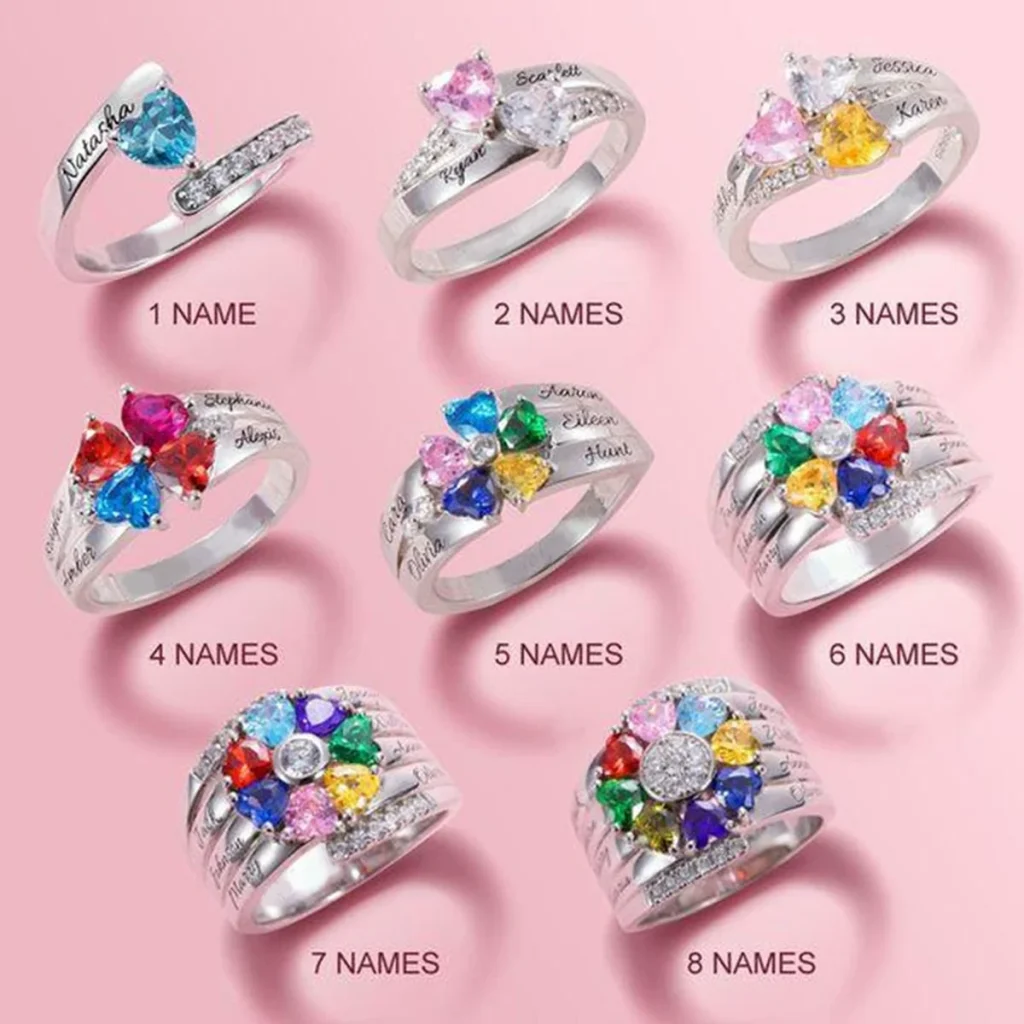
The Family Constellation Name Ring currently offers US sizes 6 through 10, name engraving, and one to eight simulated birthstone accents. The product uses month-based accent choices; it does not offer a menu of natural sapphire colors or publish natural-gem identification.
For every represented person, write one row with the approved name and confirmed month. Choose September for a September birthday even if another preview resembles the person’s favorite sapphire color. Do not change months to coordinate a palette.
Review ring size independently from the birthstone map. Also avoid assuming an exact final stone arrangement from a guide image. The current form establishes the supported count and month choices; unclear product fields can be checked through the Amorieva FAQ. If a shopper requires an identified natural sapphire, compare documented specifications across the current collection rather than inferring material from blue color.
Use a sapphire-versus-selector fact check
- Natural sapphire is corundum and can occur in many colors.
- Red corundum is conventionally called ruby.
- Blue is a common September symbol, not sapphire’s only color.
- A simulated September accent is a calendar cue, not natural sapphire proof.
- Name, month, position, and ring size should each be reviewed separately.
This fact check allows a gift note to be interesting without becoming inaccurate. It is safe to explain that sapphire has a wide natural palette and that the chosen accent represents September. It is not safe to call the accent a blue sapphire without supporting product documentation.
Common questions
Is pink sapphire really sapphire?
Yes. Pink sapphire is corundum whose color falls in the pink range. The boundary between deeply pink sapphire and ruby can involve trade and laboratory terminology, so color alone is not a do-it-yourself identification method.
Why is September represented by blue?
Blue sapphire is the most familiar September tradition and works as a recognizable chart convention. The cue organizes the month; it does not limit natural sapphire to blue.
Does a blue September accent contain sapphire?
Not by appearance or month alone. The current Family Constellation Ring uses simulated birthstone accents, so its September choice should be described with that documented language.
Keep the wider palette and the fixed cue in context
Sapphire’s many colors are a genuine gemological fact, while a blue September cue is a practical symbolic convention. Both statements can be true at once. Use the natural-gem information for education and the product’s month label for ordering, without turning one blue accent into unsupported material identification.