Why June, August, and December Have Multiple Birthstones
Learn why June, August, and December have several recognized birthstone names, and how a month-labeled jewelry selector keeps personalization clear.
Months with multiple birthstones reflect changing jewelry traditions rather than an error in the chart. June, August, and December each have several recognized gemstone names in modern references. Lists developed across places, eras, and organizations, so one month can preserve older associations while also including later alternatives. A personalized jewelry form can still stay simple by asking for the confirmed calendar month.
Why one universal list never settled every month
Birthstone traditions were shaped over long periods, and different communities did not always use the same available stones or naming conventions. Later trade and jewelry organizations helped standardize lists, but revisions and alternatives remained. That history is why reputable sources can show more than one answer without contradicting the month itself.
Multiple entries also give readers choices across appearance and availability. They should be understood as recognized traditions, not as scientific rules about personality, health, luck, or what a person must wear.
A modern chart can therefore do two things at once: preserve a long-standing association and acknowledge a later alternative. The date on which a list was organized, the institution presenting it, and the audience it serves all help explain differences. A variation is a reason to check the source, not to accuse one month chart of being false.
June includes pearl, moonstone, and alexandrite
The GIA June birthstone reference discusses pearl, moonstone, and alexandrite. These are distinct gem materials with different appearances and gemological characteristics. Seeing all three on a June list does not mean a single jewelry accent contains or imitates all three.
For personalized family jewelry, “June” usually functions as the month selection. The product’s material description then explains what kind of simulated or crystal-style accent is used to represent that month.
August and December also preserve alternatives
The GIA August reference includes peridot, spinel, and sardonyx. The GIA December reference discusses turquoise, tanzanite, and zircon. These examples show why a search for “the” stone can produce several legitimate names.
Do not resolve the difference by selecting a neighboring month whose preview color looks closer to a preferred gem. The person’s calendar month remains the stable fact. Historical alternatives belong in educational context; the live product selector defines the offered representation.
For example, a family list may contain June, August, and December together. The buyer does not need nine gemstone decisions. The order record still contains three month choices attached to three names. The multiple traditions can enrich the story in a card without complicating the form.
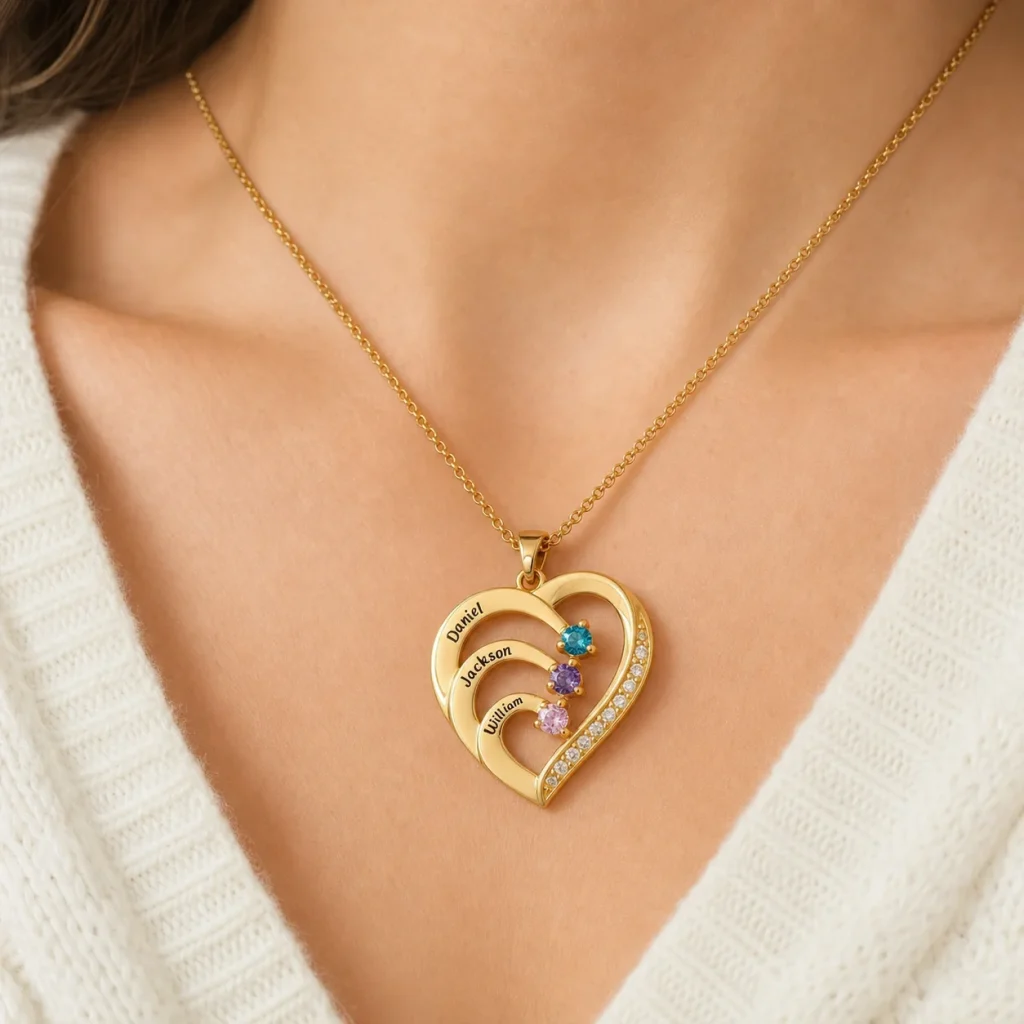
How a month-labeled Amorieva form handles the issue
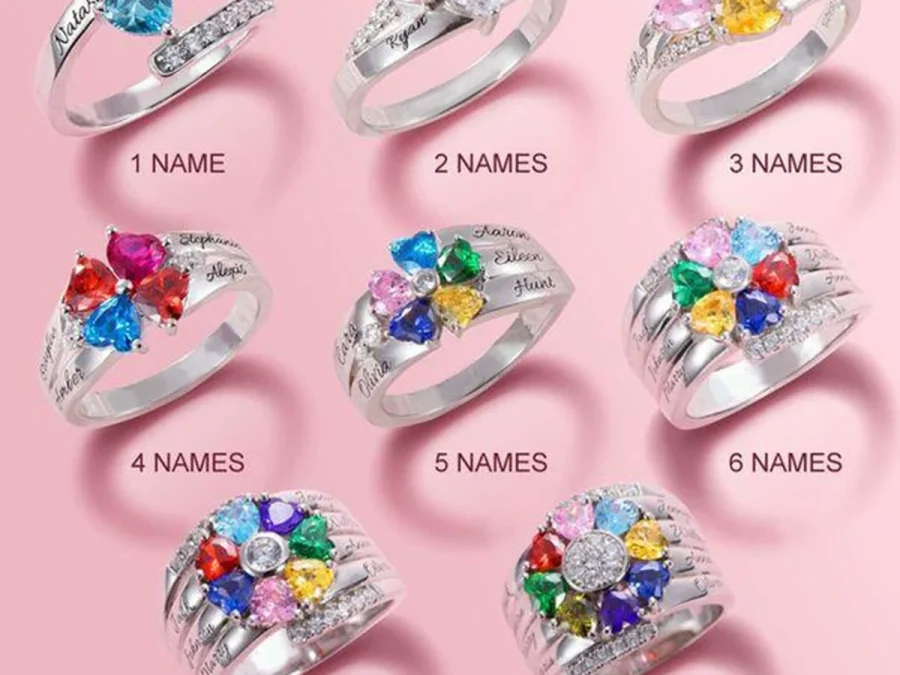
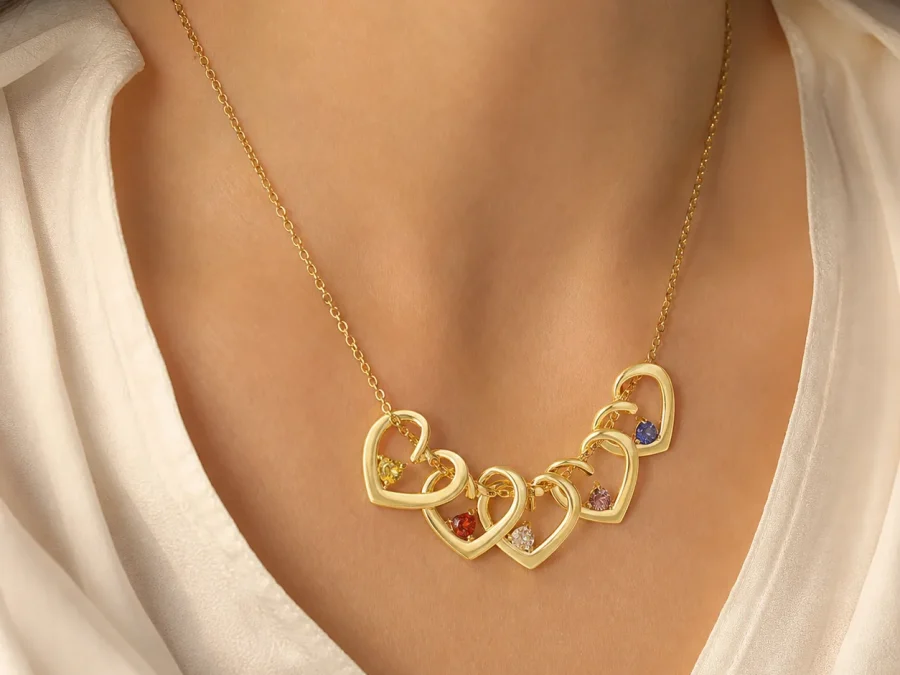
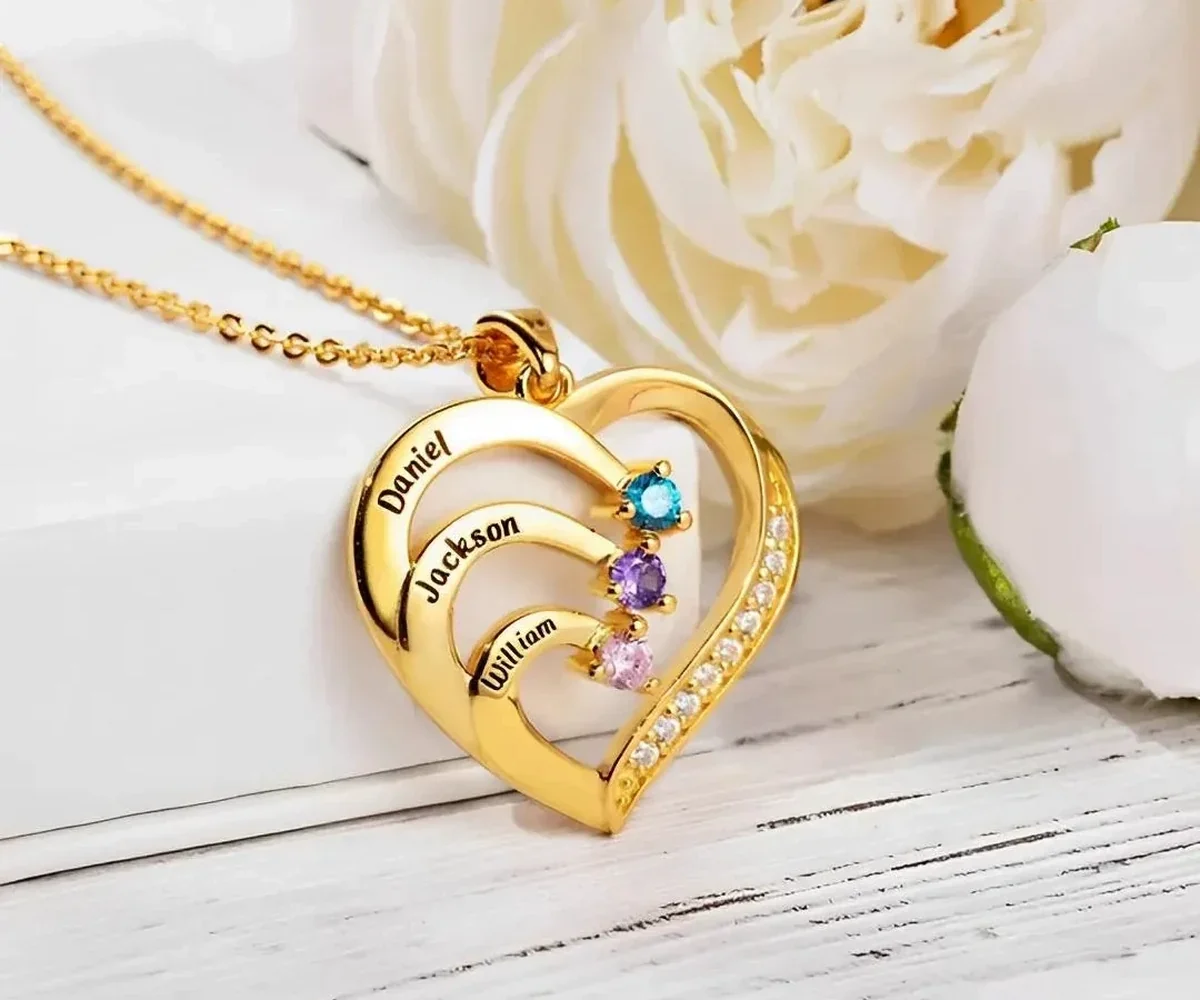
The Family Embrace Heart Necklace currently supports one to six loved ones. Each engraved name is paired with a January-to-December simulated birthstone selection. The plated mixed-metal design offers three finish tones.
If one person was born in June, select June. You do not need to decide among pearl, moonstone, and alexandrite in the form. The simulated accent is the product’s month cue, not a claim that one of those named materials is present.
Repeat the process row by row and keep names, months, and positions together. Amorieva’s personalization process can help prepare that record before entry.
Use two separate notes when material matters
Create a “tradition” note and a “product” note. The tradition note can record recognized stone names from a gemological source. The product note should quote the current listing’s exact accent terminology. Never copy the first note into the second simply because the month is the same.
If a recipient wants a specifically identified gem material rather than a month-colored accent, pause and verify the actual product specifications. The Amorieva materials FAQ is the correct place to clarify current wording. The broader family birthstone guide remains educational context.
Use precise gift language as well. Say “a simulated birthstone representing June” rather than choosing pearl, moonstone, or alexandrite for the recipient unless the product actually identifies that material. Repeat the same discipline for August and December. This keeps a culturally rich explanation from becoming a statement about what the jewelry contains.
When relatives ask why their chart differs, show the source pages and explain the distinction between a traditional list and a product selector. Avoid settling the discussion by color matching, because alternative stones can have broader appearances than a single representative swatch.
Common questions
Does having several birthstones change a person’s birth month?
No. The calendar month stays the same. Multiple gemstone names reflect different recognized traditions and alternatives associated with that month.
Which June birthstone should I choose on an Amorieva form?
Choose June when the field is labeled by month. The product supplies its own simulated June accent, so the buyer is not selecting pearl, moonstone, or alexandrite separately.
Can I select by the preview color instead?
Use the written month label. Photography, display settings, and small accent scale can change perceived color, and an alternate gem reference does not alter the correct month field.
Let tradition remain broad and ordering remain exact
June, August, and December can carry several established birthstone names because traditions evolved rather than arriving as one permanent universal chart. Personalized ordering solves the practical question differently: confirm the person, choose the calendar month, and read the product material description on its own terms.