Lunar-Calendar Birthday and Birthstone Month: What Should You Use?
Choose a birthstone month respectfully when a family observes a lunar or non-Gregorian birthday by confirming the recipient's own calendar convention.
There is no universal rule that converts every lunar-calendar or non-Gregorian birthday into one birthstone month. Birthstone selectors usually use the January-through-December Gregorian month labels shown on the product form. The respectful approach is to ask which date convention the recipient recognizes, record one agreed month for the order, and avoid silently changing it from year to year.
Separate three questions that are often mixed together
A family may keep an original lunar-calendar birth date, celebrate on a converted Gregorian date, and also have a civil record with a fixed Gregorian birthday. Those are related pieces of the same person’s story, but they are not automatically interchangeable.
The GIA birthstone overview organizes common birthstone traditions under January through December. It does not establish a universal conversion rule for every calendar system. A jewelry form that asks for “birth month” likewise needs one of its listed month labels; it cannot infer which family convention should control.
First ask which calendar date the person identifies as their birthday. Second decide whether the gift should follow that personal convention or the fixed civil date. Third translate that decision into one available selector label. Keeping the questions in this order prevents a software conversion from making a cultural choice for the recipient.
Do not let an annual celebration date move the symbol
A lunar observance may fall in different Gregorian dates from one year to another. If a shopper simply uses the Gregorian month of this year’s celebration, the jewelry’s month symbol could change depending on the year ordered. A made-to-order piece is static, so the family should choose a stable rule before entering the form.
Possible rules include using the Gregorian month recorded at birth, using the Gregorian equivalent of the original non-Gregorian birth date, or using another month the recipient consistently recognizes. None should be imposed as universally correct. The important point is that the represented person understands and approves the convention.
For a surprise, ask a trusted relative a neutral question: “Which month does this person use when a form asks for a birth month?” That is clearer than asking someone to perform a fresh conversion. If nobody can confirm the answer, pause rather than guess.
Create a calendar note before a jewelry map
Use a small private record with four columns: approved name, observed calendar tradition, chosen January-through-December label, and who confirmed it. Do not place a full birth date in a public gift note when only the month is needed.
For a hypothetical example, imagine that a family observes a birthday by a lunar date while official records show a March Gregorian date. If the recipient consistently answers “March” on month-based forms, record March. If the recipient uses a different converted month and has explicitly chosen it for symbolic gifts, record that instead. The example does not create a rule; it shows why confirmation matters.
Once the month is settled, stop recalculating. Map the approved name and chosen month to one position, then review the complete family list. The family birthstones by month guide can help with that final January-through-December organization, but it should not override the person’s calendar choice.
Apply the decision to a fixed product form
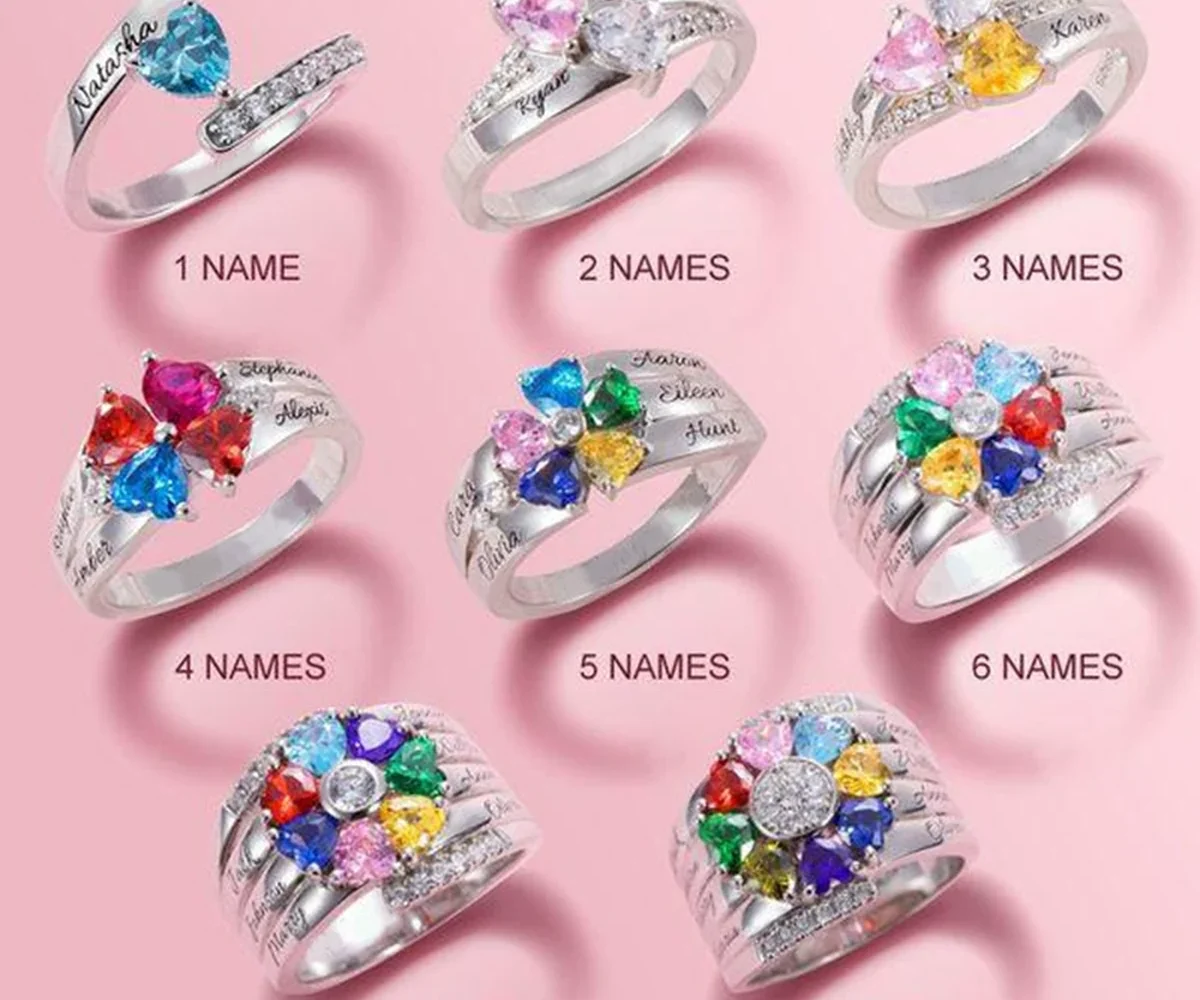
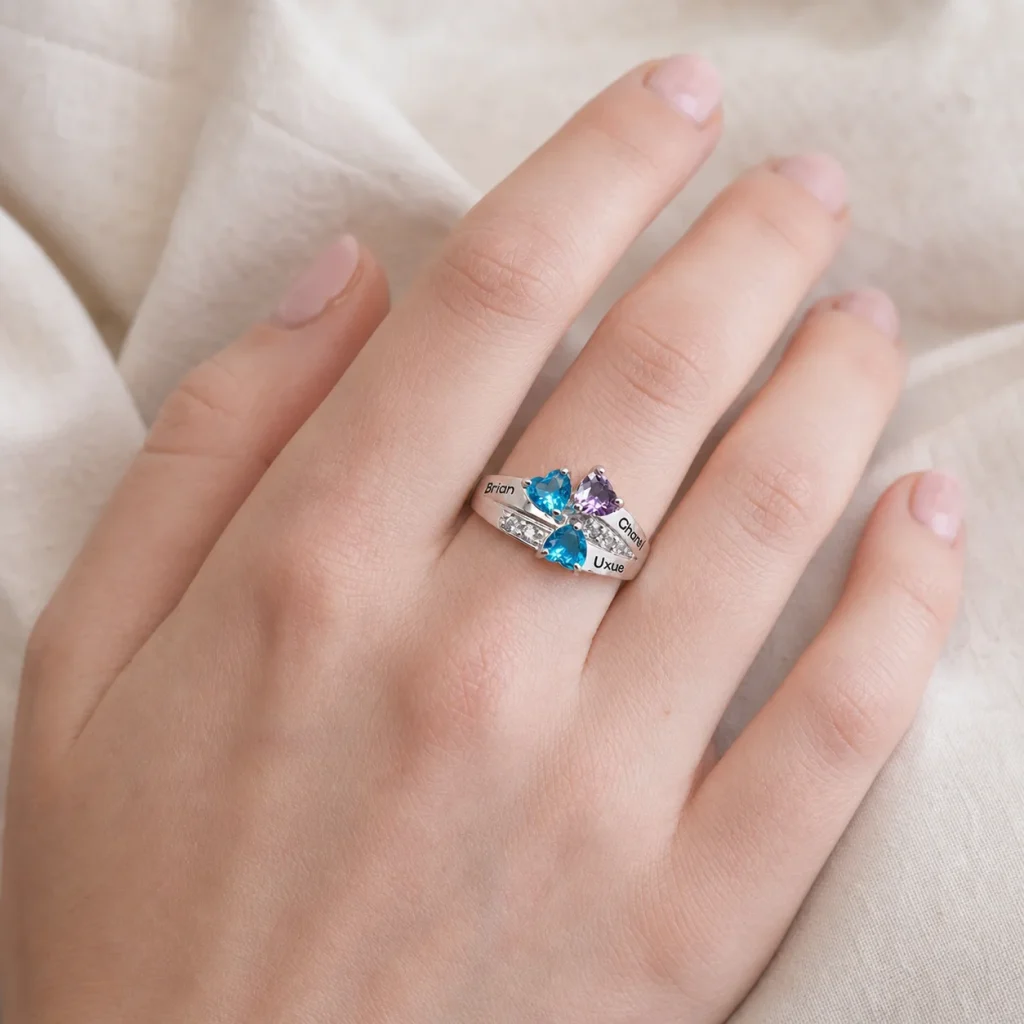
The Family Constellation Name Ring currently offers US sizes 6 through 10, name engraving, and one to eight simulated birthstone accents. Its birthstone inputs use month choices. The ring does not perform calendar conversion, and its simulated accents should not be described as natural versions of gems listed in educational references.
Confirm ring size separately from the month decision. Then create one row for every represented person and make sure the number of names, month choices, and intended positions agree. Do not place an alternate calendar date in a note and expect it to replace a required month field.
The personalization process explains why completed details matter before a made-to-order item is prepared. For an unresolved calendar or field question, use the current FAQ and identify the exact product rather than assuming an exception.
Use a respectful confirmation checklist
- Ask which birthday convention the represented person recognizes.
- Choose one stable January-through-December label for this piece.
- Record who confirmed the choice without collecting unnecessary private data.
- Match the month to the approved display name.
- Review ring size, name count, and accent count independently.
- Do not claim that one conversion method is culturally universal.
Common questions
Does a lunar birthday have its own universal birthstone?
No universal rule covers every lunar or non-Gregorian tradition. Common product selectors use January-through-December labels, so the recipient or family should choose the convention they recognize.
Should I use the month of this year’s birthday celebration?
Not automatically. That Gregorian month may move from year to year. Agree on a stable reference before ordering a permanent personalized piece.
What if the gift must remain a surprise?
Ask a trusted person which month the recipient normally gives on a standard form. If the answer remains uncertain, do not guess a culturally meaningful detail simply to complete the order.
Make the convention explicit, not universal
A lunar-calendar birthday adds a decision that a month selector cannot make on its own. Respect comes from confirming the recipient’s convention, documenting one stable label, and using it consistently across the name-and-month map. The result does not declare one calendar superior; it records the family story the wearer actually recognizes.