How to Inspect a Personalized Jewelry Order When It Arrives
Inspect personalized jewelry on arrival by preserving the unboxing condition, checking every field against the order record, and documenting concerns.
To inspect personalized jewelry on arrival, open it on a clean, stable surface and compare it with the saved order record before wearing or cleaning anything. Check the product, quantity, piece count, engraving, month choices where applicable, tone, style, size, and visible condition. Photograph any discrepancy in context and close detail, then use the current support route for review.
Prepare the inspection area
Use a dry table with bright indirect light and a plain, contrasting cloth. Keep food, drinks, cosmetics, and household cleaners away. Wash and dry your hands, and place every item that arrived within view so a small component is not lost during unpacking.
Before removing tags or rearranging pieces, take one overview photograph. Preserve shipping materials until the check is complete, particularly if the outer parcel shows visible impact or moisture. Do not bend, polish, or assemble a part that looks unusual.
Give the inspection a clear start and finish. Note when the parcel was opened, who handled it, and whether anything was worn or moved before the photographs. This short timeline becomes useful only if a discrepancy exists; if the order is correct, it still confirms that the check was completed before distribution.
Have the order confirmation or final summary open beside you. A product card or sample photograph does not replace the specific submitted record.
Verify product and component count first
Read the product title and selected format. Confirm cart quantity separately from the number of personalized components inside one product. A common review mistake is to see two parts and assume the quantity is two.
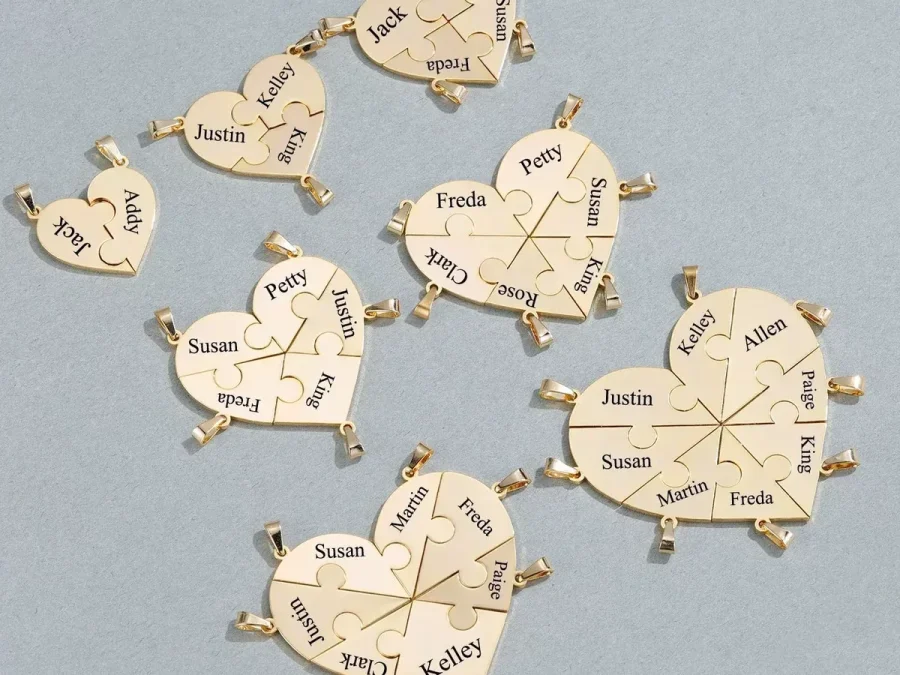
The Together Heart Puzzle Necklace, for example, can contain two or three separately worn engraved heart pieces within one configured set. Each piece has one name, and there is no birthstone field. Count the segments and chains, then match them to the chosen two- or three-piece layout.
For another product, apply its own structure rather than using this example as a universal checklist. Current Amorieva pieces vary in names, months, sizes, tones, formats, and accent choices.
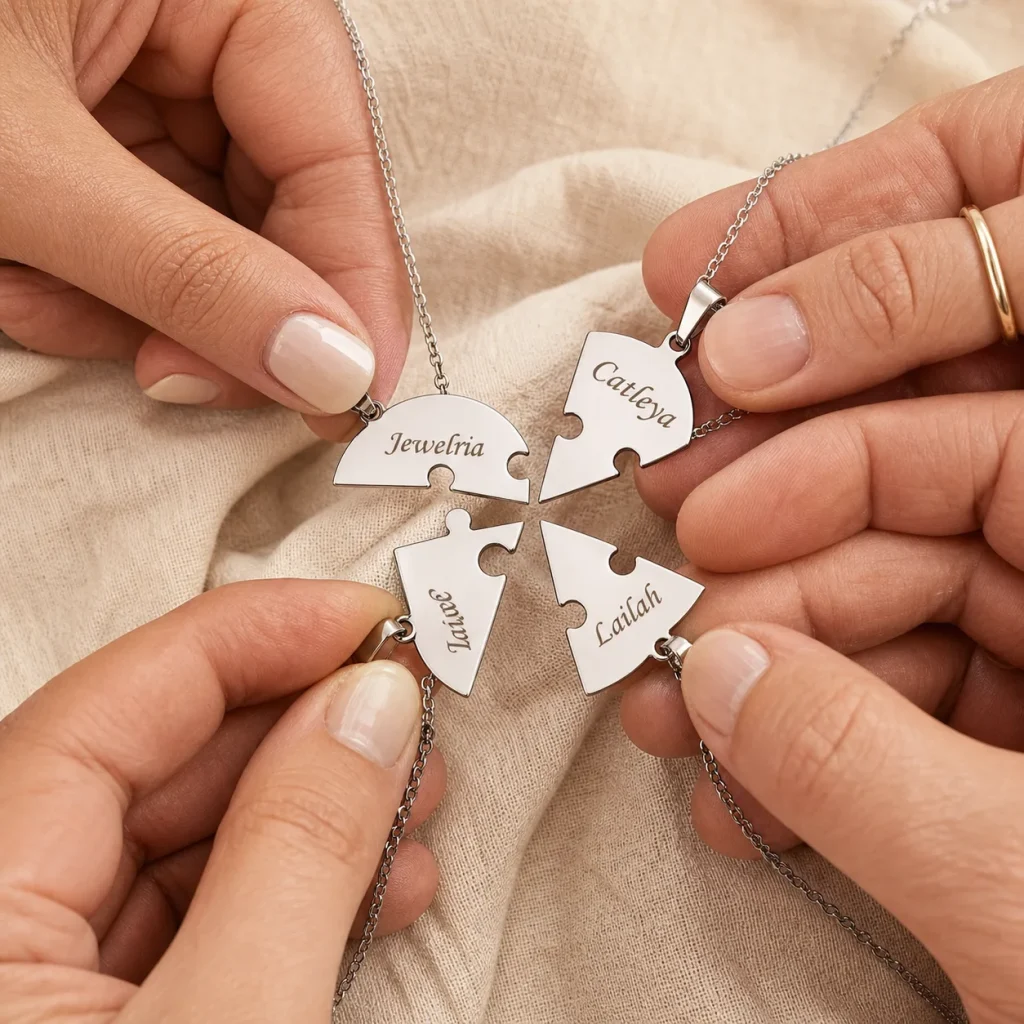
Compare every personalized field
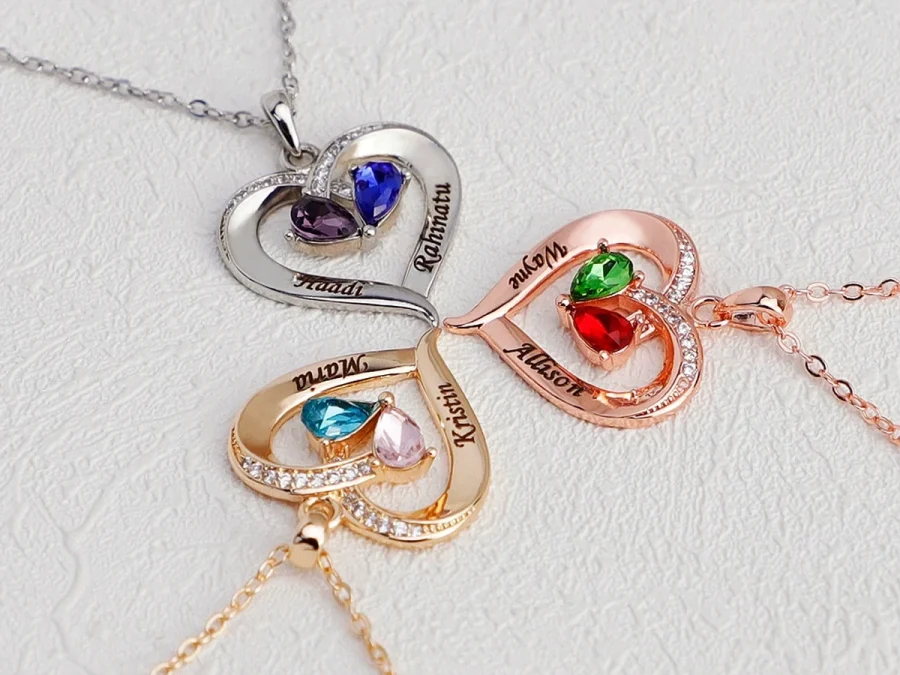
Read engravings letter by letter from the submitted summary. Check punctuation, spaces, hyphens, initials, and order. For month-based products, compare each selected month label with the correct name. Then review tone, size, accent style, and format as separate fields.
Use a two-column table:
- Submitted product and observed product.
- Submitted component count and observed component count.
- Submitted Name 1, Name 2, and later positions versus visible engraving.
- Submitted months versus observed position labels where the product uses them.
- Submitted tone, style, and size versus the received configuration.
- Submitted note versus any feature the live fields confirmed.
Evaluate color cautiously. Lighting, photography, screens, and nearby surfaces can affect appearance. Identify a concern through the selected tone label and neutral-light photos rather than a dramatic filter.
Use a check mark only after you compare both sides of a row. Seeing the correct name somewhere on the piece is not enough if it appears on the wrong puzzle segment or beside the wrong month. Position is part of the personalized record whenever the design assigns details sequentially.
Document visible condition without altering it
Inspect broad surfaces, engraved areas, accents, chain or cuff connections, and moving parts. If you see a concern, take a full-item image, a medium view locating the area, and a focused close view. Add a clean ruler beside the item when scale matters, without placing it on the jewelry.
Write what you observe rather than diagnosing the cause. “The connection between the chain and pendant appears open in photos 3 and 4” is clearer than an unsupported conclusion about manufacturing or transit.
Label image files by purpose—full front, full back, issue location, close detail, and scale. Remove duplicates that add no new information, but keep the uncropped originals. A small, ordered set makes the condition easier to review than many unlabeled close-ups.
Use the Amorieva FAQ and current shipping and returns page for the correct review process. A report does not predetermine its outcome; preserve the item and provide the evidence requested.
Complete the check before regular wear
If the order matches and no concern is visible, record one final photograph and store the confirmation. Review the care guidance before first wear: plated pieces should be kept dry, protected from perfume and household chemicals, wiped gently, and stored separately.
For a multi-person set, label the pieces for distribution only after every engraving has been checked. Giving them out first can separate the evidence and make a complete comparison harder.
Common questions
Should I clean the jewelry before inspecting it?
No. Inspect and photograph the received condition first. Cleaning can change residue or surface appearance and make it harder to document what was initially present.
What if a sample photo looks different from my item?
Compare the received product with your submitted field labels and current product details. Sample images may show another configuration, and digital color appearance can vary.
What information should accompany a concern?
Provide the order reference, product name, exact submitted value, observed difference, arrival context, and labeled overview and detail photos. Keep the description factual and concise.
Turn arrival into a controlled handoff
A five-minute inspection protects the accuracy of the record before normal use changes the condition. Count the pieces, check every personalized field, photograph the complete item, and document any concern without attempting a repair. Once the order and condition are confirmed, the jewelry can move from a shipment into the family story it was prepared to represent.