How Amorieva Fact-Checks Personalized Jewelry Guides
See how Amorieva separates current product facts, sourced gem traditions, practical editorial guidance, visual labels, and claims it will not make.
Amorieva fact-checks personalized jewelry guides by separating four kinds of statements before they reach the page: current product facts, externally sourced gem facts, clearly labeled editorial advice, and claims that should not be made without evidence. A useful article must show which kind of statement it is using. Product fields come from the current product record, birthstone facts come from appropriate primary references, and practical suggestions remain suggestions—not invented promises or customer experiences.
Every claim starts in one of four evidence lanes
Product facts include available formats, personalization fields, capacity, stated materials, and fixed sizes. Reference facts include natural-gem identities and birthstone traditions documented by sources such as the Gemological Institute of America. Editorial guidance includes checklists, comparison questions, and ordering worksheets created to help a reader decide. Unsupported claims include anything the available evidence cannot establish.
Keeping those lanes separate prevents a common content error: turning a plausible idea into a product fact. A guide may suggest asking whether the recipient wears necklaces, but it cannot claim that a design is universally comfortable. A birthstone source may describe natural ruby, but it does not prove that a simulated July accent is ruby. A product image may show a layout, but it cannot stand in for a verified customer review.
Current product fields control product statements
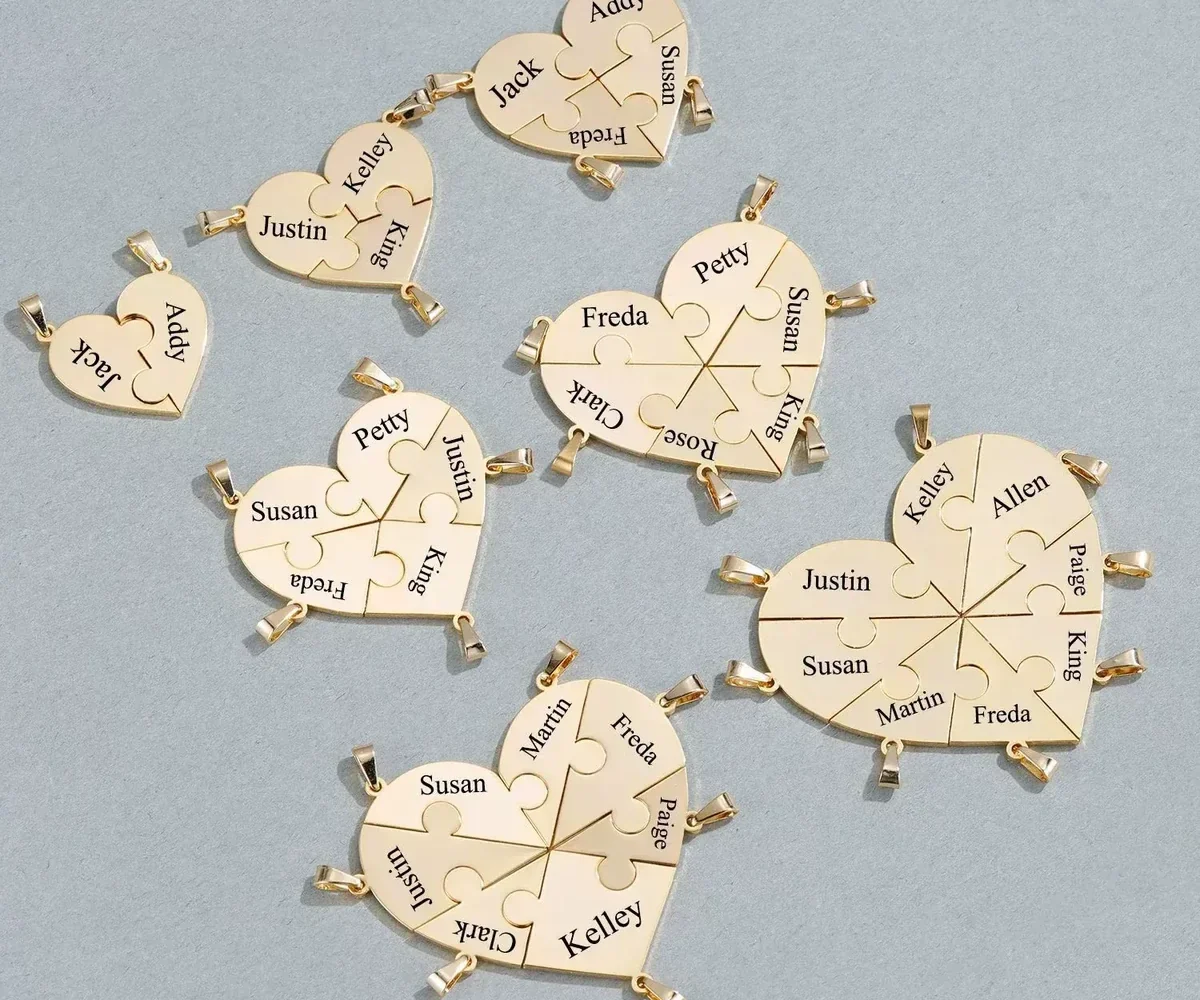
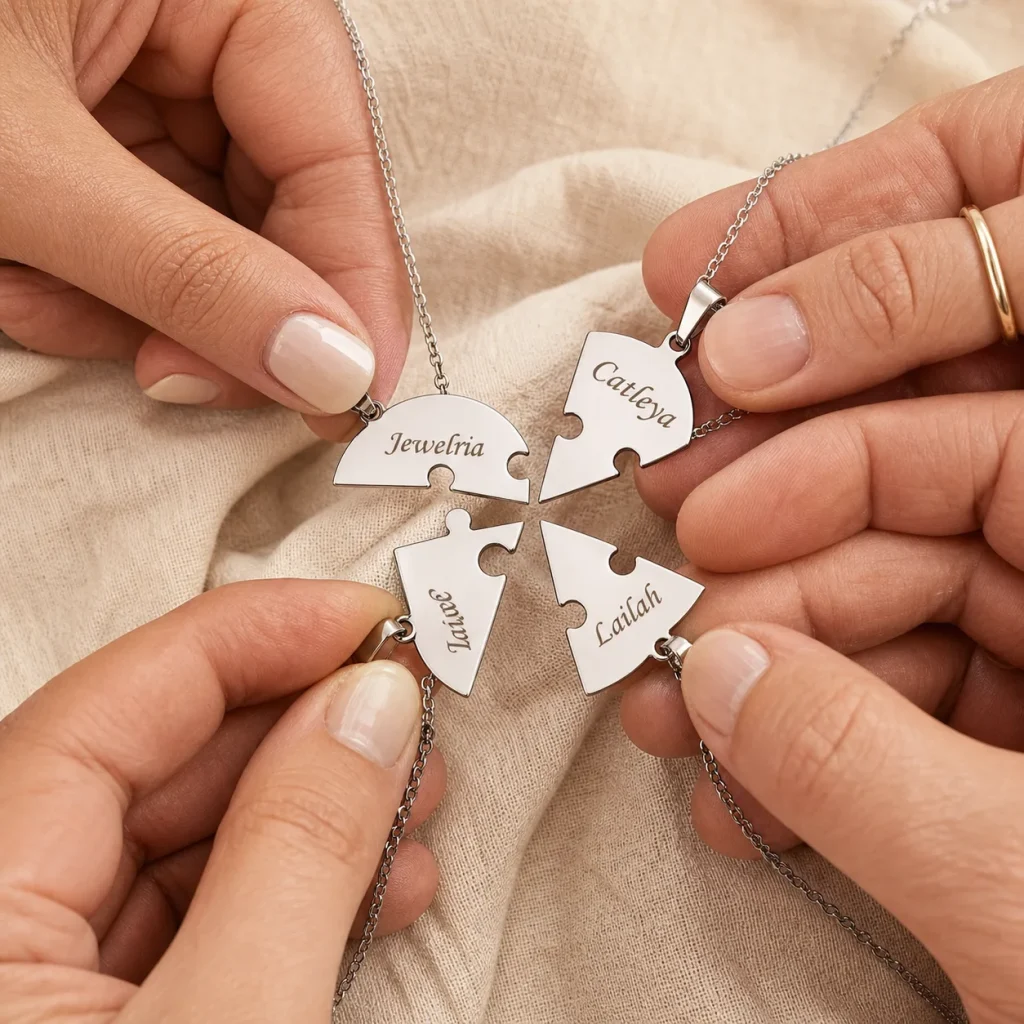
Before describing a design, the workflow checks the current product’s exact options rather than copying a generic jewelry template. The Together Heart Puzzle Necklace, for example, currently supports two or three separate interlocking pieces with one engraved name on each. It is a plated stainless-steel design and does not include a birthstone field. A guide about that necklace should not add a fourth piece, month selection, or material promise borrowed from another item.
Capacity words matter. “Two or three” is not the same as “two or more.” “One name per piece” is not an invitation to place a list on one piece. The product page is checked again when time-sensitive or configurable facts matter, and the personalization process supplies the broader rule: the shopper reviews the details supported by that specific design before submission.
Gem traditions are sourced and kept outside product identity
When a guide discusses gemological birthstone facts, Amorieva uses a source such as the GIA birthstone reference for month associations, mineral identities, and recognized alternatives. The source is paraphrased and linked when it materially supports the explanation. Lore may be described as tradition, but it is not presented as evidence of health, luck, personality, or a certain outcome.
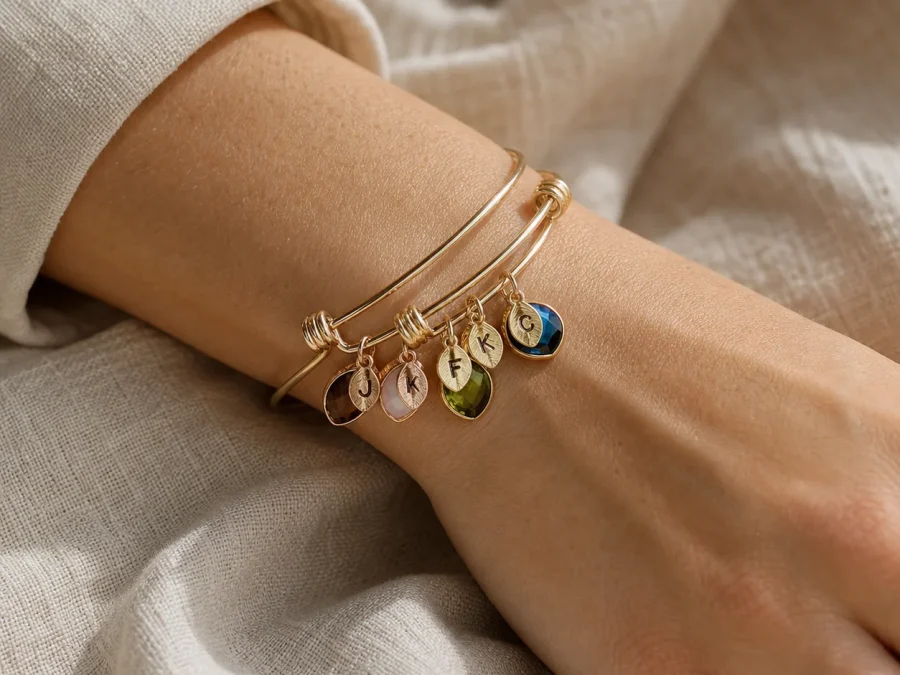
A second check asks whether the Amorieva product actually contains the specific material being discussed. Current month-selectable designs generally use simulated birthstone or crystal-style accents. The article must state that boundary. A January selector can refer to the garnet tradition without authenticating garnet; a June selector does not promise alexandrite’s color-change behavior.
Images are evidence only for what they visibly support
Product-detail and option-guide images can help explain the number of pieces, relative layout, personalization positions, or available configurations. Editorial family scenes can illustrate a wearing context. Neither type proves an unlisted material, exact color across screens, packaging, manufacturing method, or customer satisfaction.
That is why captions and Alt text use precise labels. An editorial scene is not called a real customer photo. A model image is not described as a verified buyer. A close-up is not used to guess a hidden clasp, coating thickness, or exact measurement absent from the product facts. The aim is to help the reader interpret the image without asking it to carry evidence it does not contain.
Some attractive claims are intentionally excluded
Amorieva guides do not invent reviews, testimonials, sales figures, awards, expert endorsements, laboratory testing, or founder stories. They do not convert a tone label into a precious-metal composition claim, rename simulated accents as identified gems, or assert unverified resistance, skin-compatibility, or maintenance performance.
Policy language receives the same restraint. An estimated arrival window is not rewritten as a fixed arrival promise, and personalized-item terms should be checked on the current shipping and returns page. Articles do not expand return eligibility, shipping coverage, approval services, or payment options beyond what the current policy actually states.
Corrections and updates are part of the method
Product fields, policies, and public availability can change. A guide should be updated when its underlying fact changes, not defended because the old wording once looked plausible. The revision starts by identifying which evidence lane failed: a product option changed, a source was superseded, an editorial statement was phrased as certainty, or an unsupported claim slipped through.
Readers can help by comparing a guide with the current product page and using the FAQ for general questions. Broader brand context belongs on Our Story, not in a fabricated origin anecdote inserted into every article. When a discrepancy appears, the current product and policy records take priority over older editorial copy.
Common questions
Does fact-checking mean every sentence comes from an external source?
No. Practical decision tools can be original editorial guidance. They must be presented as guidance and built on accurate product facts. External primary sources are used when the article makes factual claims outside Amorieva’s own product and policy records.
Why not use product photos to confirm every detail?
A photo can show visible structure but may be affected by angle, lighting, editing, and scale. It cannot reliably establish hidden construction, exact color, packaging, or material identity. Written, current product facts control those statements.
What happens when an Amorieva option changes?
The affected guide should be reviewed and corrected so its capacity, fields, links, images, and recommendations match the current offering. Time-sensitive policy statements should likewise point readers to the current policy page.
Trustworthy jewelry guidance is less about sounding certain and more about showing the limits of each fact. By keeping product records, primary references, editorial tools, and prohibited claims in separate lanes, Amorieva can explain a choice without inventing the evidence behind it.