One Shared Pendant or Separate Puzzle Necklaces?
Choose one shared pendant or separate puzzle necklaces by deciding who will wear the story, whether months matter, and how many pieces the group needs.
In a shared pendant vs separate puzzle necklaces decision, ask who will physically wear the story. A shared pendant places two names and months on one person’s necklace. Puzzle necklaces divide two or three names across individually worn heart pieces. Choose ownership first, then decide whether birth-month accents matter. Relationship labels alone do not tell you which format will be used.
Describe the wearing plan in one sentence
Write either “One person will wear a pendant representing both people” or “Each person will receive and wear one piece of the shared design.” If neither sentence is accurate, neither product structure is ready to order.
A parent may want to carry a child’s name without the child wearing jewelry; that points toward one shared pendant. Two adults in different cities may both want a physical piece; that points toward separate necklaces. A group can be emotionally close and still prefer one wearer, while another group may value distributed ownership.
Also decide who will be responsible for care and storage. One shared pendant creates one routine under one owner. Separate necklaces create two or three independent routines, and the pieces may age differently because people wear and store them differently. That variation does not weaken the shared symbol, but participants should understand it.
Check each person’s real jewelry habits. Do not create a matching set that obligates a non-wearer to participate.
How one two-name pendant tells the story
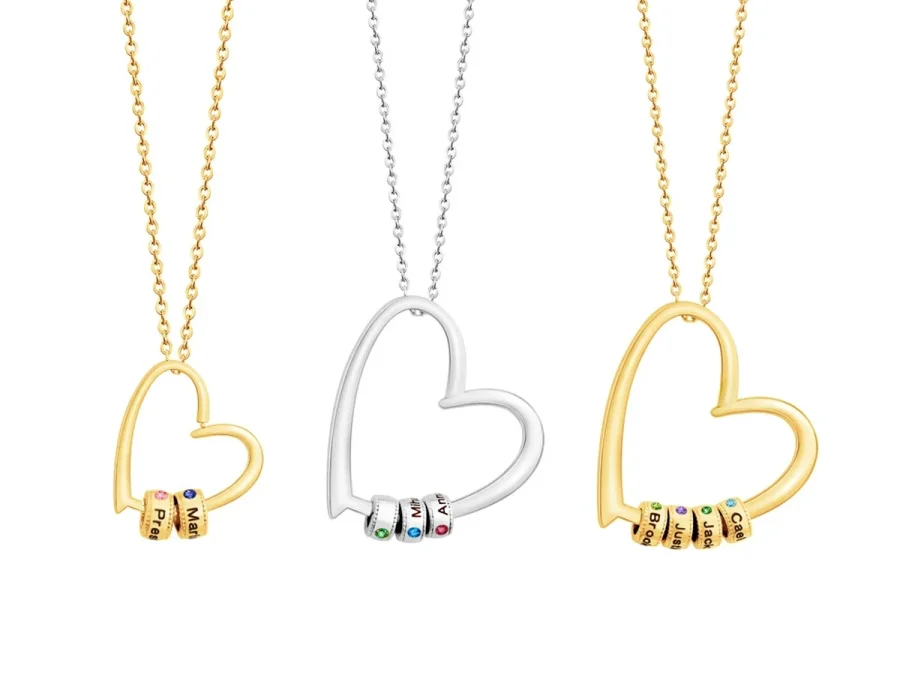
The Two-Tone Teardrop Story Necklace uses exactly two engraved names and two selected birth months on one necklace. It offers three plated tone choices and a crystal-set or smooth engraved heart accent. The complete two-person story stays with one wearer.
This can suit a gift where the recipient wants both people represented together and values month symbolism. One person does not need to coordinate when or how another person wears a matching item. The pendant remains a single object with one care and storage routine.
It is less suitable when both people expect a piece of their own or when the intended story has three participants.
How separate puzzle necklaces divide ownership
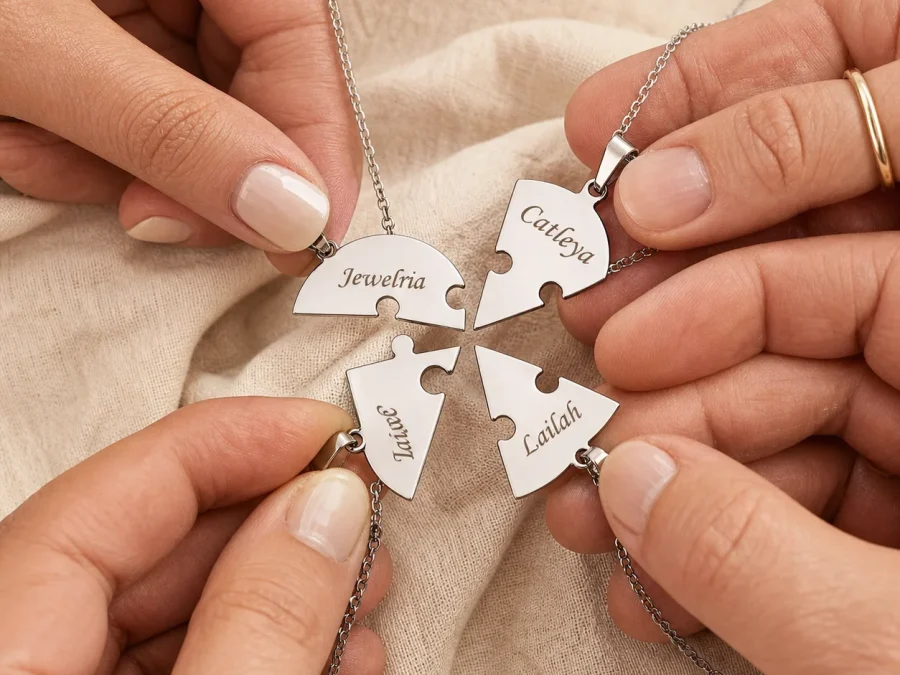
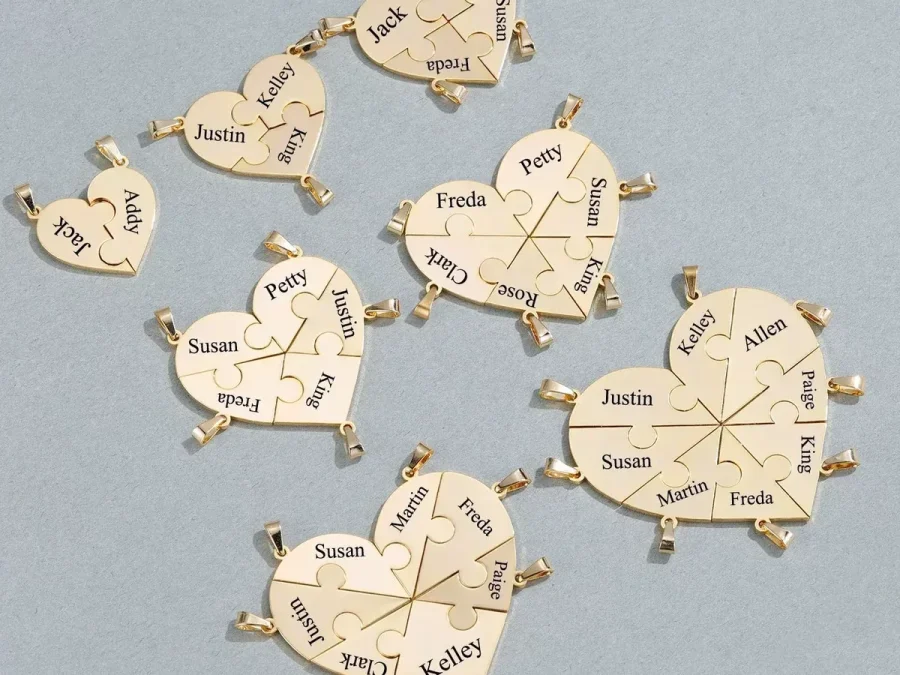
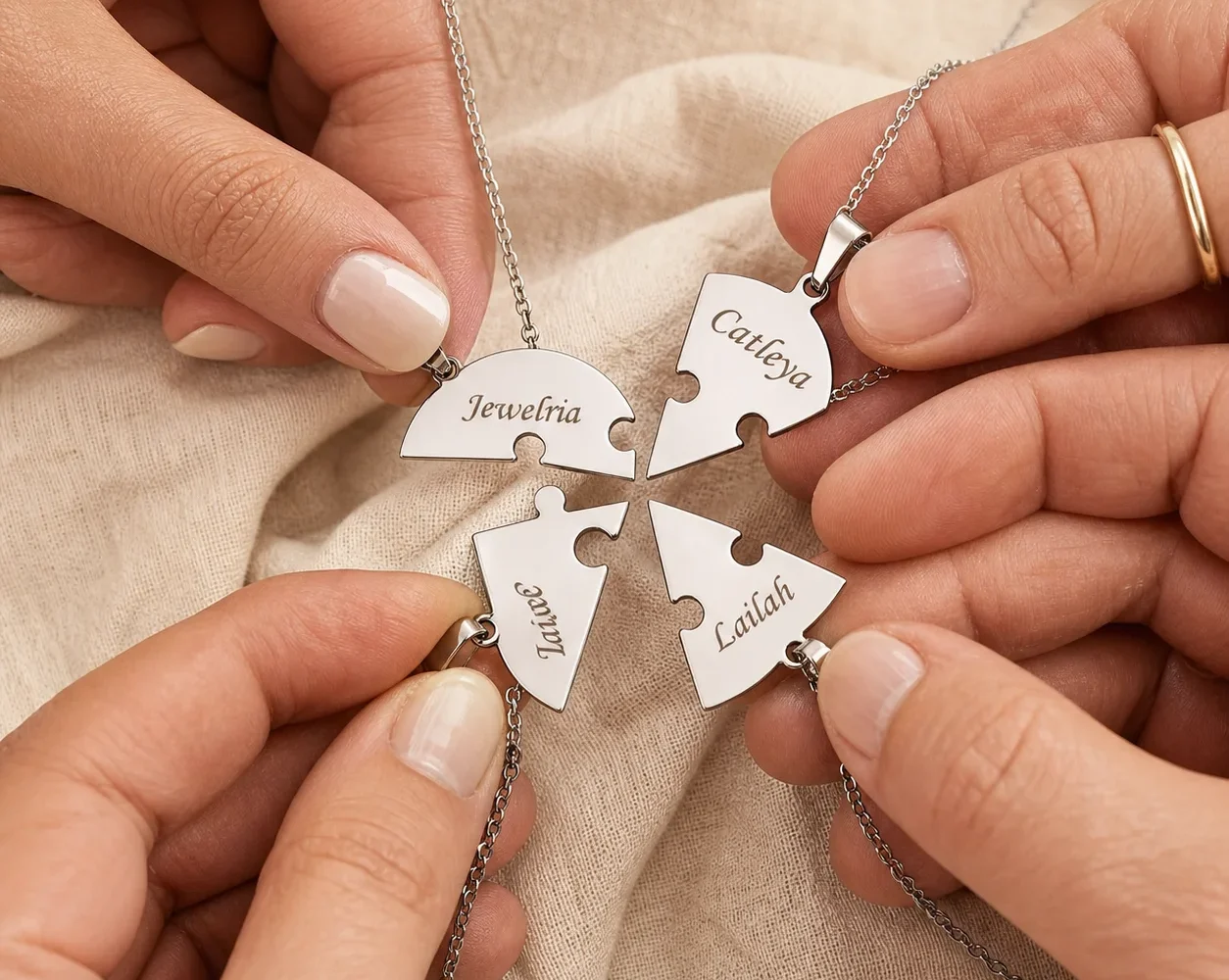
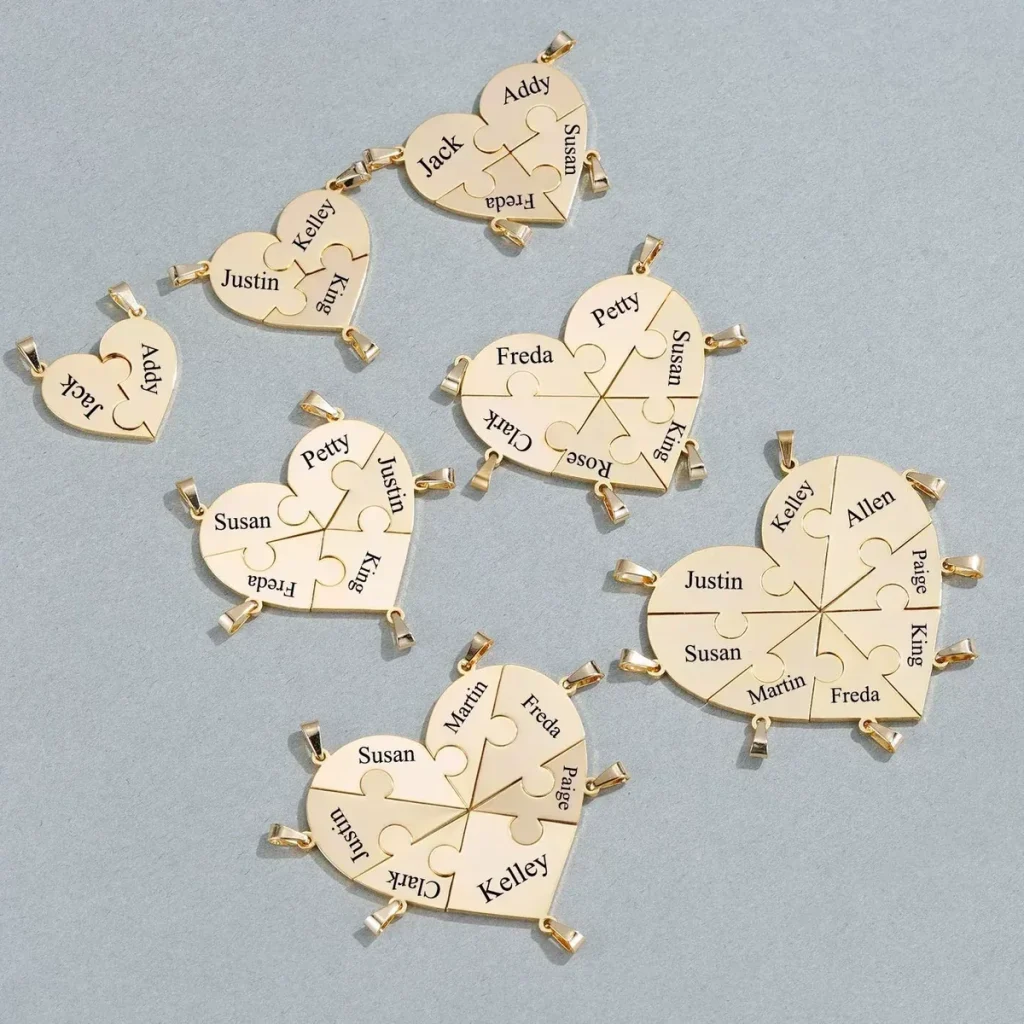
The Together Heart Puzzle Necklace supports two or three interlocking heart pieces, one engraved name per piece. Each segment comes on its own necklace, and the design has no birthstone field. It uses plated stainless steel and offers three tone choices.
This format can make distance and independent wear part of the meaning. Each person controls a piece while the segments form one heart when brought together. The current two-piece combined heart is approximately 20 by 20 mm; the three-piece version is approximately 28 by 24 mm. Those measurements describe the combined composition rather than promising where each segment will sit on a particular wearer.
Separate ownership also requires a distribution plan. Assign one approved name to each segment and label each piece for handoff. Do not assume participants will exchange segments until one “looks right”; the engraving should already identify ownership.
When distance is part of the story, decide whether the complete heart needs to be viewed together before the pieces separate. You can document the assembled layout in a private photograph, then package each necklace individually. Avoid describing an editorial or staged image as evidence of how every final personalized set will look.
Compare the two formats field by field
Use this decision grid:
- Wearers: one wearer for the shared pendant; two or three for puzzle necklaces.
- Names: exactly two on the shared pendant; one per puzzle segment.
- Months: two month selections on the shared pendant; none on the puzzle design.
- Ownership: one complete object versus individually held parts.
- Coordination: no matching-wear expectation versus an optional shared-set moment.
Then check style. A compact teardrop pendant and separate geometric heart segments create different silhouettes. Compare them in the current Amorieva collection without treating either as a universal relationship symbol.
Follow the personalization process once the format is chosen. The two products use different fields, so do not carry months into the puzzle order or add a third person to the fixed two-name pendant.
Finish with a role check: wearer, represented people, and item owner. On a shared pendant, those roles may be different. On puzzle necklaces, each person is usually both represented and an owner. Writing the roles exposes mismatches before the product is ordered.
Common questions
Do both people have to wear separate puzzle necklaces together?
No. Each person can wear or keep a segment according to individual habits. Coordinated wear can be meaningful, but it should not be a condition of belonging to the shared story.
Can the shared pendant represent three people?
The current Two-Tone Teardrop configuration is fixed at two names and two months. Choose a product with a larger verified capacity if the story includes three people on one wearer.
Can puzzle pieces include birthstones?
The current Together Heart design has one engraved name per piece and no birthstone selector. Choose the shared two-name pendant or another name-and-month design if colored month accents are essential.
Put the story where it will actually be worn
The deciding difference is physical ownership. One pendant lets a single recipient carry two names and months. Puzzle necklaces give each of two or three people a named part of the whole. State the wearing plan, confirm the participant count, and use only the fields belonging to that structure. A format fits when the people will use it naturally, not merely when its symbolism sounds attractive.