Two or Three Pieces? Choose a Together Heart Puzzle Necklace
Choose a two- or three-piece Together Heart Puzzle Necklace by counting actual necklace wearers and comparing each format as a set of separate pieces.
Choose a two-piece puzzle necklace when exactly two people will each wear a separate necklace, and choose the three-piece configuration when exactly three people will each wear one. The decision is a wearer count, not a preference for a fuller assembled heart. Every selected piece is its own necklace, so an extra segment creates an extra wearable item rather than decorative space in a single pendant.
Make the decision with an actual-wearer count
Begin with a simple question: how many people in this plan genuinely intend to wear a necklace? Count two only when both people want one. Count three only when all three people want one. Do not count someone merely because that person belongs to the family, appears in a photograph, or might wear the piece someday.
This approach keeps the product structure aligned with ordinary use. A close group of three is not automatically a three-piece order if only two people wear necklaces. Likewise, two regular necklace wearers do not need a third segment to make the combined shape feel more substantial. If the number of people in the relationship and the number of willing necklace wearers differ, reconsider whether a divided-necklace design is the appropriate format.
Understand what “two pieces” and “three pieces” contain
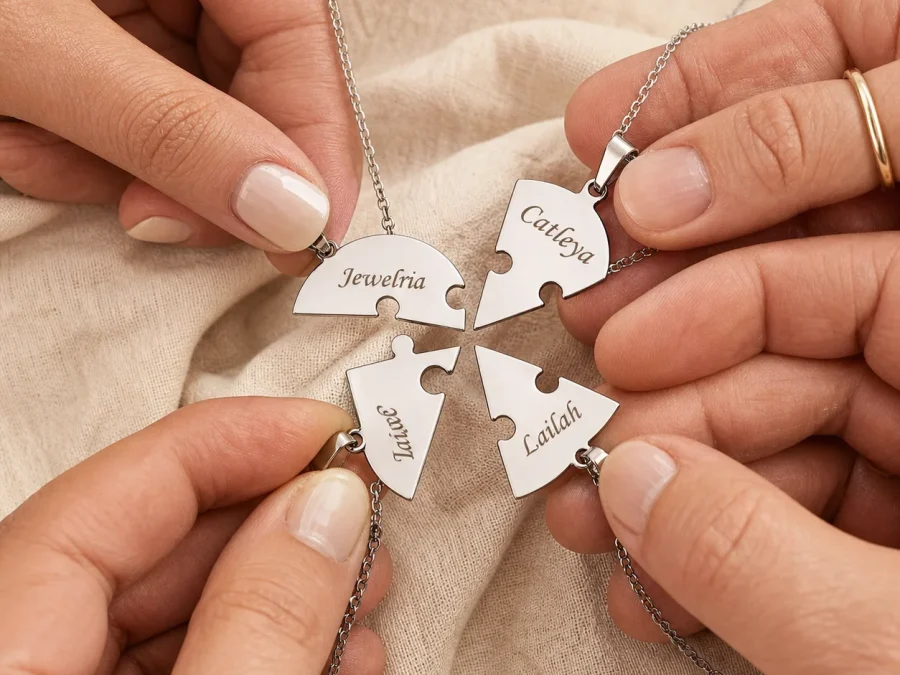
The Together Heart Puzzle Necklace is a plated stainless-steel design offered in two current configurations. One contains two interlocking heart segments; the other contains three. Each segment belongs to a separate necklace on its own O-chain. The product is therefore not one chain with two or three loose charms.
Current source-verified dimensions describe the assembled two-piece heart at approximately 20 by 20 mm and the assembled three-piece heart at approximately 28 by 24 mm. The listed chain range is approximately 51 to 60 cm. Those figures help explain the difference between the complete layouts, but the wearer normally experiences an individual segment rather than the assembled heart.
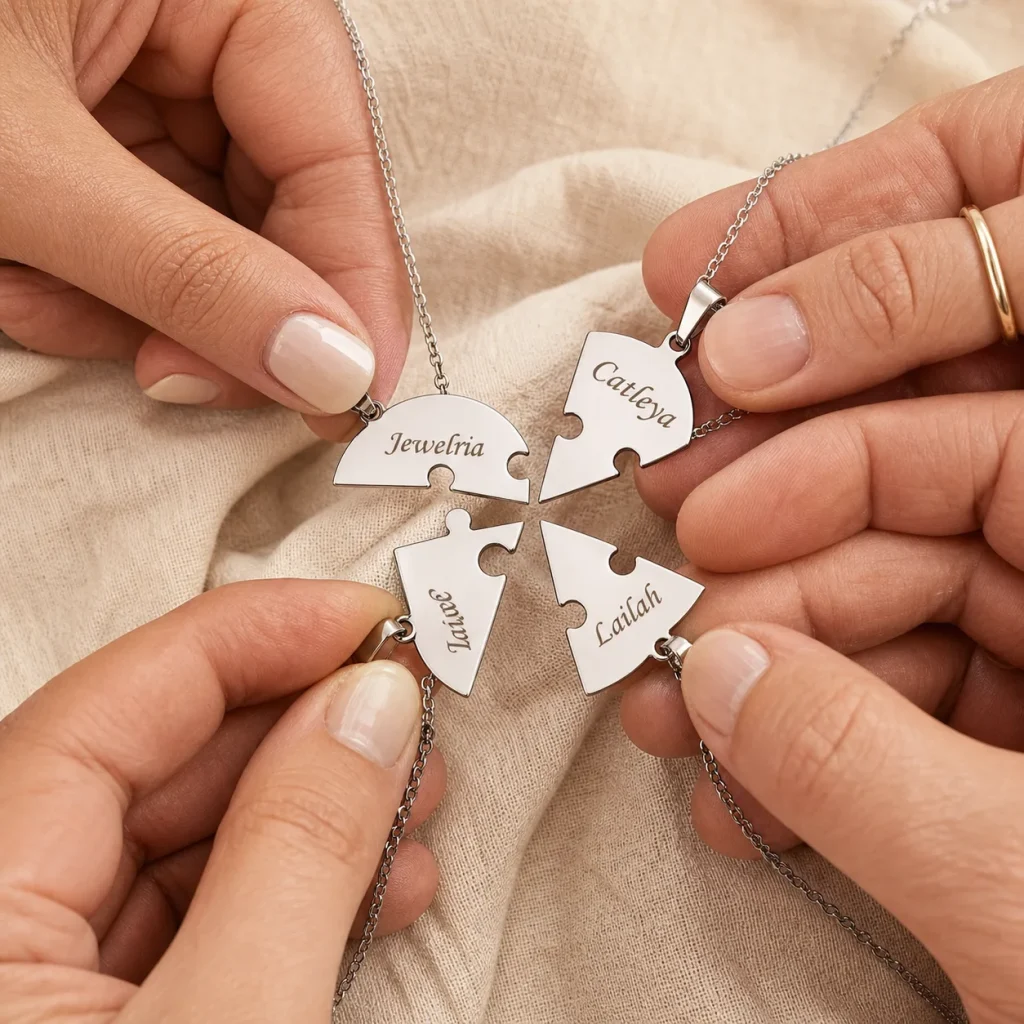
Compare the formats as separate wearable items
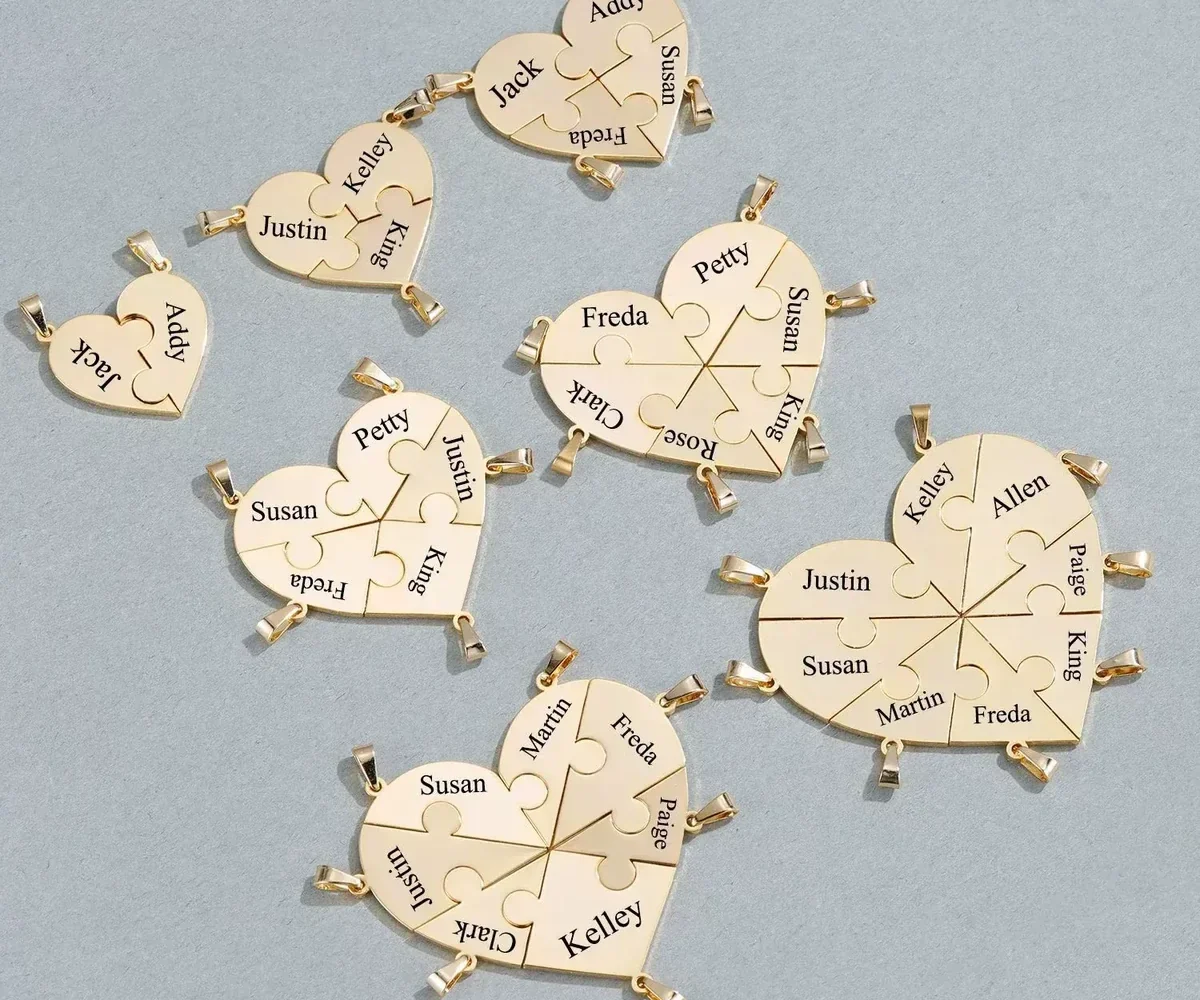
The option image should be read in two ways. First, inspect the complete heart so you understand how the selected segments relate when brought together. Second, inspect each segment on its own, because that is the visible shape one person will wear. A compelling complete outline is not enough if one or more people do not want an individual necklace.
Ask each intended wearer the same practical questions. Do they normally wear necklaces? Is the listed chain range compatible with their usual preference? Are school, work, sports, or sensory considerations likely to keep the necklace unworn? These questions do not declare one configuration better. They test whether every physical item in the selected set has a realistic wearer.
Choose two pieces for two consistent necklace wearers
The two-piece configuration is the direct fit when two people both want a separate necklace. It may suit partners, siblings, friends, or a parent and child, but the relationship label is not what determines the count. Two active wearers do.
Do not add a third piece because a future family member might eventually join, because the three-piece image seems larger, or because an unused segment could be stored. The current choice creates the complete set being ordered now. If two people want a coordinated divided-heart design, two pieces account for both without leaving a separate necklace unplanned.
Choose three pieces only for three consistent necklace wearers
The three-piece configuration fits when three people each intend to wear one of the separate necklaces. It creates a larger combined outline and divides that outline into three wearable segments. The extra piece is not a background element; it has the same practical requirement as the others—a real person who wants a necklace.
If the wider group has four or more people, neither current configuration can give everyone a separate puzzle piece. Do not omit people simply to fit the maximum. Compare other structures in the current Amorieva collection, including formats that support a larger family count on one wearable item.
Keep birthstones outside this comparison
Neither the two-piece nor the three-piece Together Heart configuration includes a birthstone field. The choice is between piece counts, not between gemstone layouts. Do not plan month colors, assume stones are hidden in the option image, or transfer a birthstone selector from another Amorieva design.
Both configurations still require plated-jewelry care. Keep each necklace dry, remove it before showering, swimming, exercise, saltwater, or chlorinated water, avoid perfume and household chemicals, wipe gently, and store it separately. The jewelry care guide applies regardless of whether the set contains two pieces or three.
Common questions
Can two people order the three-piece version?
The three-piece version creates three separate necklaces. If only two people will wear them, the two-piece format matches the actual use more closely. Do not treat the third piece as visual filler.
What if three people are represented but only two wear necklaces?
A divided-necklace set may not fit that group’s real habits. Consider a current single-item format that can represent all intended people rather than creating an unwanted third necklace.
Can birthstones be added to either configuration?
No birthstone field is currently offered for AM-NK-107. Choose a different current product if month-based simulated accents are essential, and verify its own capacity and fields through the Amorieva FAQ.
The right configuration is the one whose piece count equals the number of actual necklace wearers: two for two, three for three. Once that count is fixed, complete a separate engraving task that records and proofreads one confirmed name for each selected piece through the personalization process.