Long and Short Names on One Personalized Necklace: A Readability Check
Plan long and short names on one personalized necklace by preserving approved spellings, testing order, checking live fields, and avoiding forced abbreviations.
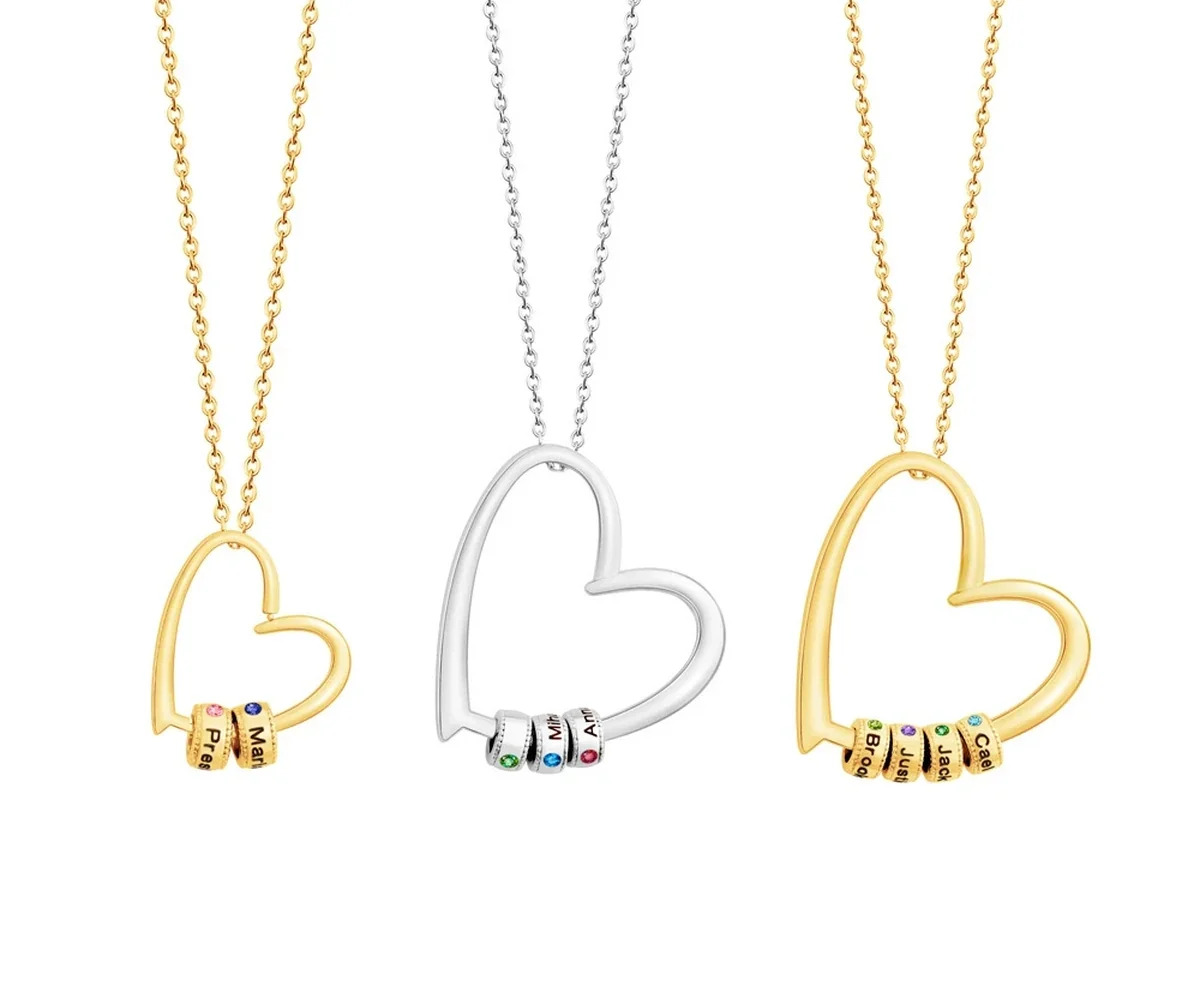
A personalized necklace with long and short names needs an accuracy check before a visual one. Preserve every approved spelling, list the names in the intended order, and verify the live product guidance for supported entry and readable fit. Do not shorten one person’s name merely to make the sequence look even. A balanced family story can contain names of visibly different lengths.
Lock the approved form of every name
Create a master list from reliable sources. Record capitalization, spaces, hyphens, apostrophes, accents, initials, and nicknames exactly. Mark who approved each form so a later contributor cannot “correct” an intentional spelling.
Distinguish preference from necessity. “Alex” may be the person’s everyday name, or it may be an abbreviation imposed because “Alexandra” looks long. Only the person or a trusted family source can tell you which is appropriate.
Create two columns labeled “approved visible name” and “private identity note.” Put only the form intended for engraving in the first. The second can distinguish relatives with similar names or record who approved an accent mark. This prevents an editor from copying an explanatory label into the product field.
The existing guide to planning necklace engraving can help you decide between full names, initials, and familiar forms without presenting one approach as universal.
Test order without ranking by length
Write every name on an identical paper strip and arrange them through a meaningful rule: alphabetical order, age, family timeline, or recipient preference. Do not put the shortest name first and the longest last solely to create a graduated pattern unless that order has been consciously chosen.
Read the sequence aloud. Ask whether someone could infer an unintended hierarchy. Then compare a second sequence only if the family order is flexible. Keep the reason beside the chosen layout.
Names that differ in length can still feel visually coherent when each receives one equivalent position. Consistency of treatment matters more than identical character counts.
Test the sequence in uppercase and lowercase only as a proofreading exercise; do not assume the final engraving typography. The goal is to notice easily confused letters, doubled characters, and spaces. Read long names in small groups of letters, then compare the complete word with the source.
If two family members have similar long names, assign temporary position numbers before entry. Review Name 3 and Name 4 as separate records so a correct ending is not copied onto the wrong beginning.
Match the list to the current bead configuration
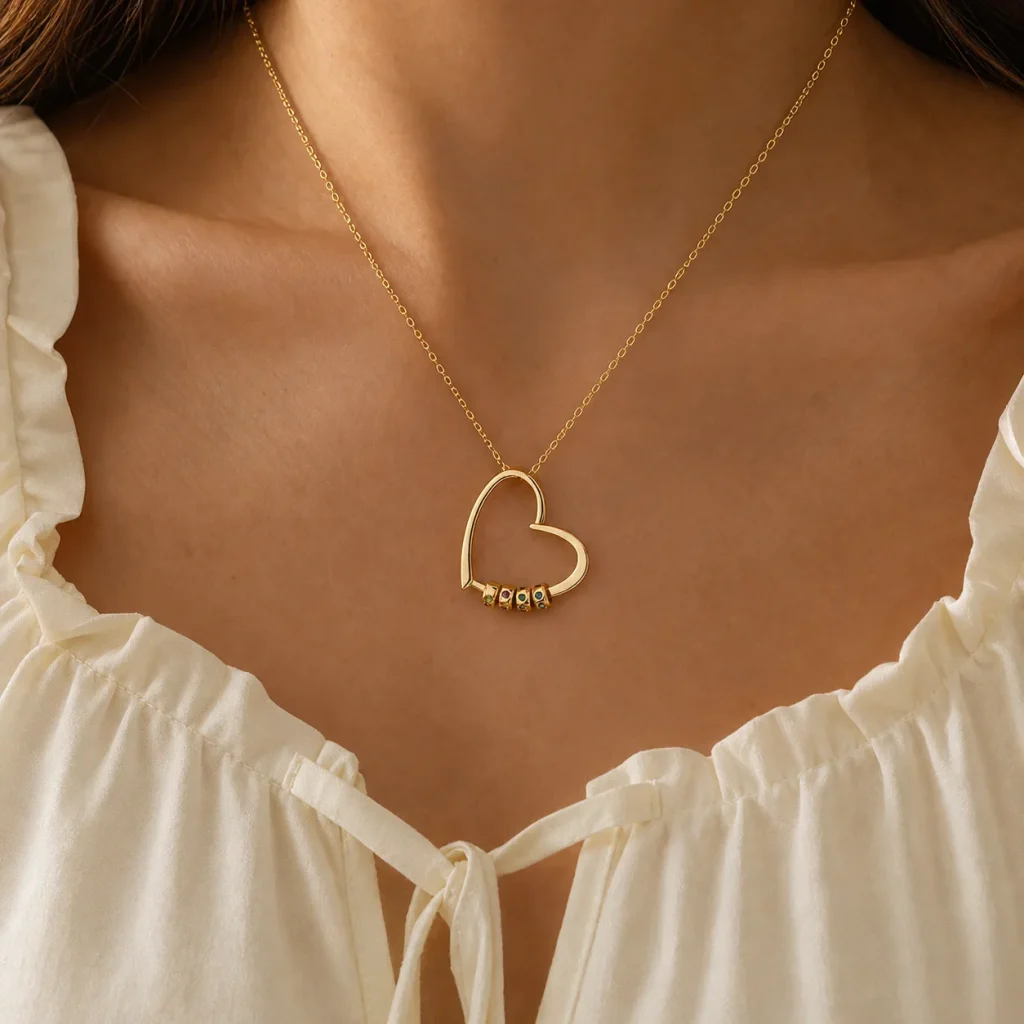
The Gathered Hearts Name Necklace supports one to eight engraved name beads. Its petite pendant is approximately 22 mm for one to four beads; the classic pendant is approximately 33 mm for five to eight. It offers three plated tones and polished or crystal-accent bead styles, with no birth-month field.
The name count determines the petite or classic configuration, but it does not confirm that every unusual or long entry will appear exactly as imagined. A general text-field limit is not a promise of visual fit on a specific bead. Follow the live prompts and ask through the current Amorieva FAQ when a spelling, character, or length raises doubt.
Do not move overflow text into a Special Note and assume it will become part of the engraving. A note cannot replace an unsupported product field.
When uncertainty remains, prepare one precise question for support: include the product, exact proposed text, character type in question, and intended bead count. Do not ask whether “long names are okay” without supplying the actual entry. A concrete question can be evaluated without creating a promise for every possible name.
Run a readability and consent review
Use four passes:
- Accuracy: spell every name from the approved source.
- Identity: confirm that initials or nicknames belong to the person’s preference.
- Order: apply one family rule, not a length-based ranking.
- Product fit: check current field guidance and resolve uncertainty before submission.
View product images at an ordinary scale as well as close-up. Close images help locate the beads, but they can make lettering seem larger than it will appear when worn. Do not promise the recipient an exact visual result based on screen magnification.
The personalization process overview can guide a field-by-field final check. Save the approved list beside the available order summary so differences are visible.
For a group gift, appoint one final proofreader who did not type the fields. That person should read from the approved source, not from a copied group-chat list that may repeat the same mistake. Sign off on each position individually before checking tone and quantity.
Common questions
Should I abbreviate the longest name?
Only when the person represented approves that form and the current product guidance supports it. Do not trade identity for visual symmetry without consent.
Will every name appear at the same text size?
Do not assume an exact engraving treatment from a sample image. Follow the live product information and ask about uncertain entries before ordering rather than promising identical appearance.
Can I add a birthstone to identify similar names?
The current Gathered Hearts name-bead design does not include a birth-month selector. Use order, full approved names, or another current product if individual month accents are essential.
Let unequal lengths receive equal care
Long and short names do not need to be normalized into matching labels. Preserve the forms people recognize, choose an explainable order, and use the correct one-to-eight-bead configuration. If the live field leaves a real fit question, resolve it before checkout or compare another design in the Amorieva collection. Readability begins with accurate identity, not forced uniformity.