Why Do Birthstone Charts Differ? Traditions and Alternatives Explained
Learn why birthstone charts may list alternatives for one month and how to use a consistent month-based rule when planning family jewelry.
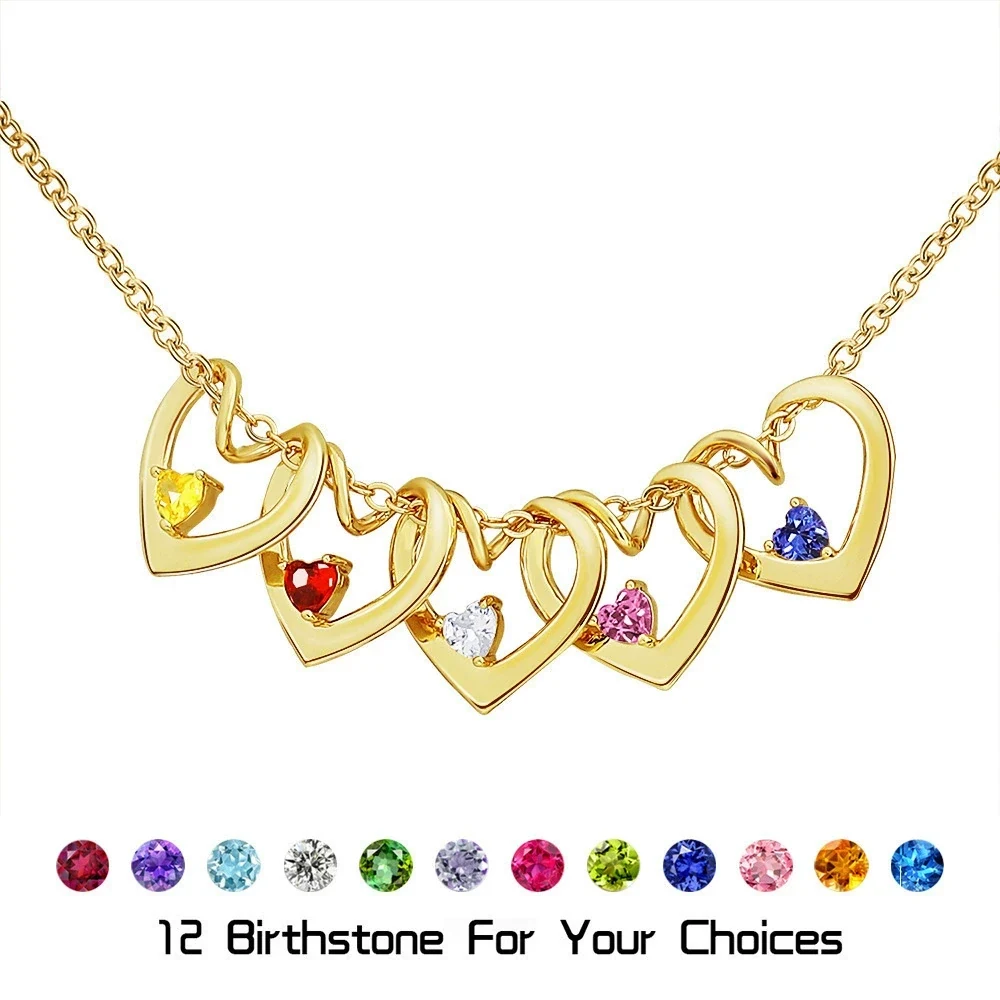
Birthstone charts differ because birthstones are traditions that have developed across places and eras, not one fixed scientific classification. Some months have more than one widely recognized gemstone association, and a retailer may present one practical color choice for each calendar month. For personalized family jewelry, consistency matters more than proving that one chart is the only correct list.
Separate the tradition from the product selector
A birthstone chart answers a cultural question: which gem names have been associated with each month? A personalization form answers a narrower ordering question: which month should this colored accent represent on this design? Those questions overlap, but they are not identical.
The GIA birthstone reference shows that several months have recognized alternatives. That supports a simple conclusion: seeing different gem names on two reputable charts does not automatically make one of them an error. Lists may reflect different traditions, updates, or regional use.
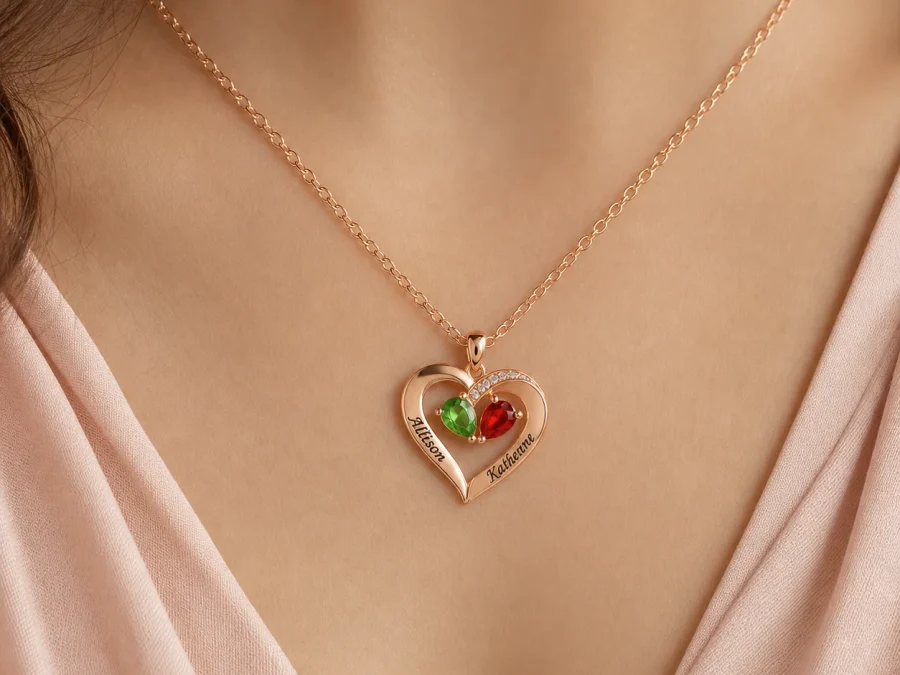
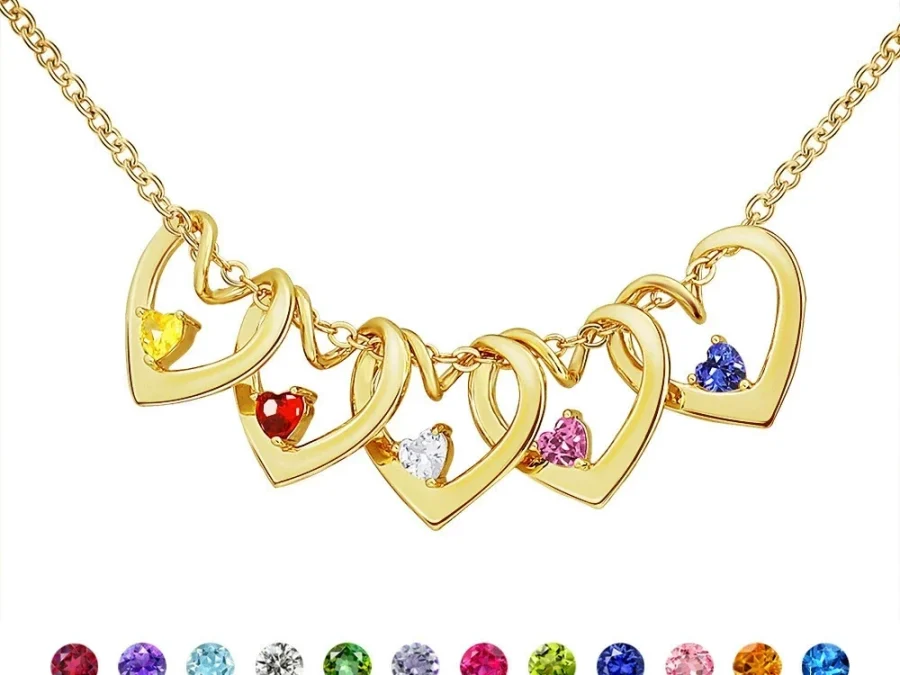
Amorieva’s current birthstone products simplify the choice by asking for a calendar month. The colored details are described as simulated birthstones or crystal-style accents, depending on the design. A month label therefore identifies the intended family symbol; it should not be read as a claim about a particular gem material.
Why colors can differ even when the month matches
Alternative gemstone names can bring different customary colors into the same month. In addition, a small jewelry accent, studio image, and screen display may not reproduce color in the same way. A chart designed for gem education and a product selector designed for personalization can therefore look different without assigning a different birthday.
Do not choose a month by sampling a color from the screen. Confirm the person’s actual calendar month, then use that month label in the product form. The engraved name and planned position provide additional identification when two colors appear close or when two relatives share a month.
For a month-by-month orientation, use the existing family birthstone guide as a reference rather than collecting isolated color charts from unrelated sellers. It gives you one consistent starting convention for the whole family.
Create one rule for the entire piece
Confusion usually enters when a buyer mixes rules. One person’s month may come from a modern chart, another from a family custom, and a third from whichever color looks nicest. The final design can still be attractive, but its logic becomes hard to explain.
Use this short decision sequence:
- Write each person’s confirmed calendar month beside the approved name.
- Choose one chart or the current product’s month selector as the working convention.
- Record any intentional exception and ask the represented person when possible.
- Enter months by label, not by an assumed gem name or photographed color.
- Review all name-and-month pairs together before submitting the order.
An exception can be meaningful, but it should be deliberate. For example, a family may have a longstanding association with an alternative stone. That is different from accidentally changing a month because two online charts use different labels.
Write the chosen convention beside the final personalization list. That small note gives future readers context if the family later encounters a different chart.
Apply the rule to an Amorieva design
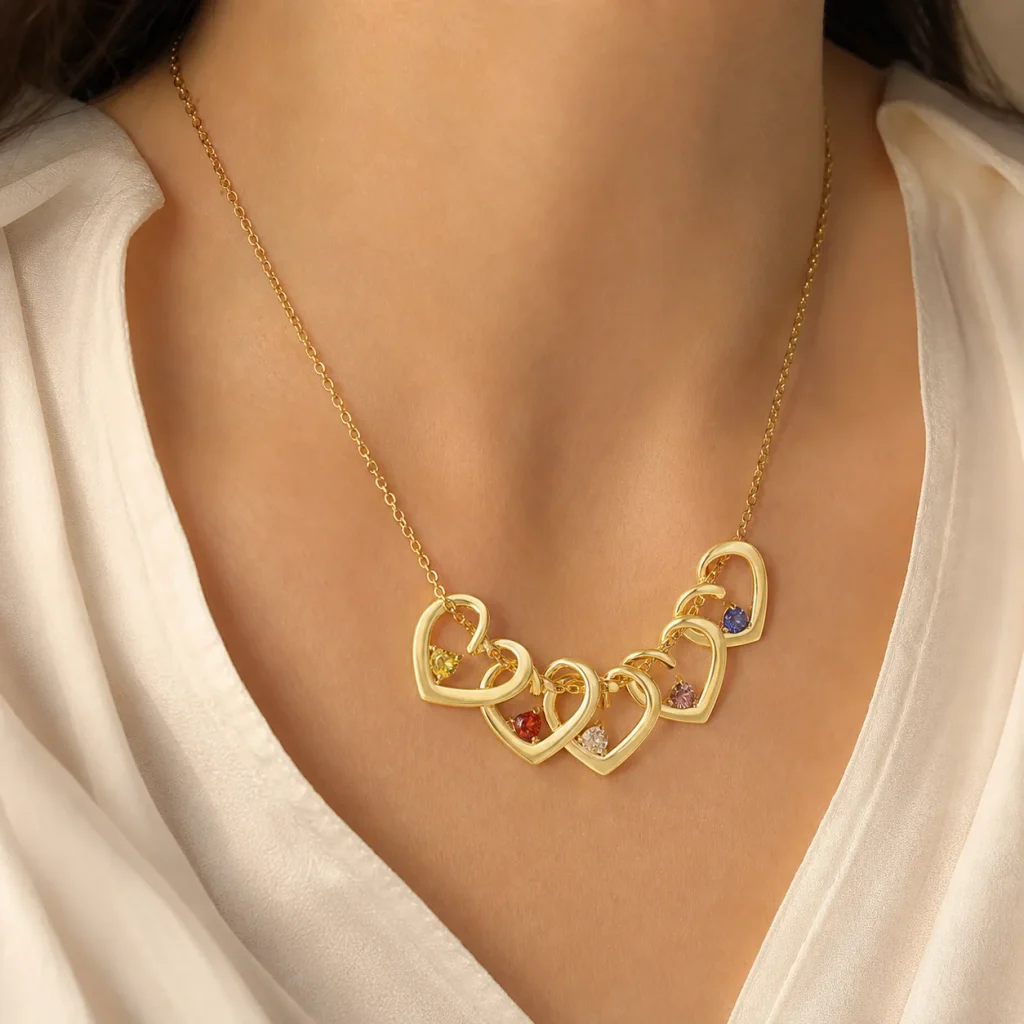
The Twisted Heart Birthstone Necklace supports one to five loved ones. Each person’s engraved heart is paired with a simulated birthstone selected by month. The design is available in necklace or bracelet format and in gold, stainless-steel, or rose-gold tone.
Those verified fields give the family a stable working method. Decide who belongs on the piece, confirm each name and month, and preserve the order from your worksheet. The product selector’s January-to-December choices are the operational list for that order, even if a reference chart also discusses alternative gem names.
If you are comparing several formats, the current jewelry collection shows which products use month-linked accents and which are name-only. Do not transfer a birthstone assumption from one design to another. In particular, a decorative crystal detail is not automatically a month selector.
Common questions
Is one birthstone chart officially correct everywhere?
No single list represents every tradition in every place and era. Reliable references can acknowledge alternatives for the same month. For an order, choose one consistent convention and then follow the current product selector.
Should I change a month to get the color I prefer?
Not if the piece is intended to record actual birth months. A different month would change the information. If color preference matters more than birth-month convention, discuss that choice openly or consider a name-led design instead of quietly substituting a date.
Does a month label prove which gem material is used?
No. A month label explains what the color symbolizes. Read the product’s material language separately. For current Amorieva pieces, use the stated simulated birthstone or crystal-accent wording rather than inferring a gem identity from a chart.
Use variation as a reason to document the choice
Different charts do not prevent a clear family design. They simply make the selection rule worth recording. Confirm calendar months, choose one convention, follow the specific product fields, and keep names and positions attached to the month choices. That method respects the variety of birthstone traditions while producing a piece whose family meaning remains understandable.