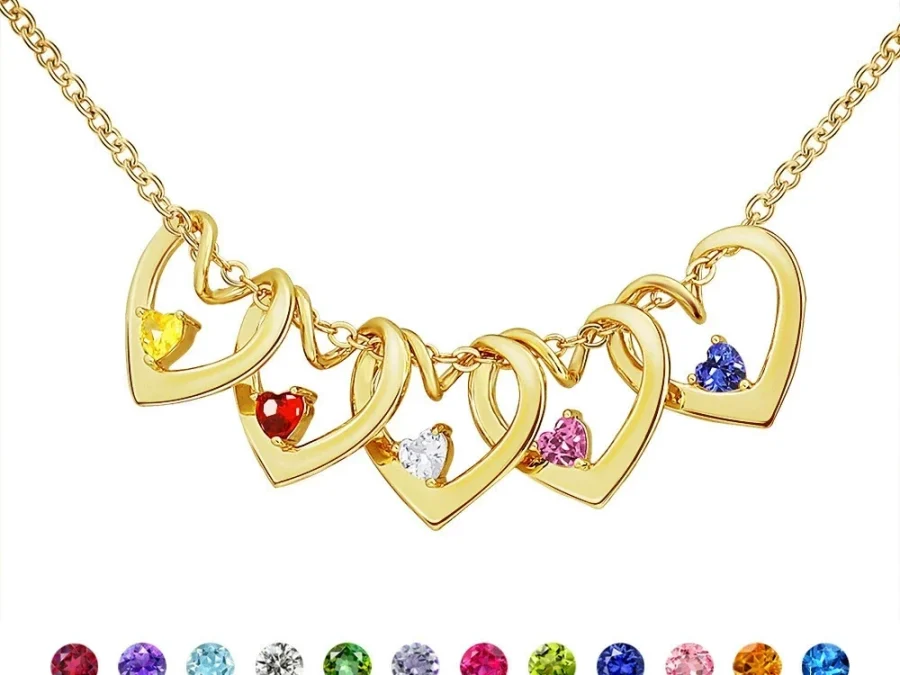
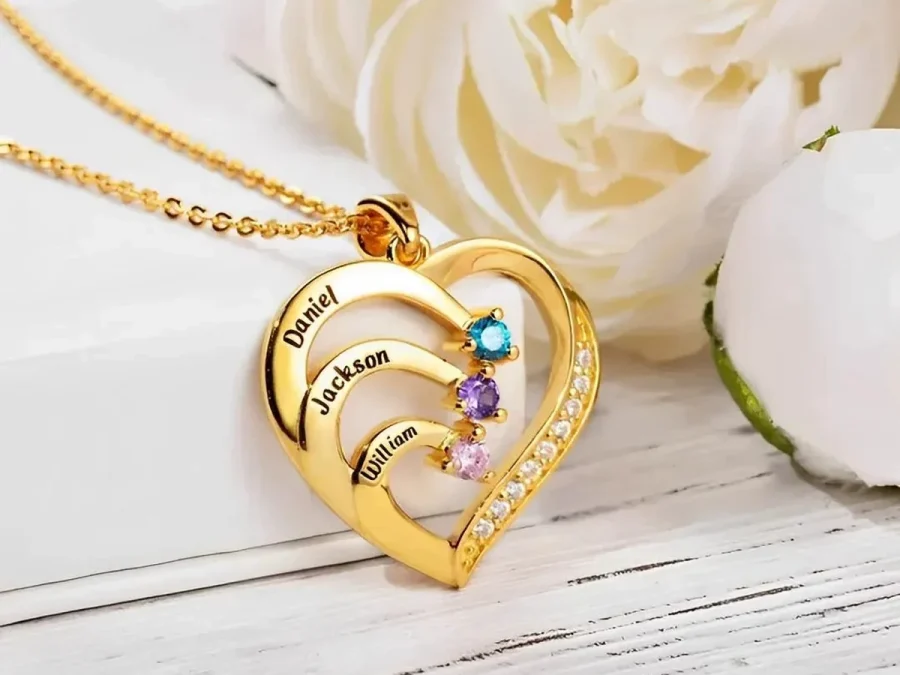
Birthstone Accent or Crystal Accent? How to Read Jewelry Descriptions
Learn how a month-linked simulated birthstone differs from a decorative crystal option, then review each personalization field without making material assumptions.
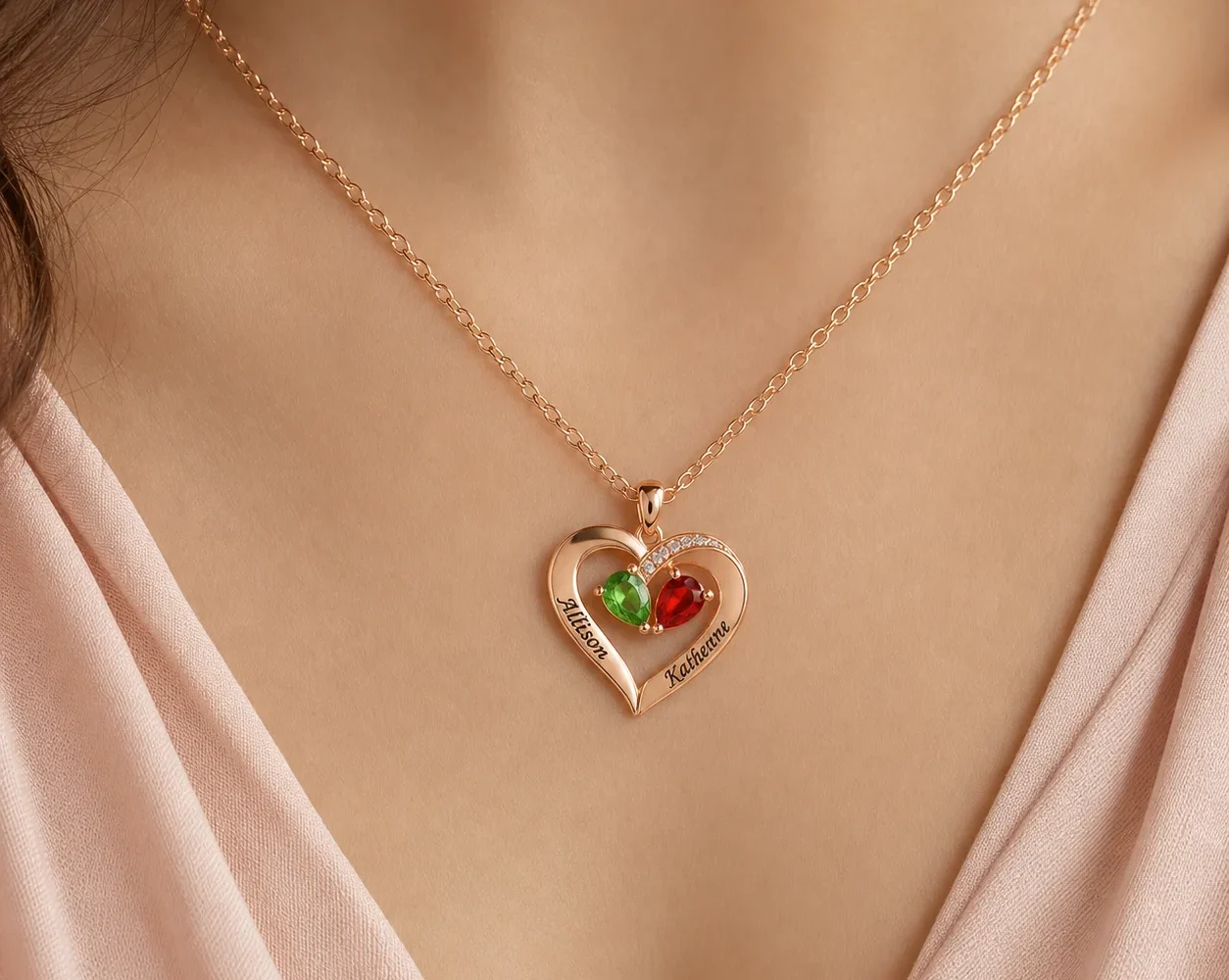
A birthstone accent and a crystal accent may appear close together in a jewelry description, but they do not necessarily perform the same job. A birthstone accent is usually connected to a selected birth month, while a crystal accent may be a decorative style choice that is not assigned to a person. Read the option labels and their positions before drawing conclusions from color or sparkle alone.
Separate the accent’s purpose from its material
The first question is not, “What gem is this?” It is, “What information does this option represent?” In personalized family jewelry, a small colored detail can function as a month marker. If the form asks for January through December beside a name, that field is establishing a relationship between one person and one simulated birthstone.
A separate option may add crystals to another part of the design simply for visual texture. That decorative choice can affect how the piece looks without changing the names or months it represents. The word “crystal” also does not, by itself, establish a specific mineral, origin, grade, or certification. Product-specific material language remains the authority.
Birthstone conventions have changed across places and eras, and some months have recognized alternatives. A personalized selector avoids much of that ambiguity by asking for the calendar month directly. When discussing Amorieva pieces, the colored month markers should be understood as simulated birthstones or crystal-style accents as stated on the current product page.
See the two decisions on the teardrop necklace
The Two-Tone Teardrop Story Necklace makes the distinction concrete. Its current personalization is built for exactly two loved ones: two engraved names and two selected birth months. Those month selections control the two simulated birthstone accents associated with the people in the design.
The necklace also offers a different choice for the heart element: a crystal-set heart or a smooth engraved heart. That is a style decision about the heart, not a third family birthstone. Choosing the crystal-set version does not add another person, and choosing the smooth version does not remove either of the two month-linked accents.
This design uses a plated copper-base necklace section, a stainless-steel pendant component, and simulated or crystal details. Those facts are more useful than trying to identify materials from a highly enlarged photograph. Lighting, editing, and individual screens can all change the way a small colored surface appears.
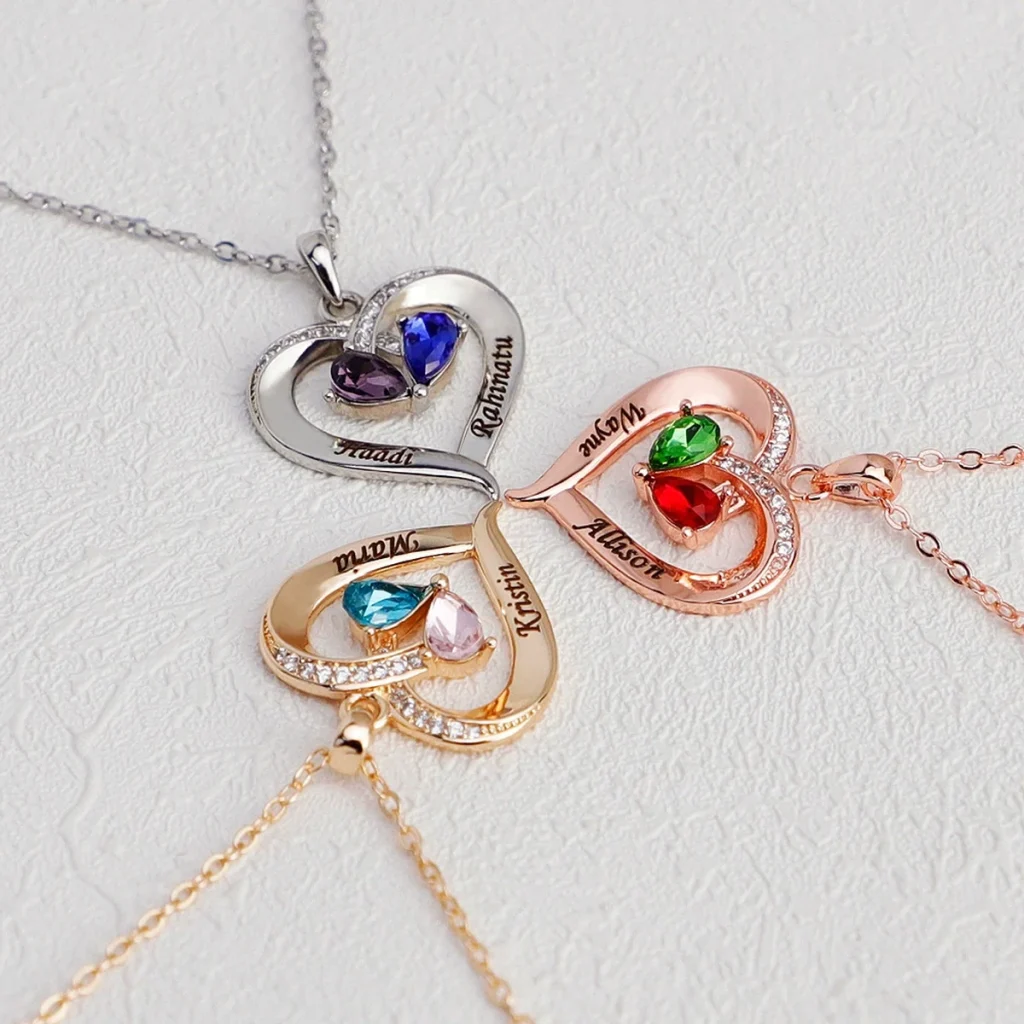
Read a product form in four passes
A careful review is easier when you do not try to solve every option at once. Use four passes:
- People: count the name fields and confirm who each one represents.
- Months: pair each name with the correct calendar birth month in the same order.
- Decorative options: identify choices such as a smooth or crystal-set heart that do not add a person.
- Format and finish: review the available tone and the complete silhouette after the personal facts are correct.
Amorieva’s overview of how personalized ordering works can help you prepare these details away from the checkout form. A written two-row list—name, month, position—makes it much harder to attach the right month to the wrong name.
Use labels instead of interpreting the photo
Product photography is helpful for understanding scale and overall appearance, but it should not replace the written fields. A pale blue detail, for example, cannot tell you whether it is month-linked, decorative, or simply affected by the image lighting. The form label supplies that meaning.
When comparing other designs in the Amorieva shop, look for three clues: whether the month is selected beside a name, whether the accent count changes with the number of people, and whether a crystal choice is listed separately under style or accent. If the description remains unclear, use the personalization and materials FAQ rather than filling the gap with an assumption.
This reading habit is especially useful when two types of sparkle appear on one piece. It keeps a visual detail from being mistaken for an extra birthstone and keeps a birth-month selection from being treated as a claim about gem composition.
Common questions
Does choosing a crystal-set heart add another birthstone?
Not on the current Two-Tone Teardrop Story Necklace. The two selected birth months correspond to the two loved ones. The crystal-set or smooth engraved heart is a separate design choice and does not change the two-person structure.
Can I identify the selected month from color alone?
Color can be a reminder, but it is not a reliable order record. Similar hues, repeated family months, photography, and screen settings can create uncertainty. Keep the name-and-month list and use the selector label as the authoritative input.
Are birthstone lists identical everywhere?
No. Birthstone traditions and alternatives can vary by culture, place, and era. For an Amorieva order, use the actual calendar birth month and the choices shown on that product’s current form.
Translate every sparkle into a specific field
A clear description should let you explain every accent in one sentence: this pair represents two confirmed birth months, while that heart treatment is decorative. If you cannot do that yet, return to the option labels before ordering. Separating people, months, and decorative style protects the family story from a small but meaningful input mistake.