Personalized Necklace for a New Mom: A Practical Choice Guide
Choose a personalized necklace for a new mom by confirming whose story it tells, which detail leads, and how much information the design needs.
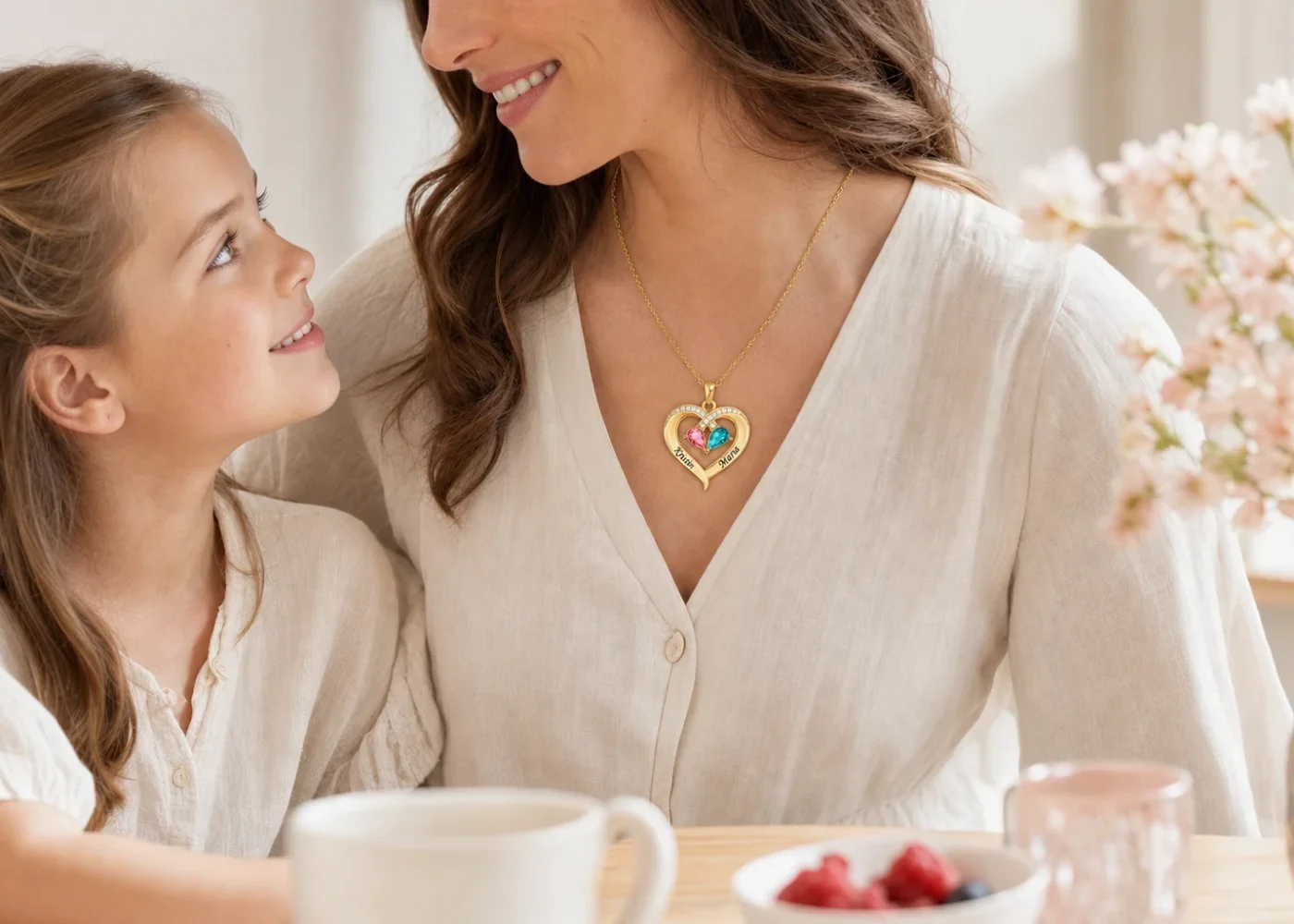
A personalized necklace for a new mom works best when it tells one clear first-family story, rather than trying to record every meaningful date or relationship at once. Begin by deciding whose names belong on the piece, whether the baby’s birth month should be visible, and what the mother already likes to wear. Those three answers will tell you more than a broad search for the most sentimental design.
Write the family story before choosing the necklace
The first useful step is a private two-line brief. Write the exact name the mother uses for the baby, including the preferred spelling, and list the confirmed birth month. Then decide whether the second person in the story should be the mother, a partner, another child, or nobody. Do not add a second name simply because a design provides room for one.
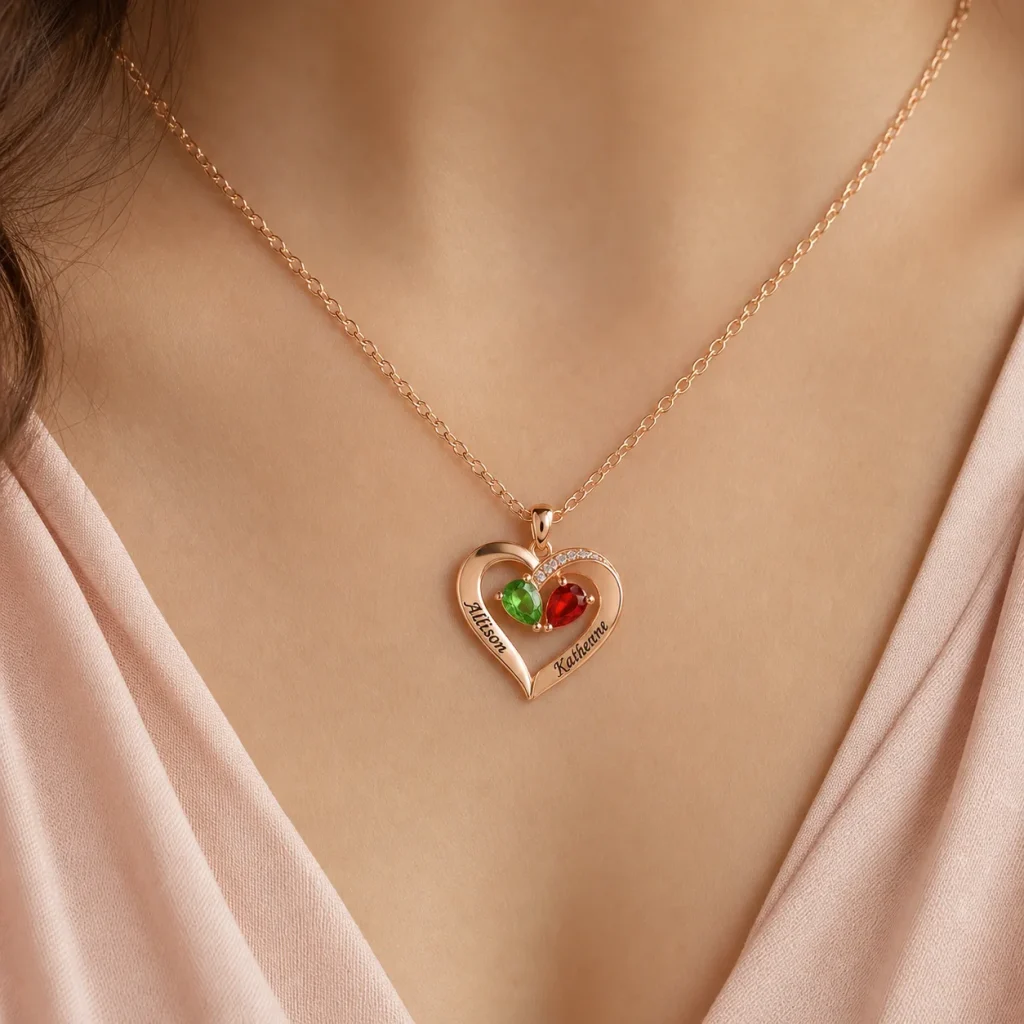
This distinction matters with the Two-Tone Teardrop Story Necklace. Its current personalization is fixed at two names and two birth months. It can suit a new mom when two people genuinely belong in the design—for example, mother and child—but it is not a one-name blank that must be filled creatively. Review the current fields on the Two-Tone Teardrop Story Necklace page before building the gift around it.
If the story is only the baby’s name, or if more than two people must appear, compare structures in the current personalized jewelry collection. Capacity is not a measure of emotional value. It is simply a fit question: the product should match the number of confirmed people without omission or filler.
Decide whether the name or birth month should lead
A name-led necklace is direct. The recipient can read the personal detail without needing to interpret a color. A month-led design adds a compact visual marker, which can be useful when the new mom enjoys color or wants the child’s birth month represented beside the engraving. Neither approach is inherently more meaningful.
Use a simple priority test. If the mother regularly talks about the baby’s name, its spelling, or a nickname, make engraving the first decision. If she enjoys month traditions or small colored accents, confirm the birth month next. If she tends to wear plain, low-color jewelry, a smoother accent treatment may feel more natural than a crystal-led focal point.
Amorieva describes the colored elements on this necklace as crystal or simulated birthstone accents, depending on the product wording. They represent selected calendar months; they should not be treated as proof of a particular gem material. Select by the confirmed month label instead of trying to match a color sampled from a phone screen.
Match the visual detail to her regular style
The AM-NK-102 design offers three tone labels—Gold Tone, Stainless Steel Tone, and Rose Gold Tone—and a choice between a Crystal-set heart and a Smooth engraved heart. Think of these as visible design decisions, not as shortcuts to assumptions about the entire material composition. The current piece combines plated construction with a copper necklace section, a stainless-steel pendant, and crystal decoration.
Look at what the new mom already reaches for. Does she wear one small pendant most days, or does she layer several necklaces? Does she prefer a little reflected color, or mostly smooth surfaces? Is her everyday jewelry warm-toned, cool-toned, or mixed? Choose the closest continuation of an established habit instead of applying a rule based on age, skin tone, or motherhood.
The necklace is recorded at about 45 cm with an approximately 5 cm extender, and the pendant at roughly 17.5 by 16.5 mm. Those measurements help set scale expectations, but they cannot predict exactly where the pendant will sit on every person. Neck and torso proportions, clothing necklines, and any other chains she wears all affect the result.
Use a five-point order review
Before submitting any permanent details, review them as separate decisions:
- Confirm the two intended people and the exact name spelling for each.
- Match one verified calendar month to each name in the same order.
- Choose the tone by her existing wardrobe, not by a material assumption.
- Select the heart accent according to her preference for sparkle or a smoother engraved look.
- Read the complete form from top to bottom once more, preferably against the written brief.
The overview of how Amorieva personalization works can help you keep factual inputs separate from style choices. If you do not know a permanent detail, pause and ask someone who does. A slightly less surprising gift is better than an incorrect engraving.
Common questions
Should the necklace use the baby’s full name or nickname?
Use the form the mother actually recognizes and wants displayed. A nickname can feel intimate, while a full first name may remain easier to understand over time. Confirm the choice with a trusted family member and follow the current product field guidance rather than assuming every spelling will fit identically.
Should the mother’s own birth month be included?
Include it only if the two-person concept is mother and child. If the intended story is two children or another pair, keep the month mapping faithful to those people. Do not add the mother’s month merely to create color balance.
How should a new mom care for a plated personalized necklace?
Keep the piece dry, remove it for showering, swimming, and exercise, avoid perfume and household chemicals, and wipe gently with a soft lint-free cloth. Separate storage can reduce contact with other pieces. Amorieva’s current jewelry care guidance provides the practical routine.
Let one accurate idea carry the gift
A first personalized necklace does not need to summarize the whole family history. It needs an accurate, comfortable idea the new mom will understand immediately. Confirm who is represented, decide whether the name or month is the stronger cue, and choose a tone and accent that resemble what she already wears. When the two-person AM-NK-102 structure matches that brief, it offers a focused way to mark a new chapter without crowding the design.