Personalized Jewelry Returns: What to Check Before You Order
Review personalized jewelry return questions before ordering, including change-of-mind limits, incorrect details, damage, records, and current policy terms.
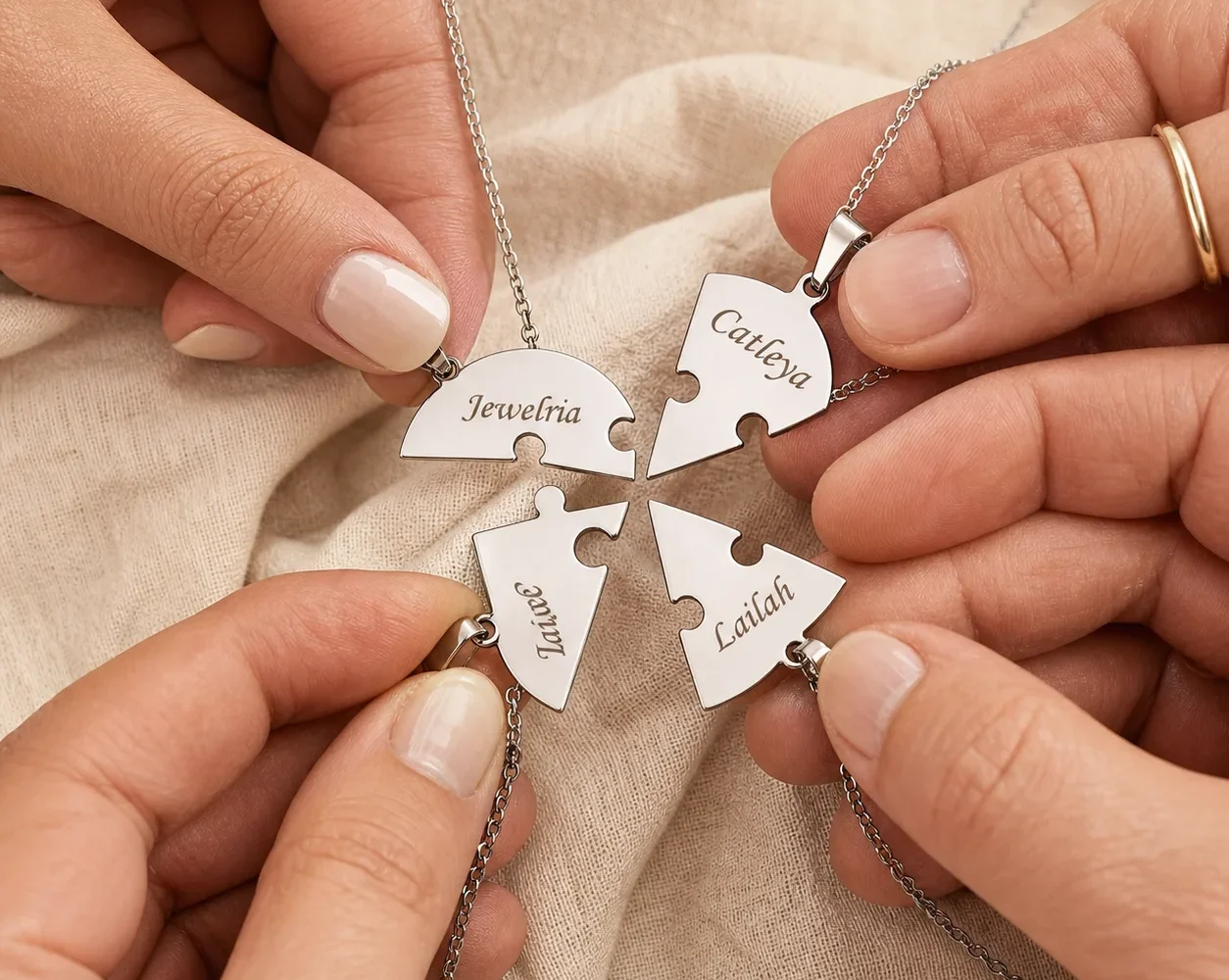
Before ordering personalized jewelry, distinguish a change of mind from a piece that arrives damaged, incorrect, or inconsistent with the confirmed order details. Amorieva’s current policy says personalized pieces are generally not eligible for change-of-mind returns, while problem orders require review under the current terms. Read the live policy, save the submitted personalization, and do not assume a specific outcome before the facts are examined.
Ask which kind of problem you mean
A change of mind means the item matches the confirmed order but the shopper later prefers a different name, tone, format, or gift choice. Personalized details make that situation different from receiving a standard item that can simply return to general inventory.
An order problem is different. Examples include visible damage, a configuration that appears inconsistent with the submitted details, or another defect requiring support review. The distinction does not guarantee a refund, remake, or replacement; it identifies the information the current process needs.
Read the live Amorieva shipping and returns policy immediately before purchase. Policy wording is time-sensitive, so this article is a checklist rather than a substitute for the current terms.
Read for definitions, eligibility, required actions, and timing instructions. Do not rely on a search-result snippet or an old message from another order. Save the date you reviewed the page with the order record so you know which information shaped the decision.
If a policy sentence is unclear, ask a specific question before ordering. “What happens if I dislike it?” is less precise than “How does the current policy treat a correctly prepared personalized item when the shopper later prefers another tone?” Clear categories create clearer expectations.
Resolve preference questions before personalization begins
Confirm the recipient, product, format, capacity, names, months, size, tone, and decorative choices. Ask whether the wearer actually uses that jewelry type. Treat spelling and month entries as permanent instructions rather than placeholders.
A separate digital design proof is not promised. Do not submit uncertain text expecting a later approval stage to catch it. The personalization overview helps you organize the fields before the order is placed.
If a required detail is unclear, use the current FAQ or seek clarification first. A Special Note should not conflict with required selectors or request features outside the stated product capacity.
Also check whether the recipient knows and accepts the chosen style. An accurately prepared piece can still become a change-of-mind problem when a surprise relies on an untested ring size, unwanted jewelry format, or name the person no longer uses. Reduce that risk through discreet confirmation rather than a return assumption.
Use a current product as a capacity check
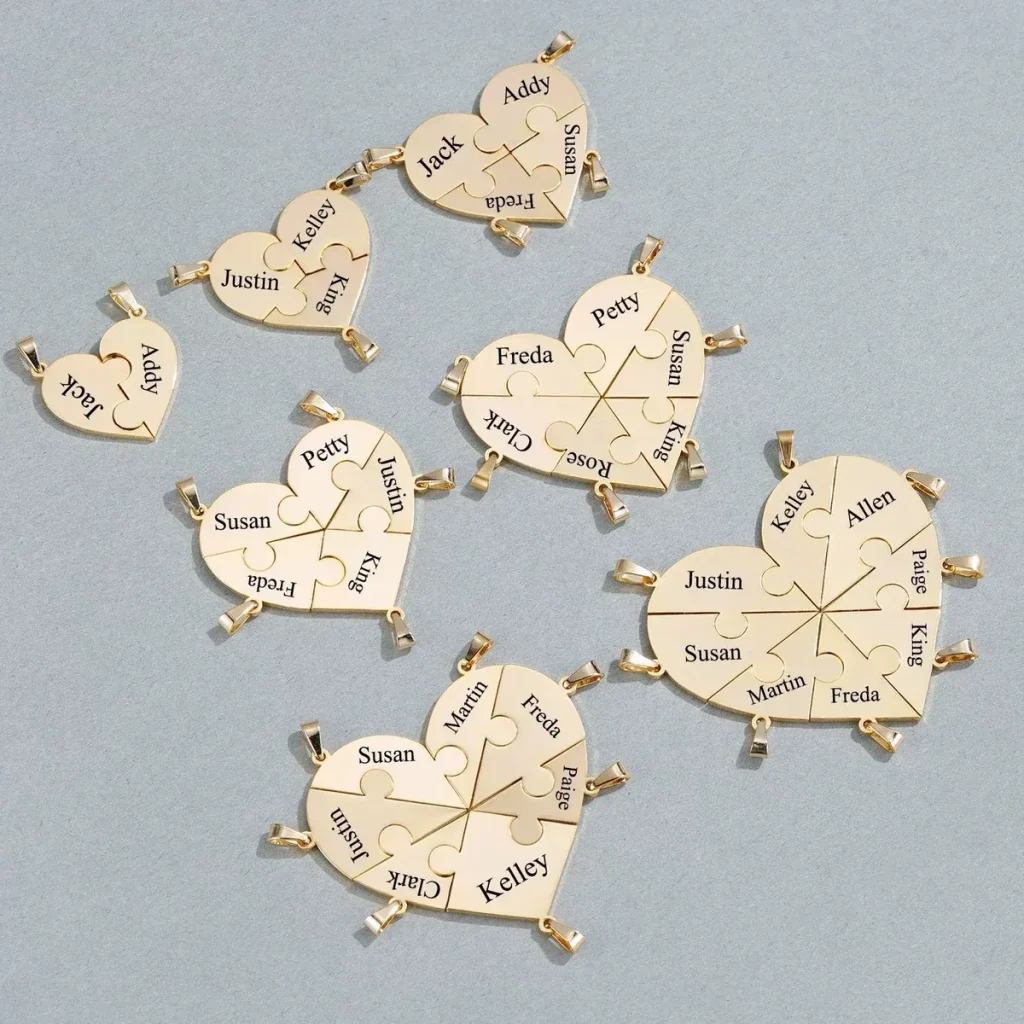
The Together Heart Puzzle Necklace supports two or three interlocking pieces, one engraved name per piece, and no birthstone fields. Its current tone choices do not turn it into a four-piece or multi-name-per-piece design.
Before ordering, write: selected piece count, name on piece one, name on piece two, and name on piece three when applicable. Confirm the intended wearer for each piece. If four relatives need separate pieces, select another structure instead of assuming an unsupported addition can be corrected later.
This kind of pre-purchase check addresses change-of-mind risk. It does not waive support review if the received item appears inconsistent with the confirmed configuration.
Because the pieces are intended for different wearers, record who receives each one. If names are intentionally exchanged, note that decision too. The product can match the submitted details while the giver later realizes the handoff assignment was reversed; an owner map distinguishes order accuracy from distribution confusion.
Keep a clean order record
Save the order confirmation and the exact personalization as submitted. Record the chosen product, piece or person count, spelling, months where applicable, size, tone, and delivery address. A text record is more useful than relying on memory after a surprise gift has been discussed by several relatives.
When the package arrives, compare the item with that record before judging it against an earlier draft. If there is a concern, preserve the packaging and follow the current support instructions. Describe what is observable and which confirmed detail appears different; avoid guessing at the cause.
Use neutral descriptions such as “the engraving reads X while the confirmation records Y” or “the second piece shows visible damage at this location.” Keep overview and close-up photos if the current process asks for documentation. Do not alter, polish aggressively, or discard the item before support has had an opportunity to review the condition.
Common questions
Can I return personalized jewelry because I chose the wrong spelling?
Current Amorieva guidance says personalized pieces are generally not eligible for change-of-mind returns. Check the live policy and resolve spelling before submission; do not assume a correction outcome.
What if the item arrives damaged?
Follow the current policy and support process promptly, keep the order record, and document the observable condition. The response depends on review, so this article cannot promise a particular remedy.
Does a Special Note override the selected options?
It should not be used that way. Required fields need to contain the final choices, and notes should only clarify an allowed detail without creating a conflict.
Order with the facts already settled
Return questions are easiest to manage when the shopper knows what was chosen and what arrived. Read the current policy, confirm that personalized change-of-mind limits fit your decision, save the submitted configuration, and distinguish preference changes from observable order problems. That preparation cannot determine a future review, but it creates an accurate record for whatever happens next.
Before leaving the product page, answer four questions in writing: Am I certain about the person and format? Are all permanent details verified? Have I read the current policy? Can I document the submitted configuration? If any answer is no, more review is more useful than proceeding quickly.