Personalized Family Keyring or Bangle: Which Format Fits the Recipient?
Choose a personalized family keyring or bangle by comparing wear habits, carry habits, one-to-five-person capacity, and the same core design choices.
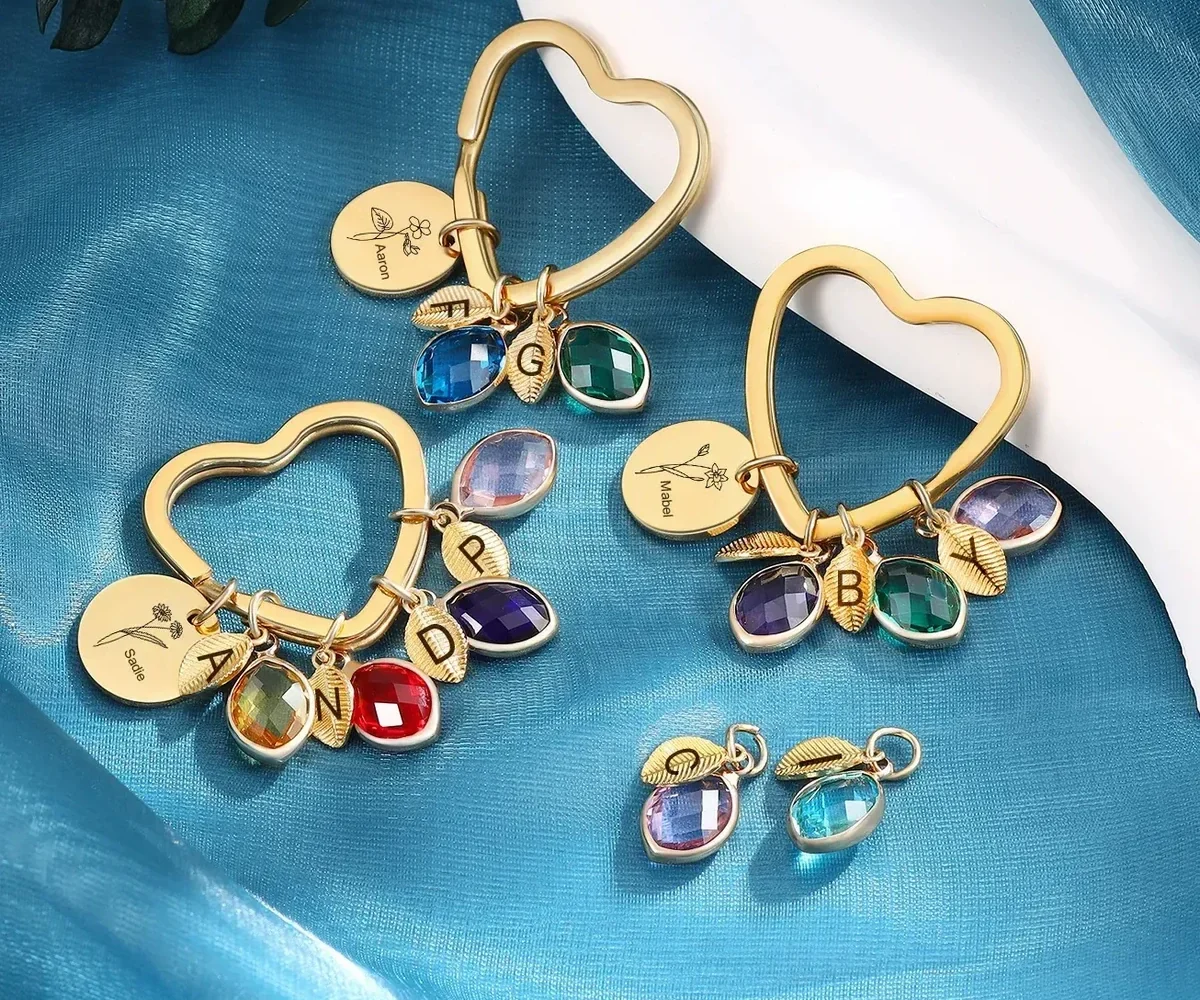
A personalized family keyring or bangle should match what the recipient already does each day. Choose the bangle for someone who welcomes a visible wrist piece and is comfortable checking its fit. Choose a keyring for someone who prefers to carry the family story on keys or a bag. The personalization can remain similar while the daily interaction changes completely.
Begin with carry versus wear
Ask one practical question: where would this person naturally keep the gift? If she regularly wears wrist jewelry and likes details that move with her, the bangle format deserves consideration. If she rarely wears jewelry, manages keys every day, or would rather attach the piece to a personal item, a keyring may be more useful.
Do not treat the keyring as a lesser substitute. It is a different use case. It avoids guessing how a wearable feels, while the bangle keeps the design close and visible during wear. The recipient’s stated preference is stronger evidence than a giver’s idea of what a jewelry gift should look like.
If you are still comparing broad formats, the current Amorieva collection provides necklaces, wrist pieces, a ring, and name-only options alongside this convertible family-branch design.
Understand what stays the same
The Family Branch Birthstone Bangle currently offers an adjustable bangle, a round keyring, or a heart keyring. Across those formats, the design can represent one to five loved ones through engraved name leaves and simulated birthstone charms. It is a plated mixed-metal piece available in gold, stainless-steel, or rose-gold tone.
The center disc is another planning area. Current ordering uses the Special Note workflow to specify its short text. That message should be prepared separately from the name-and-month pairs so it does not become confused with a leaf engraving.
Because the family information stays consistent, you can decide in this order: format, included people, exact names, confirmed months, center text, and tone. Changing from bangle to keyring should not silently change who the piece represents.
This shared structure makes the comparison unusually clean. You are not choosing between two unrelated products; you are deciding how the same family-branch idea should enter the recipient’s routine.
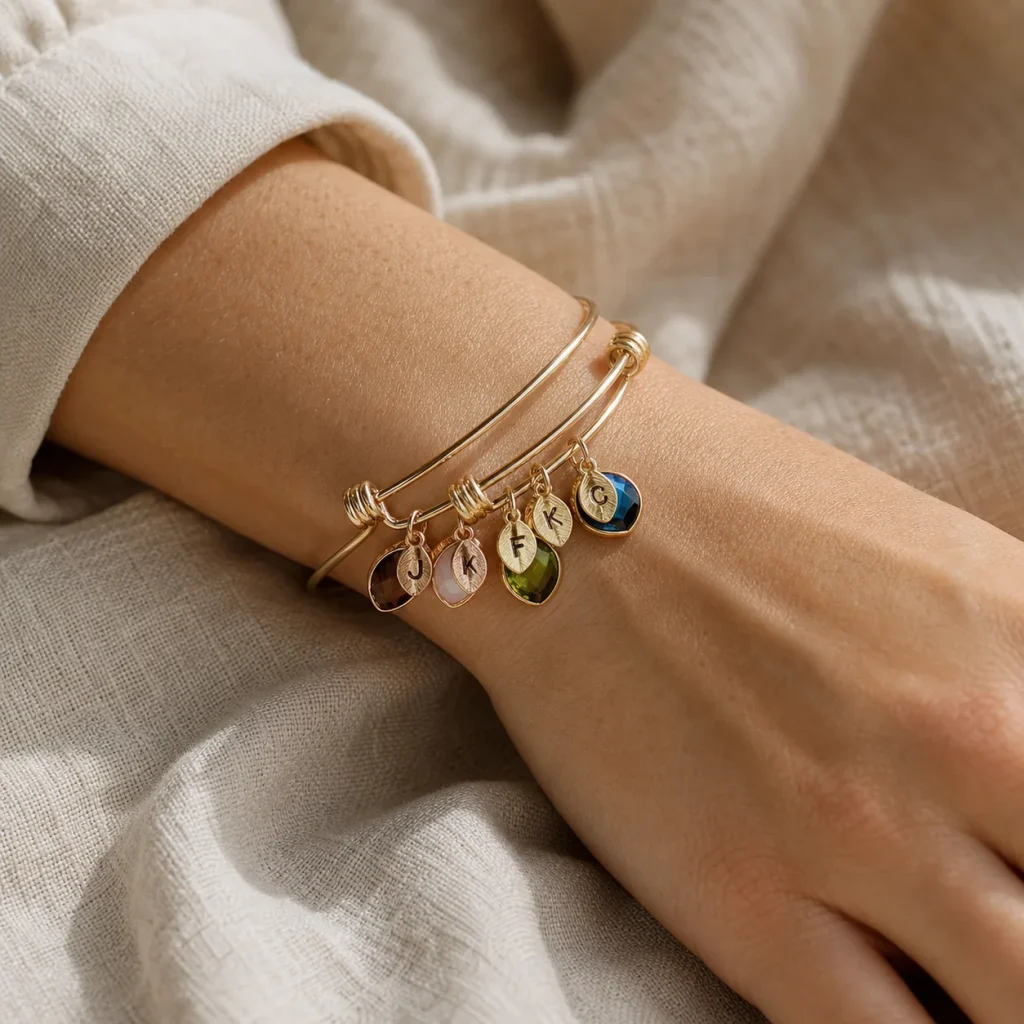
Compare all three formats with a routine test
Imagine one normal week rather than one gift-opening moment. For the bangle, consider whether the recipient wears bracelets at work, removes them for tasks, or prefers an uncluttered wrist. Adjustable does not mean that every wrist will feel the same, so comfort expectations still deserve attention.
For a keyring, ask which object is genuinely personal and used often. A house-key bundle, handbag attachment, or another carried item may make sense, but the recipient should control where it goes. The round keyring is listed at approximately 30 mm, while the heart keyring is approximately 31 mm. Those measurements help compare the two silhouettes without predicting every finished arrangement.
Consider visibility as well. A bangle keeps the names near the wearer, while a keyring may be seen whenever keys or a bag are handled. Neither level of visibility is inherently preferable; privacy and taste should decide.
Use this three-line test:
- Bangle: chosen because the recipient already likes wrist jewelry and wants the names visible while worn.
- Round keyring: chosen for a neutral carried outline and a practical daily object.
- Heart keyring: chosen when the heart silhouette fits the recipient’s taste, not because it changes the family information.
Plan the personalization without overloading it
Write one row per loved one, pairing the approved name with the confirmed birth month. Then draft the center message on a separate line. A center disc of about 20 mm is not a reason to compose a long paragraph. Keep the message concise and follow the current field instructions.
After entering the details, compare every row with the original list. Check format and tone independently. Amorieva’s personalization process guide explains why confirmed information should be ready before a made-to-order piece is submitted.
Care also changes with use. Plated pieces should be kept dry, protected from perfume and household chemicals, wiped gently with a soft lint-free cloth, and stored separately. For the full routine, use the current jewelry care guidance. A keyring may meet different objects than a wrist piece, so inspect it rather than assuming a carried format needs no care.
Common questions
Does the keyring support the same number of loved ones as the bangle?
The current Family Branch options support one to five engraved name leaves with corresponding simulated birthstone charms across the listed bangle and keyring formats. Review the live product fields before submitting details.
Is an adjustable bangle suitable for every wrist?
Adjustability provides flexibility, but it is not a universal fit promise. Consider the recipient’s wrist-jewelry habits and comfort, and ask a fit question before ordering if there is uncertainty.
Can the center disc replace the individual names?
It serves a different role. Use the leaf fields for the one-to-five names and months, and prepare the center text through the current Special Note instruction. Keep both parts short, accurate, and clearly labeled.
Let the recipient’s routine choose the format
The right family-branch format is the one the recipient will naturally use. Keep the one-to-five-person story, names, months, center message, and tone accurate, then decide whether that story belongs on her wrist or with something she carries. This preserves the meaning while making the gift practical on an ordinary day.