Family Birthstone Necklace, Bracelet, or Ring: How to Choose
Compare a family birthstone necklace, bracelet, and ring by wearing habits, sizing confidence, family count, and how each format organizes names and color.
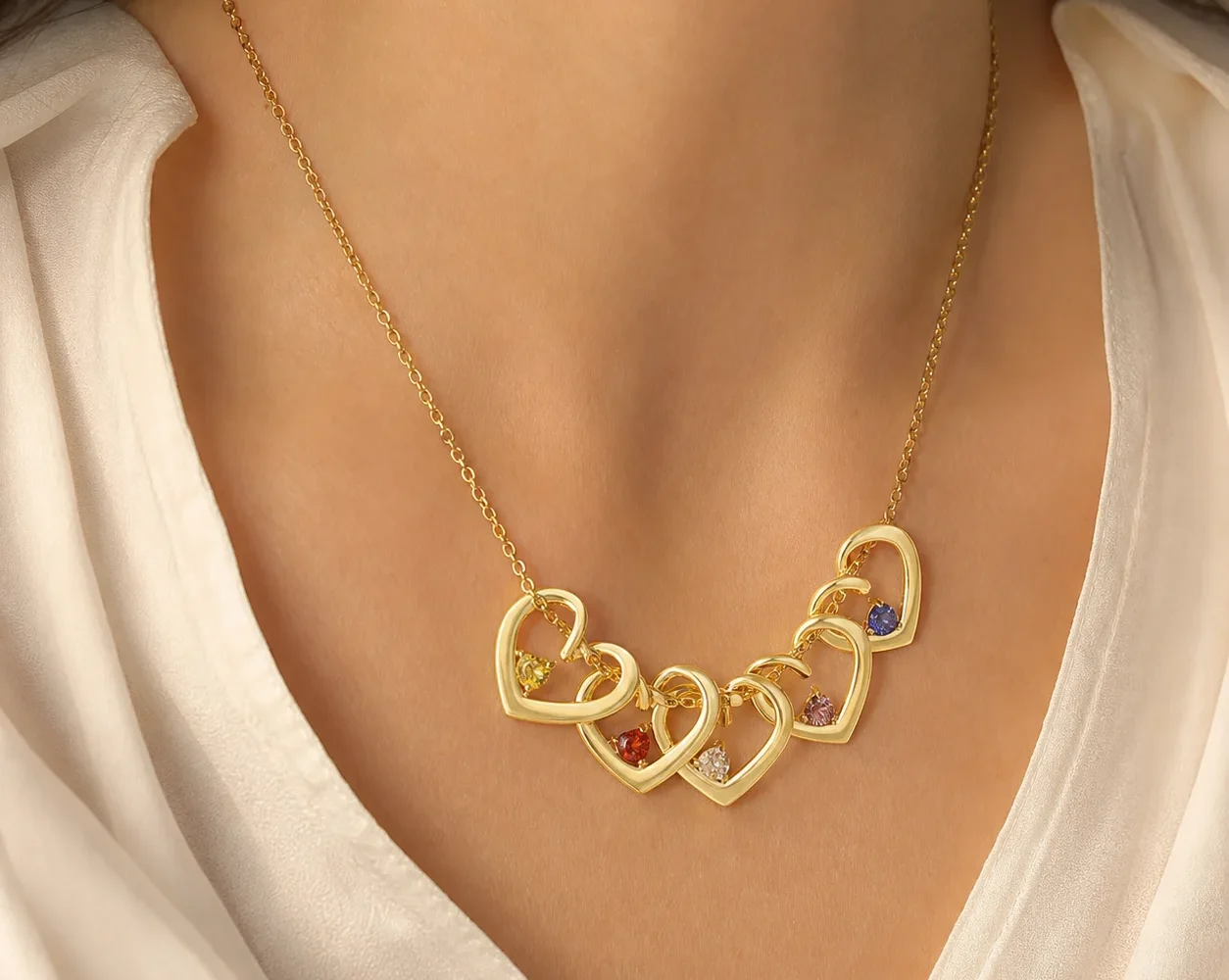
Choosing a family birthstone necklace, bracelet, or ring should begin with how the recipient actually wears jewelry. A necklace reduces ring-size uncertainty and keeps the family story near the neckline; a bracelet makes the details visible during daily movement; a ring creates a compact, hand-centered arrangement but requires reliable sizing. After format, compare family capacity and the way names and simulated birthstones are organized.
Use four questions to choose the format
A good comparison needs more than a list of product features. Ask four practical questions in order:
- Where does the recipient already wear jewelry? Repeated behavior is more informative than a gift trend.
- How certain is the required fit? Rings need a confirmed size; cuffs and bangles still need a reasonable fit judgment.
- How many people must the piece represent? Product capacities differ.
- Should each name have a separate month marker? Look at the current field structure, not color alone.
If one answer is unknown, do not hide it behind a “best overall” label. Choose the format with the fewest unresolved assumptions or invite the recipient into that part of the decision.
Choose a necklace for familiar, low-sizing-friction wear
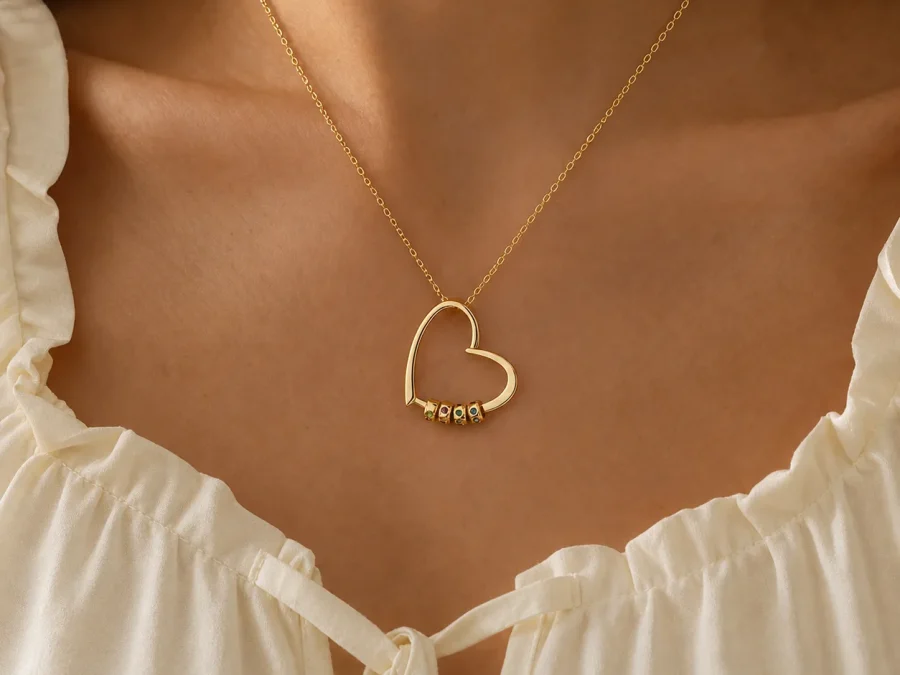
A necklace is often practical when the recipient already wears pendants and you cannot confirm a ring size. The chain and pendant still have dimensions, so compare the current length with a necklace they like. Neckline, layering habits, and pendant scale affect the choice.
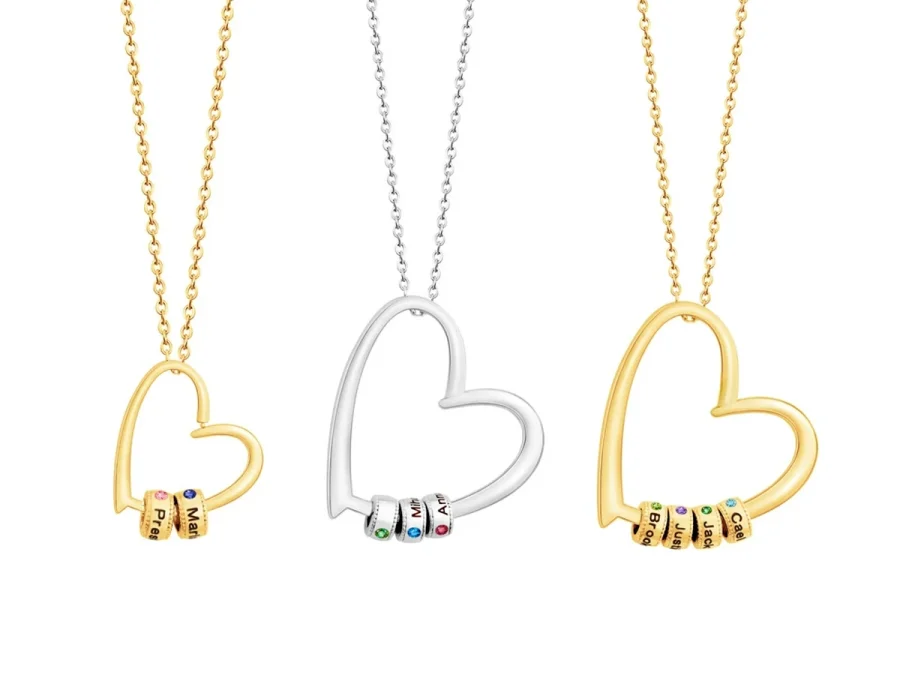
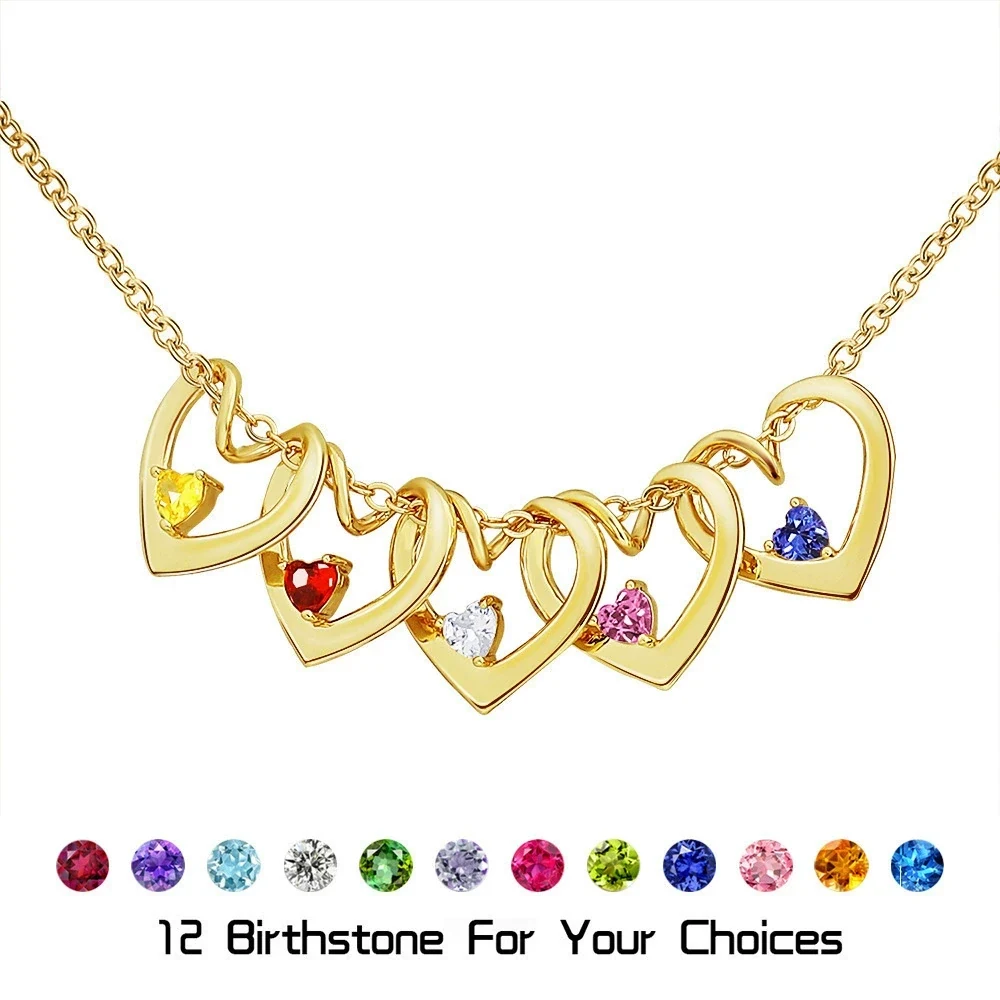
The Twisted Heart Birthstone Necklace currently supports one to five loved ones, with an engraved name and a simulated birthstone selection for each. It is available in necklace or bracelet format and in gold, stainless-steel, or rose-gold tone. Its paired name-and-month structure suits a shopper who wants each person identified individually.
That design is less appropriate if the intended family count exceeds five or if the recipient avoids heart motifs. Product capacity is a boundary, not an invitation to combine names without checking readability.
Choose a wrist format for visible, active personalization
Wrist jewelry brings the details into the wearer’s own line of sight. It can work well for someone who already wears bangles or cuffs and does not routinely catch them on clothing or work equipment. The tradeoff is fit: “adjustable” provides flexibility but does not mean every wrist will feel the same.
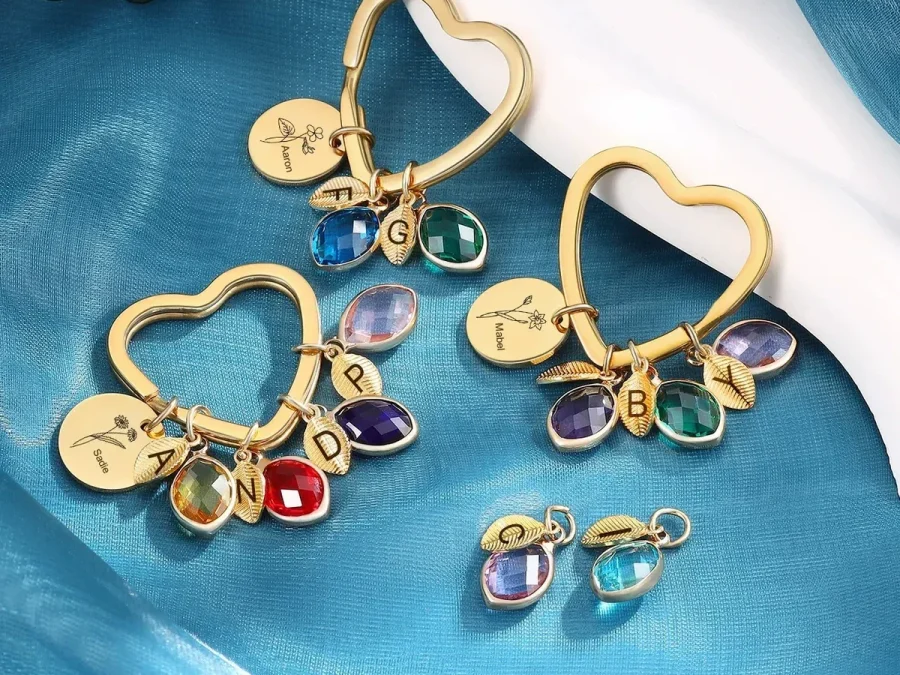
The Family Branch Birthstone Bangle supports one to five engraved leaf-and-month combinations and is also offered as a round or heart keyring. That format flexibility is useful when the family arrangement appeals to the recipient but wrist wear does not. The Open Heart Birthstone Cuff is a different, fixed two-person concept, so it should be considered only when exactly two names and months tell the intended story.
Choose a ring for a compact cluster and confirmed size
A ring concentrates the family colors in a small area and can feel more visually present because it moves with the hand. It is the least forgiving surprise when sizing is uncertain. Use a confirmed current ring size, not a guess based on height, clothing size, or an old ring worn on another finger.
The Family Constellation Name Ring is currently offered in US sizes 6 through 10, with one to eight simulated birthstone accents and name or short engraving. As the count increases, the cluster becomes visually denser. The current product does not offer a three-tone selector, so do not assume its finish choices match those of the necklace or cuff.
Compare the full decision, not just the category
Make a one-page matrix with columns for usual wear, fit confidence, family count, desired name visibility, and care habits. Mark a format “unresolved” if it depends on missing information. Then review the remaining options in the Amorieva family jewelry collection.
Also consider care. Current plated designs should be kept dry, removed for showering, swimming, and exercise, protected from perfume and household chemicals, wiped gently, and stored separately. A recipient who cannot follow that routine may prefer a carried keyring format, though a keyring still needs considerate surface care.
Finally, preview the information at the scale the recipient will encounter it. Enlarged product images help explain details, but ordinary wearing distance determines whether the complete arrangement feels calm, colorful, or busy.
Common questions
Which format is easiest to give as a surprise?
A necklace often removes ring-size uncertainty, but you still need the recipient’s style, preferred chain drop, names, and months. A keyring can remove wearable fit questions. The easiest option is the one supported by confirmed facts.
Can one format hold more family birthstones than another?
Yes, but capacity is product-specific. In the current examples, the Twisted Heart and Family Branch designs support one to five loved ones, while the Family Constellation ring supports one to eight accents.
Should I choose by birthstone color?
Use color as one visual consideration, not the only decision. Verify each calendar month, then evaluate format, capacity, name placement, fit, and the recipient’s normal jewelry habits together.
Let ordinary habits settle the comparison
The format that gets worn or used naturally will carry the family story more convincingly than a category chosen in the abstract. Observe the recipient’s routine, remove options that rely on uncertain sizing or capacity, and then compare the remaining layouts. That sequence turns necklace, bracelet, and ring into practical alternatives instead of competing declarations of meaning.