Garnet vs Ruby: How January and July Birthstones Differ
Compare January garnet and July ruby by mineral identity, month tradition, and color range, then separate those facts from simulated jewelry accents.

Garnet and ruby are different gems tied to different birthstone months. Garnet is the January tradition and refers to a group of related minerals with a broad color range. Ruby is the July tradition and is the red variety of corundum. Both may be represented by red color cues in personalized jewelry, but a shared color does not make their mineral identities the same—and a month-labeled simulated accent is not proof that either named gem is present.
Garnet and ruby have different mineral identities
The GIA January birthstone reference explains that garnet is a group of several minerals, including gem varieties such as pyrope, almandine, spessartine, grossular, and andradite. Red garnets are familiar, but the family also includes orange, yellow, purple, and green examples. “Garnet” therefore names more than one red look.
The GIA July birthstone reference identifies ruby as a variety of the mineral corundum. Ruby’s red comes from chromium, and natural rubies can range through different red and purplish-red appearances. The important comparison is structural: garnet is a mineral group associated with January, while ruby is red corundum associated with July.
Red is a useful cue, not a gem identification
Red helps a shopper recognize the familiar January and July birthstone traditions, especially in a twelve-month selector. It is not a sufficient material-identification test. A red object could be garnet, ruby, another material, or a simulated decorative accent. Reliable gem identification requires evidence beyond a photograph or color name.
Color also varies within the natural categories. GIA notes garnet’s unusually broad range, while ruby itself can show differences in hue and tone. Lighting, photography, display settings, metal color, and the small scale of an accent can change how two reds look on screen. For that reason, “darker means January” and “brighter means July” are not dependable ordering rules.
The written month remains the safer reference when the accents are small, reflective, or photographed under different conditions.
Birthstone tradition and product material are separate facts
A birthstone list answers a cultural question: which named gem is traditionally associated with a month? A product specification answers a material question: what is this particular jewelry element? Those questions can meet in a design without having the same answer.
Amorieva currently describes its selectable colored elements as simulated birthstone or crystal-style accents. Selecting January or July identifies the intended month cue. It does not authenticate the accent as garnet or ruby, promise a gemological grade, or transfer the physical properties and care instructions of those mined materials to the product. The family birthstone month guide can help verify month associations while preserving that boundary.
Map January and July with names, months, and positions
When one family layout includes both January and July, make a written assignment before ordering. Use four columns: person, exact engraved name, month, and position. Write “January” or “July” rather than “dark red” or “bright red.” If the product form numbers the entries, copy that number into the worksheet and review the list in both directions.
This method still works if the two simulated accents look nearly alike at wearable scale. The engraved name and recorded position carry the distinction that color alone cannot. It also protects against a more basic mistake: choosing a color by memory instead of verifying the person’s birth month. The Amorieva personalization process is designed around the details the shopper confirms and submits.
Apply the distinction to the Twisted Heart design
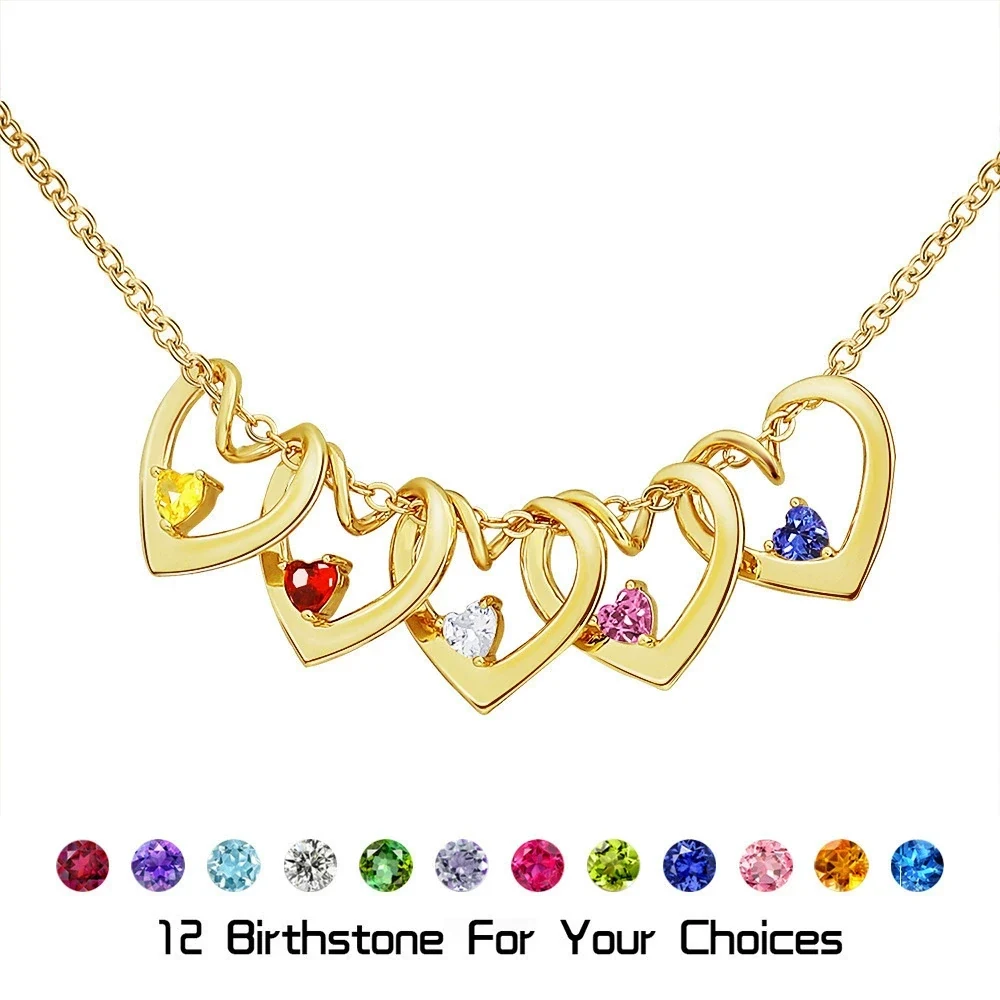
The Twisted Heart Birthstone Necklace currently supports necklace or bracelet format, one to five loved ones, one engraved name and simulated birthstone selection for each included person, and Gold Tone, Stainless Steel Tone, or Rose Gold Tone. It can represent a January person and a July person in one piece when both entries are mapped correctly.
Choose the design because its capacity and format fit the family, not because its small accents are expected to reproduce natural garnet or ruby. Review the names, month fields, format, and tone separately. After the piece arrives, follow Amorieva’s plated-jewelry care guidance rather than natural-gem instructions borrowed from an unrelated garnet or ruby purchase.
Common questions
Are garnet and ruby both always red?
Ruby is the red variety of corundum. Garnet is a mineral group commonly associated with red but also found in orange, yellow, purple, green, and other colors. Their January and July associations remain different even when a jewelry chart represents both with red.
Can I identify a ruby or garnet from a product photo?
No. Color and a photograph are not enough to authenticate a gem material. Read the product description. Amorieva’s month-selectable elements in this design are simulated birthstone accents, not claimed garnet or ruby specimens.
What if January and July look almost the same in the necklace?
Use the confirmed month field, engraved name, and planned position as the family key. Do not change a correct month merely to force greater color contrast, and do not promise that photographs will match every screen or lighting condition.
Garnet and ruby remain distinct because of their mineral identities and month traditions—not because a small red cue must look a certain way. In a personalized piece, accurate names and month assignments preserve that distinction without making an unsupported gemstone claim.