Children’s Names on Jewelry: A Privacy and Consent Checklist
Before placing children's names on jewelry, decide who wears it, where names will be visible, which name form is approved, and whether sharing is welcome.
Children’s names on jewelry create a privacy decision as well as a design choice. Before using a full name, nickname, initial, or no visible name, identify who will wear each piece, where it will be seen, whether photographs may be shared, and what the child and responsible adults prefer. This checklist supports a family conversation; it is not legal advice.
Map the actual visibility
A pendant worn under clothing has a different visibility pattern from a name charm displayed on a bag or a necklace photographed for public posts. Write down ordinary settings: school pickup, work, travel, community events, and online sharing. Do not judge exposure only from the gift-opening moment.
Consider who controls each item. A parent wearing a child’s name makes different daily choices than a child wearing their own visible name. A shared set gives each wearer separate responsibility for one piece.
Review transitions as well as routine. Travel, school changes, new extracurricular activities, and a move can alter who sees the piece and what other information appears with it. A choice that felt private inside one household may become more public in a new setting.
Choose the least identifying name form that still feels personal
Options may include a familiar nickname, first name, approved initial, family role, or a design without visible text. The appropriate choice depends on the product’s supported fields and the family’s comfort. Do not add a surname, location, school, or other identifying context merely to make an engraving more specific.
Ask the child in an age-appropriate way when possible. A young person may have a clear preference about which name is used publicly. Responsible adults should also agree on the display and sharing plan.
Consent should be revisitable. A child may enjoy a visible nickname now and prefer less identification later. The family can store the piece, change how it is worn, or stop posting close-ups without treating the earlier choice as permanent permission.
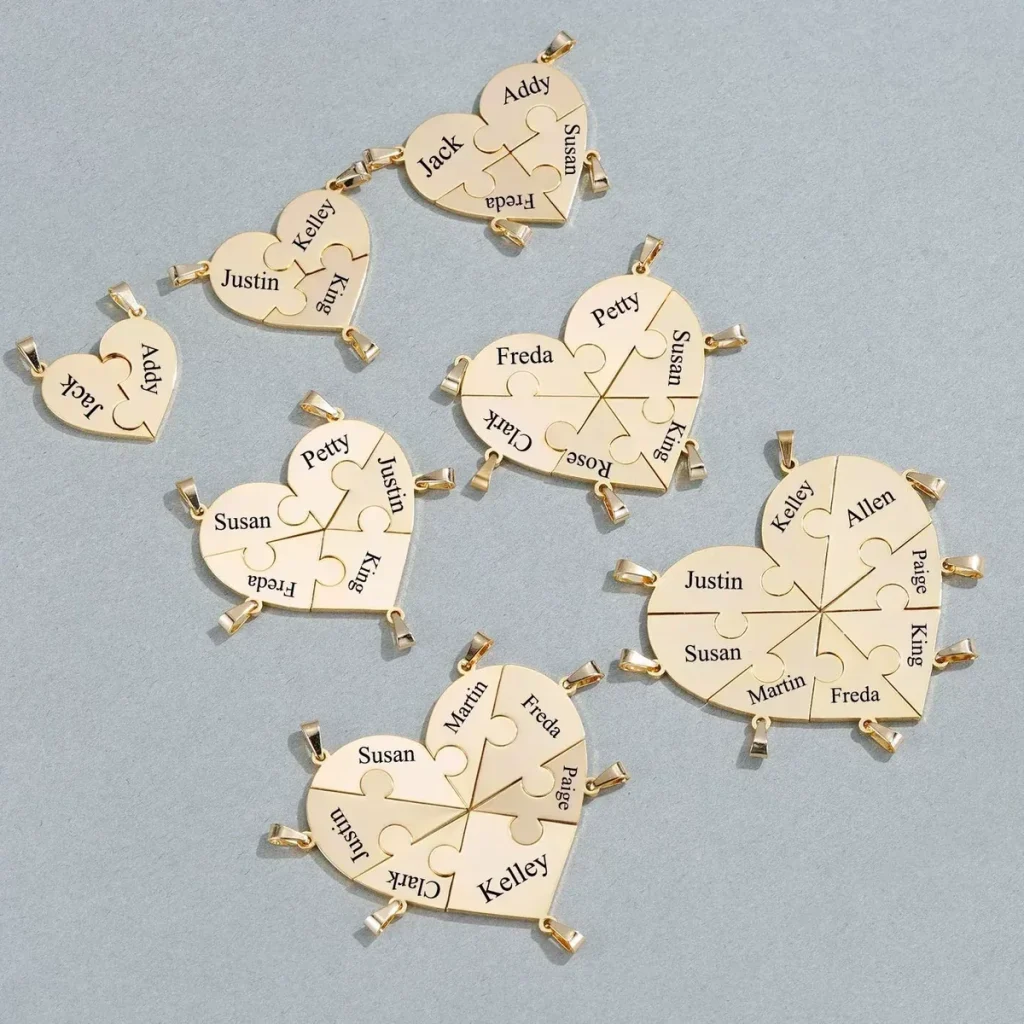
Apply the checklist to a shared puzzle necklace
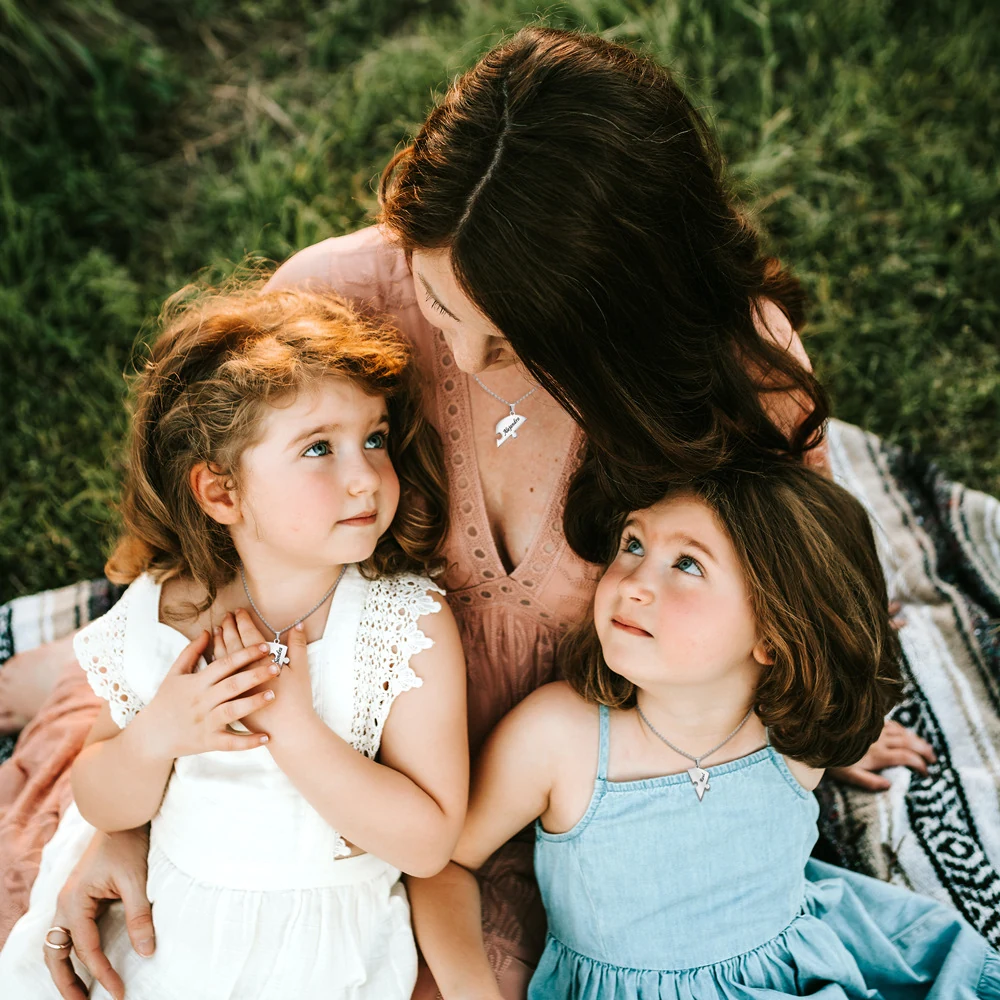
The Together Heart Puzzle Necklace is a plated stainless-steel design with two or three interlocking heart pieces and one engraved name per piece. It has no birthstone field and offers three finish tones.
Because each name appears on a separate wearable piece, decide who receives each piece and whether that person is comfortable displaying the approved engraving. The current form is name-led; do not assume every symbol, blank field, or alternate text is supported. Ask before substituting an initial or role.
If no visible name is appropriate, this current product may not fit the brief. Compare other formats in the Amorieva collection or choose a non-personalized object rather than hiding an unsupported request in a note.
Create a family consent record
- Wearer of each piece.
- Approved display form for every child.
- Places where the piece will normally be visible.
- Whether public photographs showing the engraving are welcome.
- Who can revisit the decision as the child grows.
Keep the record simple and private. It is a planning aid, not a permanent judgment. Preferences can change, and a child who accepts a nickname today may choose another public name later.
Proofread and share with restraint
Once the display forms are approved, compare them character by character with the product form. Use Amorieva’s personalization process to separate names, piece count, order, and tone. The current personalization FAQ should resolve a field question before submission.
After the gift arrives, ask before posting close-up images that make names readable. Avoid combining a visible engraving with location tags, schedules, or school information. Privacy is shaped by context, not just by the word on the metal.
Check reflections and backgrounds before sharing. A photograph can reveal mail, uniforms, home numbers, or event badges even when the caption is careful. Crop to the design only when everyone involved accepts the image, and avoid turning an editorial product scene into evidence about a real child.
Common questions
Is a nickname always more private than a full name?
Not always. A distinctive nickname can still identify a child within a community. Consider the name together with wearer, location, photographs, and other visible information.
Should siblings use the same naming rule?
Consistency can simplify the design, but each child’s and family’s preference matters. Approve every display form individually rather than applying one rule without discussion.
Can I leave a puzzle piece blank?
Do not assume so. The current design uses one engraved name per piece. Ask whether an alternative is supported or choose a different product when visible text is not appropriate.
Personal does not have to mean public
A child’s name can carry deep family meaning without needing maximum visibility. Choose the display form and product through an explicit conversation, review where it will appear, and share images with restraint. The design remains personal because the family approved it—not because strangers can read every detail.
When preferences conflict, choose the least public supported option and revisit the gift together. Preserving a surprise is never a reason to bypass the people responsible for the child’s privacy.
Store the approved naming and photo-sharing decision with the gift record, then review it before any later public post instead of treating consent at ordering as permanent.