Birthstones vs Zodiac Stones: What Is the Difference?
Compare birthstones and zodiac stones, see why their lists can differ, and choose a clear month-based plan for personalized family jewelry.
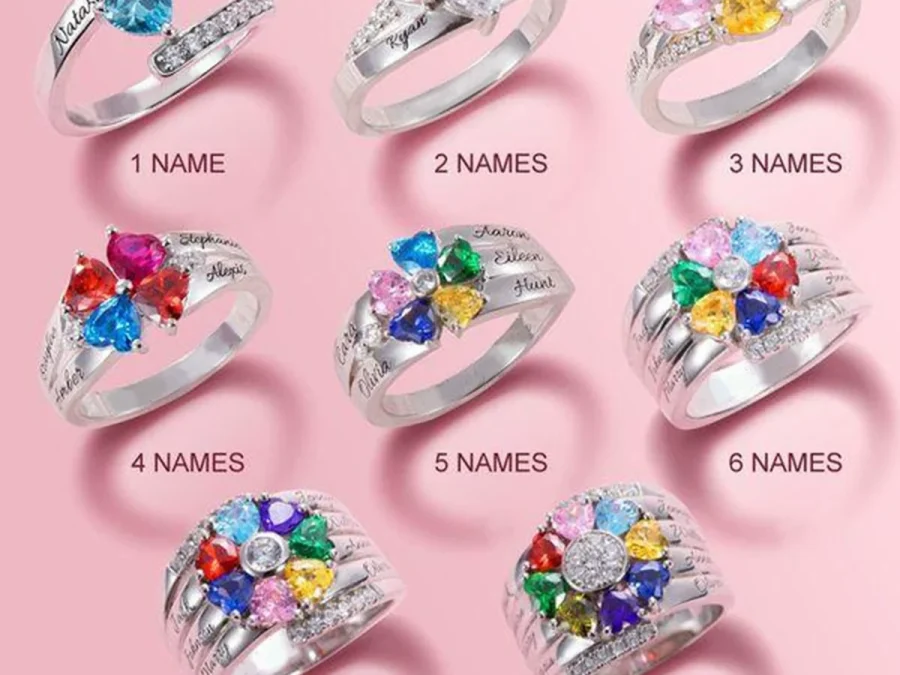
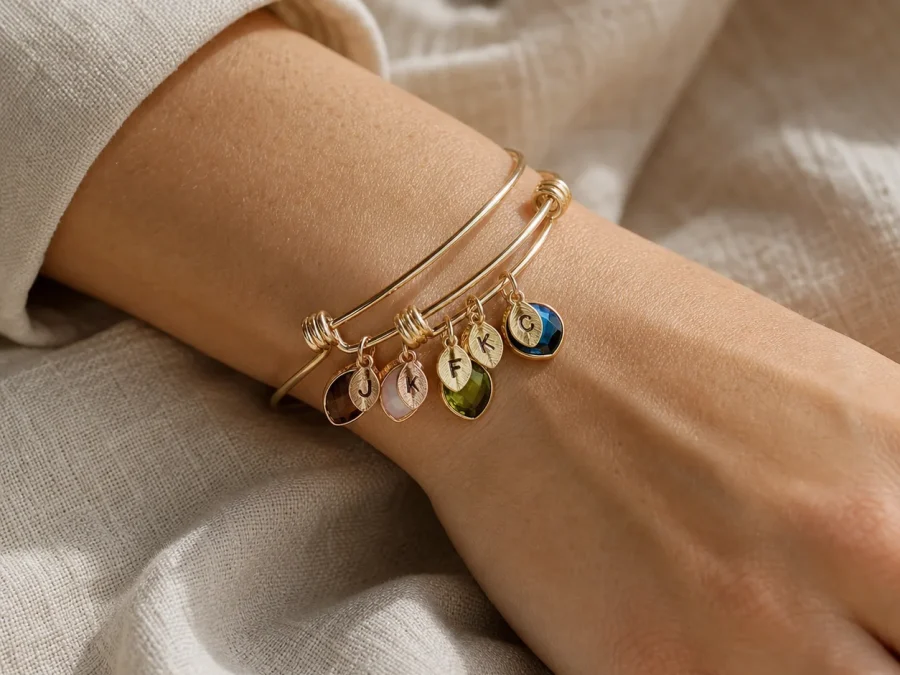
Birthstones and zodiac stones are two different cultural systems. Birthstones usually begin with a calendar month, while zodiac stones begin with an astrological sign and its date range. The lists sometimes overlap, but they are not interchangeable rules. For personalized family jewelry, the clearest approach is to decide which tradition the gift will follow and then use the labels offered on the product page consistently.
Two traditions start from different information
A birthstone question starts with “Which month was this person born?” Someone born in late March and someone born in early March share the same month entry, even though their zodiac signs may differ. A zodiac-stone question starts with a sign, so its boundary changes during a month. That alone can produce different answers for two people whose birthdays are only days apart.
Neither system is a scientific test of character or a prediction of outcomes. They are symbolic traditions that people may use to organize a personal story. Lists can also vary by culture, place, source, and era. The Gemological Institute of America’s birthstone reference is useful for checking customary month associations, but a zodiac list from another source may use a different historical or astrological framework.
Before buying, write one sentence that defines your choice: “This necklace will represent everyone by birth month,” or “This separate keepsake follows our family’s zodiac tradition.” That sentence prevents accidental mixing when several names and dates are involved.
Why month labels are clearer for an Amorieva order
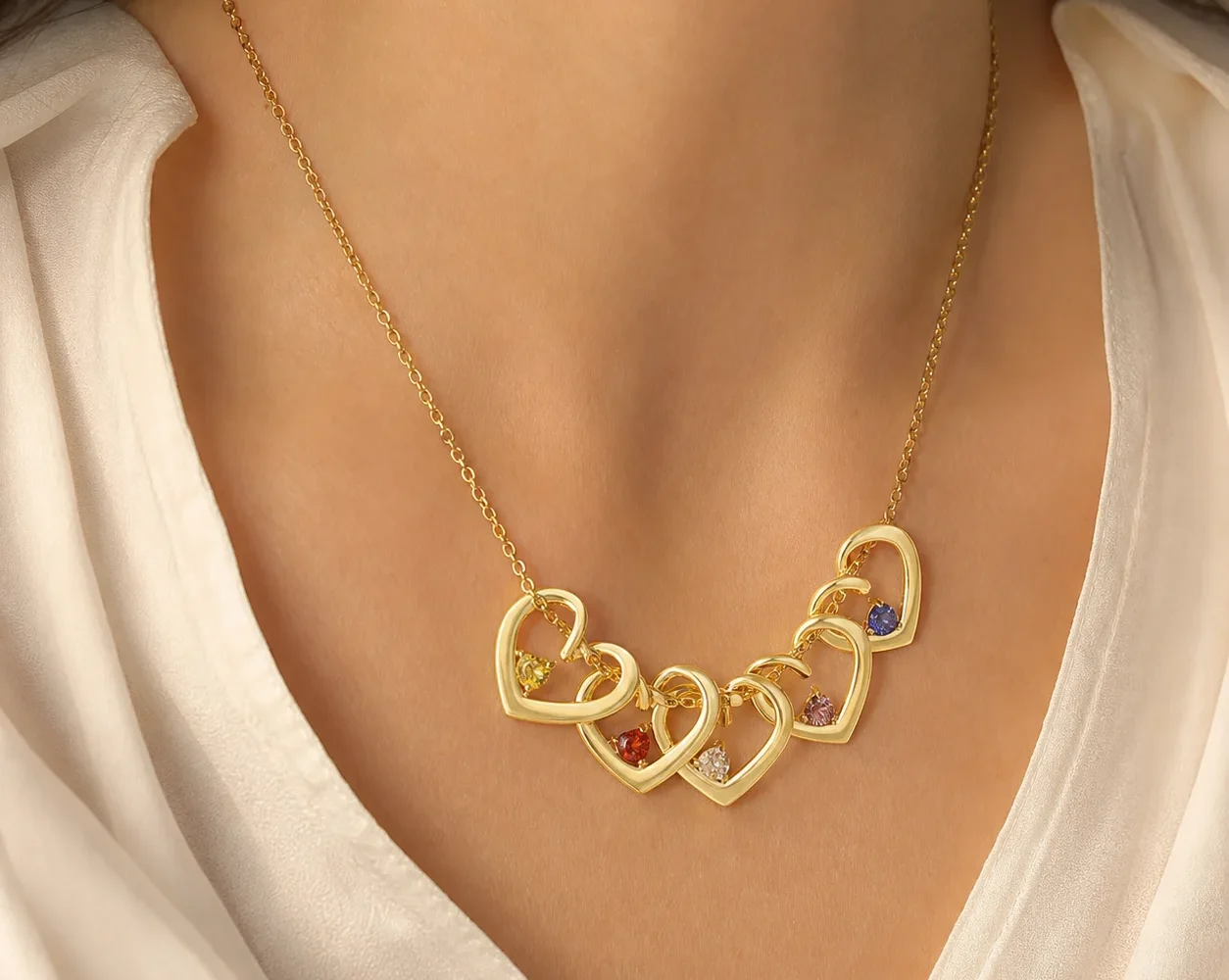
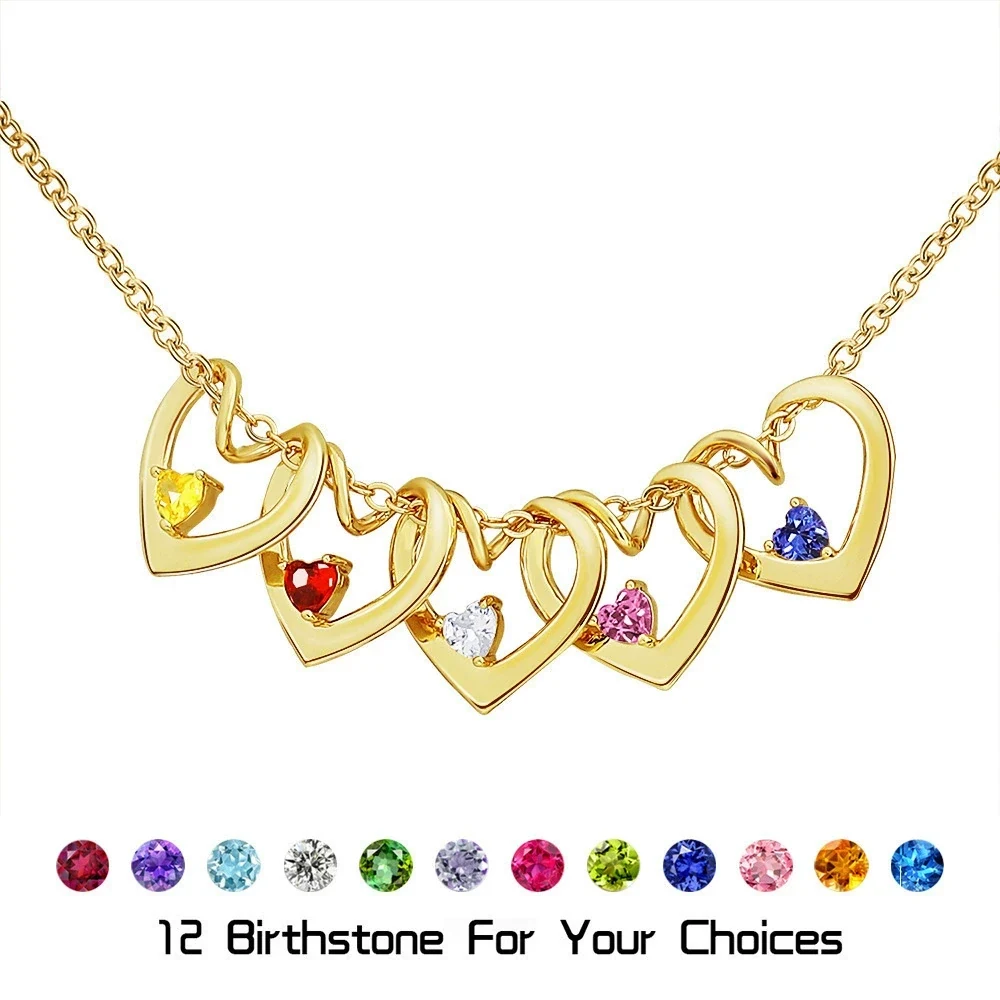
Current Amorieva designs with birthstone accents use January-through-December choices. The Twisted Heart Birthstone Necklace, for example, supports one to five loved ones, with an engraved name and a selected birth month for each person. Its colored details are simulated birthstone accents. The ordering fields do not ask for a zodiac sign.
That means a shopper can still value zodiac symbolism, but the submitted product configuration should follow the actual month-labeled fields. Trying to convert a sign into a color from an unrelated chart creates ambiguity: the order record shows a month, while the giver may be thinking of a sign. If the recipient expects traditional month representation, that mismatch can make an otherwise thoughtful gift feel inaccurate.
Use the family birthstones by month guide when you need a practical month reference. Then confirm the actual birth month for every person rather than inferring it from a sign, a favorite color, or a photograph of another piece.
Use a simple decision test before choosing
Ask what the jewelry needs to communicate without an explanation. Month-based personalization usually works well when several relatives are represented, because each name can be paired with a familiar calendar fact. A zodiac approach may be meaningful when the recipient already talks about signs and understands the chosen association, but it is not the field structure used by the current birthstone selectors.
A useful decision sequence is:
- List each person’s exact name and full birth date.
- Decide whether the story is based on calendar months or zodiac signs.
- If ordering an Amorieva birthstone design, convert the list only into verified January-through-December entries.
- Keep each name beside its matching month while entering the fields.
- Review the final order as a set of pairs, not as a row of colors.
This process also handles boundary dates cleanly. You do not need to debate where one zodiac date range ends if the jewelry is explicitly using a birth-month system.
Keep color, material, and meaning separate
A month association answers “What does this accent stand for?” It does not by itself answer what the accent is made from. In Amorieva’s applicable designs, the colored elements should be understood as simulated birthstones or crystal accents according to the listing. They are visual markers within a personalized plated piece, not evidence about the mineral described in a gem reference.
Color is also an imperfect identifier at jewelry scale. Lighting, photography, display settings, nearby finish tones, and the size of an accent can change its appearance. Two month choices may look close in an online image. The reliable order record is the selected month label paired with the correct name.
If you are still comparing formats, the current jewelry collection shows which pieces organize names and month accents together. Choose a structure that holds the needed number of people before deciding how much symbolic interpretation to add.
Common questions
Can one person have both a birthstone and a zodiac stone?
Different traditions can associate the same person with more than one stone. That does not make either list a mandatory rule. For a personalized order, select one organizing system and explain it clearly so the recipient knows what each detail represents.
What should I do if two reference lists disagree?
Check what system each source uses, note that traditions and alternatives vary, and follow the month labels on the actual product form. Do not combine entries from several charts without a clear reason that the recipient will understand.
Should I choose the color I like instead of the birth month?
You can favor color in a personal design, but do not describe it as the wearer’s birth-month selection if it is not. For an Amorieva month-labeled field, enter the choice deliberately and keep a written record of what the color is meant to represent.
Make the system legible
The useful difference between birthstones and zodiac stones is not which list is “more correct.” It is what information each system starts with and whether that logic remains understandable in the finished gift. For Amorieva personalization, a verified name-and-month list aligns directly with the current selectors. Use zodiac associations only as a separate, consciously chosen tradition—not as an invisible conversion that makes the order harder to check.