Birthstone Jewelry for Color-Blind Families: Use Names and Position Too
Choose birthstone jewelry that remains understandable without color alone by combining each simulated accent with an engraved name and stable position.
Birthstone jewelry for color-blind families should communicate through more than hue. Choose a design in which each simulated birthstone is paired with an engraved name, a separate element, or a stable position. Then keep a written name-to-month map. The wearer should be able to understand the family story without correctly identifying red, green, blue, or neighboring shades by sight.
Make color one cue among several
A color-only design asks the wearer to remember which small accent represents each person. That can be difficult when relatives share a month, accents look similar at jewelry scale, or a person distinguishes some colors differently. Photography and display settings can add another layer of uncertainty before purchase.
Use redundant information instead: name plus month, position plus name, or one distinct charm per person. Redundancy is not clutter when each cue performs a clear job. It makes the piece readable in more situations and for more family members.
Evaluate the design in three conditions. First, look at the complete piece at ordinary viewing size rather than zoomed in. Second, imagine two relatives sharing the same month. Third, cover the color key and ask whether the engraving and structure still identify everyone. A design that passes all three checks does not depend on perfect hue recognition.
Birthstone traditions and alternatives vary by place and era. Amorieva’s relevant selectors use calendar month labels and simulated birthstones or crystal-style accents. The month selection records the intended association; it is not a test of whether someone can name the color.
Ask the wearer how they identify details
Do not diagnose a relative or decide which colors they can see. Ask a practical preference question: “Would names or fixed positions make this easier to read?” Someone may prefer engraving, a consistent oldest-to-youngest sequence, or a name-only design. Another person may enjoy the colors while still relying on names for identification.
If the gift must remain a surprise, ask a close helper about the recipient’s established habits without demanding medical information. Accessibility should be treated as a design requirement, not as a disclosure the recipient owes the gift giver.
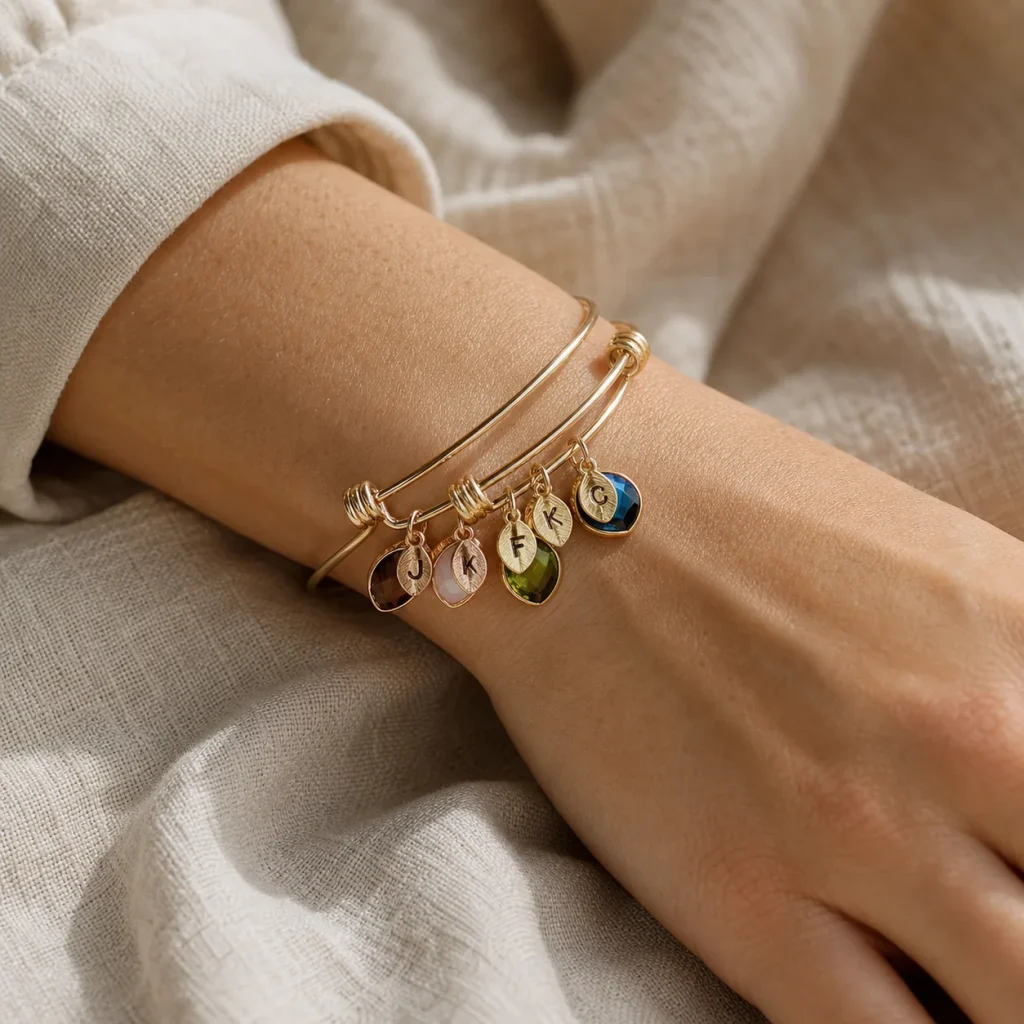
Use the family branch as a name-and-position system
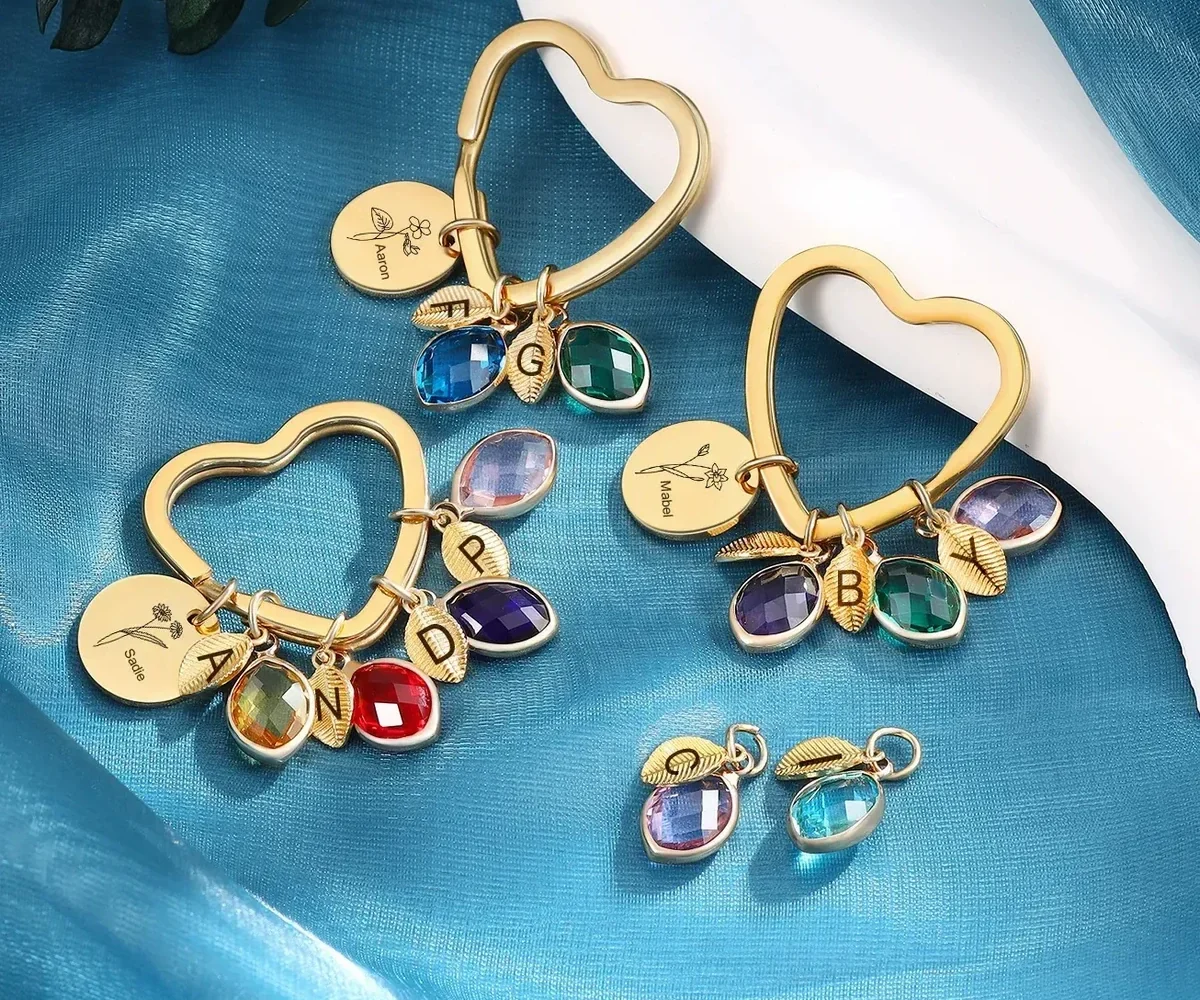
The Family Branch Birthstone Bangle currently supports one to five loved ones through separate engraved leaf charms and simulated birthstone selections. It can be configured as an adjustable bangle, a round keyring, or a heart keyring. A central disc can receive a short message through the current note workflow.
This structure can support reading beyond color because every person has an engraved leaf and an associated accent. Establish a position rule before ordering and record it. For example, list the leaves oldest to youngest and preserve that sequence in the form. Do not rearrange the months merely to create stronger color contrast.
Charms can move during use, so position should not be the only cue. The engraved names remain essential. If small engraved elements do not suit the intended wearer, compare a larger name-led layout through the current Amorieva collection.
Before ordering, describe the design aloud without using color words: “The first leaf is Maya, the second is Leo, and the third is Sam.” If that explanation is clear, the month accents can add meaning without carrying identification alone. If the explanation fails, choose a different layout instead of planning to teach a complicated color code after delivery.
Build an accessible pre-order checklist
- Confirm the exact people and preferred engraved names.
- Pair each name with a verified calendar birth month.
- Choose an ordering rule the wearer can remember.
- Check whether names remain the primary identifiers when colors repeat.
- Compare the format—bangle or keyring—with the recipient’s daily routine.
- Save the approved name, month, and position map with the order record.
The Amorieva personalization process can help organize these inputs before the product form is opened. If character support, engraving readability, or a field remains uncertain, use the current personalization FAQ and ask before submitting.
Common questions
Should I choose very different birthstone colors?
Accuracy comes first. Use each person’s confirmed month even when colors are similar or repeated. Names, separate elements, and an approved order should carry the identification instead of an altered color sequence.
Is a color key enough after the jewelry arrives?
A key can help, but accessibility should be designed into the piece before ordering. Engraved names and a logical structure remain available during ordinary use when a separate reference is not nearby.
What if the wearer prefers no colored accents?
Respect that preference and compare a current name-only design. Birthstones are one way to tell a family story, not a requirement for meaningful personalization.
Design the story to survive without hue
An accessible family piece does not remove color; it refuses to make color do all the work. Confirm the names, months, and sequence, then choose a structure that preserves those relationships through engraving and layout. The result remains understandable even when two accents look alike, the light changes, or color is not the wearer’s primary cue.
Give the wearer the approved written map with the gift, but make it optional reference material. The jewelry itself should already communicate through names and structure rather than requiring the person to carry instructions.