When Family Members Share Initials: Keep Engraving Unambiguous
When relatives share initials, use approved first names or distinct nicknames and a documented order instead of adding unverified middle names.
When family jewelry uses the same initials for two or more people, initials alone are not an unambiguous engraving plan. Use approved first names, distinct family nicknames with consent, or a documented order that the recipient understands. Do not add a middle initial, surname, or longer name solely to create difference unless that person approves the exact display form.
Identify where the ambiguity appears
Write the intended people and their initials in a table. Ambiguity may occur in the engraving itself, in the buyer’s worksheet, or only when the finished elements change order. Separate name beads can move, so position alone may not permanently distinguish two identical marks.
Ask the recipient or appropriate family source how each person is normally identified. A nickname can help only when it is genuinely used and welcomed. An invented abbreviation solves the buyer’s problem by creating a new one.
For example, “Alex Morgan” and “Avery Morgan” both produce A.M. Their approved first names are already distinct, so there is no need to expose middle names. If both are called “Alex” in the family, ask whether a familiar longer form or nickname exists rather than assigning one.
Choose among three clear naming strategies
- Approved first names: use the ordinary display form for each person.
- Distinct nicknames: use them only with individual consent and verified spelling.
- Fuller approved forms: include a middle or family name only when the person actually chooses it.
Use one strategy consistently where practical, but personal identity takes priority over visual uniformity. Do not remove diacritics or change capitalization without checking character support and preference.
Record rejected alternatives in a separate planning column so they are not copied into the product form. Mark the final version clearly. When several relatives review a group chat, repeated suggestions can make it hard to tell which name was actually approved.
Apply the plan to separate name beads
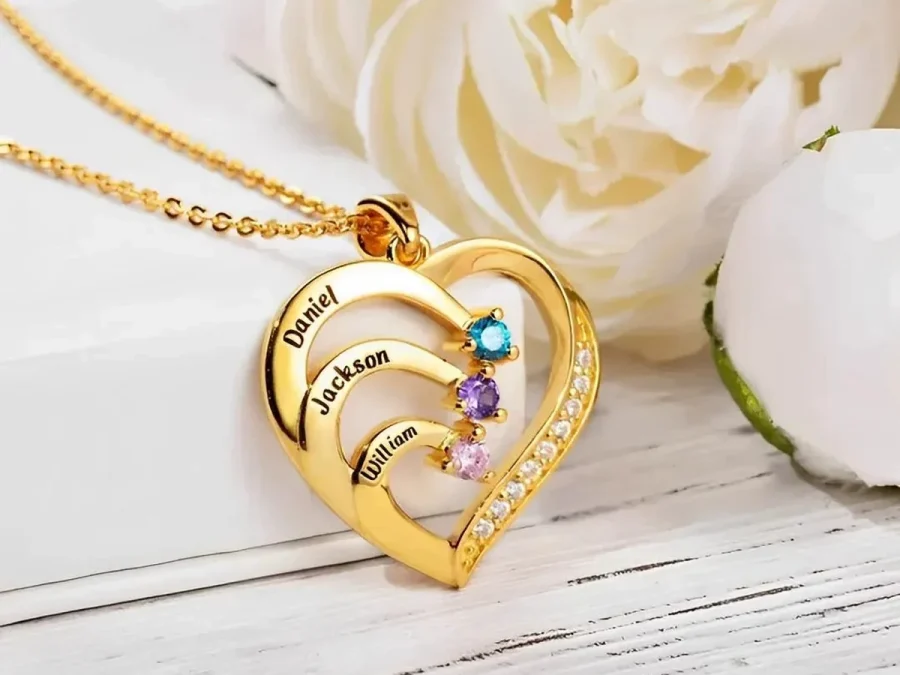
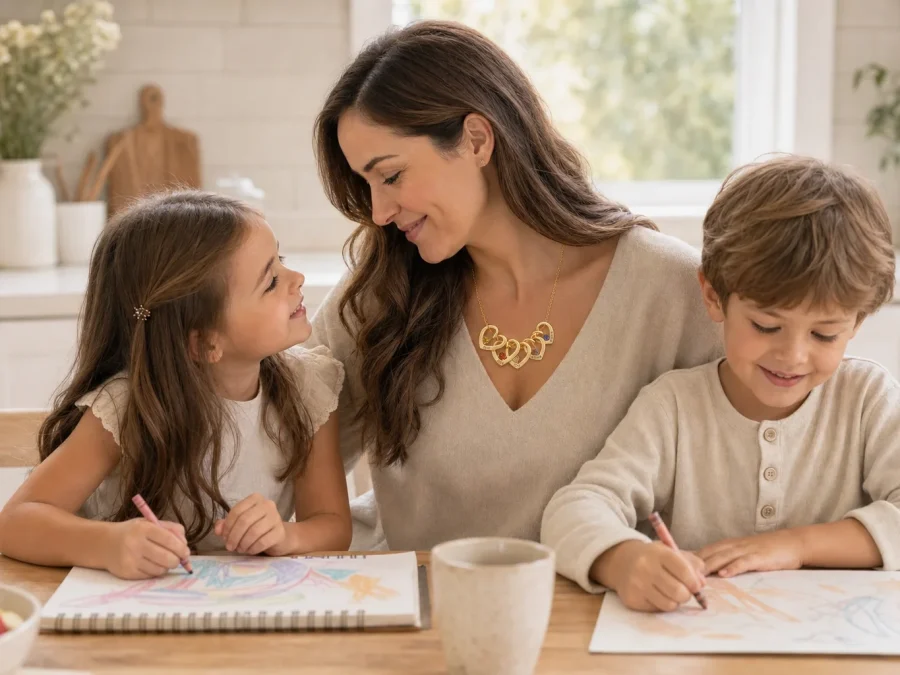
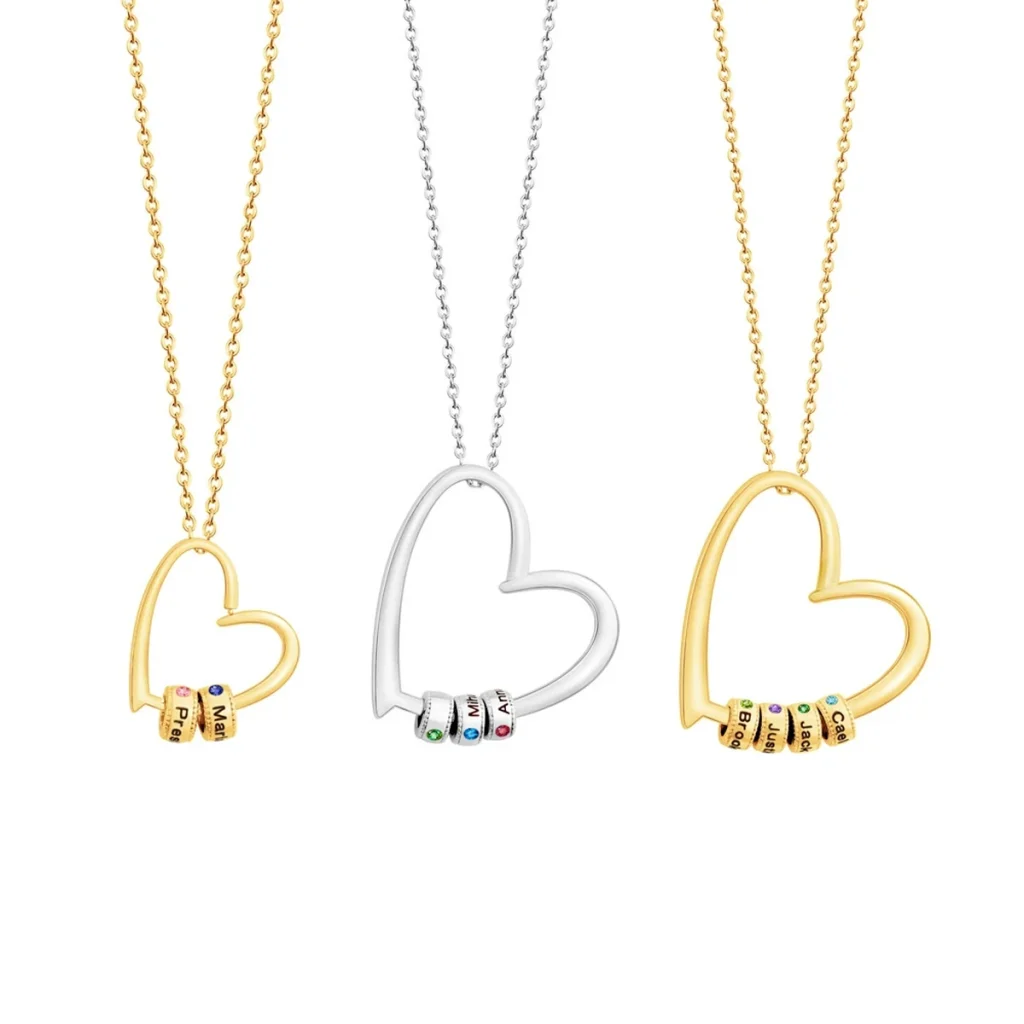
The Gathered Hearts Name Necklace currently supports one to eight engraved name beads. Its petite 22 mm pendant is intended for one to four beads, while the classic 33 mm option is intended for five to eight. It offers polished or crystal-accent bead styles and three finish tones.
The product has no birth-month field, so the engraved names must carry identification. Two beads engraved only “A” could remain ambiguous as they move. Approved first names or distinct nicknames make the structure easier to understand.
Longer names can feel denser at small scale. Verify the current field and ask about unusual spellings rather than assuming a technical text limit guarantees equal readability.
Compare the final list at the intended petite or classic count. A four-name petite pendant and an eight-name classic pendant organize the beads differently. Initial ambiguity may be solved by full names, but readability must still be reviewed at realistic scale.
Use order as support, not the only identifier
Choose a stable rule such as oldest to youngest or household group and record it. Order helps proofread the submission and explain the family story, but it should not be the sole way to distinguish identical initials on moving elements.
The existing necklace engraving guide can help with name order. Amorieva’s personalization process supports a row-by-row entry method.
Give every bead a numbered row even when the engraved text is unique. If two names are visually similar, such as Ana and Ava, position and a second proofreader add another layer of accuracy without changing either person’s identity.
Proofread the shapes of names
Compare each submitted name character by character with the approved source. Read repeated letters, hyphens, apostrophes, spacing, and capitalization. Ask a second reviewer to work from the source list, not from your spoken summary.
If a name form may not be supported, use the current personalization FAQ before ordering. Do not submit several alternatives in a note and ask the preparer to choose.
After submission, save the approved row order. Beads can move during wear, so the record explains the intended sequence without claiming they will always remain in that visible order.
Common questions
Can matching initials appear if the order is documented?
They can, but moving name beads may make position less reliable during wear. Use a clearer approved name form when the recipient needs to identify each person easily.
Should I add middle initials?
Only with the person’s approval and verified spelling. Do not invent or research private middle names merely to make the design different.
Are nicknames better than first names?
Only when they are distinct, genuinely used, and welcomed. The best display form is the one each person and recipient recognize without explanation.
Make recognition stronger than symmetry
Matching initials are a signal to collect better naming information, not a reason to improvise. Choose approved names, preserve a sensible order, and proofread every character. The final beads can then represent distinct people even when the family happens to share the same first letters.
Ask the final reviewer to cover the initials column and identify everyone from the submitted engraving alone. Any remaining confusion should be resolved before the order is placed.
Record the approved corrections rather than relying on memory.
Then reread the full sequence once.