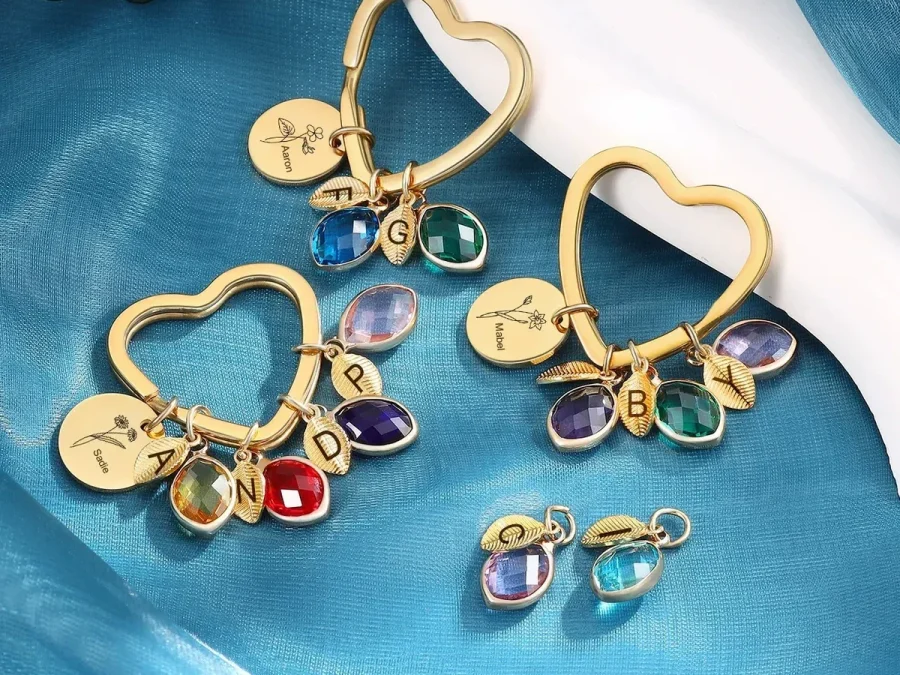
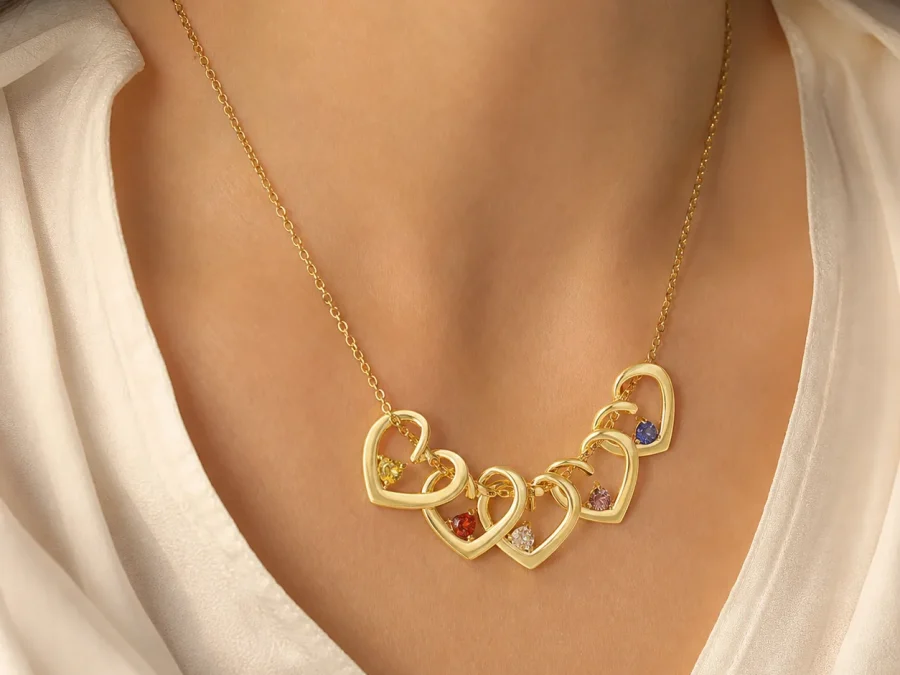
Why Does Opal Show Many Colors Instead of One Birthstone Hue?
Natural opal can show shifting play-of-color, while a personalized October selector uses one stable month cue. Learn why those are different jobs.
Natural opal can show many colors because light interacts with an internal arrangement of tiny silica spheres, producing flashes that can change with viewing angle. Gemologists call this play-of-color. A personalized jewelry selector has a different purpose: it assigns one consistent visual cue to October. That simulated cue represents the month; it is not expected to reproduce or prove the optical behavior of natural opal.
Play-of-color is more than a multicolored surface
The GIA October birthstone reference identifies opal and tourmaline as October traditions. In precious opal, light is diffracted by an orderly internal structure, separating into colors that may appear as patches, pinpoints, broad flashes, or other patterns.
The visible result depends on angle, lighting, the opal’s internal structure, and its background color. Turn the gem and a red flash may strengthen, disappear, or be replaced by green or blue. A single photograph freezes only one combination of angle and light.
Not every natural opal displays play-of-color. Common opal can have bodycolor without the shifting spectral effect. Even among opals that do show it, brightness, pattern, range, and background vary. “Opal color” therefore cannot be reduced to one permanent pastel or rainbow swatch.
Bodycolor and play-of-color answer different questions
Bodycolor is the underlying appearance of the opal, such as light, dark, or warm. Play-of-color is the changing spectral display seen over or within that background. A shopper may notice both at once, but gemological descriptions keep them separate because they arise from different aspects of appearance.
This helps explain why online examples disagree. One page may feature a pale opal with subtle green flashes, while another shows bright red play-of-color against a dark background. Both can belong to the opal category. Neither image establishes what a small simulated October accent should look like.
Screen brightness, photo editing, and compression can further simplify the effect. Video may communicate movement better than a still image, but it still cannot authenticate material. Natural-gem identity requires documented facts, not a rainbow seen on a display.
Opal also shows why a color name and an optical effect should not be treated as synonyms. “White,” “black,” or “fire” may describe part of an opal category, while play-of-color describes changing spectral flashes. One label cannot summarize both.
A month selector needs stability, not every opal effect
A January-through-December selector must help shoppers repeat the same month choice across a personalized order. It therefore uses representative cues. If October changed through every possible opal color, it would be harder to use as a reliable input and still would not recreate the natural phenomenon.
Choose October because the represented person was born in October, not because the preview resembles a favorite opal photograph. Record the person’s approved name, confirmed month, and position. If two people share October, repeat the October choice and let the names and positions distinguish them.
The family birthstones by month guide can help organize a larger roster. Use it to map calendar months, while keeping natural opal education in a separate note.
Apply the distinction to Open Heart
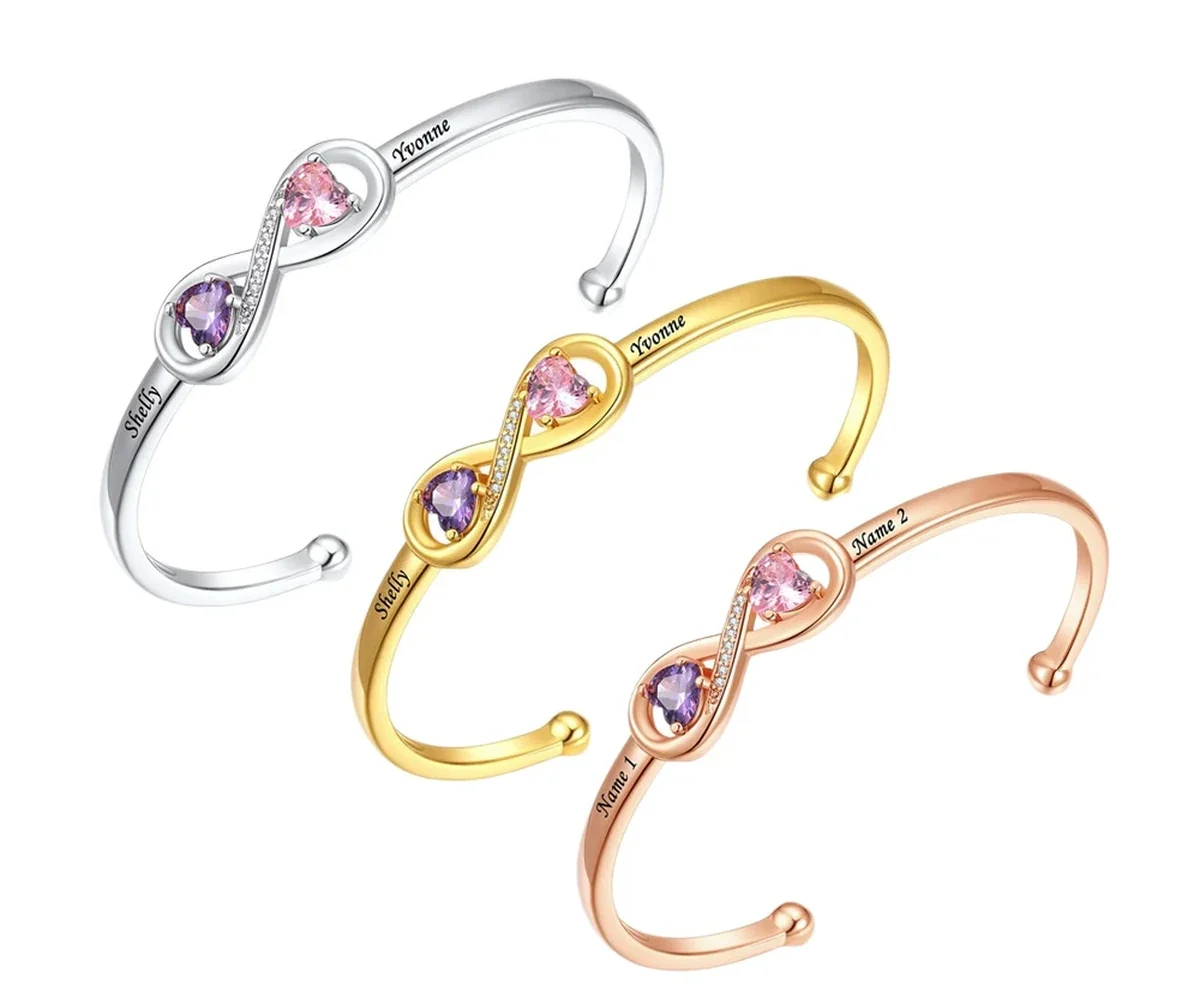
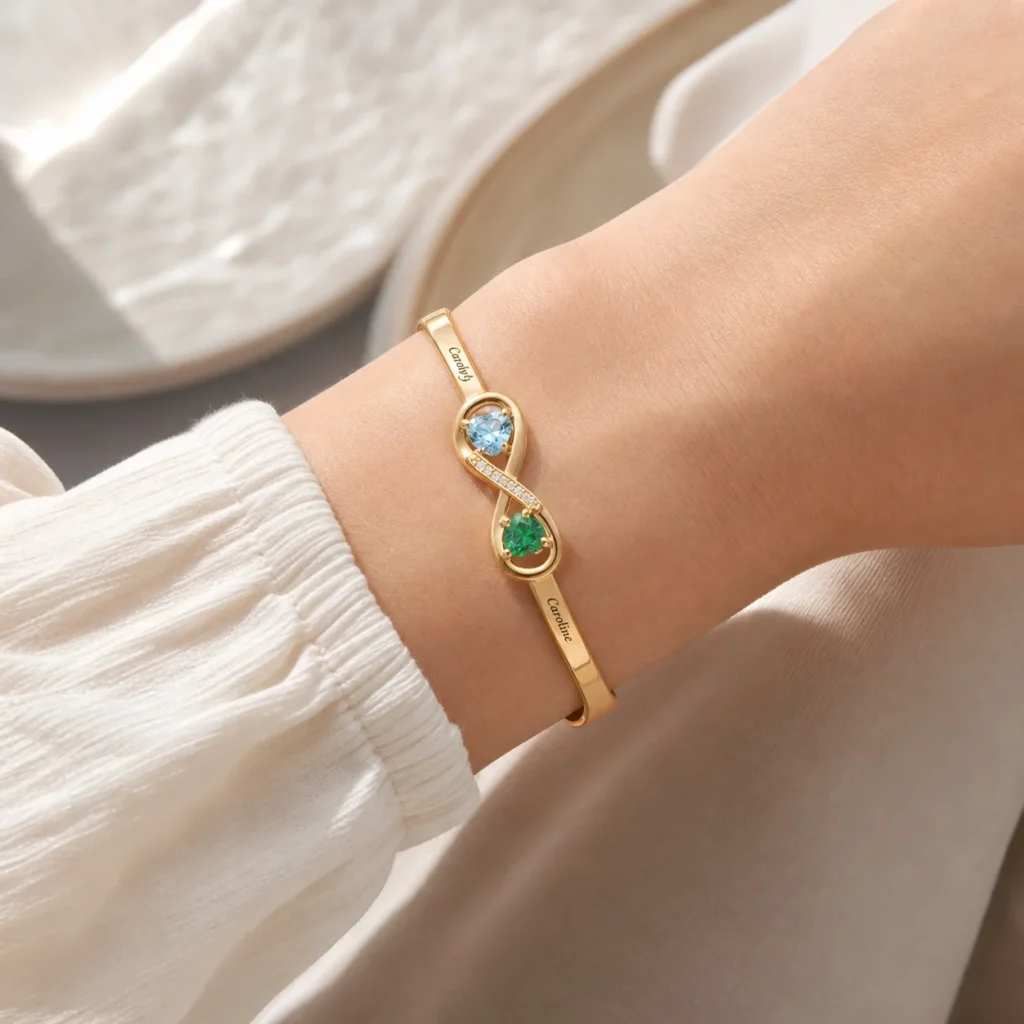
The Open Heart Birthstone Cuff currently uses exactly two engraved names and two simulated birthstone month selections. It is an open, adjustable cuff offered in gold, stainless-steel, and rose-gold tones.
For an October entry, the product fact is “simulated October birthstone accent.” Do not relabel it as natural opal, precious opal, fire opal, or tourmaline. Do not assign it the care requirements, rarity, or value factors of those natural gems.
Because the cuff has two fixed person positions, make a two-row record before checkout. Match each name to its actual month and review the left-right entry order shown by the current form. If the story needs more than two people, compare another supported format in the current collection rather than squeezing extra names into a note. Product-field questions can be checked in the FAQ.
Use a fact boundary when discussing the gift
- Natural opal can show play-of-color that changes with angle.
- Not every opal has the same bodycolor or optical display.
- October traditions can also include tourmaline.
- The cuff’s October element is a simulated month cue.
- The name-and-month pair is the reliable personalization record.
A gift note can say, “This accent represents your October birthday.” It should not say, “This is an opal,” unless the product specification identifies that material. The shorter statement is both meaningful and accurate.
Common questions
Why does opal seem to change color when it moves?
The viewing angle changes how light interacts with the opal’s internal structure, so different parts of the spectral display can become visible. That changing effect is called play-of-color.
Does every opal show a rainbow?
No. Opal appearances vary, and common opal may not show play-of-color. Even precious opal can display only part of the spectrum or a subtle pattern.
Should an October jewelry accent look exactly like opal?
No. A month selector needs one recognizable October cue. The current Amorieva cuff uses simulated birthstone accents and does not identify its October choice as natural opal.
Let movement belong to opal and consistency to the selector
Natural opal’s changing color is an optical phenomenon with genuine gemological depth. A personalized month cue solves a more practical problem: it keeps the October choice stable while names and positions identify the people. Understanding both roles makes the gift story richer without turning a simulated accent into a material claim.