How to Choose a Personalized Bracelet for a Stacked Look
Choose a personalized bracelet for a stacked look by mapping wrist space, movement, visual focus, open-end orientation, and the recipient's real habits.
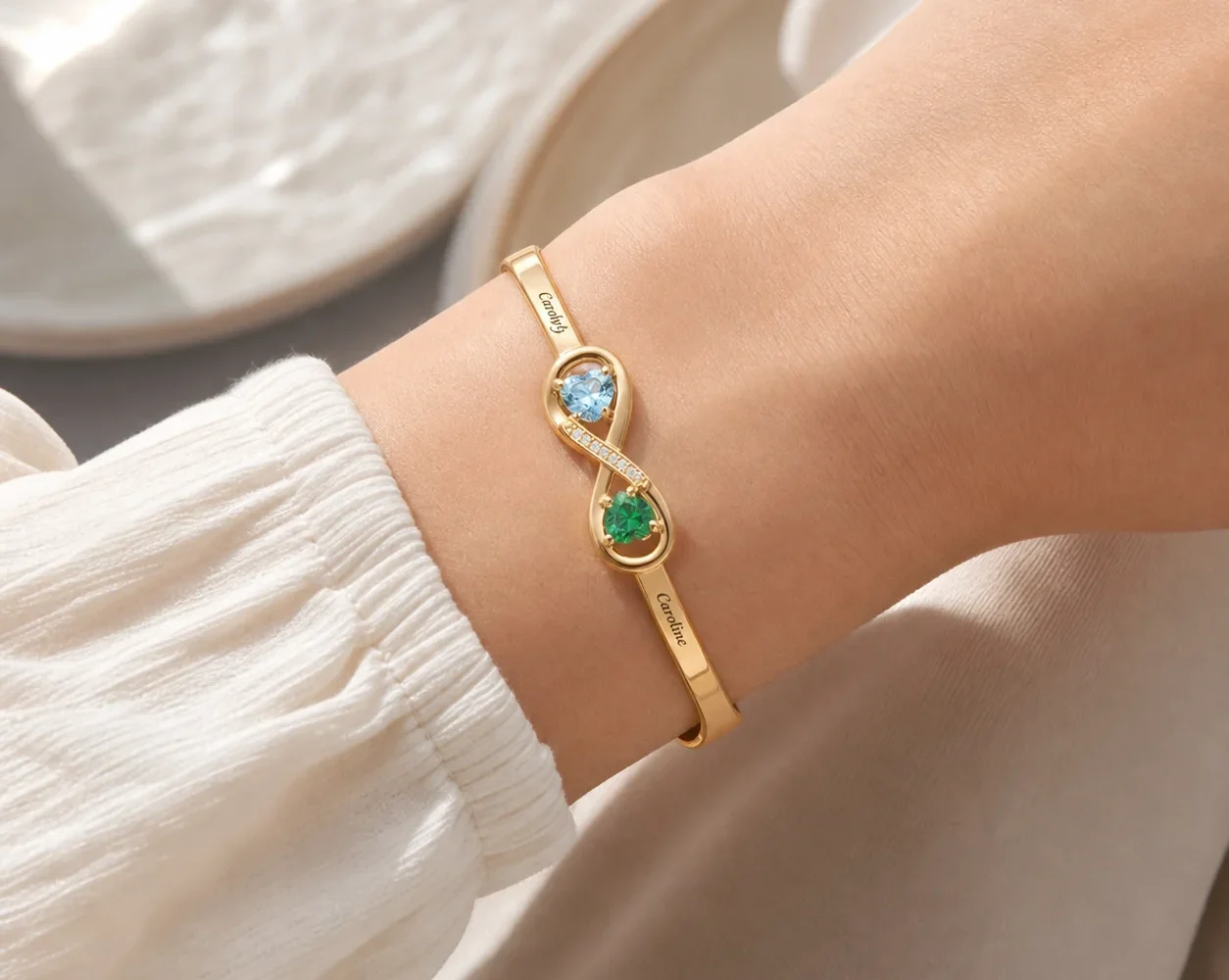
Choose a personalized bracelet for a stacked look by studying the stack the recipient already wears: total wrist space, movement, tone mix, and which piece remains the focal point. An open cuff can join that arrangement when its two personalized ends have room and the wearer accepts contact between pieces. It should also work alone, because the full stack may not suit every day.
Document the existing stack first
Photograph the wrist from above and the side during an ordinary day, with the wearer’s permission. Note which pieces stay closest to the hand, which slide upward, and whether a watch anchors one end. Count only the bracelets actually worn, not items stored in a jewelry box.
Ask what the wearer likes about the stack. The answer may be sound, movement, mixed tones, symmetry, or one sentimental piece. A personalized cuff should support that preference instead of competing with it by default.
If the stack already feels crowded, the better personalized format may be a necklace or carried piece. More jewelry is not automatically a better stack.
Measure the visual stack, not just the wrist. A narrow open space between two existing pieces may disappear when the hand turns. Watch the arrangement during typing, walking, and putting on a sleeve, with the wearer’s consent. Record where the stack naturally settles.
Reserve space for the open ends
An open cuff has a directional front. The personalized ends need space to remain visible and should not be hidden continually beneath a wide bracelet or watch. Use a paper outline to visualize the general width and orientation without treating it as an exact fitting tool.
Consider normal hand rotation and sleeve movement. Stacked pieces can shift. Decide whether the recipient is comfortable readjusting them and whether the cuff can also be worn on the other wrist or alone.
Do not repeatedly bend the cuff to force it between other pieces. Follow the current product guidance for its adjustable structure.
Decide which side of the open cuff faces the hand and which faces the arm in the intended stack. The product image can show its structure, but the wearer may prefer another orientation within normal use. The two names should remain understandable in that position.
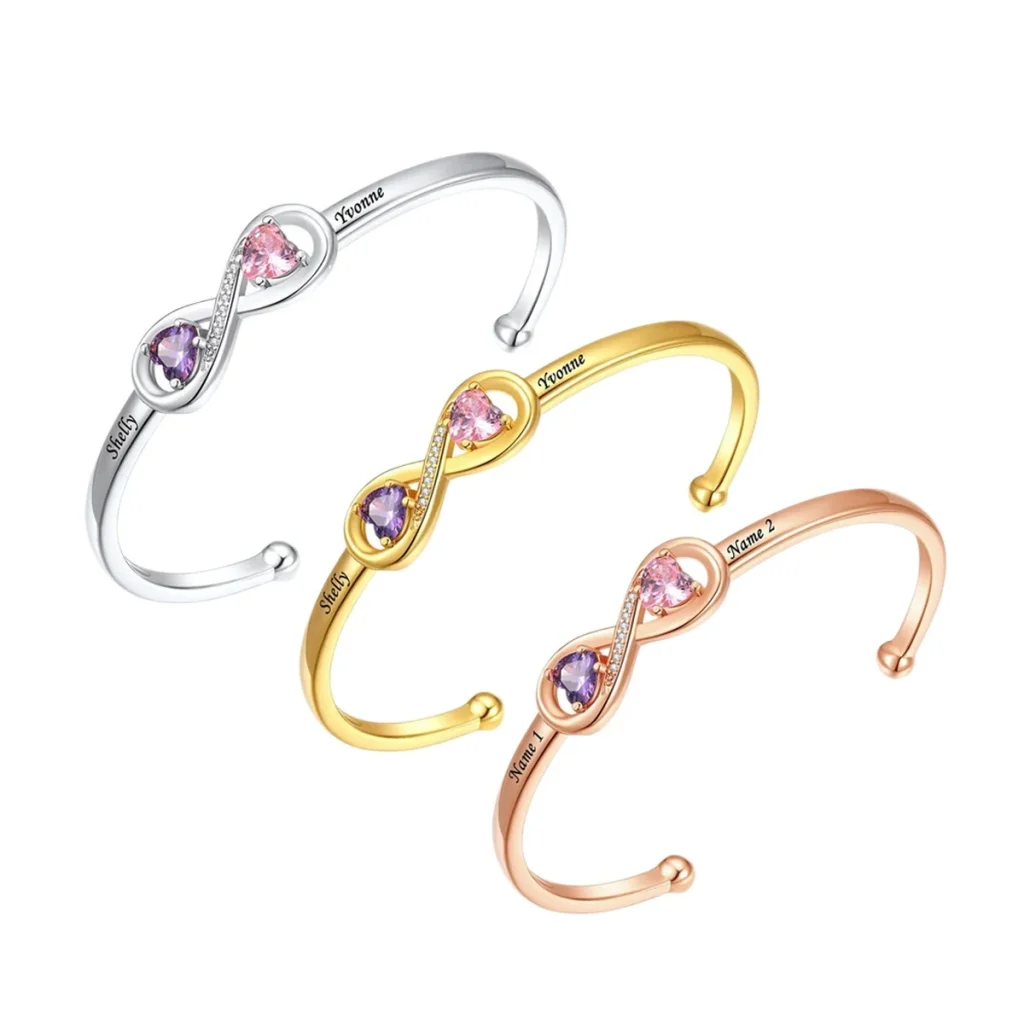
Use the two-person story accurately
The Open Heart Birthstone Cuff is a plated copper-base design for exactly two names and two simulated birthstone selections. Its two personalized ends can create a clear focal pair within a stack.
That fixed capacity should match the family story before stacking is considered. A third person’s name cannot be added through placement beside another bracelet. If the intended group is larger, compare other formats in the current collection.
Keep the two name-and-month pairs in order and save the final map. The cuff offers gold, stainless-steel, and rose-gold tones, but tone choice does not redefine its material construction.
Balance visual competition
If the current stack contains several charms, crystals, or moving elements, a cleaner neighboring bracelet may let the engraved cuff remain readable. If the stack is mostly smooth, the two personalized ends can serve as the main detail.
Matching every tone can create continuity; mixing tones can create contrast. Neither approach is a rule. Look at what the wearer already combines willingly rather than building a new palette from a product image.
View the cuff alone as well. A personal piece should still feel complete on days when the watch, sleeves, work, or activity makes the full arrangement impractical.
Listen to the stack as well as viewing it. Some wearers enjoy movement and sound; others remove combinations that draw attention. Do not assume visual compatibility settles sensory preference.
Plan contact, removal, and storage
Adjacent pieces may touch during wear. If the recipient wants to minimize that contact, separate wrists, reduce the stack, or wear the cuff alone. Do not promise a particular surface outcome from any stacking arrangement.
Plated jewelry should be kept dry, removed for showering, swimming, and exercise, protected from perfume and household chemicals, wiped gently, and stored separately. Take the stack apart for storage rather than leaving pieces pressed together. See the care guide.
Follow the personalization process after the wrist and family decisions are complete.
Photograph the approved stack plan for the recipient, but treat it as one styling option rather than an instruction. Store the cuff separately after wear so the displayed stack does not become the storage arrangement.
Common questions
Should the cuff sit next to the watch?
Only if the wearer already likes bracelets beside the watch and there is comfortable space. The opposite wrist or cuff worn alone may work better.
Can I choose mixed tones within one cuff?
Do not assume so. Select the tone offered for the complete product configuration. Mixed surrounding bracelets are a separate styling choice.
Will stacked bracelets remain in one exact order?
Movement varies with the pieces, wrist, and activity. Plan for shifting and make sure the cuff still looks intentional when it moves.
Add a piece, not an obligation
A good stacked choice respects the arrangement that already exists. Map wrist space, protect the two open ends from being visually buried, confirm the exact two-person story, and make sure the cuff also works independently. The recipient can then decide when the personalized piece joins the stack and when it stands on its own.