Personalized Jewelry for Twins: Keep Both Stories Equal and Clear
Plan personalized jewelry for twins with two equally verified names, accurate repeated months when needed, and a neutral position rule that avoids ranking.
Personalized jewelry for twins should give each child one equally verified place. Use two approved names, pair each with the actual birth month, and accept a repeated month when both birthdays fall in the same month. Color variety is not more important than accuracy. Choose a neutral position rule so the layout does not quietly rank one twin above the other.
Confirm two separate identities
Twins may share a birthday and surname, but their names, nicknames, and preferences are individual. Copy each engraving from a family-approved source and verify capitalization, spacing, hyphens, or accents. Do not shorten the longer name merely to make the pair look more symmetrical without consent.
If the gift is for a parent, ask which version of each child’s name she uses in keepsakes. If the twins are old enough to express a preference, include them in that decision when the surprise allows it.
Do not use one shared nickname as a replacement for both names unless the recipient specifically wants a collective label. A twin identity can be joyful, but the two engraving positions are an opportunity to preserve two individual names. Keep the shared nickname for the gift message if that better reflects how the family uses it.
Create two records: Twin A — exact name — full birth date; Twin B — exact name — full birth date. The letters are temporary planning labels, not value judgments.
Repeat the birth month when it is accurate
Many twins share a calendar month, so their selected birthstone accents may repeat. That is an accurate family pattern, not a reason to choose an alternate month or color. The names and positions keep the children distinct.
Birthstone traditions and alternatives can vary by place and era, but the product selector still asks for a January-through-December choice. Use the family birthstone month guide for a practical reference and enter the actual month label for each twin.
When twins were born across a month boundary, verify each full date separately. Do not assume shared month based on the family story or expected due date.
If contributors question a repeated color, show them the written dates and month labels before changing anything. The duplicate is evidence that the system is working. Color variety can appear elsewhere in the card or presentation without rewriting a child’s month.
Use a fixed two-place design deliberately
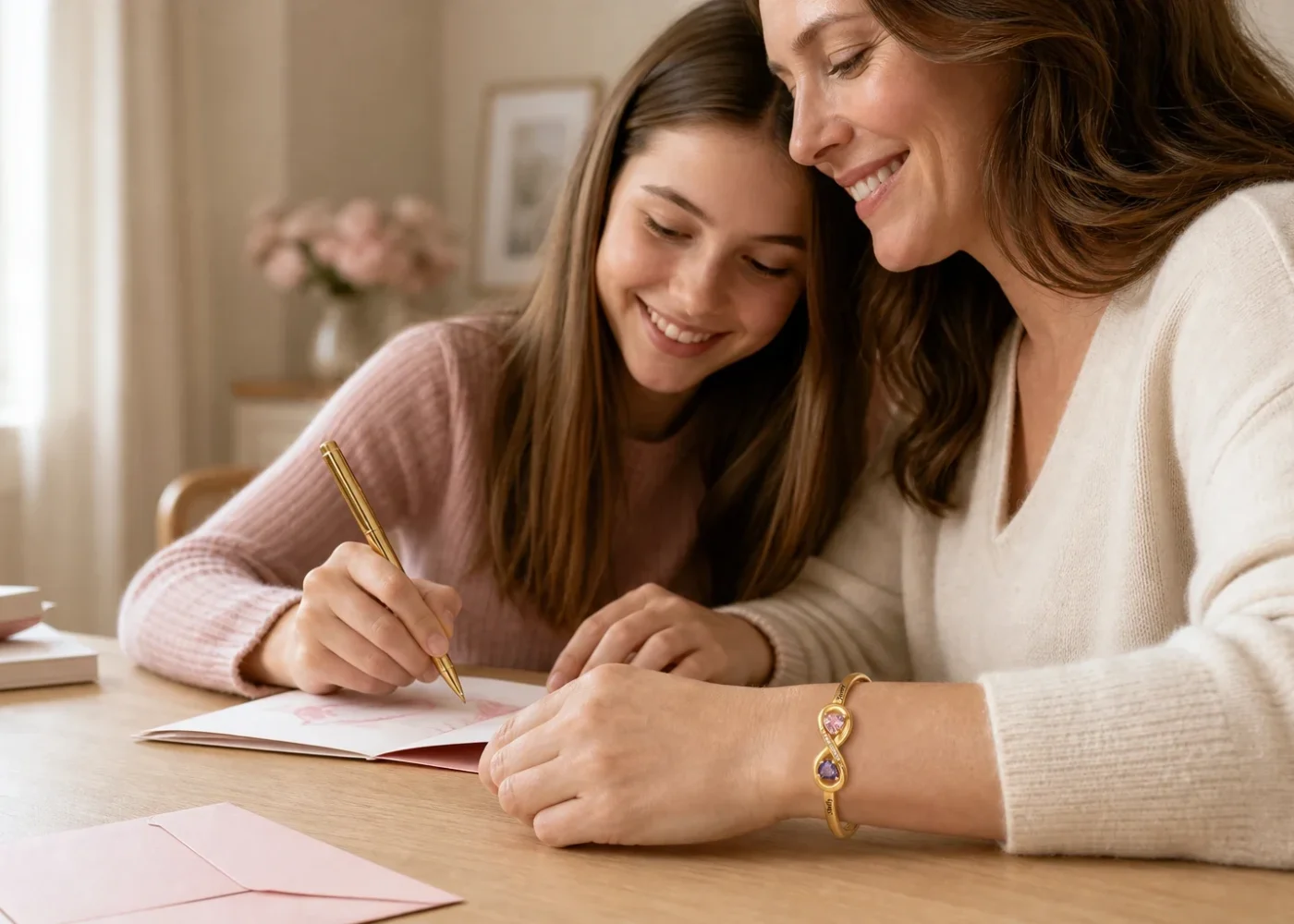
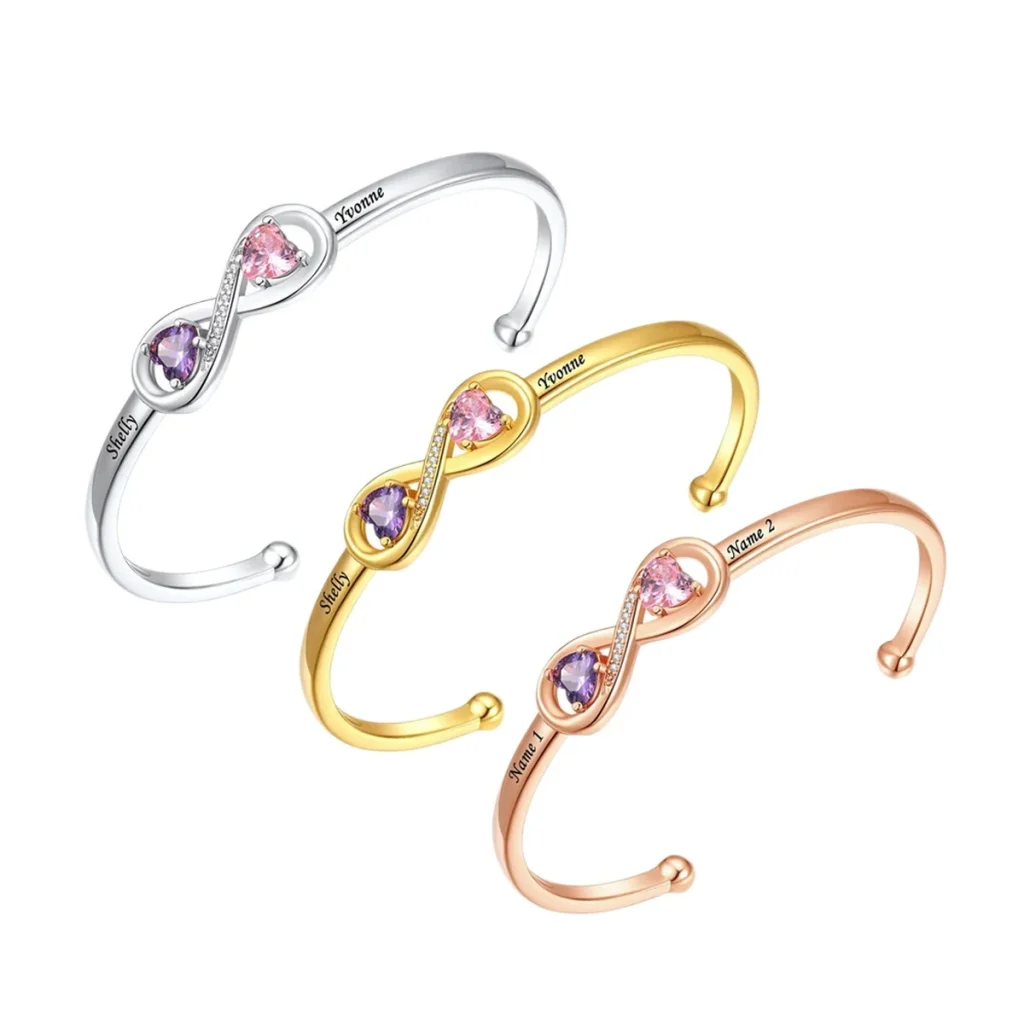
The Open Heart Birthstone Cuff supports exactly two engraved names and two selected birth months with simulated birthstone accents. It offers gold, stainless-steel, and rose-gold tone choices on a plated copper-base adjustable cuff.
The two ends can create a balanced twin structure, but plan them as End A and End B rather than relying on left and right in a photograph. Decide the order through one consistent rule:
- Alphabetical order.
- Birth order, if the family commonly uses it.
- The order the parent prefers for this keepsake.
- A random assignment recorded before the form is completed.
No rule makes the first position more important. If family members may interpret order strongly, use alphabetical order or ask the recipient rather than guessing.
Document the position rule directly on the worksheet: “A is alphabetical first,” for example. Then give a second reviewer only the worksheet and product fields. If that person can match both names and months without additional explanation, the layout is clear enough to submit.
Review equality beyond the two fields
Read the pair in both directions: Name A with Month A, Name B with Month B; then Month A belongs to Name A, Month B belongs to Name B. Spell both names letter by letter and state repeated months aloud instead of assuming the duplicate is accidental.
Keep descriptive language balanced in the gift message. Avoid calling one child “the calm one” and the other “the bold one” based on a color or birth order. Say what the two positions share: both are included, both are named, and both belong within the same heart structure.
Balance does not require identical wording about their personalities. You can mention different real memories or interests when the family knows them, but those observations should come from experience rather than the birthstone accents. The jewelry records names and months; the note can recognize two distinct people.
The Amorieva personalization overview can guide the final field check. If the intended gift also needs parent names or another sibling, the fixed two-place cuff is not large enough; compare capacities in the current collection.
Common questions
Should twins with the same birthday have the same accent?
Yes, when the design represents actual birth months. Select the same month for both and rely on engraved names and positions to identify each child.
Which twin’s name should appear first?
Use a rule the family recognizes, such as alphabetical or birth order, and explain that position is organizational rather than a ranking. Record the rule before entering the fields.
Can I choose two different colors so the twins look individual?
Not if you plan to describe both as accurate birth-month choices and they share a month. Individuality can come from names, your gift message, and each child’s real preferences without changing a confirmed calendar fact.
Let accuracy show equal care
A twin gift does not need artificial contrast to recognize two people. Confirm each name independently, repeat the month when correct, and use a neutral assignment rule. The result can be visually symmetrical without treating the twins as interchangeable, because the engraving preserves two distinct identities within one intentionally balanced design.