Does an April Birthstone Accent Mean the Jewelry Contains a Diamond?
An April month selection can create a clear-colored accent without identifying it as diamond. Learn to separate birthstone tradition from product material facts.
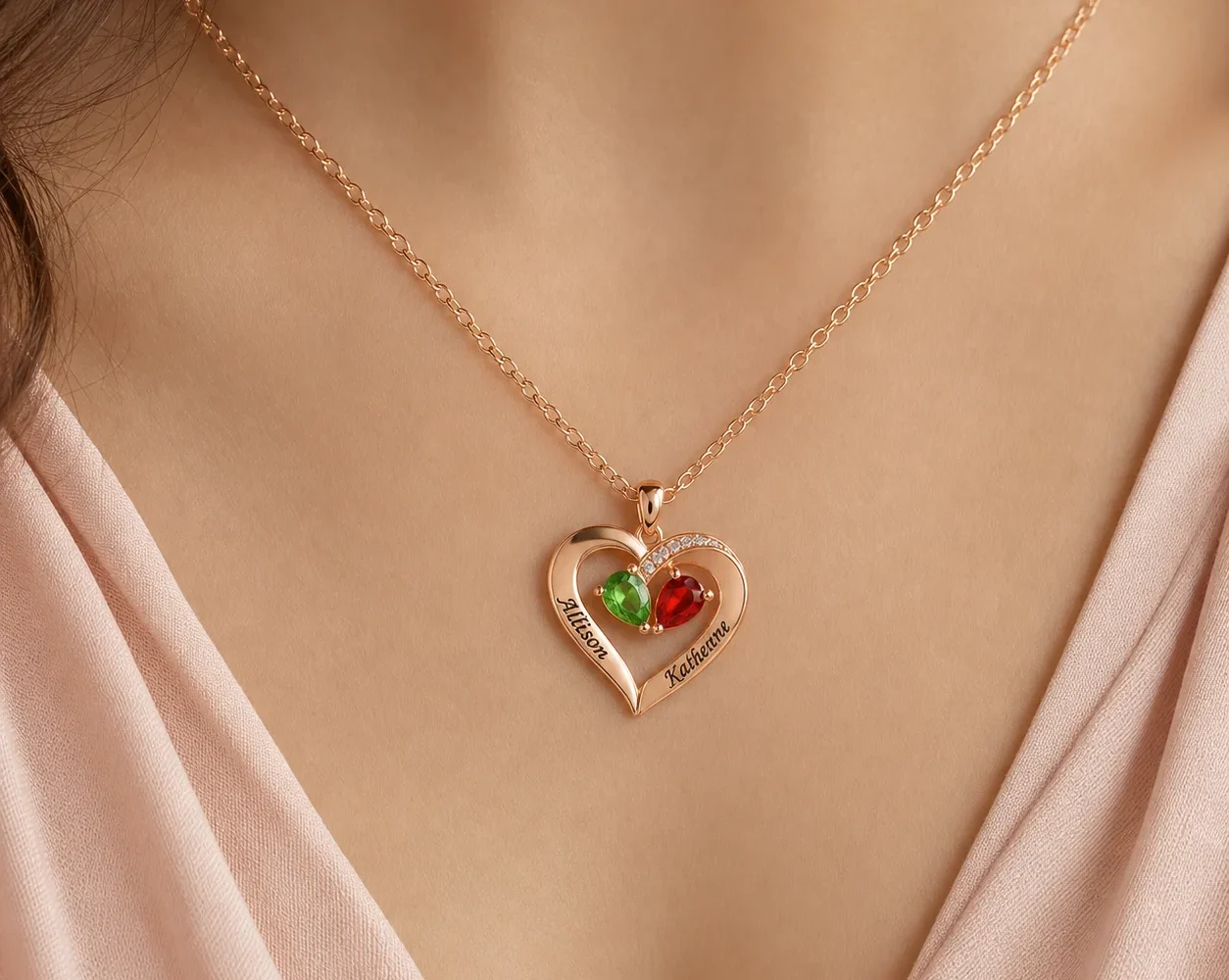
An April birthstone accent does not, by itself, mean the jewelry contains a diamond. April is conventionally associated with diamond, but a personalized jewelry selector may use a simulated birthstone or crystal-style accent to represent the month through color. The month label explains the family meaning; only the product specifications can identify the actual accent material.
Separate tradition from composition
The GIA April birthstone reference identifies diamond as the traditional April birthstone. That gemological tradition answers “Which stone name is associated with April?” It does not answer “What material is used in this particular necklace?”
Personalized family jewelry often translates the tradition into a visual marker. A clear or light-colored simulated accent can stand for an April birthday without claiming diamond content, origin, grade, or certification. Read the month and material fields as two separate pieces of information.
The same clear appearance can come from many decorative materials and image conditions. Cut, reflection, a pale background, and bright product lighting can make a small accent look diamond-like to a shopper. Visual resemblance is not a material test, and an enlarged photograph cannot establish composition.
Birthstone lists and alternatives can vary by place and era. The safest ordering method is to select the confirmed calendar month from the current form, then read the product’s own materials description for what the accent is.
Use a three-line reading test
Before drawing a conclusion, find three lines on the product page:
- Personalization: does the field ask for April or another calendar month?
- Materials: how does the listing describe the colored accent?
- Decorative options: is there a separate crystal choice that is not a month field?
If the materials line says simulated birthstone, use that term. Do not upgrade the description because April is linked to diamond in a traditional chart or because the accent looks clear in a photograph.
Save the three lines with your comparison notes. This creates a simple boundary: month meaning, documented material, and separate decoration. If a seller provides only the first or third line, ask for the second before describing what the jewelry contains.
Read the teardrop necklace fields correctly
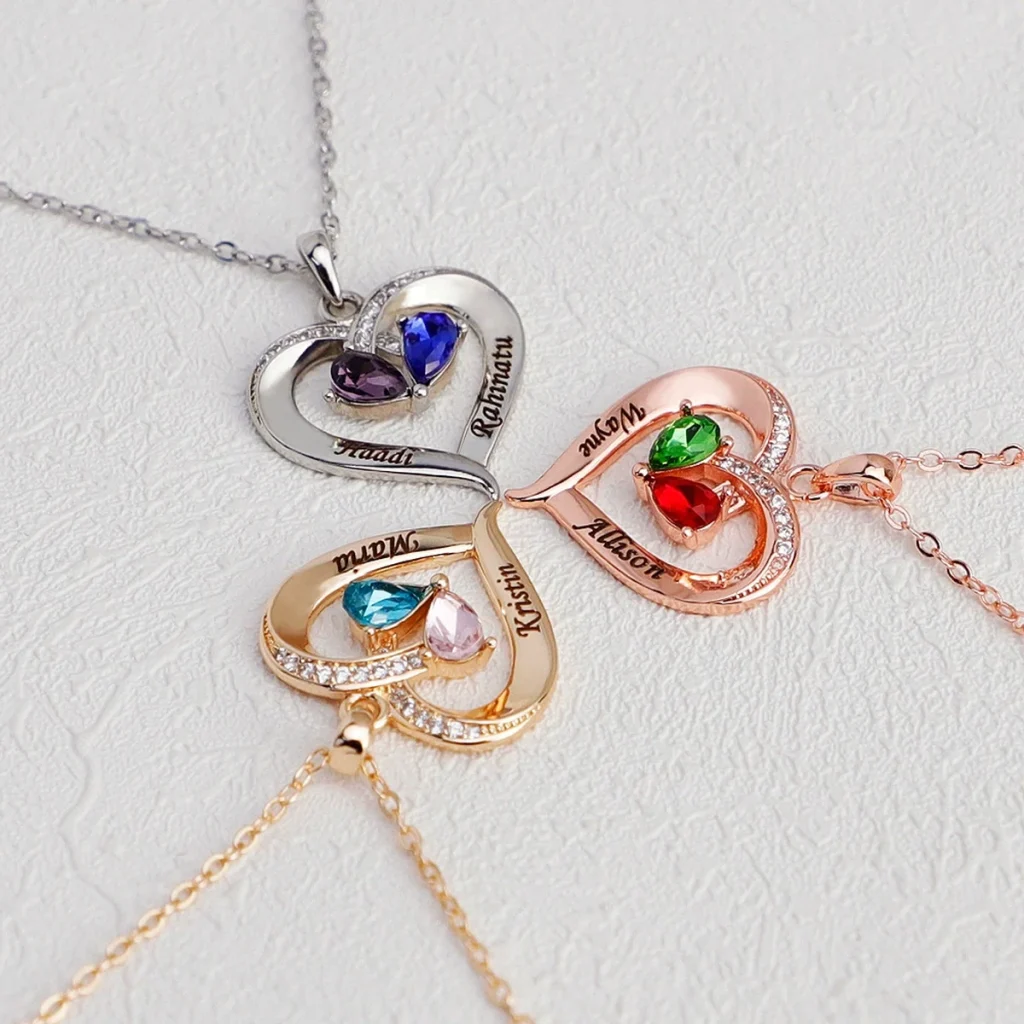
The Two-Tone Teardrop Story Necklace is designed for exactly two loved ones through two engraved names and two simulated birthstone selections. It also offers a crystal-set or smooth engraved heart accent on a plated copper-base design with a stainless-steel pendant component.
If one person’s birth month is April, select April for that name. The resulting simulated accent represents the month; it should not be described as a diamond. The optional crystal-set heart is another decorative choice and does not convert either month-linked accent into a different material.
Photography and screen settings can affect how a small clear accent appears. Use the written month label and materials statement instead of visual identification.
This distinction also matters when giving the piece. Describe it as a personalized necklace with an April simulated birthstone accent, not as a diamond necklace. Precise gift language prevents the recipient from receiving a material expectation that the product page never established.
Ask material questions precisely
“Is this an April option?” and “What is this accent made from?” are different questions. The first belongs to personalization; the second belongs to specifications. Ask both when material identity matters to the recipient.
Use the Amorieva materials FAQ for an unresolved current product question. Compare other structures in the Amorieva collection only after deciding whether the recipient values month symbolism, a specifically documented material, or both.
The family birthstone month guide can help with traditional associations, but it does not replace the materials section of a product page.
Use this final verification sequence:
- Confirm the person’s calendar birth month is April.
- Select April in the matching name row.
- Copy the current accent terminology into the order notes.
- Record the separate heart treatment without merging it with the month field.
- Correct any gift message that calls the simulated accent a different material.
Common questions
Why does an April accent often look clear?
Designers commonly use a clear color cue to refer to April’s diamond association. Color communicates the month, but it does not establish the accent as diamond.
Does “crystal-set heart” mean the April stones are crystals?
Not necessarily. On this design, the heart treatment is a separate decorative option. Read the materials and month-linked accent descriptions independently rather than merging the fields.
How should I describe the piece to the recipient?
Say that the selected simulated birthstone represents an April birthday. Use only the documented product terminology for material and avoid substituting the name of the traditional April stone.
Let the label answer only its own question
“April” tells you which month the accent symbolizes. “Simulated birthstone” tells you how the product describes that detail. “Diamond” belongs to the traditional birthstone reference unless the specific listing separately establishes it as a product material. Keeping those sentences apart prevents a meaningful color cue from becoming an unsupported claim.
Apply the same method to every month: tradition supplies context, while the live listing supplies composition. A color name, sparkle, or family assumption should never cross that boundary on its own.
When in doubt, quote the current specification exactly in your gift notes.