When Someone Does Not Want to Be Included in Family Jewelry
Respect a relative who opts out of family jewelry, rebuild the personalization rule around confirmed participants, and avoid explaining their choice for them.

Family jewelry consent and inclusion become simple at the first principle: if someone does not want a name or birth month included, treat that answer as complete. Do not pressure them, create a symbolic substitute, or explain their choice to the rest of the family. Rebuild the design around confirmed participants and choose a product whose capacity and layout fit the revised story.
Accept the opt-out without investigation
A person may have privacy, relationship, style, or personal reasons, but they do not need to provide a reason for the buyer to respect the answer. Asking once for clarification about the exact preference can be appropriate; repeatedly asking why turns personalization into pressure.
Record only the operational decision: “Do not include name or month.” Do not write an assumed explanation into a group plan or Special Note. An opt-out is not evidence of reduced affection or family membership.
Decide who actually needs to know. The buyer and final proofreader may need the operational note; a large family chat does not. Limiting the discussion protects the person’s privacy and prevents well-intentioned relatives from restarting a conversation that has already been answered.
Rebuild the inclusion rule openly
Return to the sentence defining the piece. If it originally meant “all adult children,” revise it to “the relatives who chose to participate” or another honest description. Do not quietly replace the absent person with a pet, date, decorative month, or duplicate accent just to preserve symmetry.
Check that every remaining participant understands the rule. The goal is not a public vote on the person who opted out; it is a clean list of people who consent to the personalization.
If the original idea depended on complete participation, consider changing the gift category. A shared meal, photograph chosen with permission, or non-name-based object may carry the family meaning without placing one person in the position of blocking the plan. Jewelry should not become leverage.
Fit the revised count to a current design
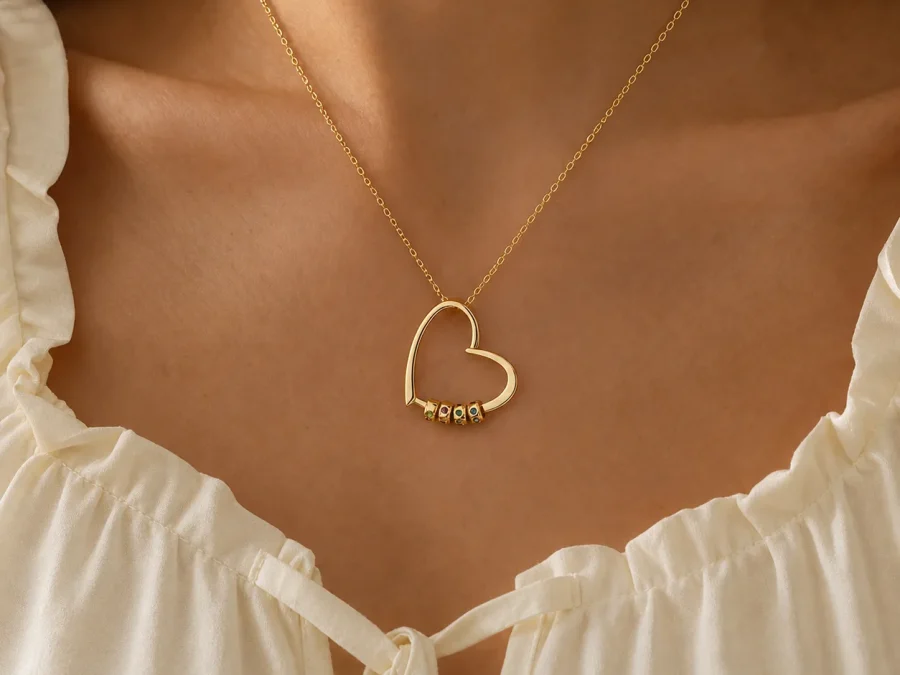
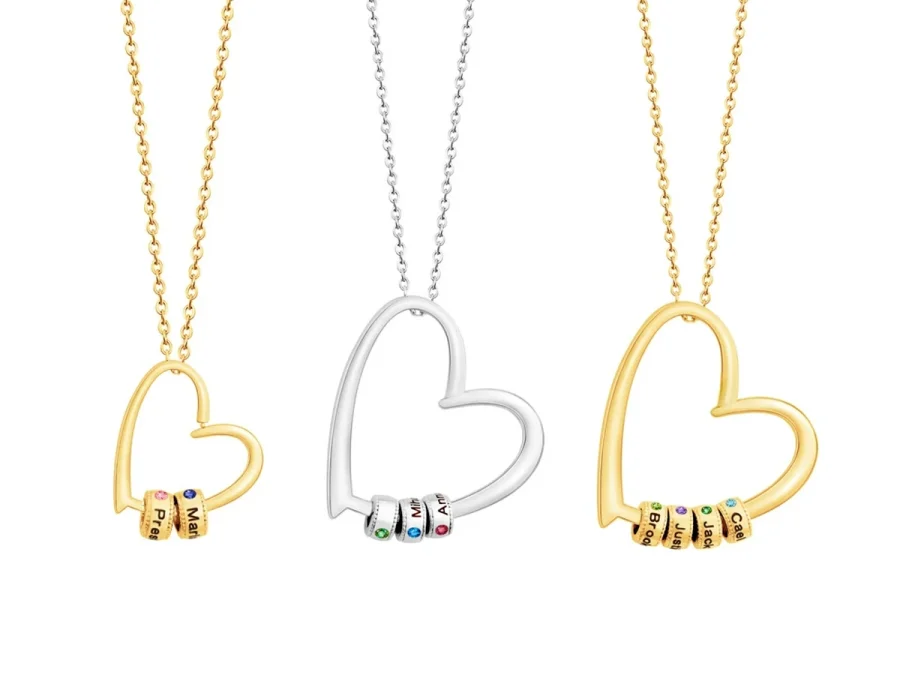
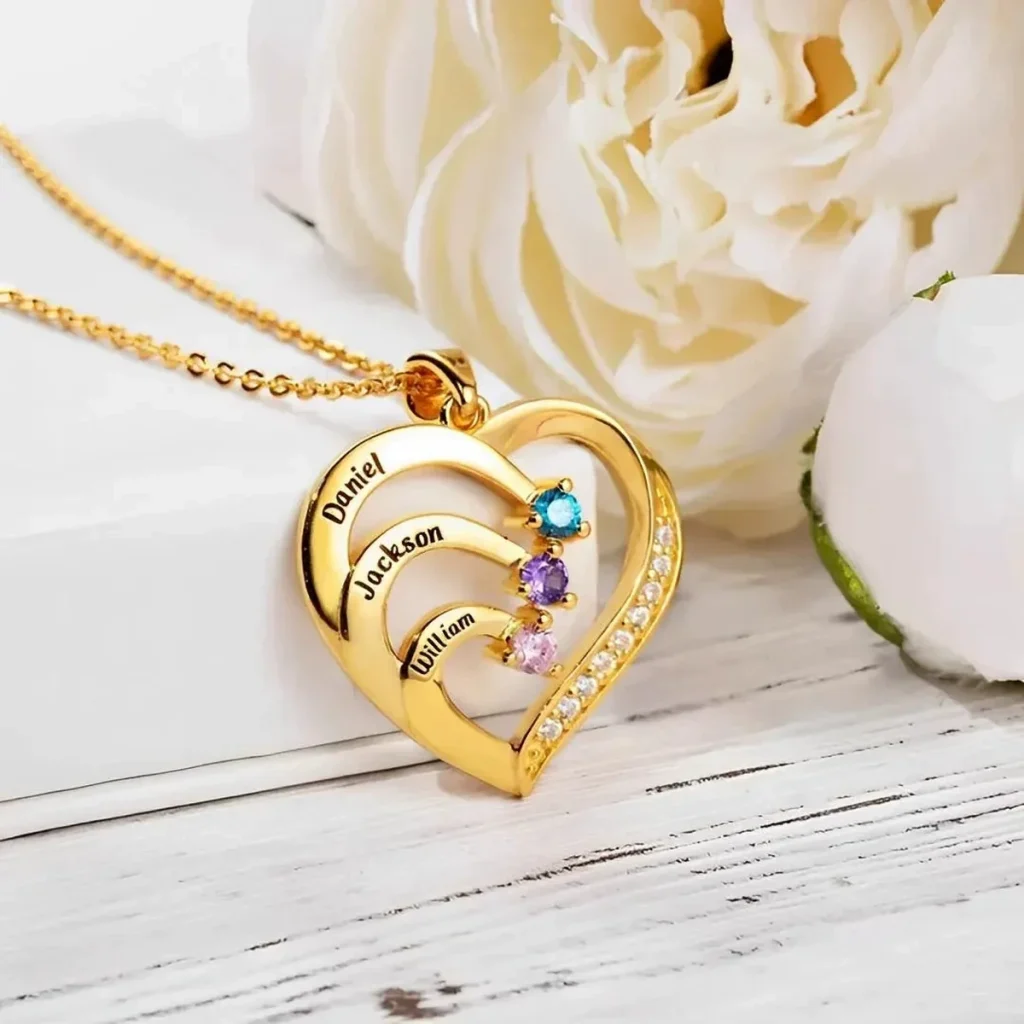
The Family Embrace Heart Necklace currently supports one to six loved ones, with each engraved name paired to a simulated birthstone selection. It offers three plated finish tones on a mixed-metal heart design.
Use one position for each confirmed participant. If the revised count is three, select three name-and-month pairs rather than adding a fourth unassigned accent. Preserve an approved order rule without making a central or first position a ranking of family importance.
If the heart layout no longer suits the recipient or the participating group, compare other current structures in the Amorieva collection. A name-only design can also be considered when people consent to names but prefer not to share birth months.
Handle the gift conversation neutrally
If someone notices the omission, describe the piece accurately: it includes the people who chose this form of representation. Do not expose private discussions or assign motives. Let the person who opted out decide whether to say more.
A gift recipient may also have inclusion preferences that differ from the people named. Confirm that the wearer is comfortable with the final list. A family piece should not turn them into the messenger for a conflict the buyers did not resolve.
Use neutral language in the presentation. Do not announce that the piece contains “everyone who agreed” if that wording spotlights the absence. Describe the included names positively and let the recipient experience the design without a public explanation of private boundaries.
Proofread only confirmed information
Create a numbered list containing approved names, calendar birth months, and order. Mark the opt-out outside that list so it cannot be accidentally copied as a placeholder. Then compare the product form row by row.
Delete speculative substitute ideas from the final worksheet. A crossed-out name beside an invented month can be copied accidentally during a rushed review. Archive sensitive discussion separately and give the buyer only the confirmed configuration.
Ask the proofreader to verify the inclusion rule before checking spelling. This catches a perfectly typed name that should not have entered the form at all.
Amorieva’s personalization process helps organize the supported fields. Use the current FAQ for a product question, but do not ask a technical note to solve a consent issue.
Common questions
Should I include the person’s birthstone without a name?
Not unless they explicitly approve that alternative. An unnamed accent can still represent them and may disregard the same preference they expressed by opting out.
What if the design looks uneven after someone opts out?
Use the accurate participant count. Review another supported layout if the composition no longer suits the recipient, but do not add an invented person or month for visual balance.
Can the family vote to include the person anyway?
No group vote should override an individual’s preference about displaying their name or birth month. Choose a different family symbol if full participation is essential to the concept.
Let respect define the finished list
Inclusion is not measured by how many positions are filled. A respectful piece records the people who agreed to be represented and leaves no one defending a boundary through an engraving. Accept the answer, revise the rule, and let the final configuration tell an accurate, pressure-free story.