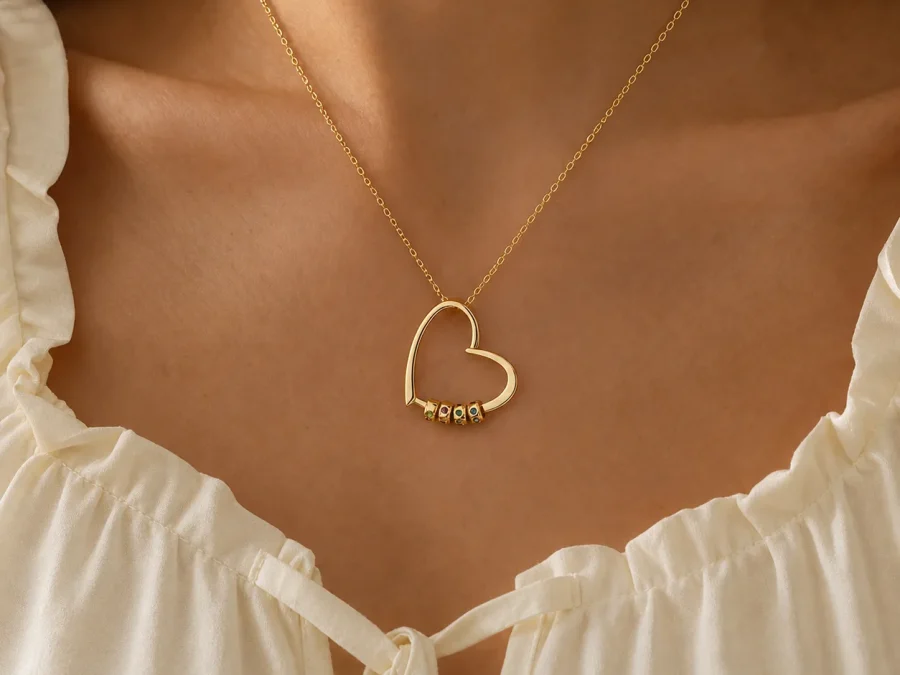
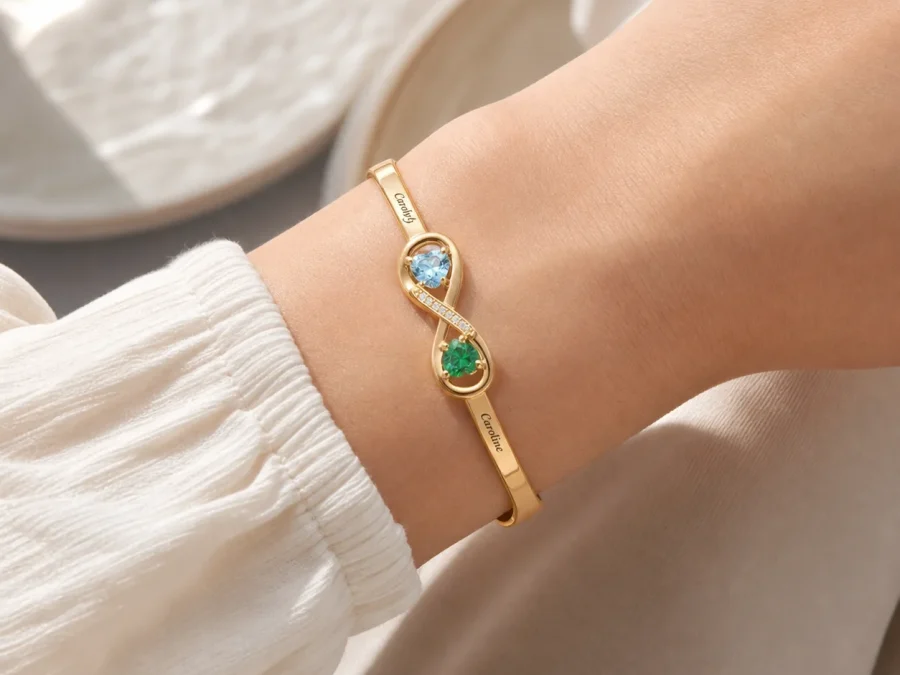
Twisted Heart vs Family Embrace Necklace: Compare the Layouts
Compare the Twisted Heart and Family Embrace necklaces by name layout, capacity, chain scale, format, and how clearly each family member appears.
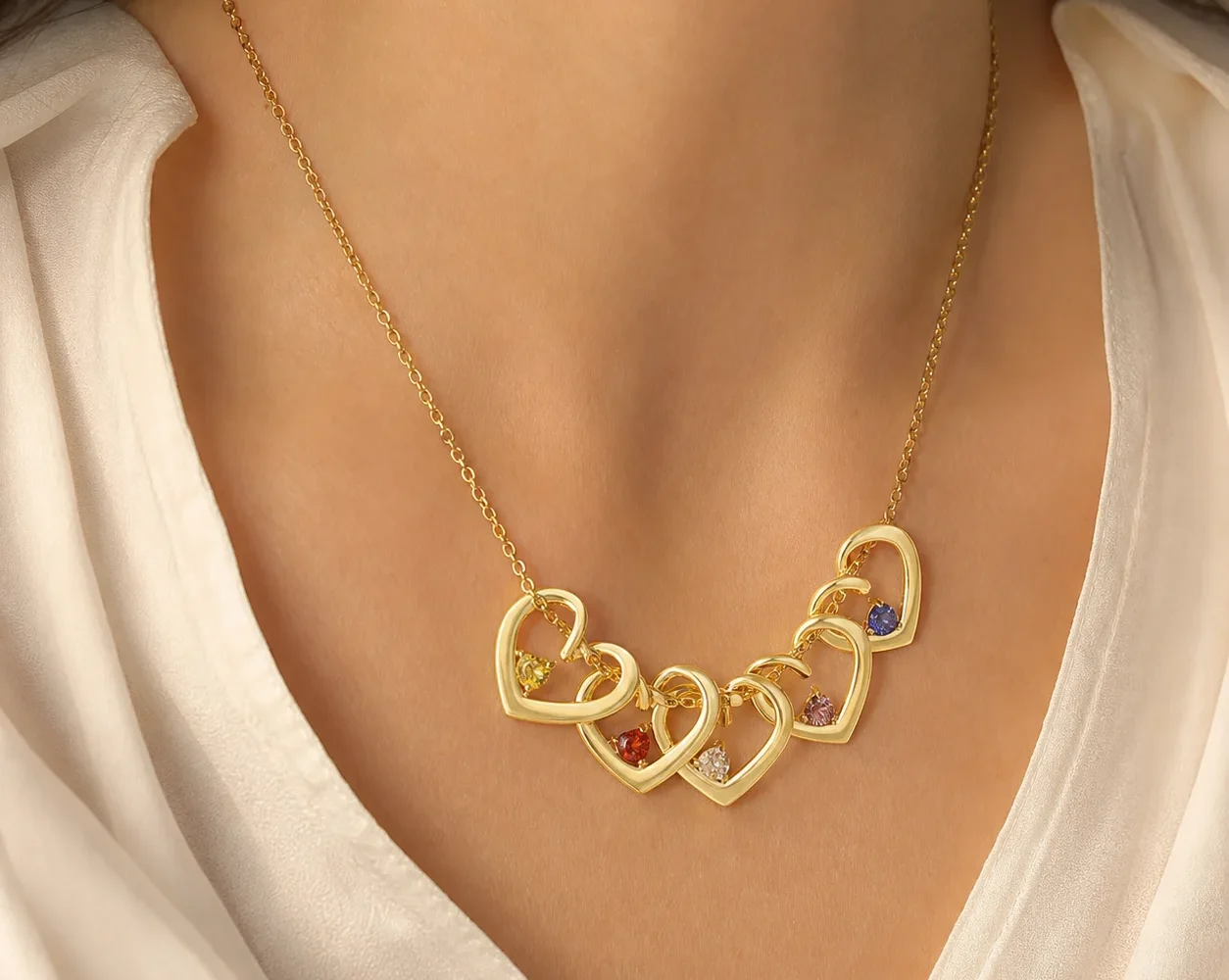
Choose the Twisted Heart when you want up to five loved ones represented through distinct engraved heart details in a compact design, with a necklace-or-bracelet format choice. Choose Family Embrace when one necklace needs room for up to six name-and-month pairs arranged as bands within a larger heart composition. Both use simulated birthstone accents, but their layouts and wearing options are not interchangeable.
Compare the two layouts at a glance
- Twisted Heart: one to five loved ones, separate name-and-month details, necklace or bracelet format, approximately 17 by 15.5 mm heart element in the necklace version.
- Family Embrace: one to six loved ones, engraved bands and month accents within one heart, necklace format, approximately 22 by 22 mm pendant.
Both current designs offer gold, stainless-steel, and rose-gold tone choices. Those are appearance options, not solid precious-metal claims. Their materials also differ by component, so choose on the complete current listing rather than assuming two plated heart necklaces share identical construction.
Choose separate details or a layered composition
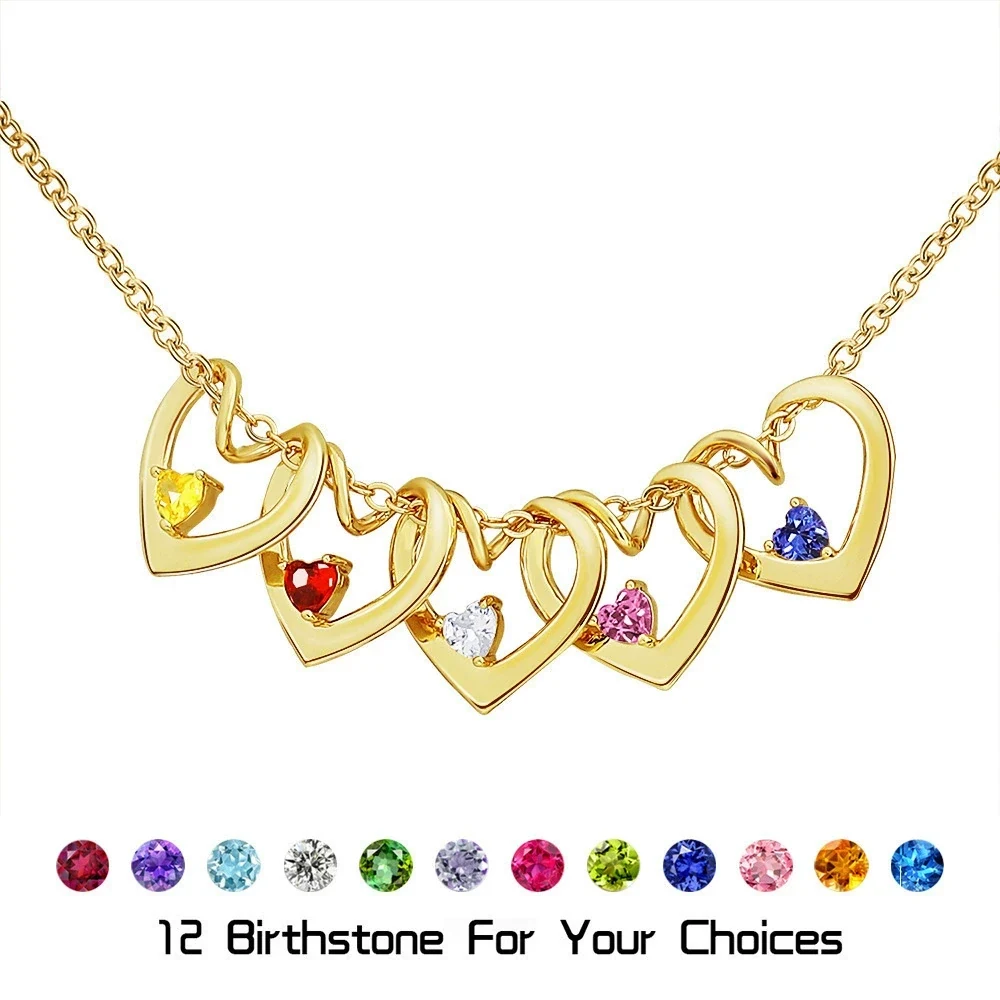
The Twisted Heart Birthstone Necklace gives each included loved one an engraved name and simulated birthstone selection. Its separate heart details can suit a shopper who wants to point to each person individually within the central design.
The Family Embrace Heart Necklace integrates one to six names and accents into a layered heart. It can suit a wearer who prefers one unified composition rather than a set of smaller heart elements.
Neither visual system makes family members more or less important. The question is how the wearer likes to read personalized information: as individual repeated elements or as several names gathered into one continuous shape.
Test that preference with the actual roster. Write the names on separate slips and then in one grouped list. The slips approximate the logic of repeated individual elements; the list approximates an integrated composition. This paper exercise does not preview the final jewelry, but it reveals whether the family naturally thinks in individual markers or one collected whole.
Let the sixth person and the bracelet option decide early
If the confirmed family list contains six people, Family Embrace remains within its current capacity while Twisted Heart does not. Do not shorten the list or place a sixth person in a note to force the five-person design to fit.
If the recipient wants a bracelet rather than a necklace, Twisted Heart offers that format choice. Family Embrace is the necklace in this comparison. Decide whether the piece will be worn at the neck or wrist before spending time on tone or month-color arrangement.
For lists of one to five, capacity does not settle the decision. Look at how much separation the wearer wants between names, whether a compact heart or larger layered heart fits her style, and whether she already wears similar pendant scales.
At the low end, one loved one can make either structure visually simpler, but the underlying motif still differs. At five, both designs are fuller and the arrangement of repeated names becomes more prominent. Compare the option image for the exact selected count rather than assuming the one-person example represents every configuration.
Compare chain and pendant scale without predicting exact fit
The Twisted Heart necklace information records an approximately 45 cm chain and a heart element near 17 by 15.5 mm. Family Embrace records an approximately 50 cm chain plus 5 cm extender and a pendant around 22 by 22 mm. The second configuration is therefore longer and larger by the listed measurements, but exact worn placement varies by person and clothing.
Use a familiar necklace as a reference. Mark each pendant’s dimensions on paper and compare them over the type of neckline the recipient wears. Model images add context but do not function as a universal fitting chart.
The guide to choosing a family necklace name count can help you consider readable scale after the roster is complete.
Run the same accuracy check for either necklace
Create one row for every loved one: exact name, actual birth month, and intended position. Confirm that the selected person count equals the number of completed rows. Read each name with its month so two choices are not accidentally switched.
Then verify tone and format separately. Both are plated personalized designs, so keep them dry, avoid direct perfume and chemical contact, wipe gently, and store separately. The care page gives the current routine.
Finally, save the chosen product name with the roster. Similar heart descriptions can be confused in family messages, and the wrong capacity or format can be copied when someone else performs the final review. One complete record keeps the comparison from following the order into submission.
Common questions
Which necklace works for six names?
Family Embrace supports one to six names with simulated birthstone selections. Twisted Heart supports one to five. Use the full confirmed roster rather than leaving someone out to fit the smaller limit.
Can Family Embrace be ordered as a bracelet?
Not in the current configuration described here. Twisted Heart offers necklace or bracelet formats; Family Embrace is the necklace option in this comparison.
Which one is more subtle?
That depends on the selected person count, the wearer’s frame, and what she considers subtle. Compare the listed dimensions and model-scale images instead of assuming a particular heart structure looks smaller on everyone.
Choose the layout she will understand at a glance
Twisted Heart separates up to five loved ones and adds a wrist-format path. Family Embrace layers up to six into one larger necklace composition. Once capacity and wearing location are settled, compare the way names appear and the scale she already prefers. The better fit is the structure that expresses the complete family without requiring explanation or unsupported customization.