Two-Name Birthstone Necklace or Cuff: Which Format Fits?
Compare a two-name birthstone necklace and open cuff with the same two-person information, focusing on wear location, structure, and daily routine.
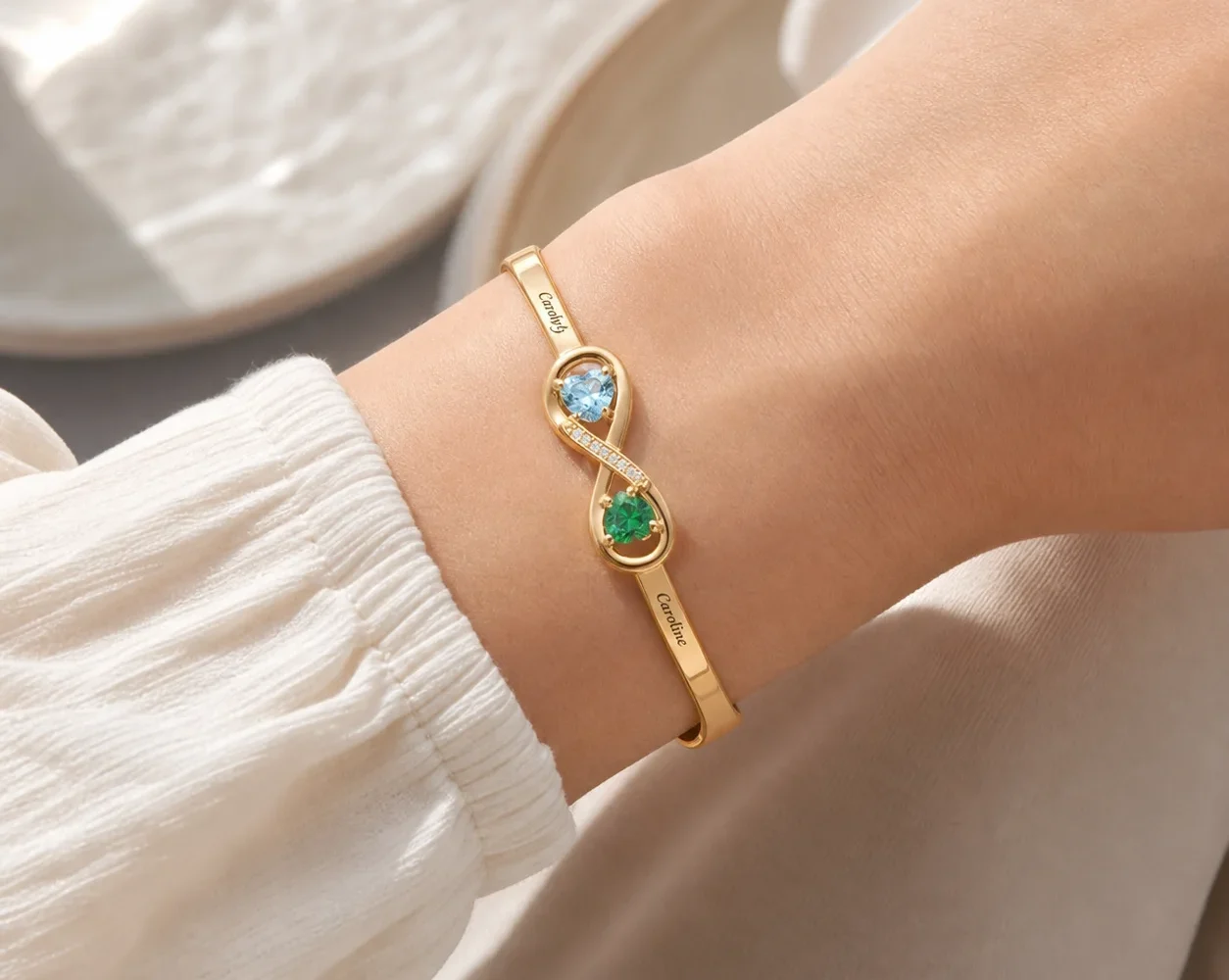
Choose a two-name birthstone necklace when the recipient regularly wears pendants and would prefer both names gathered at the neckline. Choose an open cuff when she favors wrist jewelry and likes the two people displayed at opposite ends of one shape. Because both current designs use exactly two names and two birth months, the useful comparison is wear location, structure, and routine—not family capacity.
Hold the personalization inputs constant
Prepare two rows before comparing products: person one with an exact name and birth month, then person two with the same. Use the same verified pair for both designs. This prevents an attractive photograph from changing who the gift is meant to represent.
Both the Two-Tone Teardrop Story Necklace and Open Heart Birthstone Cuff are current two-person designs. Neither is the right choice for one, three, or more names if the goal is equal name-and-month treatment. When the roster does not equal two, return to the current collection and choose a structure with matching capacity.
If the two people share a birth month, select the same month twice. Their names and positions keep them distinct.
Read the necklace as one framed story
The Two-Tone Teardrop Story Necklace places two engraved names and two simulated birthstone accents within a teardrop-and-heart composition. The plated copper-base necklace is listed with an approximately 45 cm chain plus a 5 cm extender and offers gold, stainless-steel, or rose-gold tones.
It also asks the shopper to choose a crystal-set or smooth engraved heart accent. That heart treatment gives the necklace an extra decorative decision not shared by the cuff. Select it according to the wearer’s style, not as a third birthstone or person.
A pendant can work well for someone whose wrists are busy at a keyboard, whose sleeves cover bracelets, or who already uses a favorite necklace length. Compare the listed chain with one she owns rather than predicting exact placement from a model alone.
Also consider visibility. A necklace may be partly covered by a collar or jacket, while a cuff can remain visible to the wearer whenever sleeves allow. Some recipients like other people to notice a pendant; others prefer a personalized detail they can see themselves. Ask which kind of visibility feels natural instead of equating a more obvious placement with greater meaning.
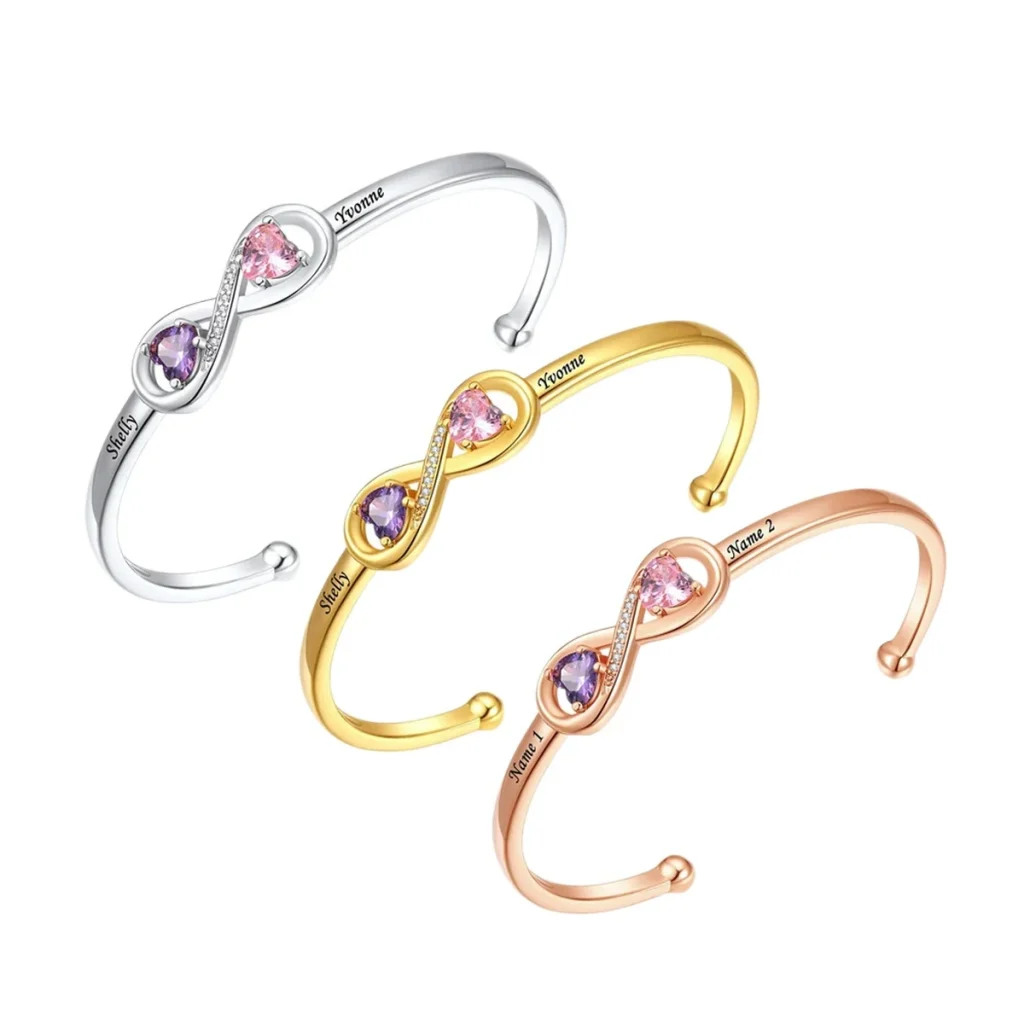
Read the cuff as a balanced pair
The Open Heart Birthstone Cuff places the two names and simulated birthstone accents at the open ends of a plated copper-base wrist design. It is adjustable and offered in the same three tone families, but its identity comes from the visible two-ended balance rather than a central pendant.
A cuff may suit a person who likes to glance at personalized details during the day or rarely wears necklaces. It may be less suitable if wrist jewelry interferes with her work, exercise, or clothing. “Adjustable” does not mean one universal fit, so use current measurements and support information when wrist fit is uncertain.
Do not bend, reshape, or repeatedly flex the cuff beyond the product’s normal wearing use. Follow the current page rather than treating adjustability as an unlimited modification instruction.
For a surprise, look for evidence of wrist fit and necklace preference separately. A ring size does not establish cuff fit, and a favorite pendant does not prove that every chain length works. If either format has an essential unanswered measurement, resolve it through current product information before the emotional appeal of the design settles the choice.
Run a one-day routine comparison
Picture the recipient from morning to evening. Note necklines, sleeves, desk work, childcare, exercise, and the jewelry she removes first. A necklace spends the day against clothing or skin near the neckline; a cuff moves with the hand and may meet desks or sleeves. This practical map often resolves the choice faster than comparing close-up decoration.
Then consider care. Both are plated designs that should be kept dry, removed for showering, swimming, and exercise, and protected from perfume and household chemicals. If one format would be easier for her to remove before those activities, that is a legitimate advantage. See the current jewelry care guide for the full routine.
Finally, imagine storing the piece. A necklace benefits from being laid or hung so the chain does not tangle; a cuff should have a separate dry space where other items will not press against it. The format whose care routine fits the recipient’s habits is more likely to remain usable.
Common questions
Can either design include a third name?
No. Both current configurations are built for exactly two names and two birth-month selections. A note should not be used to expand that capacity.
Which one shows the birthstones more clearly?
They position the accents differently, so clarity depends on viewing distance, lighting, and the wearer’s preference. Use option images for layout and worn images for scale rather than declaring one universally easier to see.
Do the tone choices mean precious-metal construction?
No. Gold, stainless-steel, and rose-gold tone labels describe appearance. Both products are described as plated copper-base designs with simulated birthstone accents.
Let wear location settle the tie
When the same two people belong in either design, compare where the recipient already keeps jewelry. The teardrop necklace frames the pair in one neckline composition and adds a heart-accent choice. The cuff places them at two open wrist ends. Confirm the two name-and-month rows, then follow Amorieva’s personalization process for the format that best fits her ordinary day.