Should You Include Your Own Birthstone in Family Jewelry?
Decide whether your own birthstone belongs in family jewelry by defining whose story the piece tells, then map every person before choosing a layout.
You should include your own birthstone in family jewelry when the piece represents a group that includes you. Leave it out when the purpose is specifically to carry the children, a partner, or another clearly defined set of loved ones. There is no universal etiquette rule. The decision becomes much easier when you write one sentence explaining whose relationship the jewelry is meant to show.
Choose the point of view before the month
Imagine the wearer saying, “This piece represents…” and finish the sentence. “My whole household” normally includes the wearer. “My children” normally does not. “The five women in our family” includes whoever belongs to that agreed group, regardless of who places the order.
This point-of-view test prevents a common mismatch: selecting a visually balanced set of colors before deciding what those colors mean. Birthstone jewelry is most useful when every accent has a clear person attached to it. The family birthstones by month guide can help verify month traditions after the group is defined, but a month chart cannot define the group for you.
Draw a relationship map with a center
Put the intended wearer in the center of a page. Around that name, write each person the jewelry might represent. Draw a line to the people included by the purpose sentence, and leave the other names outside the current piece without suggesting they matter less.
Now ask whether the center person belongs in the represented set. In a parent-and-children design, yes. In a children-only design, no. In a gift from siblings to their mother, the answer depends on whether the piece is about the siblings or the entire immediate family. Discuss the choice when it could carry emotional weight rather than treating the wearer’s month as a decorative filler.
Convert the final map into rows: exact name, actual birth month, and intended position. If two people share a month, repeat it accurately.
Keep the giver outside the map unless the giver also belongs in the stated relationship. The person entering payment and shipping information does not automatically earn a place in the design. Likewise, a wearer can belong in the map even when someone else orders the gift. Ownership, ordering, and representation are three separate roles.
If the decision is still unclear, make two complete mock rosters. Label one “wearer included” and the other “wearer not included.” Read the meaning sentence above each list, then show only those two concepts—not product colors—to the person helping verify the gift. This isolates the relationship decision from styling and often reveals which version sounds natural.
Know what including yourself changes
Adding the wearer increases the personalization count by one. It may change which product capacities remain suitable or how much information appears in the layout. It can also shift the message from “I carry my children” to “we belong together.” Neither message is inherently stronger; they simply describe different relationships.
Including yourself can be appropriate for a couple piece, a whole-household design, or jewelry marking several generations in which the wearer is one generation. Leaving yourself out can keep the focus on the people you want to honor. Do not let an unused slot decide the meaning. Empty capacity is not a requirement to add another person.
Apply the decision to a current design
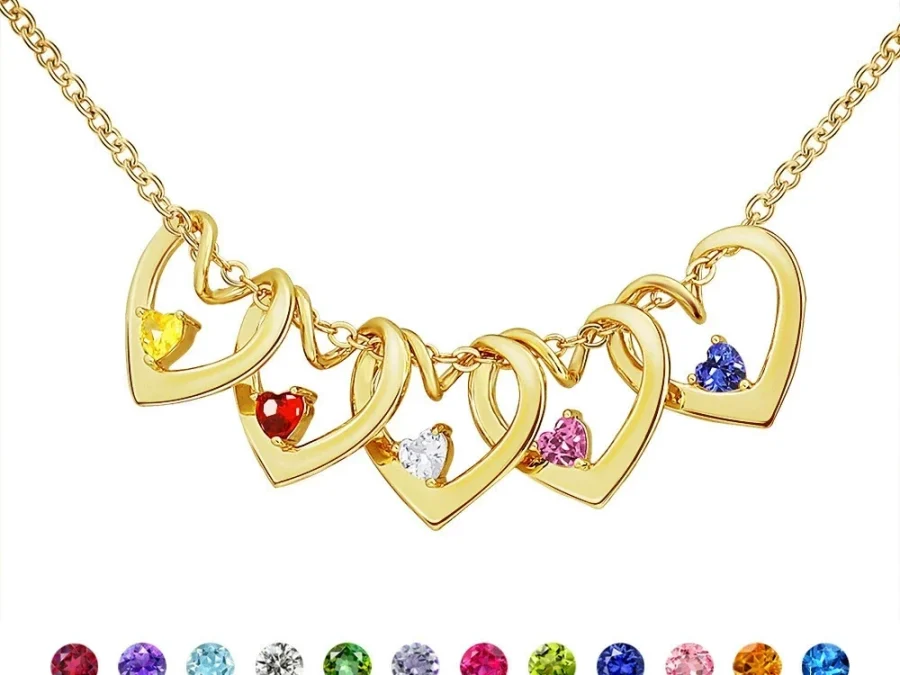
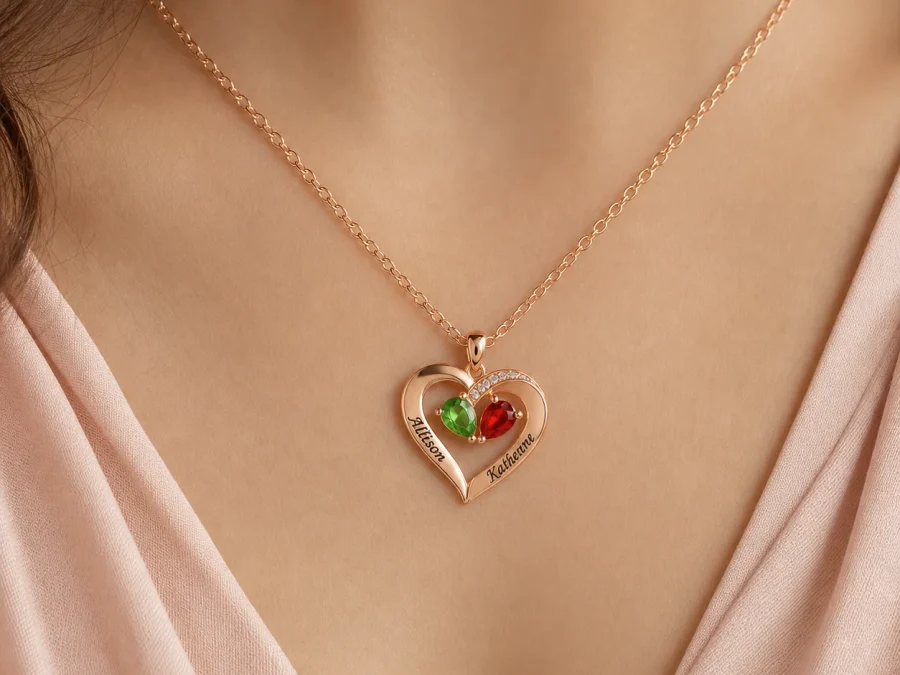
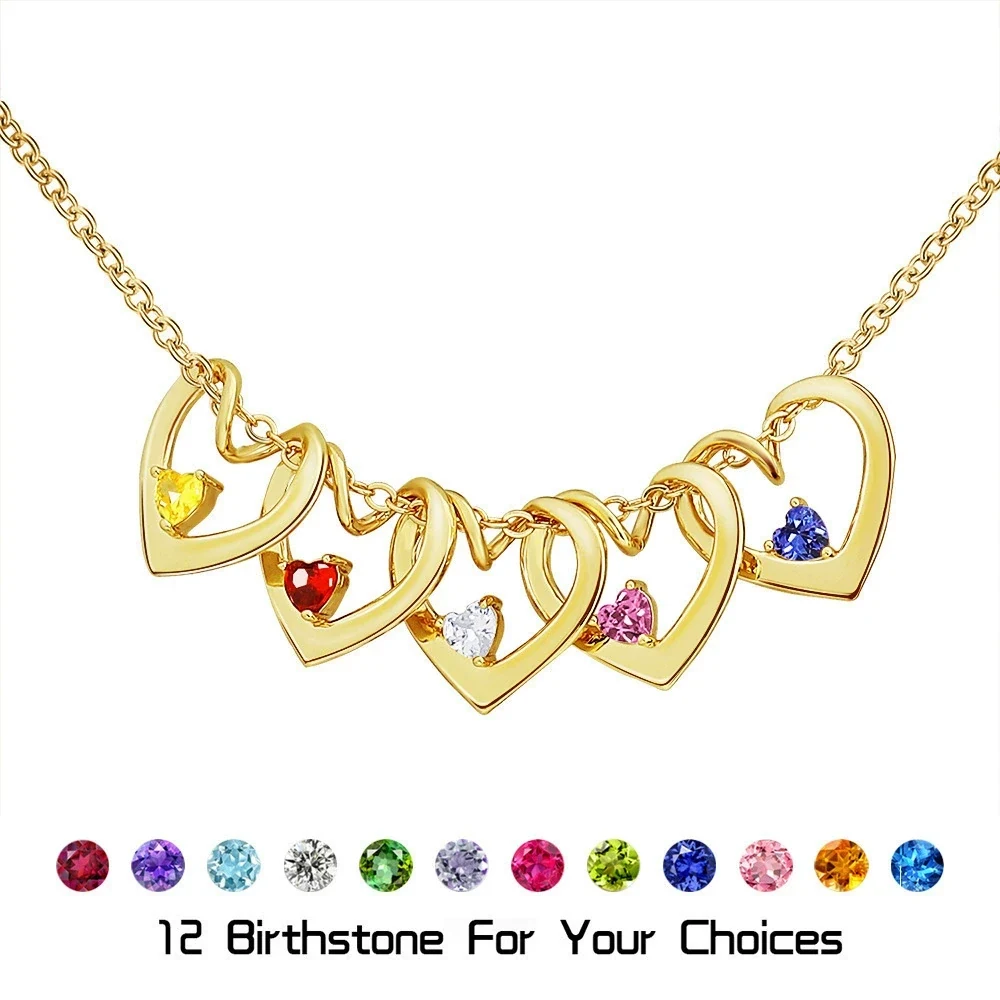
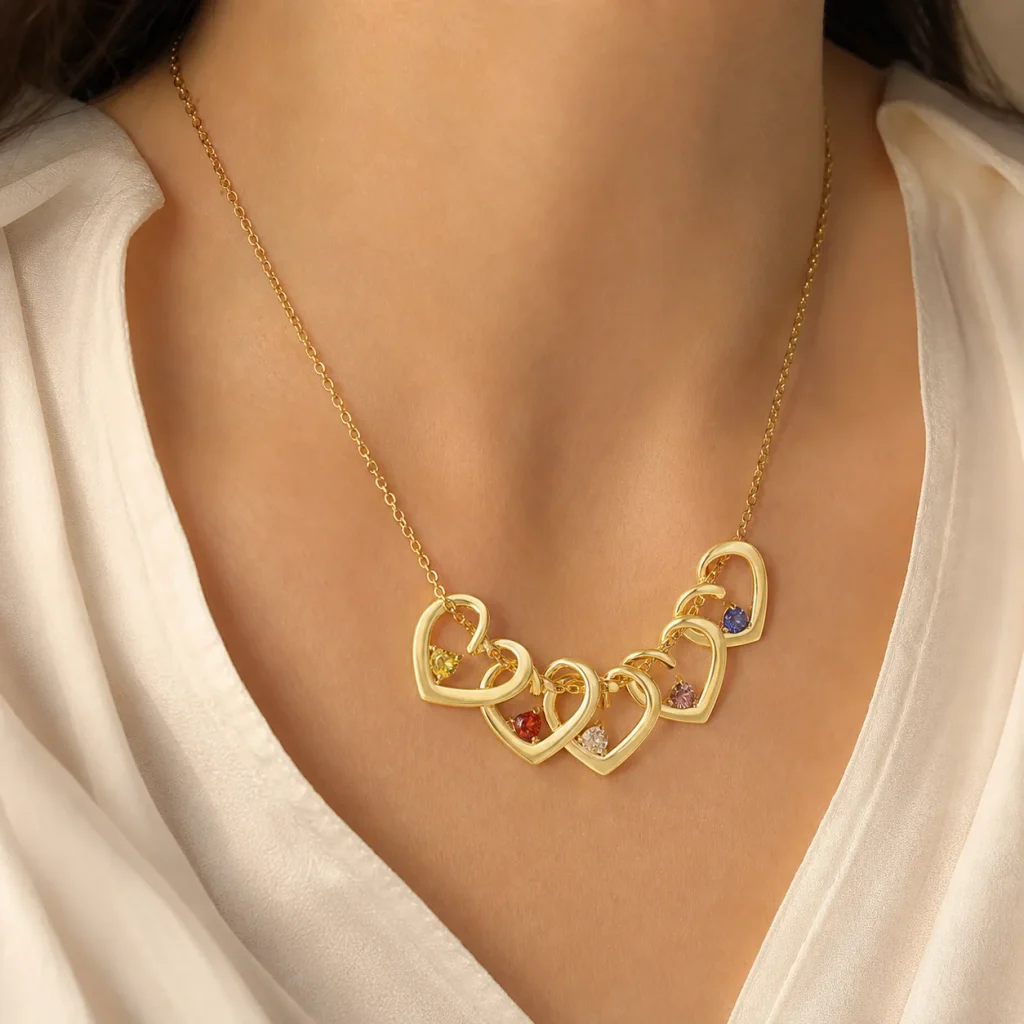
The Twisted Heart Birthstone Necklace supports one to five loved ones, each represented through a name and simulated birthstone selection. It is offered in necklace or bracelet format and in gold, stainless-steel, or rose-gold tones. If the wearer is included, her name-and-month pair occupies one of those one-to-five positions.
Count the finalized map against that capacity. A mother with four children could use all five places for the whole group, or four places for a children-only story. A wearer plus five other relatives exceeds this design’s current capacity and calls for another structure. The guide to planning family necklace names can help separate inclusion from readability.
Do not add the wearer’s birthstone without her name if every other accent is name-paired, unless the current product fields and intended story clearly support that asymmetry. Consistent treatment makes the map easier to understand.
Also consider how the wearer will explain the piece. A clear answer such as “these are my three children” or “this is all four of us” confirms that the scope works. If the explanation requires apologizing for an omitted person or inventing a color-only exception, revisit the map before ordering.
Common questions
Is it selfish to include my own birthstone?
No. If the jewelry represents a family unit that includes you, your month is part of the information. The meaningful question is whether the scope is clear, not whether the wearer must disappear from her own family story.
Should a mom necklace contain only the children’s stones?
It can, and many shoppers prefer that focus, but it is not a fixed rule. A parent-and-children design can be equally coherent. State the intended group and apply it consistently.
What if including myself exceeds the product capacity?
Choose a different current design or narrow the story only with the recipient’s understanding. Do not place an extra person in a note and assume the stated limit can be expanded.
Write the rule you want the jewelry to follow
Before opening any selector, complete this sentence: “This piece includes these people because…” Then list every name and month, count the entries, and compare them with the product. Amorieva’s personalization overview can guide the field-by-field review. When the relationship rule is explicit, including or omitting your own birthstone becomes an intentional choice rather than an uncertain convention.