March, September, and December: How to Tell Blue Birthstone Colors Apart
Compare the blue birthstone color families linked with March, September, and December, then choose personalized accents by month label rather than pixels.
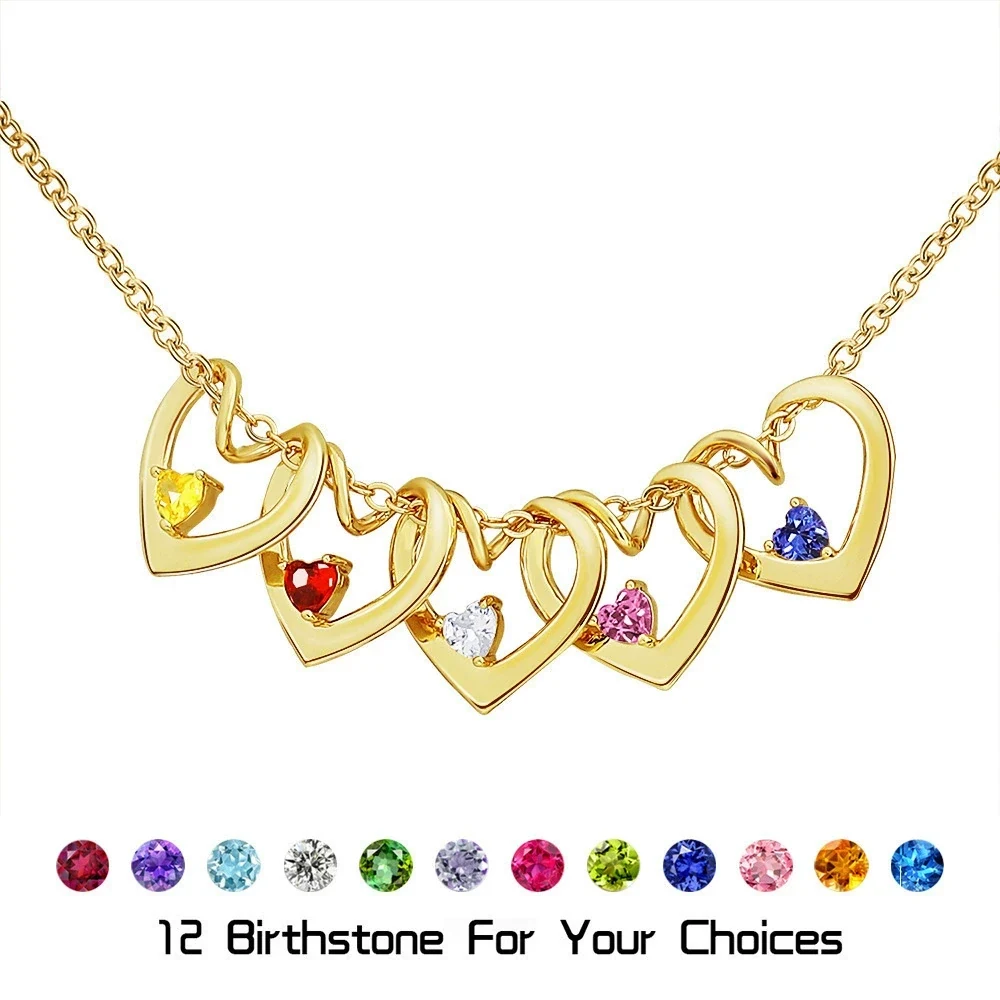
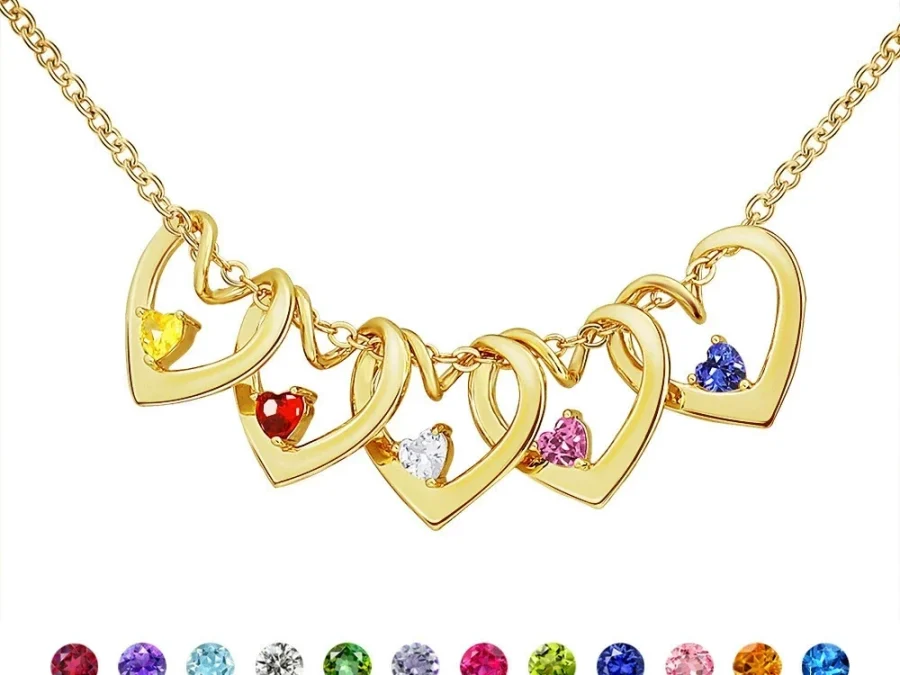
Blue birthstone colors by month are easiest to distinguish through their labels and general color families, not by sampling a tiny online image. March is commonly linked with aquamarine, September with sapphire, and December with several recognized options including turquoise, tanzanite, and zircon. Those traditions create pale, deep, green-leaning, or violet-leaning ideas of blue, but a personalized selector remains a month system rather than a gem-identification test.
Start with the month names, not a row of blue pixels
When several family members have blue-associated months, write March, September, or December beside each person before looking at color. This prevents a common mistake: choosing the swatch that looks closest to a remembered shade and attaching it to the wrong name.
Birthstone traditions and alternatives can vary by place and era. The Gemological Institute of America identifies aquamarine and bloodstone for March, sapphire for September, and turquoise, tanzanite, and zircon for December. Those pages discuss gem materials and customary associations. Amorieva’s applicable personalized pieces use simulated birthstone or crystal accents to represent the selected month.
The family birthstone month guide provides a compact ordering reference. Use it to confirm the calendar label, then return to the actual product selector.
Recognize the broad blue families
Aquamarine is commonly imagined as a lighter blue that can lean slightly green. Sapphire is often represented by a stronger, deeper blue, although sapphire itself can occur in more than one color. December is the most complicated shorthand because its recognized stones can suggest several blues: turquoise often reads blue-green, tanzanite can lean blue-violet, and blue zircon may appear bright and clear.
These are broad orientation cues, not promises about a small simulated accent. A chart designer may choose a light cyan for March, a dark royal blue for September, and a brighter blue for December. Another chart may make two of them look much closer. The product’s labeling—not a universal color code—determines which month a selectable accent is meant to represent.
Use descriptive color words only to navigate the chart, never to overwrite its labels. “Pale,” “deep,” “green-leaning,” and “violet-leaning” are relative observations that can change beside another color. They are helpful when discussing a layout, but they do not establish which material an accent contains or guarantee how it will appear in a particular room.
Understand why small accents compress color differences
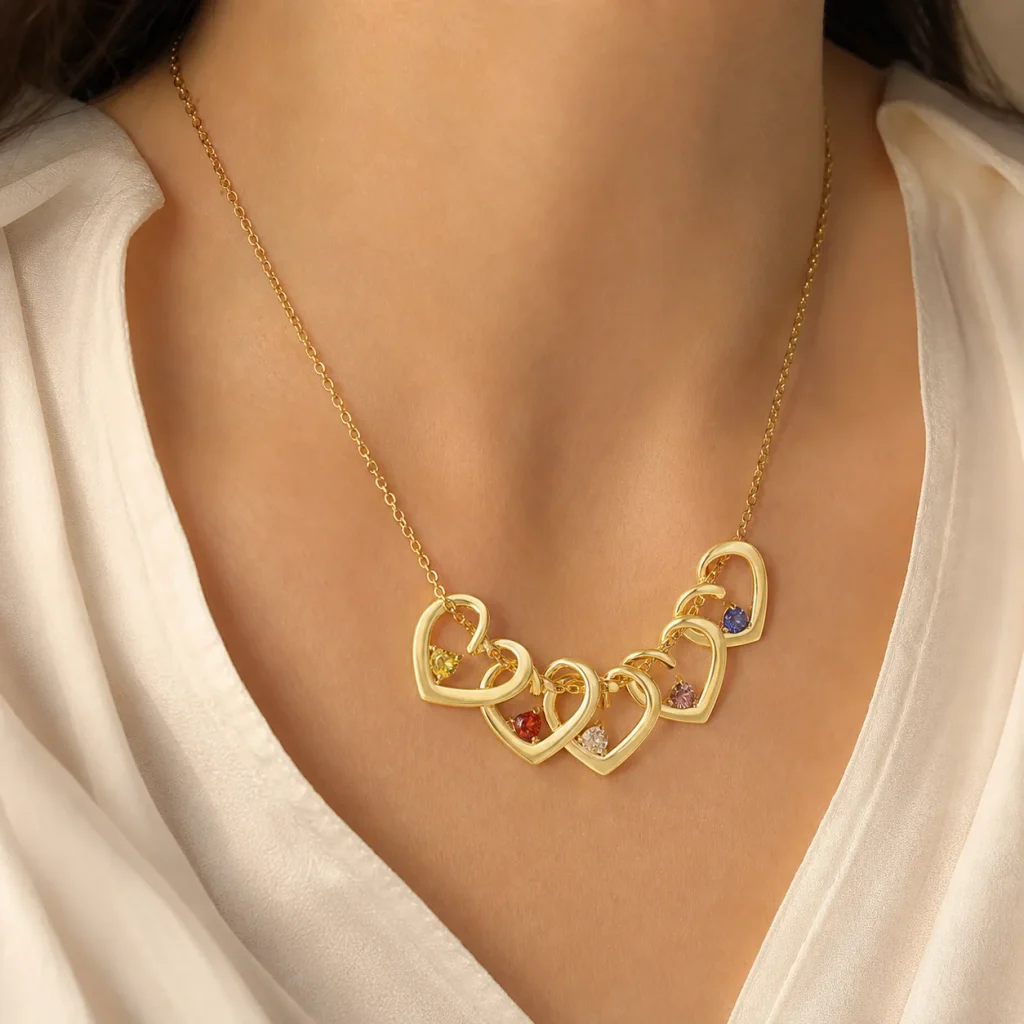
Large swatches let the eye compare hue and lightness across a wide area. A small jewelry accent reflects surrounding metal, skin, clothing, and light. At that scale, subtle green or violet tendencies may be hard to see. A darker accent can also look nearly black in shadow, while a pale one can reflect nearby colors.
Digital viewing adds more variables. Product lighting, image editing, browser rendering, brightness, and display settings can all change the apparent blue. Do not hold one screen next to another and treat the difference as a material specification.
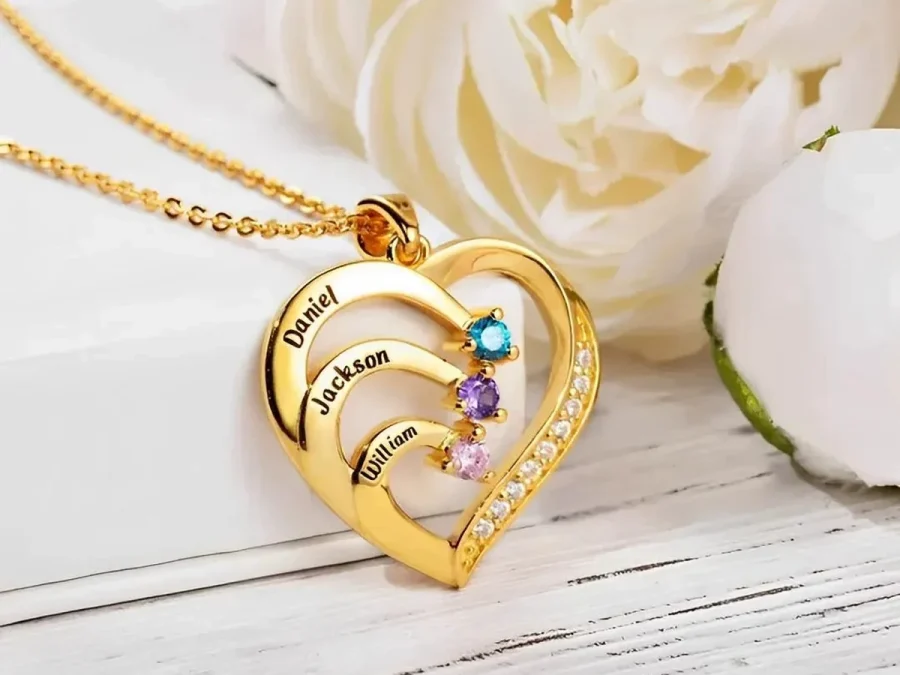
The Twisted Heart Birthstone Necklace supports one to five names, each paired with a January-through-December month selection and a simulated birthstone accent. Its family meaning remains readable because names and month positions work with color. The accent is not expected to carry the whole identification alone.
Plan several blue months without creating confusion
Use a table with three columns: position, exact name, and selected month. Keep family order separate from color contrast. If March and December appear adjacent, do not reorder the people only to make their blues look farther apart unless visual order is truly more important to the recipient.
A reliable review sequence is:
- Confirm each full birth date from a written source.
- Reduce it to the correct calendar month.
- Pair the month with the approved engraving.
- Enter each pair in the intended position.
- Read the selected month text in the final summary.
- Use colors only as a secondary visual check.
If several people share the same month, repeated colors are accurate. If three different blue months appear, similar-looking accents are not an error when the labels and name pairings are correct. The Amorieva personalization guide can help you keep confirmed details organized before submission.
Common questions
Why does December have more than one blue-associated stone?
Modern references recognize several December birthstones, including turquoise, tanzanite, and zircon. Traditions have developed over time, so one month can have alternatives. A product selector still provides its own single month-labeled visual choice.
Is every September sapphire color dark blue?
No. Sapphire as a gem material can occur in multiple colors, and product charts use simplified visual conventions. For personalized ordering, select “September” from the current field instead of trying to authenticate the month by darkness.
Can I separate similar blues by changing name order?
You can, but only if the new order still makes sense to the family. Names, positions, and month labels provide stronger identification than color contrast alone, so do not create an unintended relationship hierarchy just for visual variety.
Let labels carry the accuracy
March, September, and December can all lead to blue, but through different birthstone traditions and broad color ideas. Learn those differences as context, then make the actual order from verified month labels. You can compare other name-and-month formats in the Amorieva collection, but the rule remains the same: the written pairing is the record; the small blue accent is its visual companion.