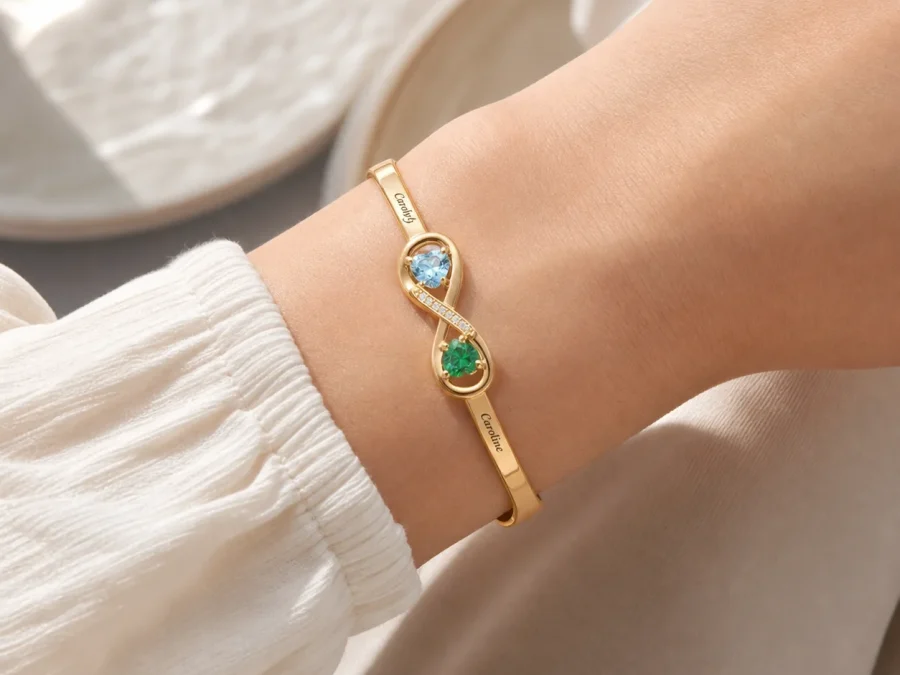
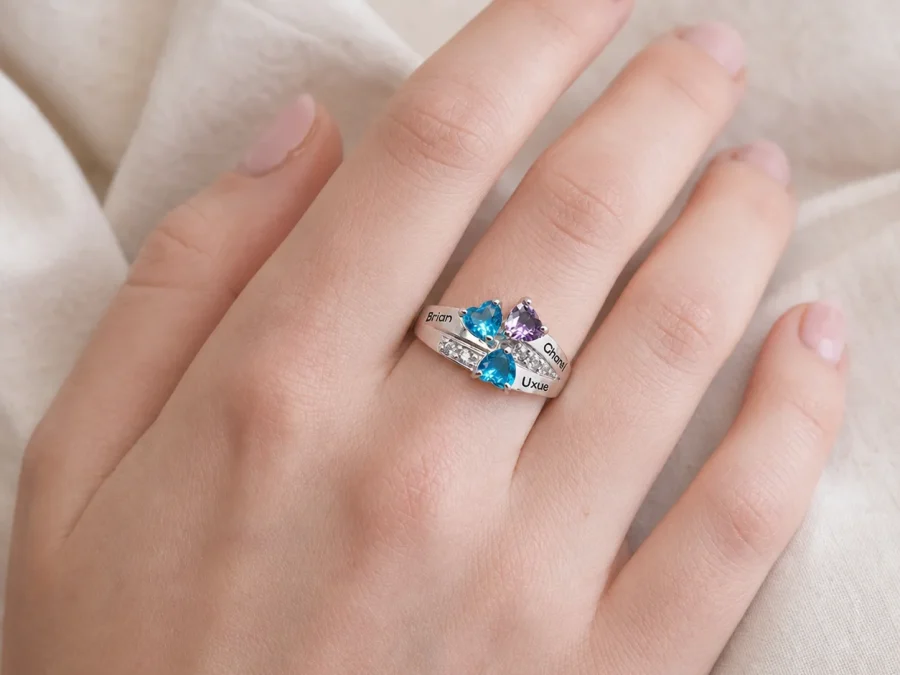
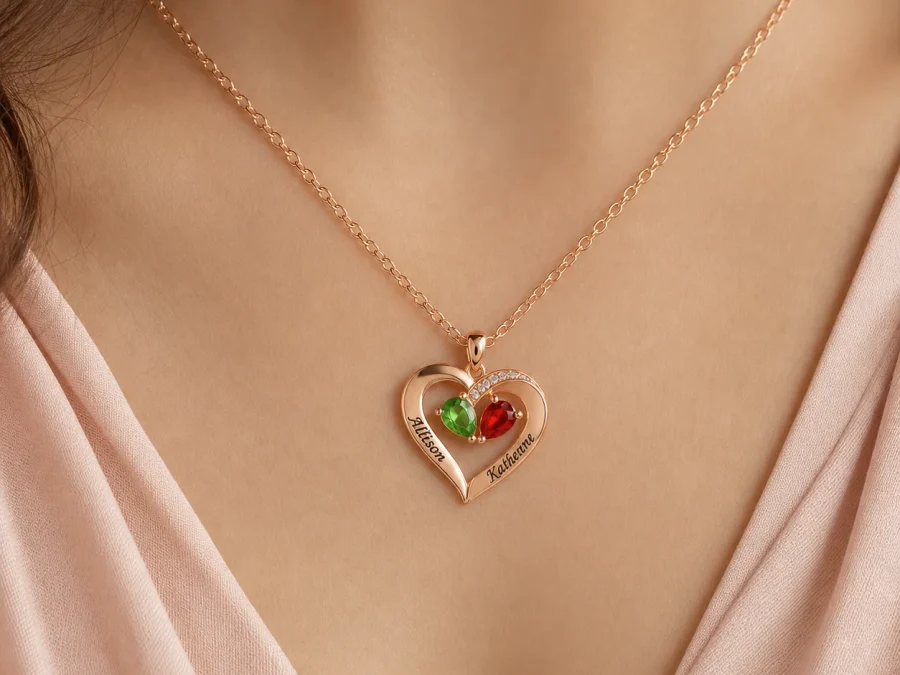
How to Clean Engraved Jewelry With Crystal-Style Accents
Clean engraved plated jewelry and crystal-style accents with a soft, controlled routine that addresses broad surfaces, recesses, charms, and storage.
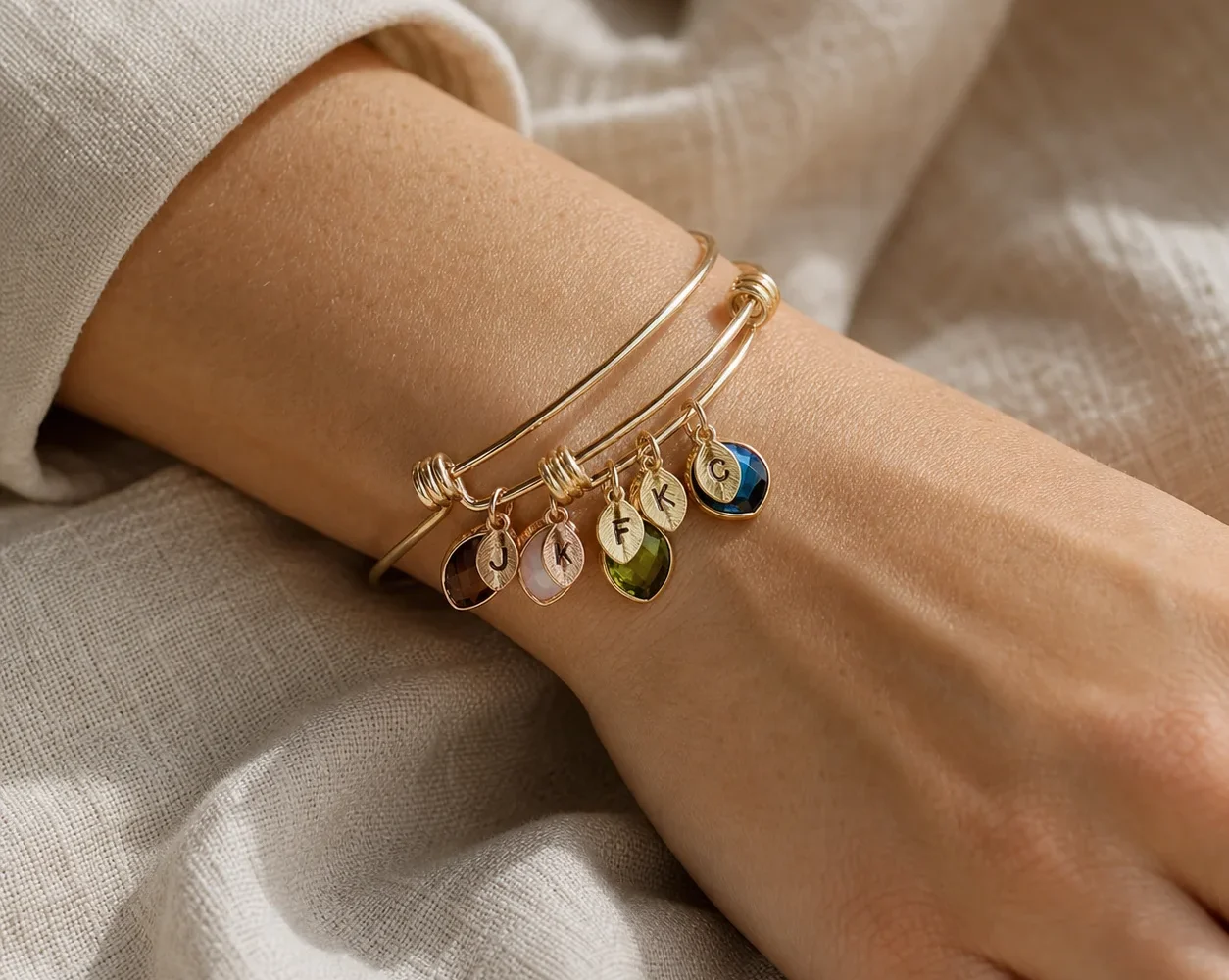
To clean engraved jewelry with crystal-style accents, begin with the least aggressive method: dry hands, a soft lint-free cloth, light pressure, and careful attention to each surface. Engraved recesses and small charms may collect residue, but that is not a reason to scrub the whole piece. Work zone by zone, keep the item dry, and stop if the published care guidance does not support a stronger step.
Identify the surfaces before you touch them
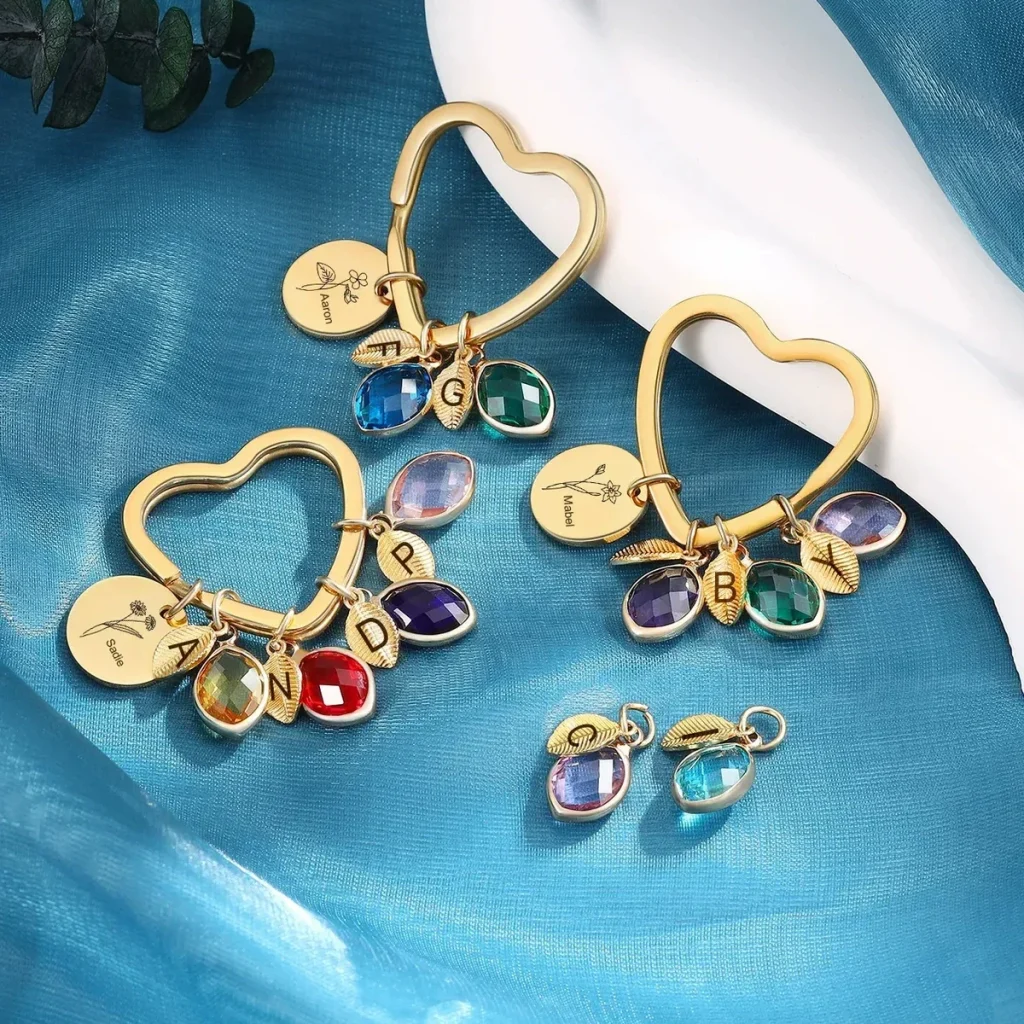
Place the jewelry on a clean, light-colored towel so small parts are easy to see. Under ordinary light, identify broad plated surfaces, engraved letters, edges, moving connections, and crystal-style or simulated birthstone accents. Look for loose-looking parts, sharp changes, or residue. Cleaning should not proceed as if every area has the same construction.
The Family Branch Birthstone Bangle is a useful example. It uses plated mixed-metal construction, an engraved center disc, one to five name leaves, and crystal-style simulated birthstone charms. It can also be configured as a round or heart keyring. Those multiple small components call for controlled handling rather than pulling the piece through a cloth.
If a charm or connection already appears damaged, photograph it and stop. Cleaning is not a substitute for evaluating a physical problem.
Use a dry, surface-by-surface sequence
Start with the broadest, least detailed area. Support the piece from underneath and wipe in short strokes with a clean section of cloth. Move to the center disc, tracing around its edge without pressing into connections. For engraved leaves, wipe along the flat face and then lightly across the lettering. Finish with the small colored accents, using minimal pressure.
A practical order is:
- Remove dust from the chain, ring, or bangle body.
- Wipe the center element while supporting it.
- Clean each engraved charm individually.
- Blot around colored accents without twisting them.
- Inspect the cloth and switch to a clean area as residue transfers.
- Lay the piece flat and recheck it before storage.
Do not use a rough paper product, abrasive pad, hard brush, or household cleaner. Friction and unknown formulas can create more risk than the original residue.
Handle stubborn residue conservatively
If dry wiping does not remove a mark, first ask what caused it. Lotion, perfume, soap, makeup, and household products require prevention as much as cleaning. Repeatedly applying another product without knowing the material response can spread residue into engraving or around accents.
Consult the current Amorieva jewelry care guidance before introducing moisture or a cleaning solution. The published routine emphasizes keeping the piece dry, avoiding perfume and household chemicals, wiping gently with a soft lint-free cloth, and storing it separately. Do not improvise a soak or high-heat drying method.
If the mark remains or a component looks different after careful wiping, document the condition in clear light and contact support through the guidance on the Amorieva FAQ. Describe what touched the piece and what you already tried. That record is more useful than a sequence of undocumented home remedies.
Prevent buildup around engraving and accents
Put personalized jewelry on after skin care, perfume, and hair products have settled. Remove it before showering, swimming, exercise, saltwater, and chlorinated water. At the end of wear, a brief dry wipe is easier than waiting for several layers of residue to accumulate.
Store the piece alone or in a separate soft compartment. Tangled chains and hard neighboring objects can rub across engraved faces and small accents. For a keyring format, remember that ordinary keys create repeated contact; inspect it regularly and avoid placing it loose with coins or tools.
Frequency should follow use rather than a rigid calendar. A piece worn briefly in a dry setting may need only a light wipe. One exposed to lotion or sweat deserves attention before storage. The aim is consistent, gentle maintenance.
Keep the cloth used for jewelry separate from cloths used with furniture polish, glass cleaner, or cosmetics. A cloth can look clean while carrying product residue from an earlier task. Starting with a known, clean lint-free cloth makes the routine easier to evaluate and prevents accidental transfer onto engraved surfaces.
Common questions
Can I soak engraved jewelry to clean the letters?
Do not begin with soaking. It exposes the entire plated piece, connections, and small accents when only one area may need attention. Start dry and follow the product’s published care instructions.
Should I use a brush inside engraved lines?
A hard or abrasive brush can apply concentrated pressure. Use a soft lint-free cloth first. If residue remains in a recess, ask support for product-appropriate guidance instead of choosing a tool by trial and error.
How do I clean several moving charms without tangling them?
Lay the piece flat, separate one charm at a time, and support its connection while wiping. Return each charm to the towel before moving to the next. Avoid pulling multiple leaves through the cloth together.
Gentle care is a sequence, not a force level
Engraved jewelry becomes easier to maintain when you divide it into surfaces and clean in a controlled order. Start dry, support each component, use fresh sections of a soft cloth, and stop before uncertainty becomes experimentation. You can compare the care needs of current plated personalized formats in the Amorieva collection, but the same principle holds: accurate observation and light, regular care are more useful than aggressive cleaning.