Your Measurement Falls Between Ring Sizes: What Comes Next?
If your measurement falls between ring sizes, repeat the test, compare the same finger with a familiar ring, and confirm the available whole-size options.
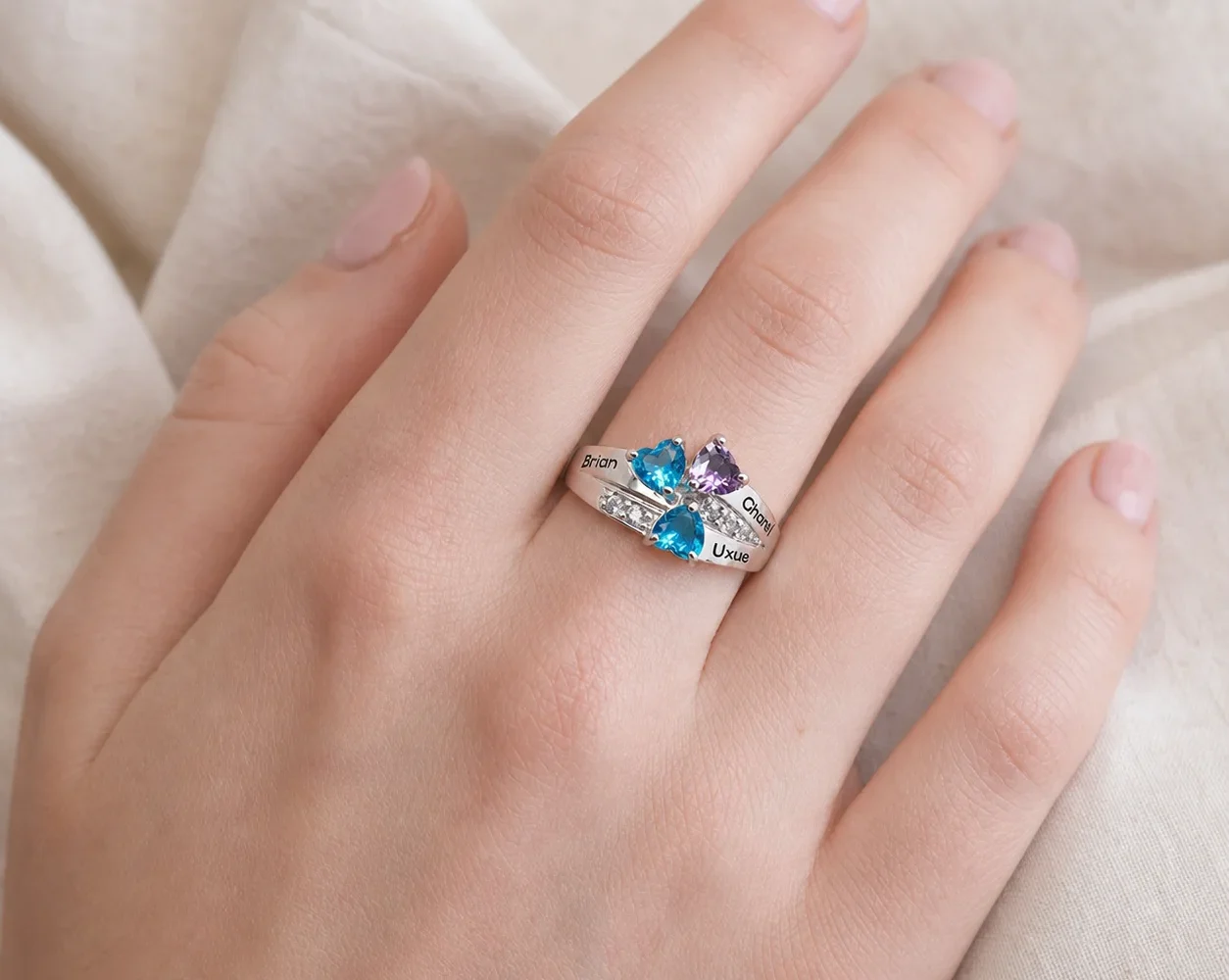
If you are between ring sizes for a personalized ring, do not round immediately from one measurement. Repeat the measurement on the exact finger and hand, compare it with a ring that already fits that finger, and check the product’s available sizes. The goal is to understand whether the result is consistently between options or whether the first test simply captured normal variation or measurement error.
Repeat the same method before changing methods
Start where the home ring-size measurement guide ends. Use the same tool, units, finger, hand, and level of tension for at least two more readings. Record the results instead of remembering an average impression.
Repeat at different points in an ordinary day. Fingers may not present exactly the same measurement every time, and pulling a paper strip more tightly on one attempt can create an artificial difference. A useful log contains time, method, circumference or diameter, and any obvious condition that changed.
If the results spread across more than one interval, stop trying to force a size decision from that method. A local jeweler or a reliable sizing tool may provide a clearer comparison. Personalized jewelry deserves more than a guess based on the smallest or largest number you happened to record.
Use the measurement tool with consistent tension. A strip that compresses the finger on one pass and barely touches it on another is testing the method, not the size. Reject any reading taken when the strip twisted, the ruler shifted, or the units were unclear. Three clean readings are more valuable than a long list of mixed-quality numbers.
Confirm the exact finger and hand
The same named finger on opposite hands should not be assumed to fit identically. Record “left ring finger” or “right index finger,” not simply “ring finger.” If the ring is a gift, confirm which hand the recipient plans to use.
Compare with an existing ring only if it fits the same intended finger comfortably. A thumb ring, a ring worn above the knuckle, or a loose fashion ring on another hand is not a direct reference. Trace or measure the inside diameter without including the metal edge, and repeat the reading.
Do not infer size from a photograph, glove size, height, or another person’s hand. Those shortcuts cannot replace a direct measurement.
Map the result to the current product choices
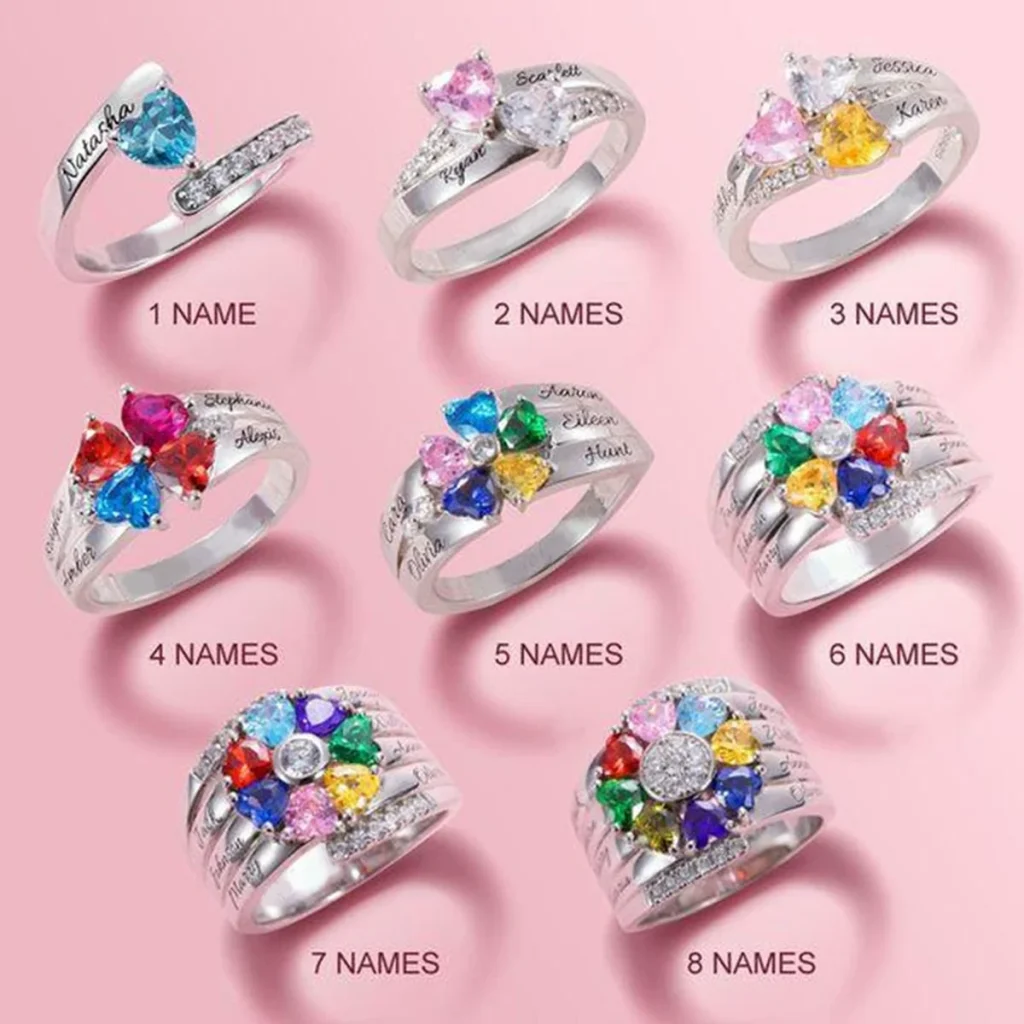
The Family Constellation Name Ring currently offers whole US sizes 6, 7, 8, 9, and 10. Its local size guide corresponds to approximate inside diameters of 16, 17, 18, 19, and 20 mm. The ring also supports one to eight simulated birthstone accents and a name or short engraving.
Those available choices define the decision. Do not assume an unlisted half size or later adjustability. If your repeated result sits between two whole options, consider how the reference ring behaves: Does it pass the knuckle without force? Does it remain stable in ordinary movement? Is it intentionally worn loose? These observations are more useful than an automatic “always size up” rule.
If neither available option seems supportable, choose another format from the Amorieva collection rather than treating a personalized ring as an experiment.
Pay attention to the knuckle as well as the resting position. A ring must pass the knuckle and then sit with the degree of movement the wearer finds comfortable. A known-fitting ring provides useful evidence because it captures both parts of that experience. Do not copy its marked size if it is worn on another finger; measure and compare its actual inside diameter for the intended finger.
Use an evidence sheet for the final choice
Write the decision in a compact format:
- Intended finger and hand.
- Three repeated measurements with units.
- Inside diameter of one known-fitting ring, if available.
- Current offered whole sizes.
- Selected size and the reason it was chosen.
- Final name and birthstone-count review as a separate step.
Keeping size evidence separate from personalization prevents a correct engraving from making you feel committed to an uncertain fit. If you need clarification about current fields, consult the Amorieva FAQ before submitting.
For a surprise gift, it may be better to reveal enough of the plan to obtain a reliable size than to preserve complete secrecy. A personalized ring that cannot be selected with confidence is not improved by a more dramatic reveal.
If you ask a household member for help, give precise instructions: identify the ring worn on the same finger and hand, photograph it beside a ruler if needed, and do not guess from a jewelry box label. Record who supplied the reference so you can resolve conflicting measurements before ordering.
Common questions
Should I always choose the larger size when I am between?
No single rule fits every finger, hand, band, and wearing preference. Repeat the measurement, compare a known-fitting ring on the same finger, and evaluate the current product options before choosing.
Can I measure a ring worn on the other hand?
You can use it as a rough clue, but do not treat it as a direct match. Measure the exact intended finger and hand because opposite sides can differ.
Does the Family Constellation ring come in half sizes?
The current product options list whole US sizes 6 through 10. Follow the live selector and do not assume a half size or modification that is not offered.
Turn uncertainty into a documented decision
An in-between measurement is a signal to gather another piece of evidence, not a command to round in one direction. Repeat the test consistently, verify the exact hand, compare a familiar ring when possible, and respect the available whole-size range. Once the size choice has a written reason, you can review the names and simulated birthstone layout without letting uncertainty in one field contaminate the rest of the order.