Do Birthstones Have to Match the Wearer’s Birth Month?
Decide when a birthstone should match the wearer's month, when a favorite color can carry another meaning, and how to label the choice honestly.
Birthstones do not have to match a birth month as a matter of personal style, but the label you use should match your intention. If you are giving “birthstone jewelry,” most recipients will expect each accent to represent an actual birth month. If you choose a favorite color instead, that can still be meaningful—just describe it as a personal color symbol rather than an accurate month marker.
Separate tradition from personal choice
Month-based birthstone lists are traditions, and recognized alternatives can vary by place and era. They offer a shared shorthand: a selected month stands for a person born during that part of the calendar. A favorite color uses a different logic. It may recall a place, season, team, or family memory, but another viewer cannot infer that story without context.
Neither approach is inherently more caring. The important question is what the recipient is likely to understand. A grandmother who regularly refers to her grandchildren’s birthstones may expect conventional month pairings. Someone who avoids a customary color may prefer an accent chosen simply because she loves it.
If you decide to follow the calendar convention, verify the month with the person’s actual birth date and consult Amorieva’s family month guide for a practical overview.
Read the product selector as the order language
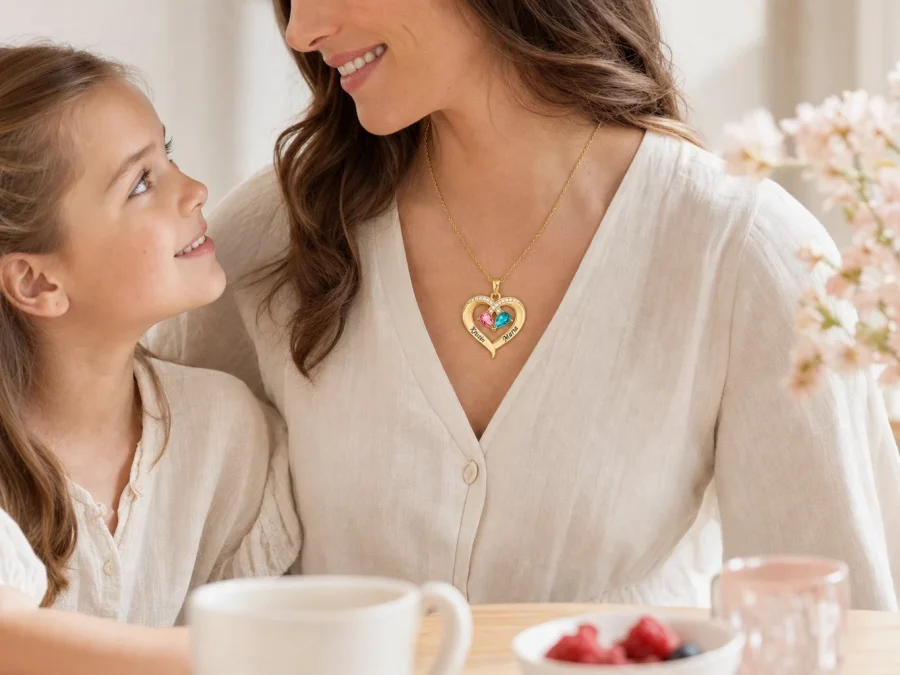
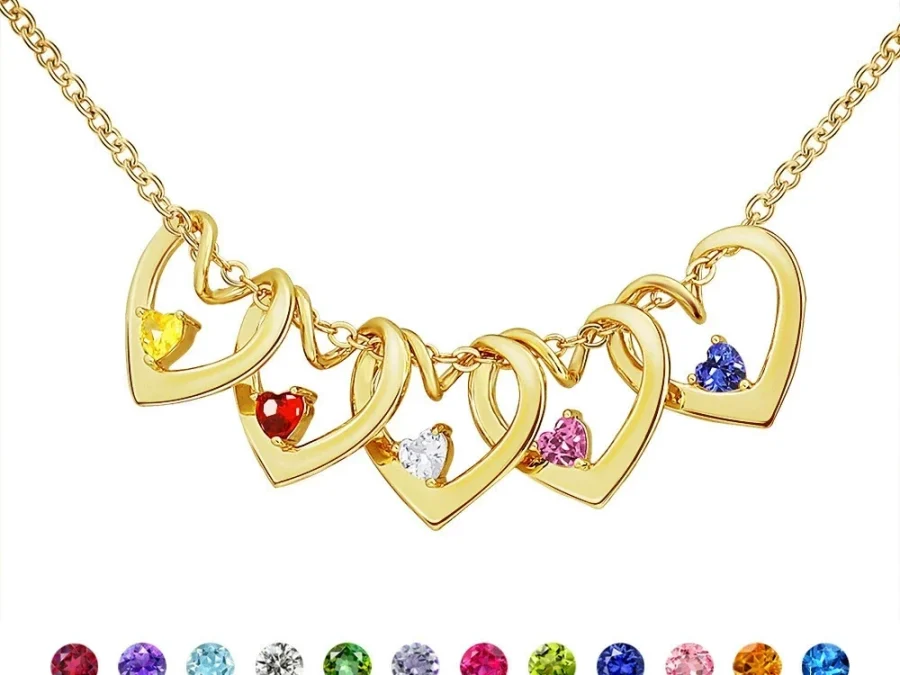
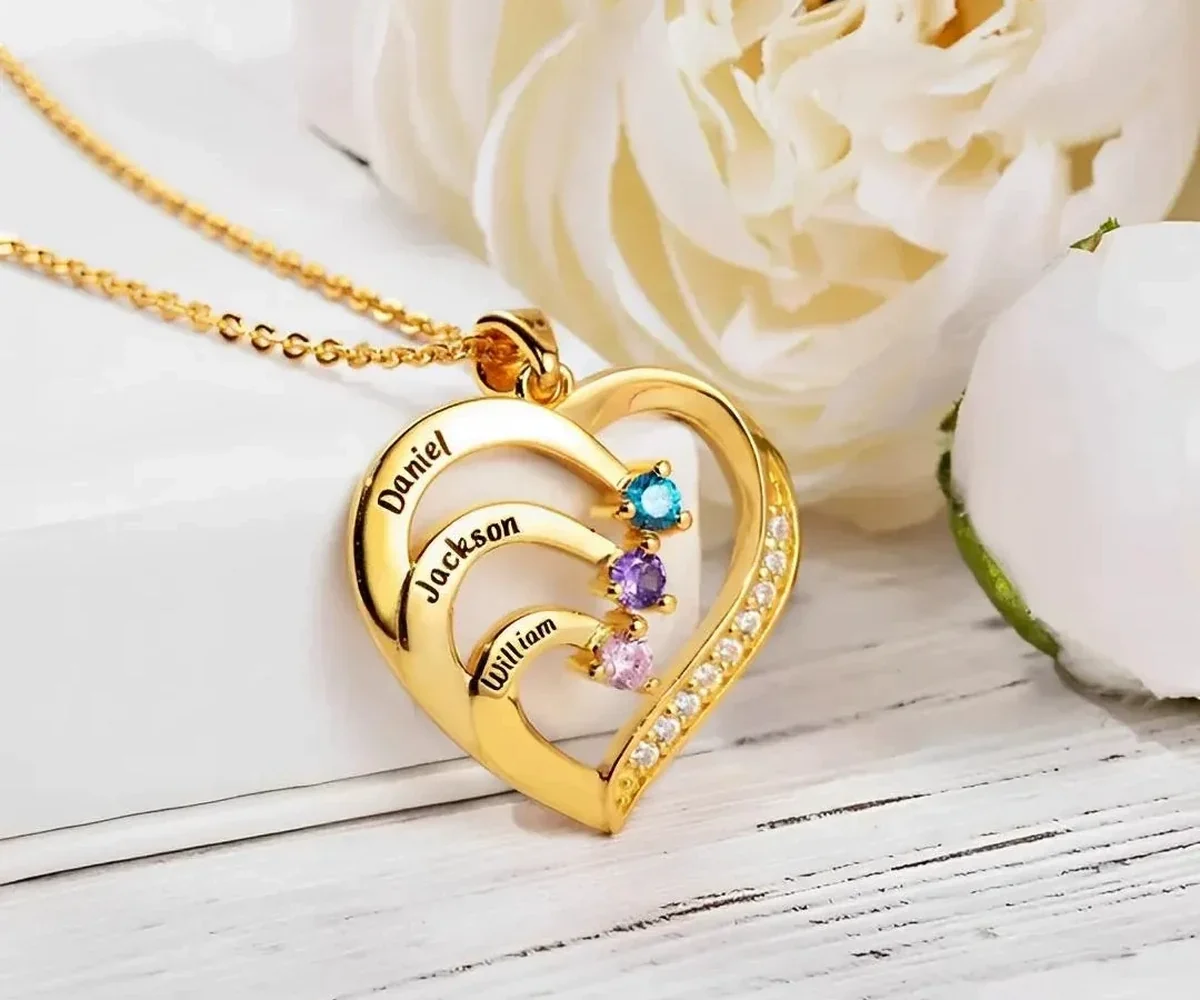
Current Amorieva birthstone products use month-labeled choices from January through December. On the Family Embrace Heart Necklace, one to six engraved names can each be paired with a selected birth month and simulated birthstone accent. The order record therefore says which month was selected; it does not include a separate “favorite blue” or “family color” field.
If you select a different month solely to obtain a preferred color, write down that decision before ordering. Otherwise, the giver may later remember the color preference while the recipient reads the selection as an incorrect birthday. The mismatch is not a technical problem with the form—it is a communication problem between two systems.
Also avoid choosing by sampled pixels. Lighting, image processing, and display settings can change how a small accent looks. Use the month label to make a month-based choice and treat the on-screen swatch as an approximate visual reference.
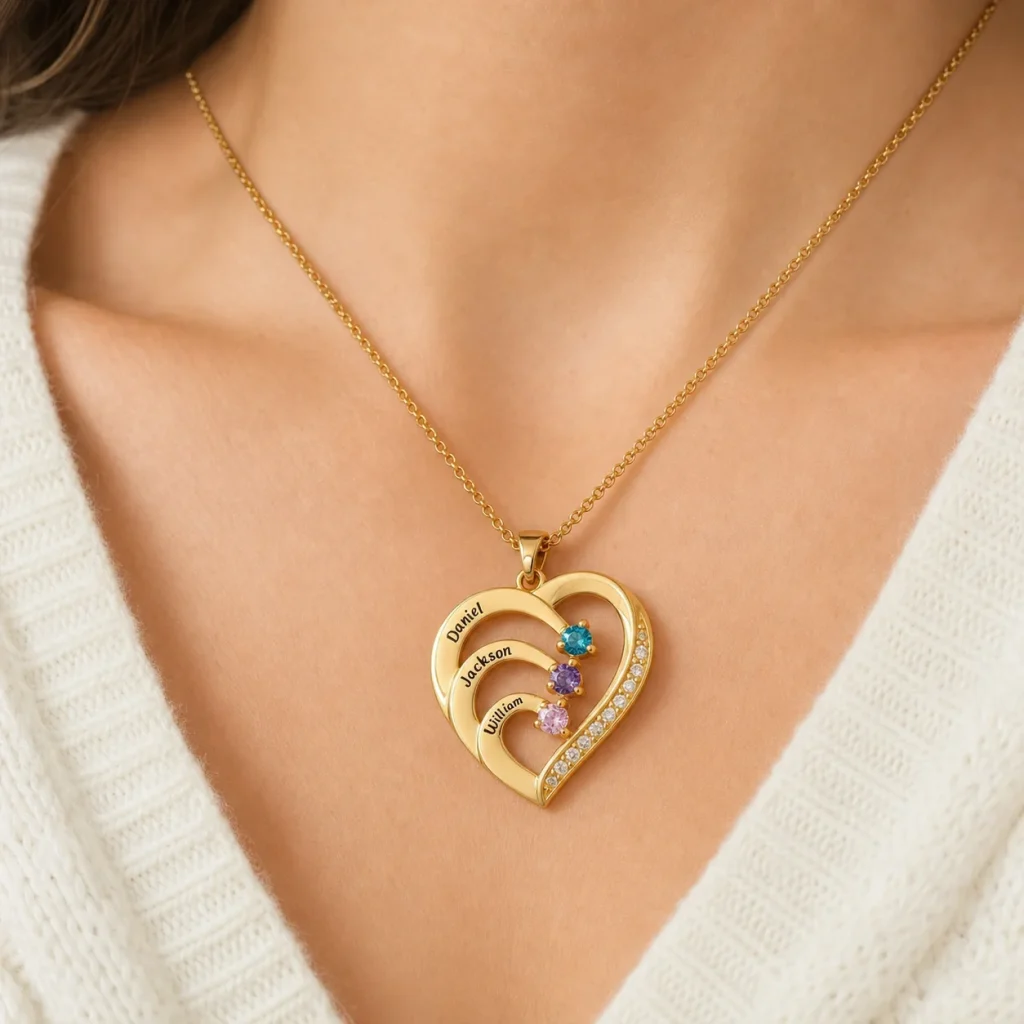
Use a three-option decision framework
Choose one of these approaches and stay consistent:
- Strict month match: Pair every name with the person’s verified birth month. This is the clearest choice for a family record.
- Personal color symbol: Choose a color for a specific private reason and explain that reason with the gift. Do not present it as the person’s birth month.
- Name-led design: If the customary color creates conflict or uncertainty, choose jewelry that centers names without month selections.
The third option is often overlooked. You do not have to force a colored accent into every family gift. The current Amorieva collection includes both name-and-month designs and name-led structures, so the symbolism can follow the recipient instead of the other way around.
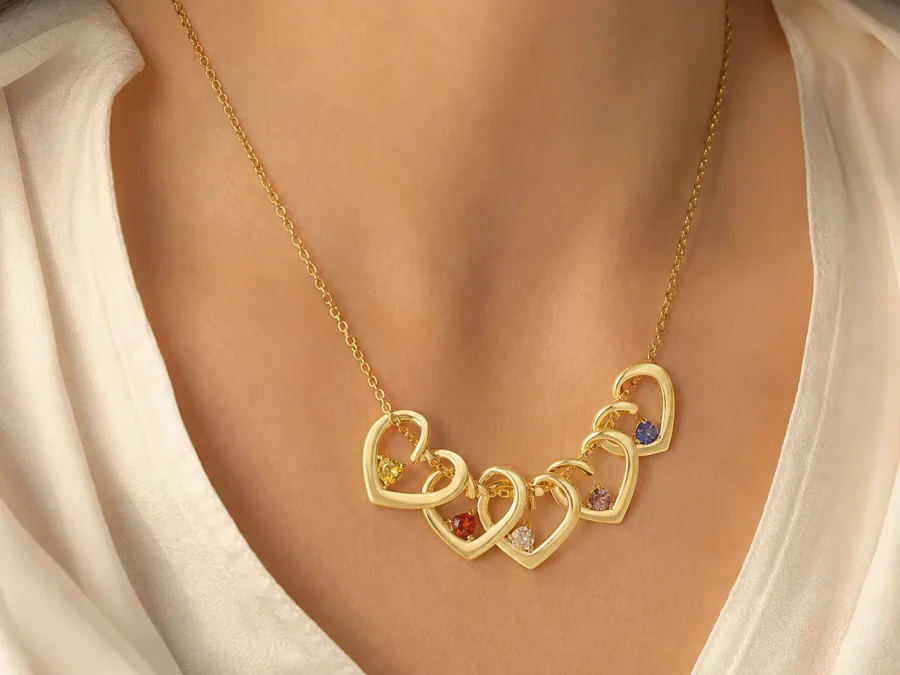
For a gift involving several people, use the same approach throughout one piece. Mixing actual birth months for some names with favorite colors for others makes the layout difficult to explain and proofread. If the family intentionally wants a mixed system, write a key in advance and share it with the recipient. Otherwise, a consistent month match or a fully name-led design will usually communicate more clearly.
Plan shared months and sensitive dates carefully
When two relatives share a birth month, repeated accents are accurate. Keep the name order clear so the repetition looks intentional. There is no need to assign one person a different month simply to create more color variety.
Some families also have sensitive relationships with dates or do not use birthdays as a primary identity marker. Ask before building a surprise around month symbolism when that context is known. A name-only piece, an independently meaningful color, or another format may respect the recipient better.
For a month-based order, make a simple list: position, exact name, actual birth month. The personalization process guide explains how confirmed details are used. Review every pair once in list order and once by person before submitting.
Common questions
Can I use my child’s birthstone instead of my own?
Yes, if the purpose is to represent your child. Make that relationship clear through the engraving or gift message. The accent then matches the child’s month rather than claiming to be the wearer’s own birthstone.
What if two month colors look almost the same?
Select from the verified month labels and rely on names and positions to distinguish people. Small accents can appear closer in color than a large chart suggests, especially under different lighting or on different screens.
Is choosing a favorite color “wrong” for personalized jewelry?
No. It is a different symbolic choice. Tell the recipient what the color means and avoid describing it as a month match when it is not. Clear language preserves the personal story.
Name the meaning you are actually using
A birth-month match is useful because it provides a shared, checkable rule. A favorite color is useful because it can reflect the recipient directly. Choose one logic for each detail, record it accurately, and explain any departure from convention. The jewelry becomes easier to understand when its names, labels, and private meaning all point to the same story.