Birthstone Bangle or Open Cuff? A Practical Guide for Mom
Compare a charm-style birthstone bangle with an open cuff by family size, wrist movement, personalization layout, and the way Mom wears jewelry.
A birthstone bangle and an open cuff can both carry names and month colors, but they do not tell a family story in the same way. A charm-style bangle suits a mother who enjoys movement and separate details for several loved ones. A two-ended cuff creates a quieter, balanced design for exactly two people. The practical choice comes from family size, preferred silhouette, and how she uses her hands—not from assuming one bracelet style is better for every mom.
Start with the physical difference on the wrist
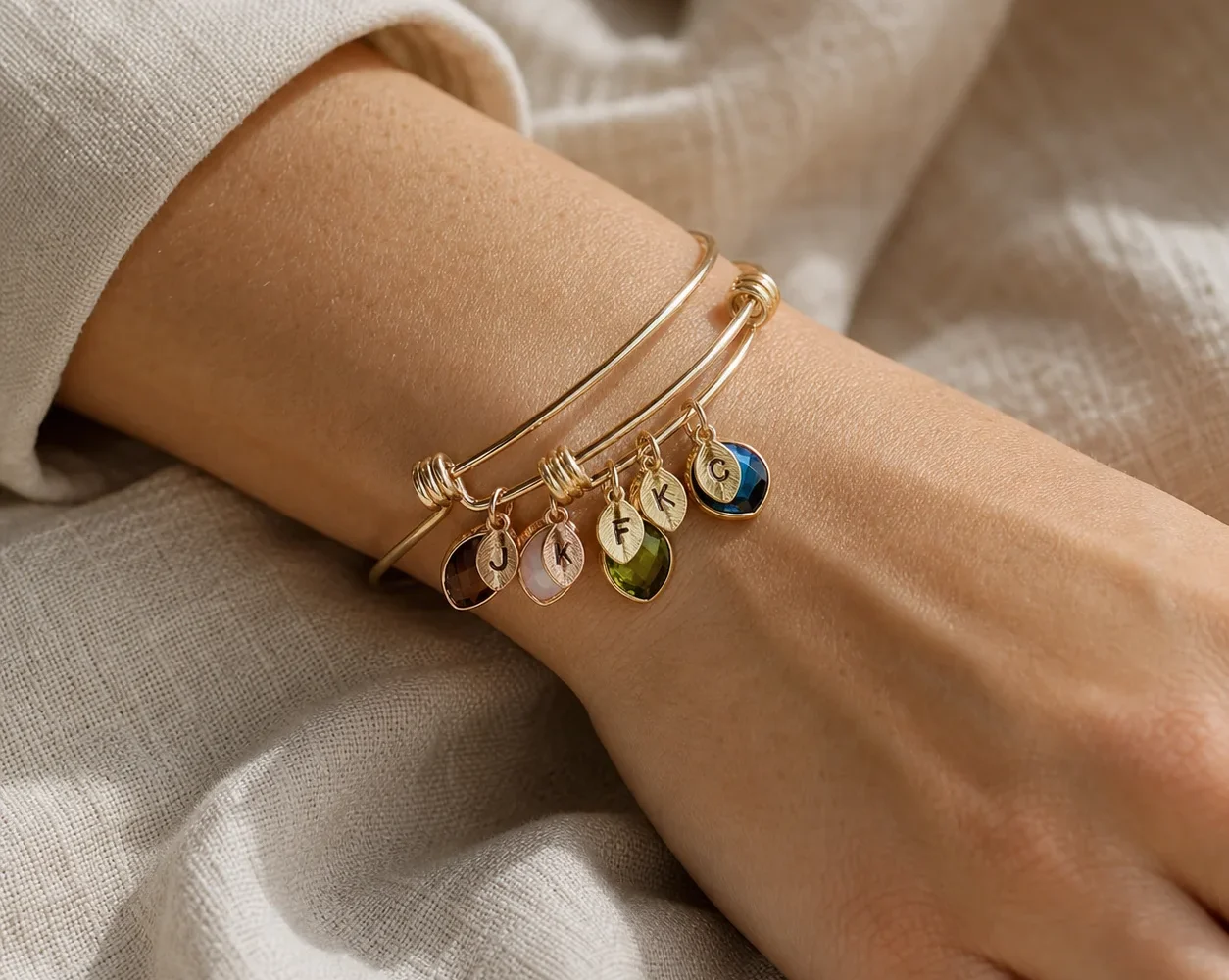
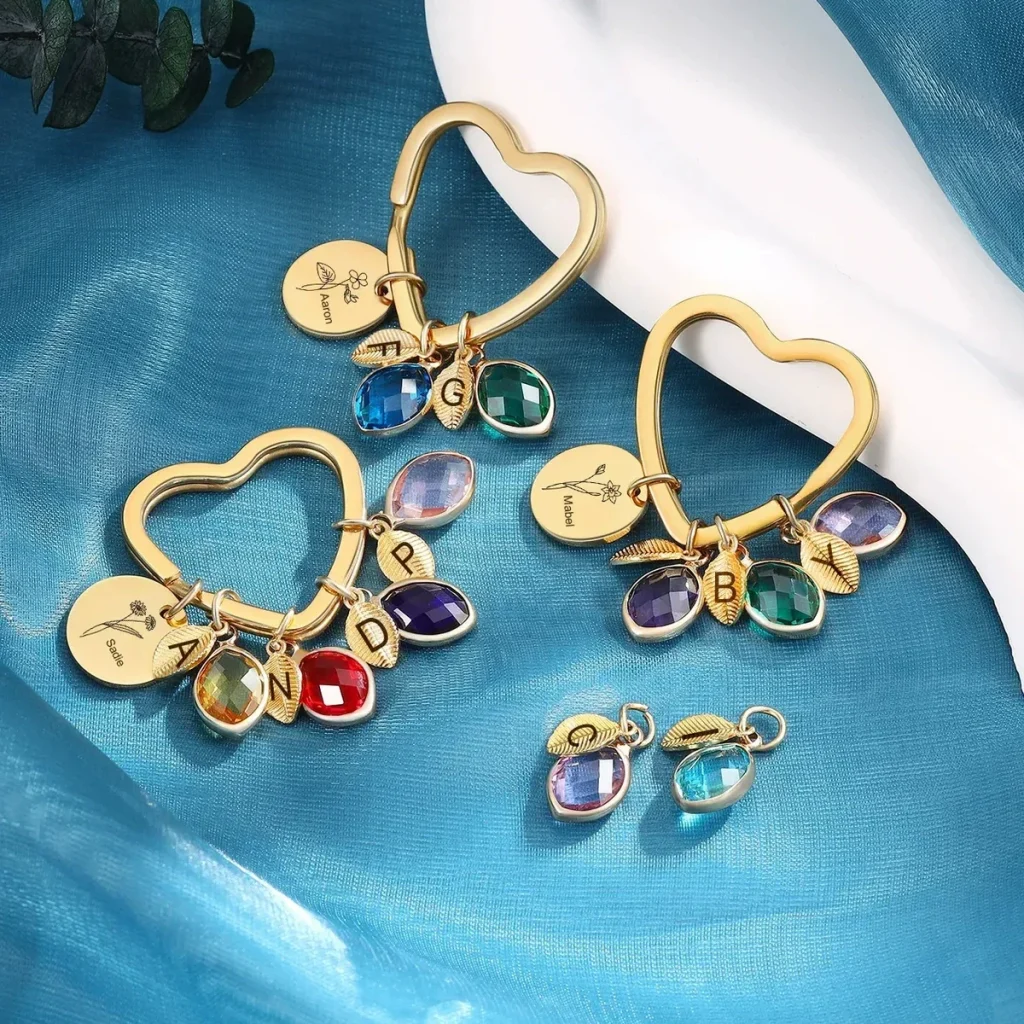
A bangle forms a continuous loop around the wrist and may let attached elements move as the wearer reaches, types, or walks. The Amorieva Family Branch design uses engraved leaf charms and small simulated birthstone charms around an adjustable bangle. Its details are meant to be read as separate parts of one family arrangement.
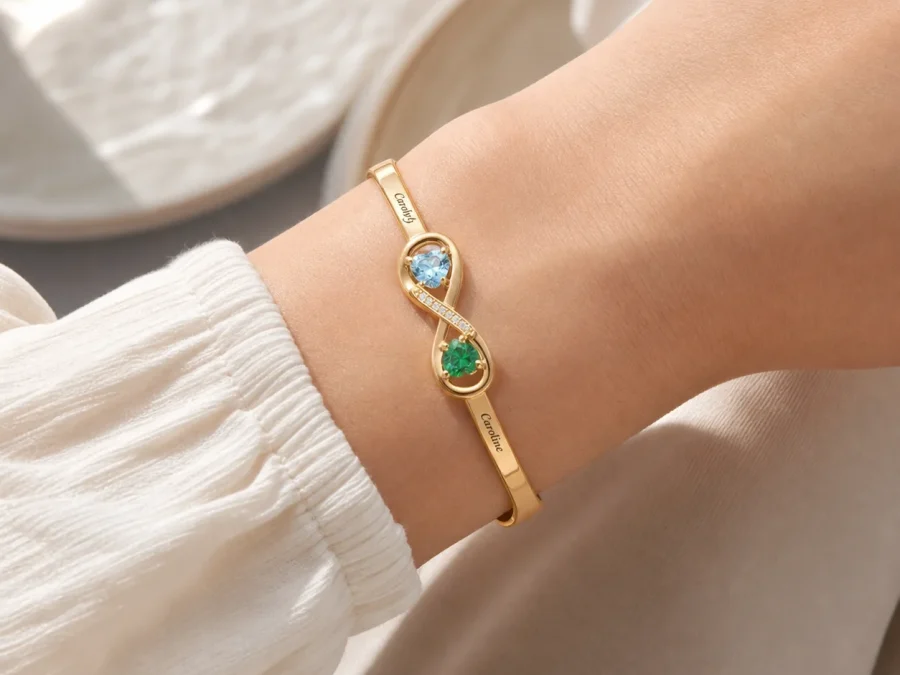
An open cuff has a gap and two visible ends. The Open Heart Birthstone Cuff uses those ends as the focus: each side represents one loved one through a name and simulated birthstone. Its plated copper-base structure is adjustable, but the visual story remains fixed at two people. That symmetry can feel deliberate when the intended relationship is a pair.
Think about what already works in her routine. If bracelets with moving charms tend to catch her attention or bump against a desk, she may prefer the contained outline of a cuff. If she enjoys tactile jewelry and likes seeing each family member as a separate element, the bangle structure may be more expressive.
Let family size narrow the choice
The current Family Branch Birthstone Bangle supports one to five loved ones. Each selected person can have an engraved leaf paired with a simulated birthstone choice. It is useful when the family story needs room for one person now or a group of several people in the same piece.
The Open Heart Birthstone Cuff is specifically configured for two names and two birthstone selections. That limit is not a drawback when two is the whole point: two children, a mother and child, or another clearly defined pair. It becomes the wrong structure if the gift must represent three or more people equally.
Count everyone before considering tone or decorative details. Write the names and months in a two-column list. If the list has one to five entries and separate charms fit the story, continue with the bangle. If it has exactly two entries and a mirrored composition feels right, consider the cuff. If neither capacity matches, compare other current formats in the Amorieva shop instead of leaving someone out to force a design to work.
Compare personalization as a complete system
On the Family Branch design, format is part of personalization. The current choices include an adjustable bangle, a round keyring, and a heart keyring. A central disc can also carry a short message when it is clearly supplied through the order’s Special Note. That means you should review the format, leaf count, name-to-month pairs, tone, and any disc wording as separate decisions.
On the Open Heart Cuff, check two name-and-month pairs, then the chosen tone. Read the first name with the first month and the second name with the second month; do not review all names first and all months later. Pair-by-pair checking is less likely to hide a switched month.
Neither approach requires the colors to be different. If two loved ones share a birth month, repeating the same month choice is accurate. Their engraved names and positions keep the two references distinct.
Use a short wearing-routine test
Before ordering, picture three ordinary moments rather than a special event. First, imagine her at a desk or kitchen counter: would she enjoy small moving elements, or prefer a smoother profile? Second, look at the bracelets she already reaches for: are they charm-led, structured, understated, or absent altogether? Third, consider whether she would rather wear the family story or carry it. The Family Branch keyring formats can suit someone who rarely wears wrist jewelry without changing the one-to-five-person concept.
Care habits matter too. Both designs use plated materials and should be kept dry, removed for showering, swimming, and exercise, and protected from perfume and household chemicals. If she routinely leaves a bracelet on through every activity, make the care requirement part of the decision. Amorieva’s jewelry care guide explains the everyday routine for plated personalized pieces.
Common questions
Is a bangle better for more children?
The Family Branch bangle is the more flexible of these two specific designs because it supports one to five loved ones, while the Open Heart Cuff is built for exactly two. Capacity alone should not decide the gift, however; the recipient still needs to like a charm-style wrist piece.
Can the Family Branch design be ordered without wearing it?
Yes. Its current format choices include a round keyring and a heart keyring as well as the adjustable bangle. Check the product page carefully so the carried format, names, months, and central-disc note are all entered as intended.
What if both people have the same birth month?
Select that month for both people. Do not substitute an unverified alternative simply to create different colors. The two names and their positions provide the distinction.
Choose the structure that matches her story
Choose the Family Branch bangle when separate moving elements, room for up to five loved ones, and an optional carried format suit her life. Choose the Open Heart Cuff when the story is precisely about two people and she prefers a balanced, contained silhouette. Confirm the names and months only after that structural choice. A bracelet feels personal when its format fits the wearer as clearly as its engraving fits the family.