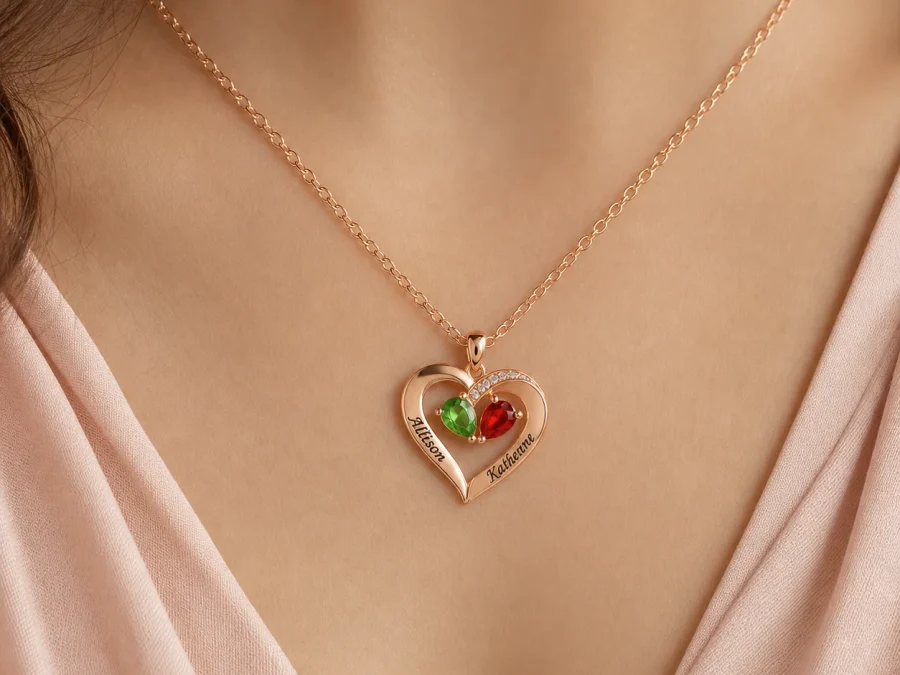
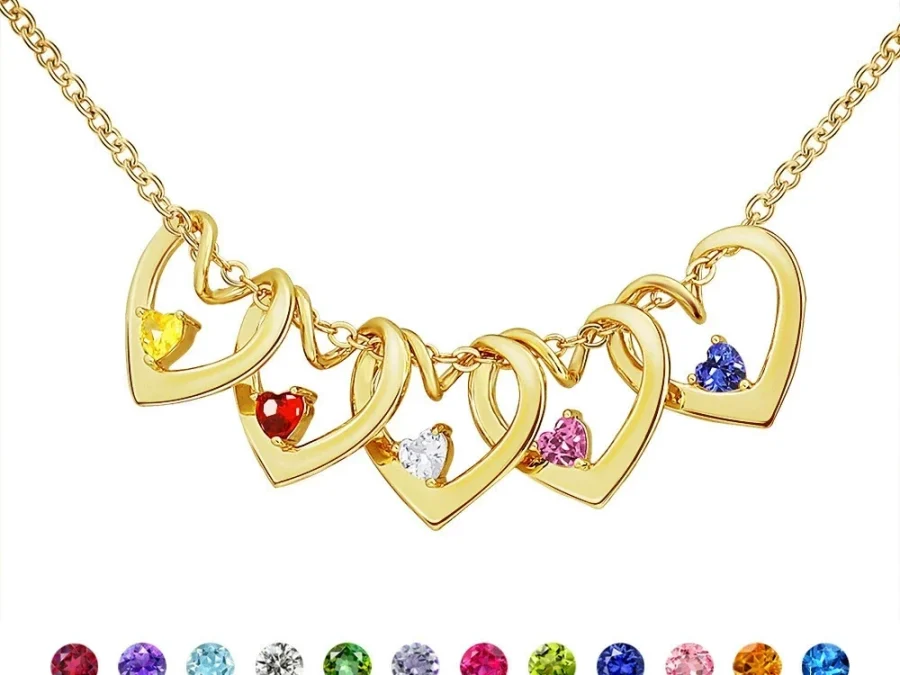
Should the Number of Birthstones Match the Number of Names?
Learn when birthstone and name counts should match, how to reconcile paired personalization fields, and when a name-led design is a valid exception.
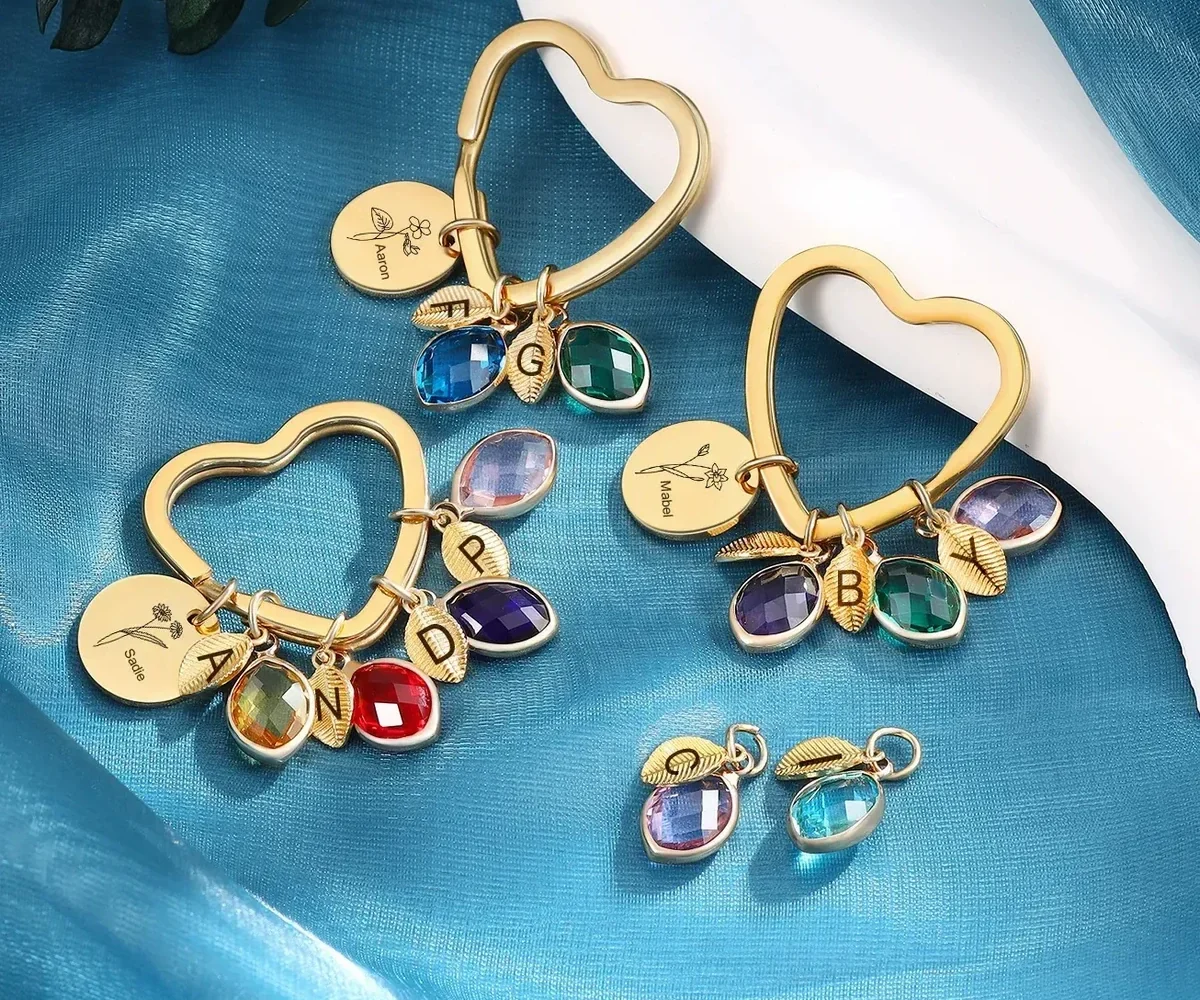
The number of birthstones should match the number of names when a product is designed to give every person one name and one month accent. It does not need to match on a name-only product or a design with a different stated structure. Read the current fields first, then reconcile the total people, name entries, and month selections before reviewing spelling or order.
Identify the product’s counting rule
Personalized jewelry can follow several rules. A paired design uses one name plus one month for each person. A name-led design may use engraved elements without birthstones. A divided design may use one name on each piece. Capacity numbers only make sense in relation to that rule.
Write the rule at the top of the order sheet. For example: “one leaf + one name + one month per loved one.” This turns a decorative image into a countable information structure.
Birthstone traditions and recognized alternatives can vary by place and era. For this count check, use the month labels supplied by the current product rather than trying to reconcile several historical lists. Amorieva’s colored elements are simulated birthstone or crystal accents as described for each design.
Do not assume that every product called “family jewelry” pairs names and stones. The current Amorieva collection includes both birthstone-led and name-only designs.
Reconcile totals before pairings
Count the intended people once from the family roster. Then count completed name fields and completed month fields separately. On a paired design, all three totals should agree.
A simple reconciliation box can read:
- People intended: 4
- Name entries completed: 4
- Birth-month entries completed: 4
- Selected product count: 4
This check catches a missing row even before you examine whether person two’s month was accidentally assigned to person three. It is a quantity check, not a replacement for pair-by-pair proofreading.
Perform the reconciliation twice. The first pass happens on the planning sheet before the product form is opened. The second happens after every selector is completed. If the totals differ, stop and find the missing or duplicated entry; do not add a random month or repeat a name merely to make the numbers agree.
Use a physical mark beside each verified row. Counting by eye across a long group can skip duplicate-looking entries, especially when two people share a month. A check mark records review without changing the order.
Apply the rule to the Family Branch design
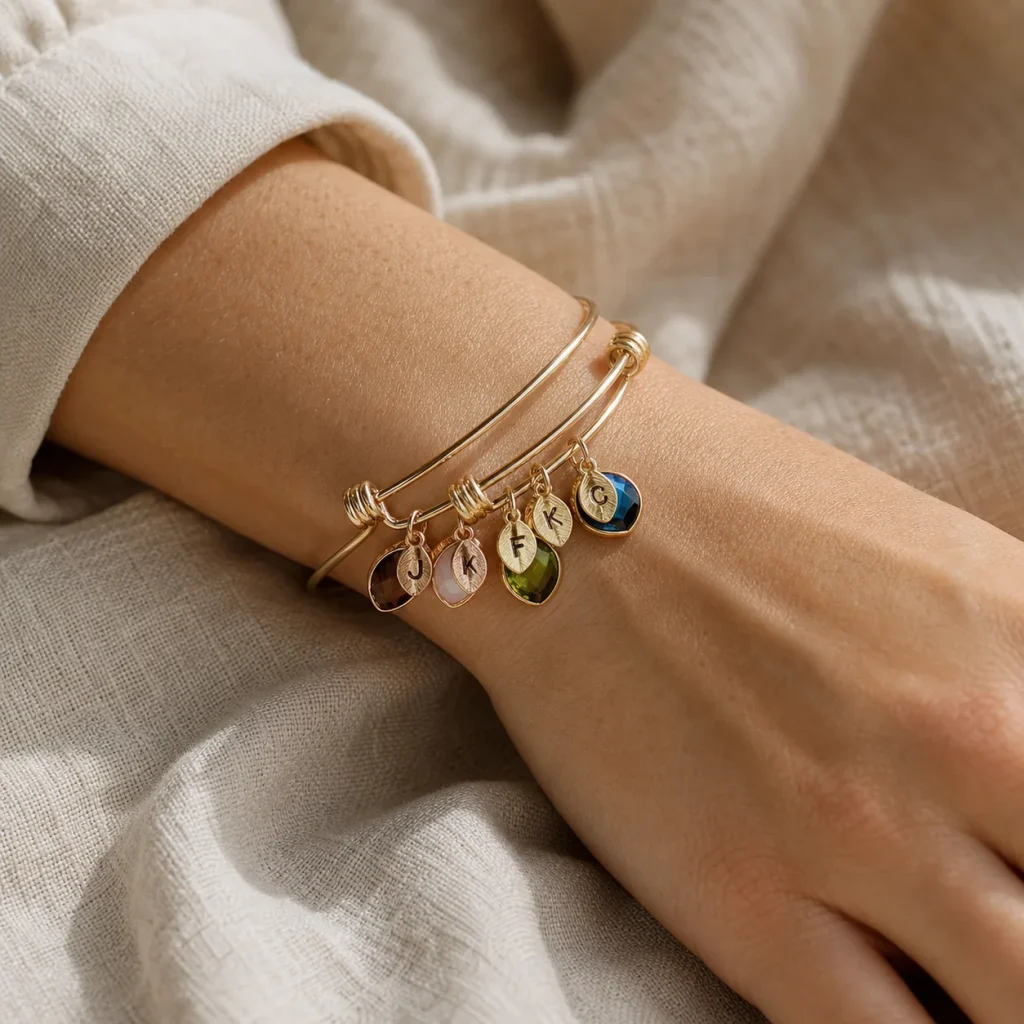
The Family Branch Birthstone Bangle supports one to five loved ones through engraved name leaves and simulated birthstone selections. It is offered as an adjustable bangle, round keyring, or heart keyring. For the represented people, the name and month counts should match.
The center disc is a different element. A short disc message supplied through the current Special Note does not represent an additional birthstone person unless the required name-and-month fields also include that person. Do not count a general family phrase as a sixth name or use it to expand the one-to-five limit.
Shared birth months still require separate selections when two people are represented separately. Matching colors do not reduce the number of people.
The selected format—bangle, round keyring, or heart keyring—also does not change the count rule. Confirm format in a separate box so a shopper does not accidentally treat a different product image as evidence of additional leaves or accents.
Recognize valid nonmatching designs
Gathered Hearts supports one to eight engraved name beads but has no current birthstone-month field. Together Heart Puzzle supports two or three pieces with one name each and no birthstones. In both cases, a birthstone count of zero is part of the actual product structure, not an incomplete order.
Family Constellation Ring can support up to eight simulated birthstone accents plus name or short engraving, but the relationship between text space and accent count should be read from its own current fields. Do not infer that eight stones guarantee eight long engravings.
If the counting rule is unclear, consult the current FAQ or ask before ordering. A Special Note should clarify allowed details, not create a new data model.
Keep exceptions product-specific. It is accurate to say “zero birthstones is correct for this name-only necklace,” but not to carry that exception into a paired leaf-and-month design. Begin each new product with a blank reconciliation sheet and its own stated fields.
Common questions
What if two names share one birthstone color?
They still represent two people. On a paired design, enter the shared month twice so each name has its own month selection, then distinguish them by name and position.
Can I include a birthstone without a name?
Only if the current product explicitly supports that structure and it matches the intended story. Do not leave a paired name field blank and assume the accent alone will be understood.
Does an extra message count as another name?
No. A center-disc phrase or Special Note is separate from the product’s required person entries and does not increase capacity.
Count first, then verify the pairs
Start with the product’s rule, count the people, names, months, and selected quantity, and make those totals agree when the fields are paired. After that, read every name with its correct month and position. The personalization process helps keep those review stages separate. Accurate totals ensure no one disappears before the more detailed proofreading begins.
Save the four final totals with the order record. If a question arises later, the record shows whether the intended person count, selected capacity, names, and months agreed at submission. That evidence is clearer than remembering a sequence of clicks.