My Plated Jewelry Got Wet: What Should I Do Next?
If plated jewelry gets wet, remove it, blot with a soft lint-free cloth, let it air-dry fully, inspect it in normal light, and store it separately.
If plated jewelry got wet, remove it promptly, place it on a clean dry surface, and blot it with a soft lint-free cloth. Do not scrub, bend, heat, or add a household cleaner. Let the piece air-dry fully before inspecting or storing it. One accidental exposure does not let anyone predict the final appearance, so respond gently and document any concern rather than experimenting.
Take the first three actions calmly
First, remove the jewelry with clean, dry hands. Support the pendant, cuff ends, charms, or connections instead of pulling on them. Second, place the item on a light-colored lint-free cloth where small components are visible. Third, blot exposed surfaces with another clean section of cloth.
Blotting lifts surface moisture without creating the friction of vigorous rubbing. Work from broad areas toward engraving and accents. If the piece has moving charms, separate them gently on the cloth so moisture is not trapped between overlapping surfaces.
Do not use a hair dryer, heater, direct sun, abrasive pad, or compressed air. Faster is not necessarily gentler. Room-temperature air and time are the more controlled next steps.
Let the complete piece air-dry
Leave the jewelry in an open, dry location away from bathroom steam, sinks, pets, and direct heat. Turn it only when it can be handled without pulling a component. Do not close it in a pouch or box while narrow areas may still hold moisture.
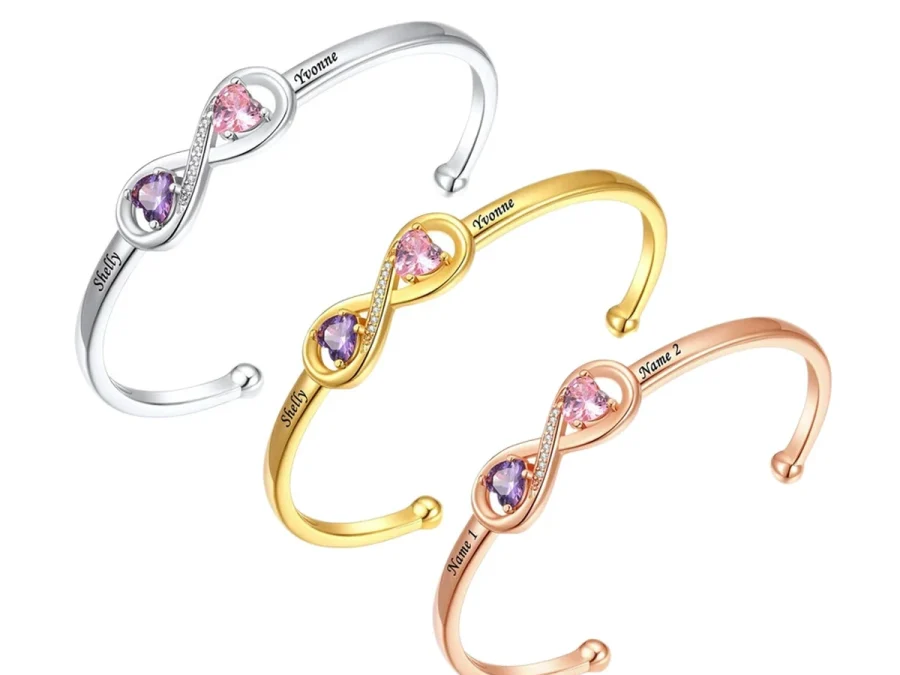
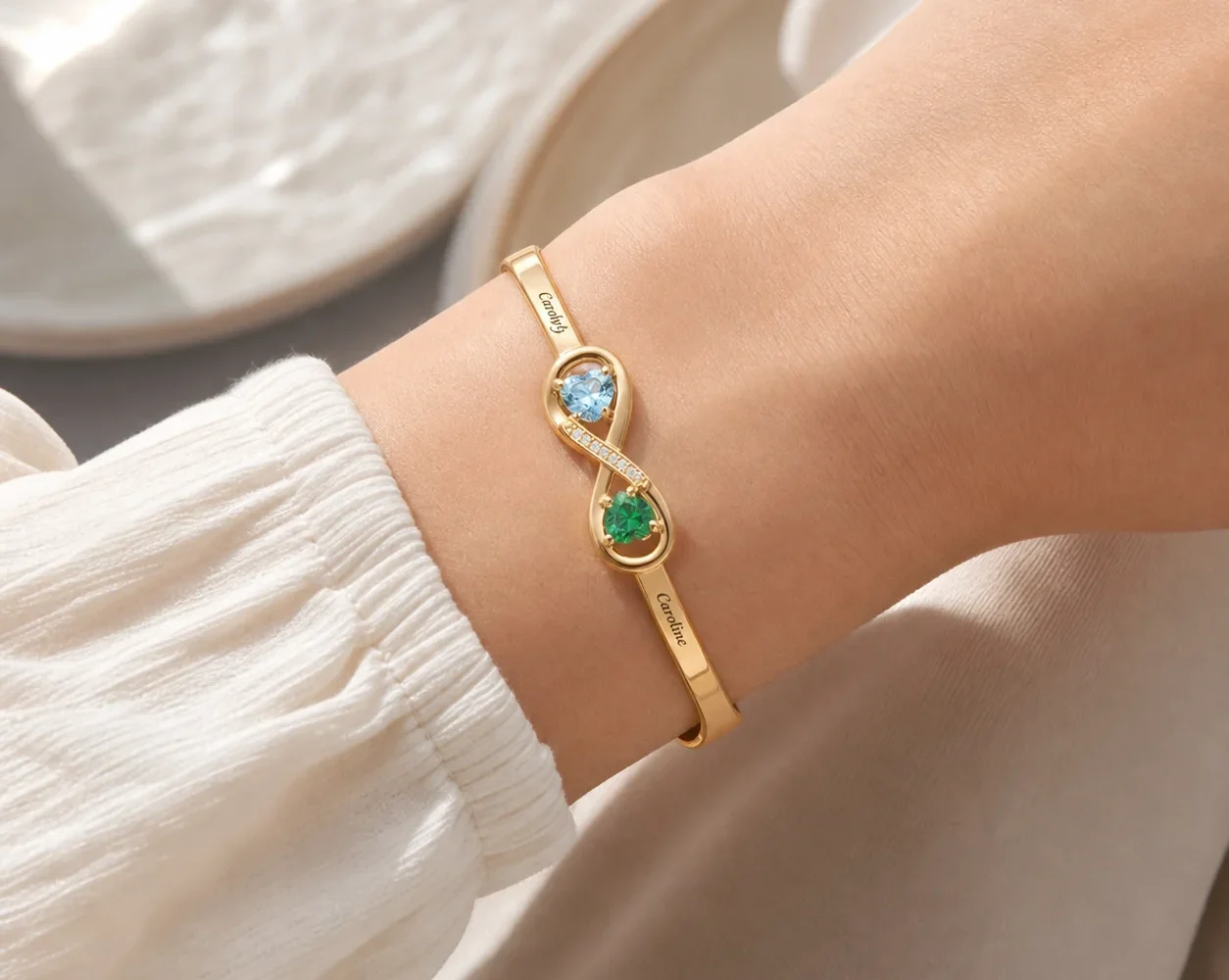
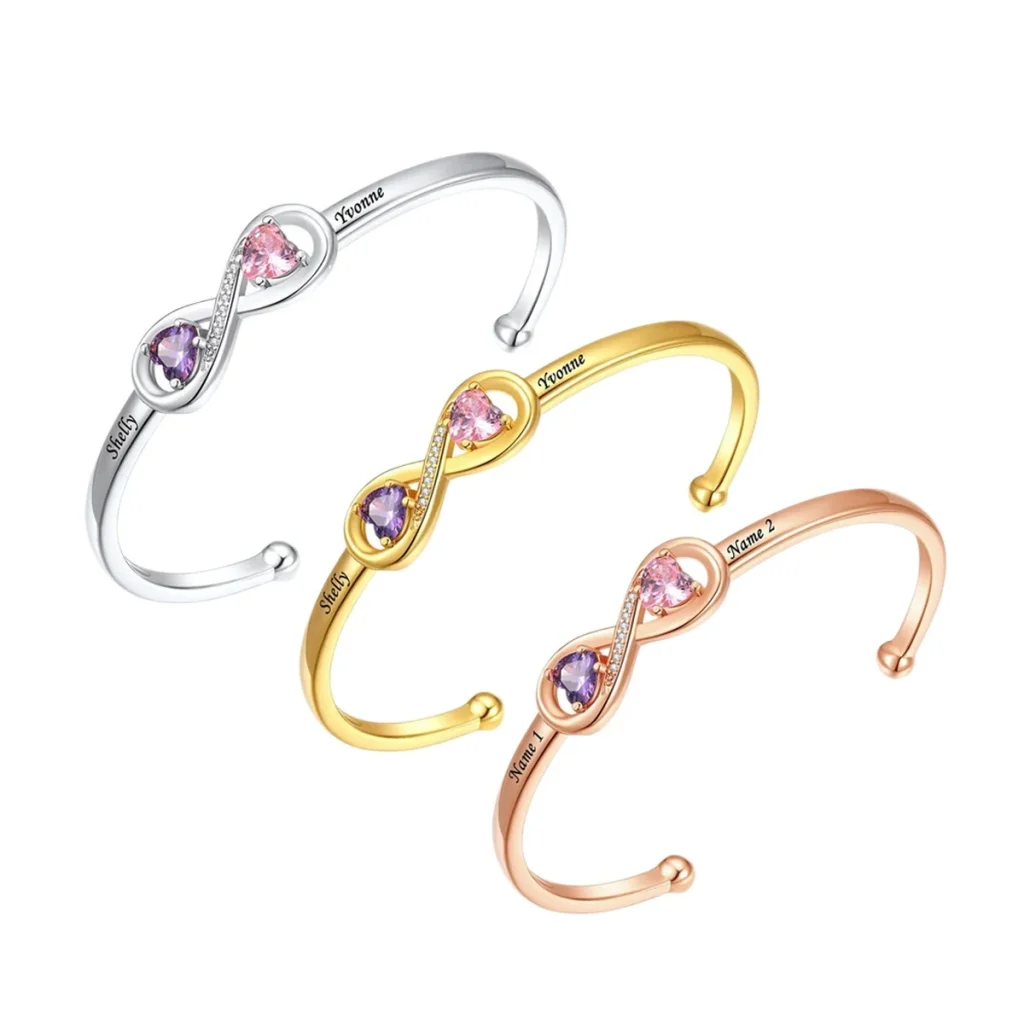
The Open Heart Birthstone Cuff, for example, has a plated copper-base construction with two engraved names and two simulated birthstone accents. Moisture can remain around the personalized ends even after the broad band looks dry. Give detailed areas enough air time before storage.
Follow the Amorieva jewelry care guidance, which recommends keeping plated pieces dry, avoiding perfume and household chemicals, wiping gently with a soft lint-free cloth, and storing jewelry separately.
Do not repeatedly pick up the piece to check whether it is dry. Each handling can move moisture into another recess or add residue from fingers. Set a clean area, note the time, and let open-air drying proceed undisturbed before the next visual check.
Inspect without turning the check into a test
Once fully dry, look at the piece in ordinary indirect light. Compare the overall surface, engraving, accents, and connections with how you remember them, but avoid repeatedly rubbing a spot to see whether it changes. Photography and light angle can alter apparent tone, so inspect from more than one neutral angle.
If you notice a specific concern, photograph the complete item and then the affected area. Record what happened: fresh water, soap, pool splash, or another exposure; approximate duration; and the steps you took afterward. Facts are more useful than a prediction about the finish.
Use a simple incident record: exposure source, approximate start time, when the jewelry was removed, which cloth was used, and when the item appeared fully dry. If someone else later helps evaluate the piece, this timeline separates the original exposure from the care steps that followed.
Consult the current customer FAQ if a component appears loose, engraving is obscured, or the surface concern remains after drying. Do not try to restore an area with an unknown solution before asking.
Reset the care routine after the incident
When the piece is dry and no further action is needed, store it in its own soft compartment. Keep it away from damp fabric, bathroom counters, coins, and harder jewelry. A separate location prevents both residual moisture transfer and unnecessary contact.
Use the incident to improve the removal habit:
- Choose one dry place where jewelry goes before washing or bathing.
- Remove it before exercise, swimming, saltwater, or chlorinated water.
- Apply lotion, perfume, and hair products before putting it on.
- Wipe it briefly after wear and check that it is dry before storage.
- Keep a clean lint-free cloth with the storage compartment.
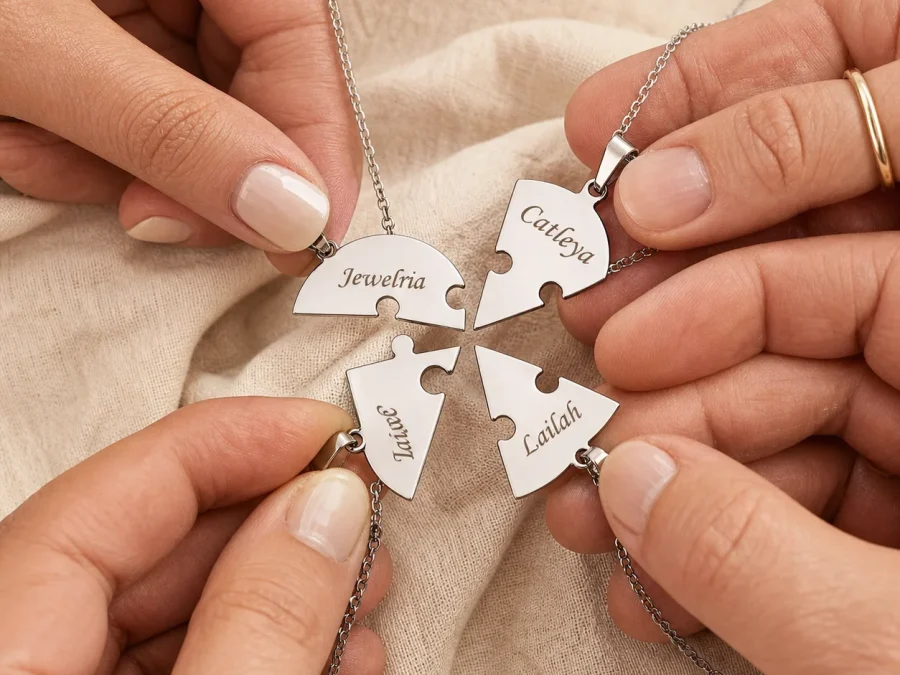
If you are comparing another personalized format in the Amorieva collection, read its construction individually. Stainless steel, copper, mixed-metal parts, plated finishes, and simulated or crystal accents vary by product; one response routine does not make them identical materials.
Common questions
Should I rinse off soap after the jewelry gets wet?
Do not add more water automatically. Blot the piece, let it dry, and consult the published care guidance. If visible residue remains, ask for product-appropriate help before introducing another cleaning step.
Can I put the piece in rice or another drying material?
Use open-air drying on a clean lint-free surface instead. Particles and dust from improvised materials can collect around engraving, accents, or connections and make inspection harder.
When is it safe to store the jewelry?
Wait until the entire piece, including recesses and overlapping parts, feels and appears dry. Store it separately in a dry location rather than closing it away immediately after blotting.
Respond with less force and better information
Accidental water exposure calls for a controlled sequence: remove, support, blot, air-dry, inspect, and document. It does not call for heat or a series of improvised products. By keeping the response simple and the record specific, you reduce additional handling and know what information to provide if the appearance or construction raises a concern after drying.