How to Plan a Family Keyring’s Center Message and Name Leaves
Plan a family keyring's center engraving and name leaves as two clear information levels, with a short shared message and verified personal details.
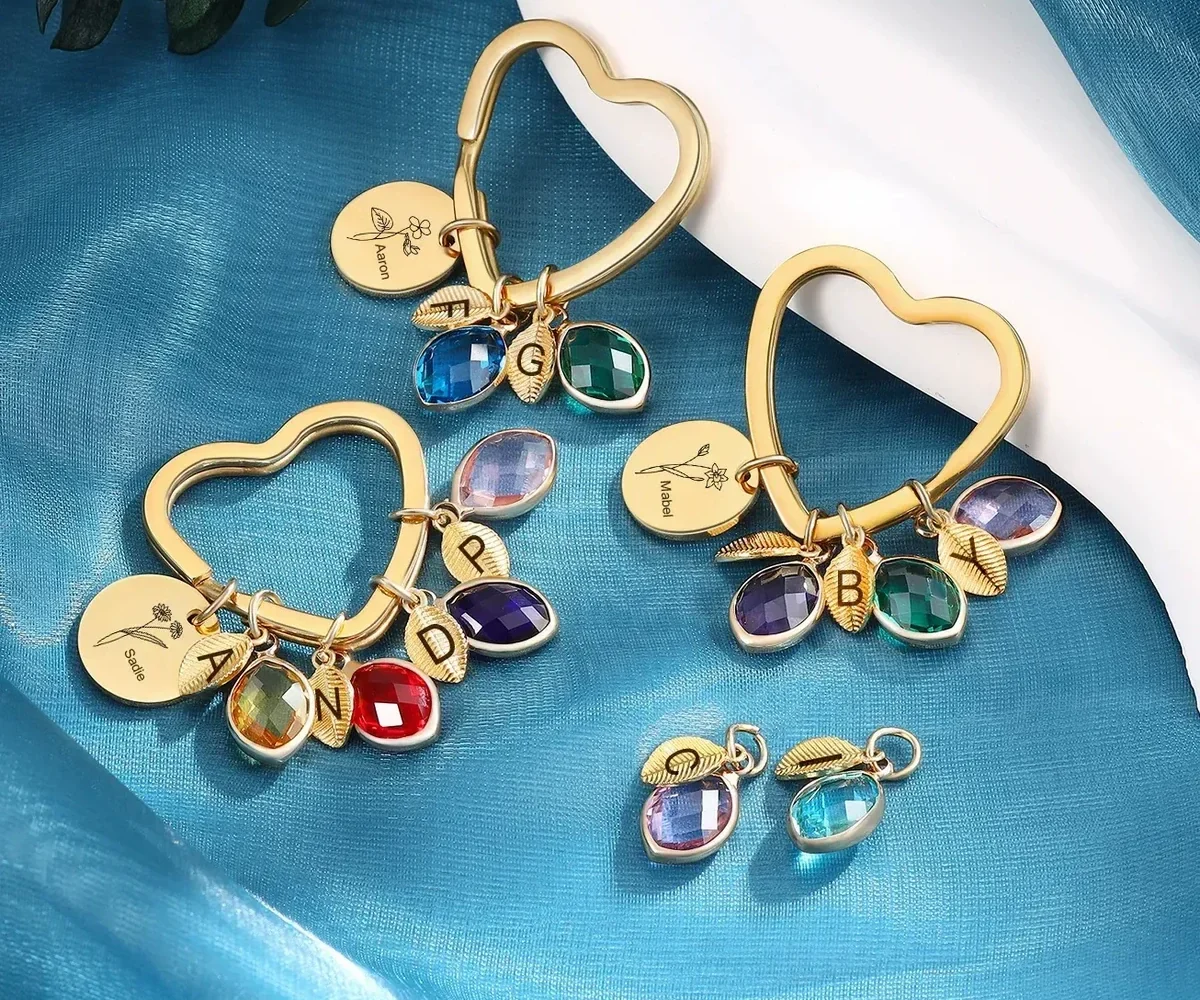
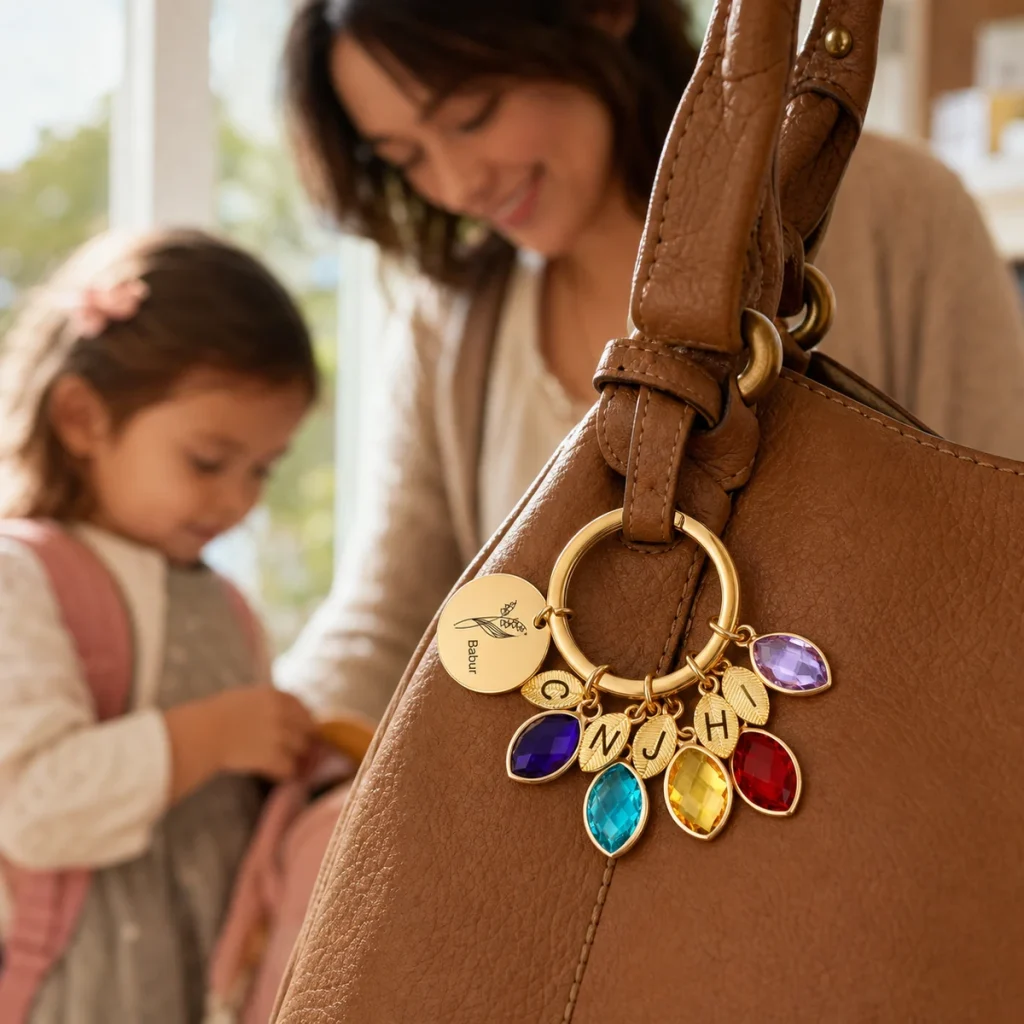
Before ordering a family keyring, choose distinct jobs for the center engraving and the name leaves around it. Use the center disc for one short, shared idea; use each leaf for one person’s name and matching birth-month choice. Planning those two information levels separately creates a clearer composition and a clearer order note than treating every surface as extra space for unrelated words.
Choose distinct roles for the center and leaves
The center disc is the unifying element. It might carry a family surname, a compact word such as “Together,” or another brief phrase the recipient uses. The surrounding leaves identify individuals. When the roles are distinct, someone can understand the piece in two steps: first the shared message, then the people it includes.
Avoid repeating the same name on the center and a leaf unless repetition has a deliberate purpose. Also avoid turning the disc into a sentence. The current Family Branch disc is approximately 20 mm, and visual space is not the same as the technical maximum of a text field. Short wording is easier to communicate and review.
The existing guide to planning engraving that fits offers useful principles for concise wording even though the object here is a keyring.
Build the leaf list as verified pairs
The Family Branch Birthstone Bangle and keyring currently supports one to five engraved name leaves. Each leaf is paired with a simulated birthstone selection, and the product can be configured as a round keyring, heart keyring, or adjustable bangle.
Create a numbered list before using the form:
- Leaf 1 — exact name — verified birth month.
- Leaf 2 — exact name — verified birth month.
- Continue through the chosen count, up to five.
- State the ordering rule: age, alphabetical, arrival, or another family preference.
- Read the list once by names and once by months.
Do not select months by comparing colors alone. The month label is the stable record, while small accents can look different under photography, lighting, and screens.
Write a Special Note that is hard to misread
The center-disc wording is currently conveyed through the Special Note workflow. Make the instruction explicit. A useful format is: “CENTER DISC TEXT: [exact text].” Then keep any true clarification on a separate sentence. Do not mix disc wording with greetings, delivery requests, or speculative design changes.
Capitalization and punctuation should appear exactly as intended. If the phrase uses an apostrophe, accent, or unusual spelling, verify it from a reliable source. The form’s general note capacity does not guarantee that a long phrase will remain visually suitable on the disc, so brevity is still the safer editorial choice.
Before submitting, compare the note with the center line on your paper plan. Then compare the numbered leaf fields with the separate leaf list. Amorieva’s personalization process guide explains why the confirmed order details matter for a made-to-order item.
Test the message and shape together
A round keyring creates a neutral frame around the disc and leaves. A heart keyring adds affection through its outline. Use the same center message and leaf list in two quick sketches to see which shape lets the information breathe.
Consider the recipient’s habits. Someone who favors simple accessories may prefer a round outline with a warm center word. Someone who regularly chooses heart motifs may welcome the more explicit symbol. Neither choice changes the one-to-five leaf structure, so do not rewrite the family list merely to justify a shape.
Read the full composition aloud: “[Center message], with [names] represented by these leaves.” If the sentence feels coherent, the information hierarchy is working. If it sounds like two unrelated gifts, revise the center phrase rather than adding more text.
Test the design for identification as well as emotion. Cover the leaf list on your worksheet and ask whether the center phrase still expresses one shared idea. Then cover the center phrase and confirm that each leaf can be matched to one person and one month. Finally, reveal both levels and check for accidental duplication. This three-pass test catches a center disc that tries to name one person while the leaves tell a broader family story.
For a group gift, appoint one editor for the final wording. Several contributors can suggest phrases, but one person should resolve capitalization, punctuation, leaf order, and the exact Special Note. A single approved sheet prevents well-meant edits from creating two competing versions at checkout.
Common questions
How long should the center message be?
Keep it to one compact idea that can be entered unambiguously. The disc is about 20 mm, so visual fit matters even when a note field can technically hold more characters. Follow current product guidance.
Should the leaf order match birth order?
Birth order is easy to explain but not required. Alphabetical order, the order people joined the family, or the recipient’s preference can work. Choose one rule and apply it consistently.
Can I request a new layout in the Special Note?
Use the note only within the current instructions, including clearly identifying center-disc text. Do not assume it creates a product configuration that the live selectors do not offer; ask for clarification before ordering.
Make every level readable
A strong center message does not compete with the names. It gives them a shared context. Draft the disc text, build one-to-five verified name-and-month pairs, choose the keyring outline, and write the note in a labeled format. If a different structure suits the family better, compare the current personalized formats. The finished keyring should feel organized enough that its meaning can be understood without decoding an overcrowded instruction.