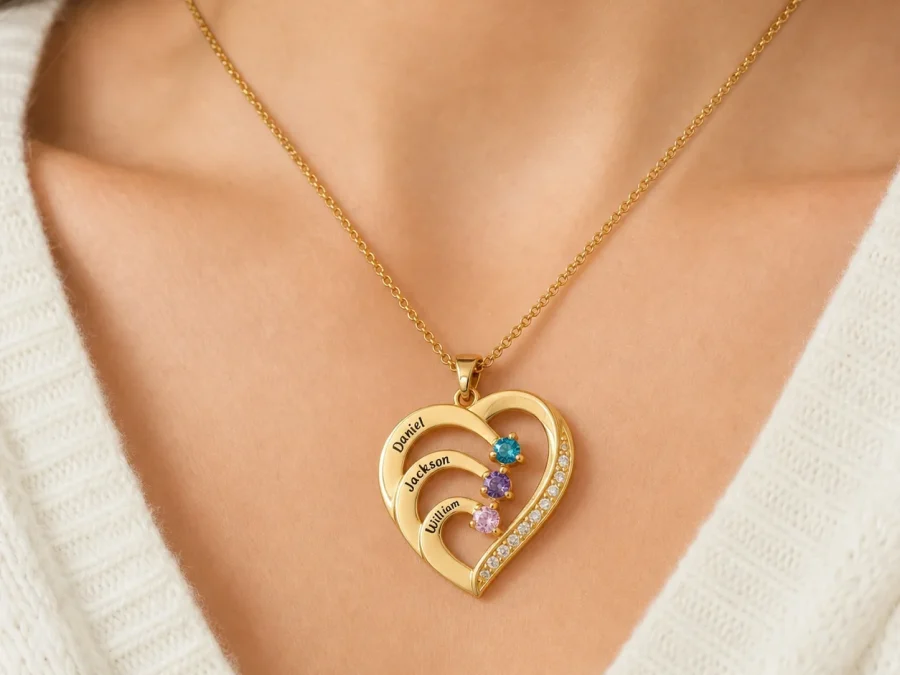
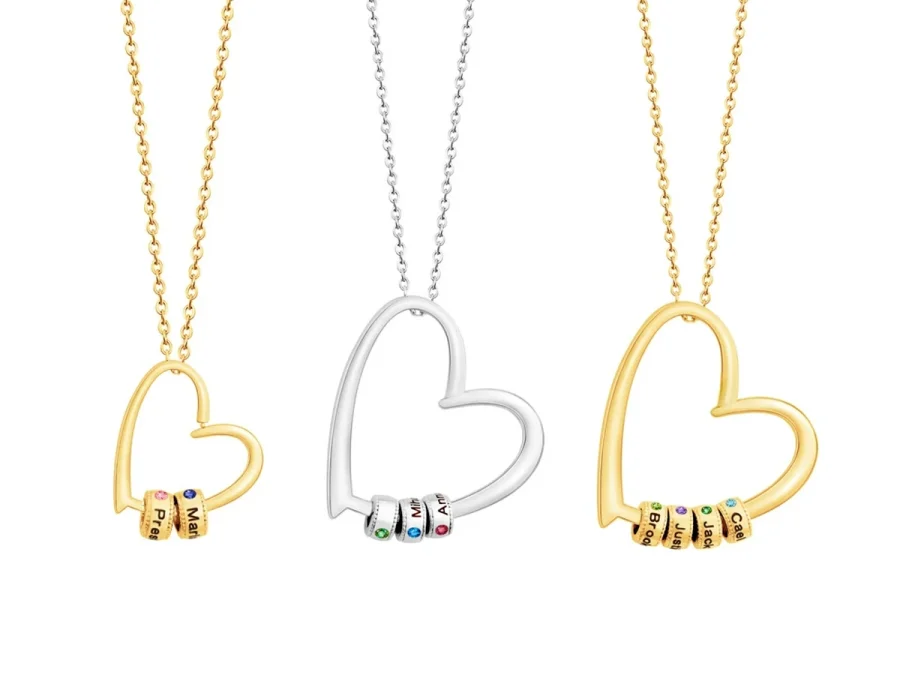
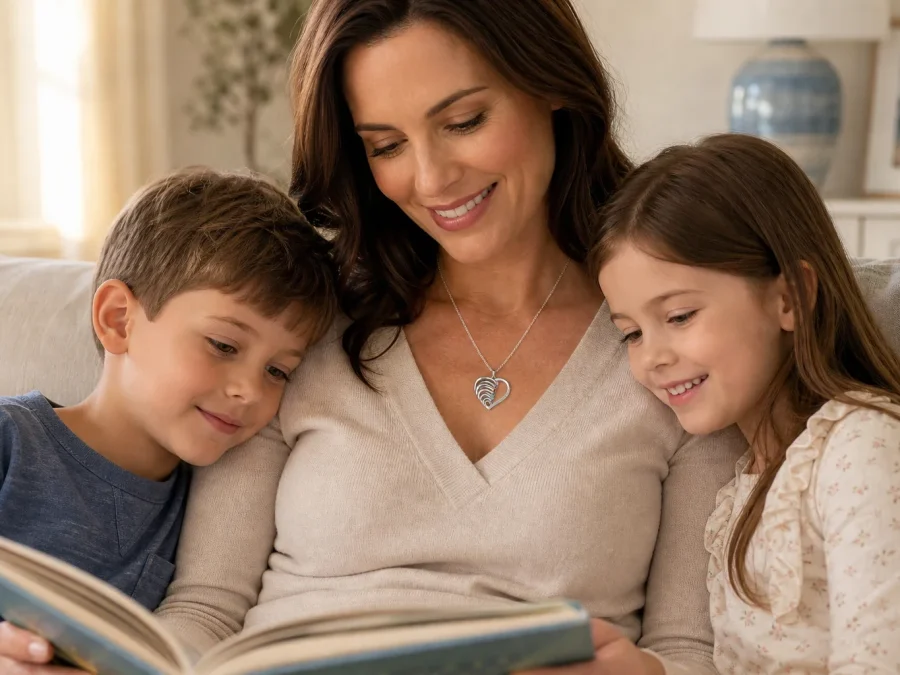
Chosen-Family Jewelry: Names Without Fixed Relationship Labels
Plan chosen-family jewelry around the names people use, the number of wearers, and a shared symbol without forcing legal or biological relationship labels.
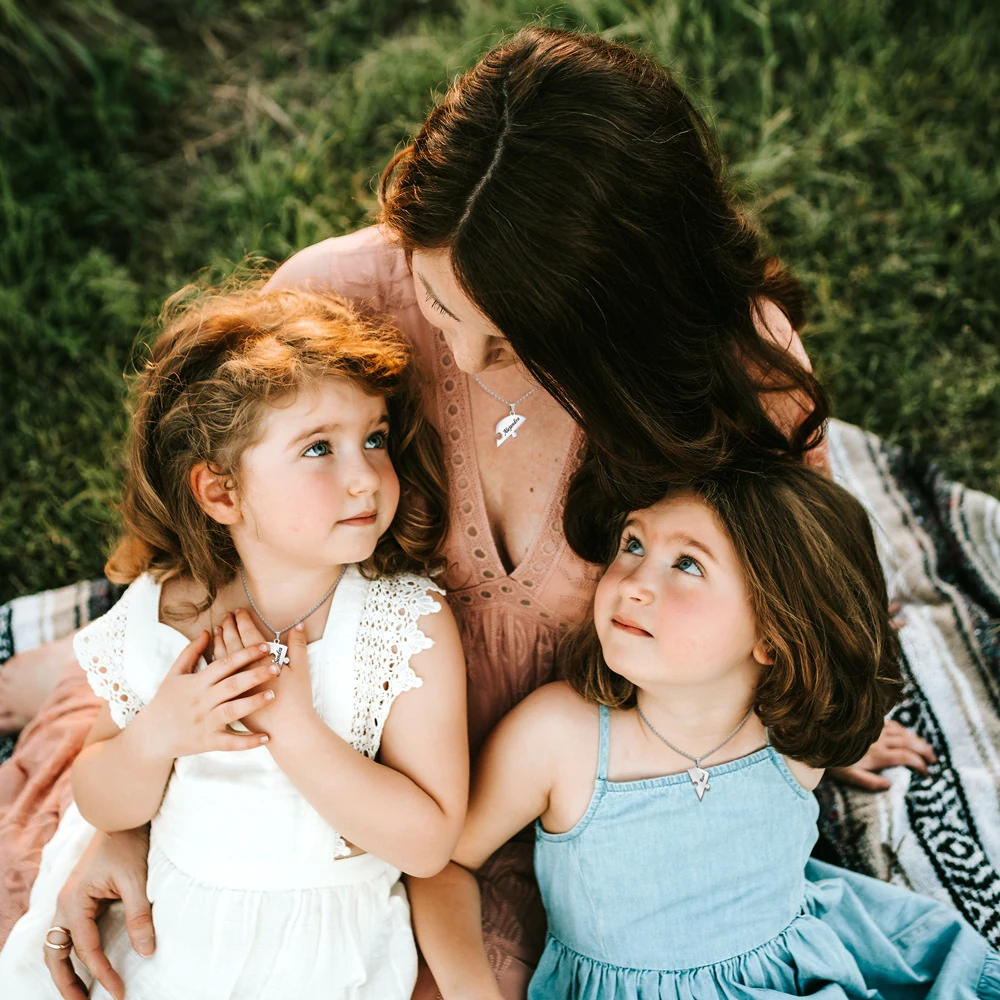
Personalized jewelry for chosen family does not need fixed labels such as sister, mother, cousin, or spouse. It can use the names people actually call one another and a shared form that represents commitment. Begin with the number of participants and their preferred names, then choose a design that gives each person an equal, independently usable part.
Let the group define family language
Chosen family can include friends, mentors, former roommates, community members, or people whose relationship does not fit one conventional category. Do not translate that bond into a biological or legal label merely because common gift wording expects one.
Ask each participant which name belongs on a personal item. A nickname may carry more history than a formal name. Initials may be preferred for privacy. If the jewelry is a surprise, confirm spellings from a reliable source and avoid relationship titles that the recipient has never used.
Amorieva’s names-and-family perspective can help frame personalization as a record of connection rather than a test of surname or family structure.
Choose one piece per person
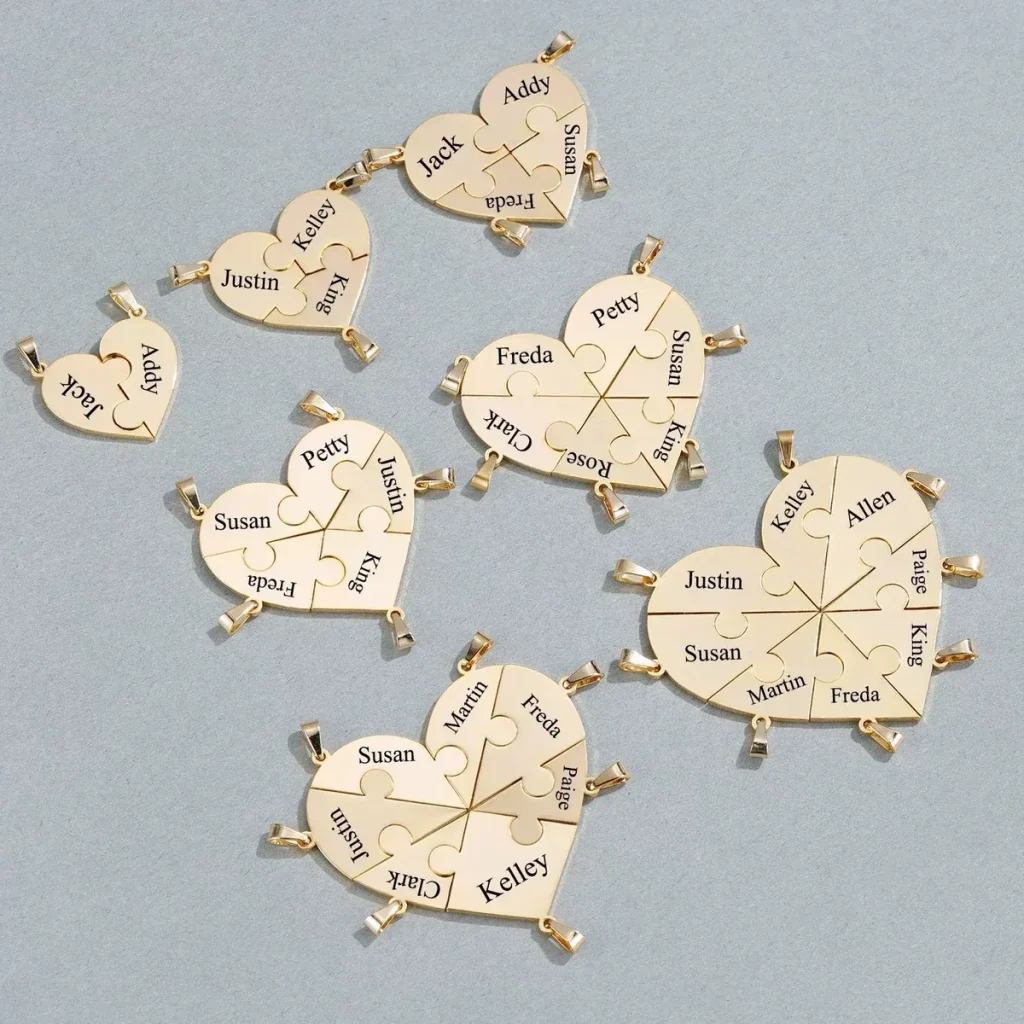
The Together Heart Puzzle Necklace is designed for two or three interlocking heart pieces, with one engraved name on each. Each piece is worn on its own necklace, so participants can carry a part of the shared form independently. The design uses plated stainless steel and does not include a birthstone field.
That structure suits a chosen-family gift when two or three people want both a collective symbol and individual ownership. It is less suitable for a larger group because the current configuration stops at three pieces. Do not leave someone out solely to force the group into the design; compare another structure or create more than one clearly explained group.
The two-piece heart is listed at about 20 by 20 mm when combined, while the three-piece version is about 28 by 24 mm. Use those approximate dimensions to understand relative composition, not to predict an exact position on every wearer.
Assign names without creating a hierarchy
Use Piece A, Piece B, and, when needed, Piece C on a planning sheet. Place each preferred name beside one letter. Then decide how the actual pieces will be distributed. If one segment looks different because of the puzzle geometry, do not quietly reserve it for a “main” person unless the group has chosen that meaning.
A neutral assignment method may be alphabetical order, drawing lots, or allowing each person to choose the shape they prefer after seeing the options. The goal is not to erase difference; it is to avoid an unspoken rank.
Think through distribution before the engraving is fixed. If the pieces will be given in different cities, label each recipient on the plan and keep the necklaces separated during handoff. If everyone will open them together, decide whether participants will choose their own segment or receive a preassigned one. A clear plan prevents an improvised exchange from contradicting the names already engraved.
Use this checklist:
- Confirm whether the group has two or three participants.
- Record one preferred name for each person.
- Decide whether each person is comfortable wearing a heart motif.
- Agree on the tone if the pieces are intended as a coordinated set.
- Assign each piece and verify its engraving before submission.
Give the set without forcing a public explanation
A shared heart can be meaningful without disclosing the group’s full history. Present the pieces in a setting where each person can respond freely. A short message such as “We chose each other, and each piece belongs to one of us” can explain the structure without assigning roles.
Consider everyday use, too. Some participants may wear necklaces frequently while others prefer to keep a symbolic object privately. Discuss that possibility before creating an expectation that everyone must wear the piece at the same time.
The pieces also need ordinary care as plated stainless-steel jewelry: keep them dry, remove them before showering, swimming, exercise, saltwater, or chlorinated water, and store them separately. Sharing one design does not require storing all pieces together, especially when each person lives elsewhere.
Review how the current fields work in the Amorieva personalization process. If a two-or-three-piece necklace does not match the group size or style, the current personalized collection offers name-led alternatives that can represent people in one shared item.
Common questions
Do chosen-family pieces need relationship words?
No. Preferred first names, nicknames, or initials can express the bond without assigning a role. Use only language the people involved already recognize and welcome.
Can four friends add a fourth puzzle-heart piece?
The current Together Heart configuration supports two or three pieces. For four people, choose another design or a clearly intentional grouping rather than assuming an unlisted fourth piece.
Can I add birthstones to the puzzle necklaces?
No birthstone selection is currently part of this design. Its personalization is one engraved name on each of two or three interlocking pieces. Choose another live product if month accents are essential.
Make belonging visible without defining it for them
Chosen-family jewelry is most respectful when participants recognize their own names, language, and place in the design. Count the people accurately, give each one an independent piece, and choose an assignment method that does not create an accidental center. The shared heart can symbolize commitment while leaving the relationship open to the people who actually live it.