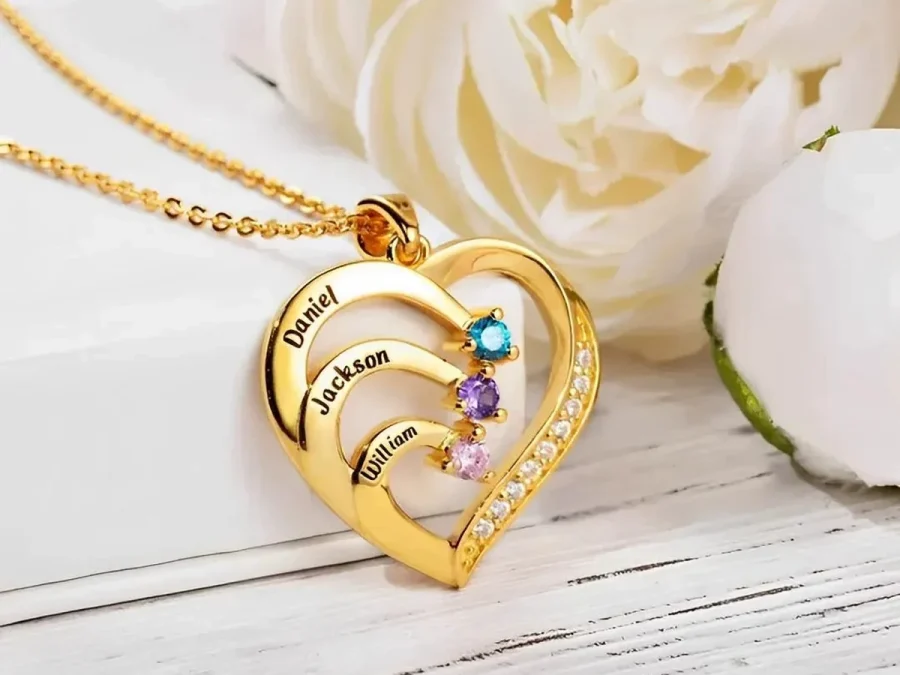
A Personalized Gift for the Family Historian: Choose One Branch or Era
Plan a family historian's personalized gift around one verified branch, generation, or era instead of compressing an entire family tree.
A personalized gift for a family historian should represent one verified branch, generation, or era—not attempt to compress an entire family tree onto a small piece. Choose a scope that fits one to five people, confirm every historical spelling and birth month, and protect information about living relatives. A short center theme can name the project, but it should not turn uncertain research into a permanent claim.
Turn a large archive into one clear scope
Family historians often hold more names than any jewelry design can responsibly display. Capacity is not the only limit: a full tree also contains disputed links, repeated names, incomplete dates, adoptions, name changes, and living people who may not want their details shown.
Define the gift with one sentence. Useful examples include “the five siblings raised in the Lake Street house,” “the maternal line from Elena through her great-grandchildren,” or “the relatives documented in the 1940 family photograph.” Each boundary tells the recipient why these names belong together.
Avoid vague goals such as “the whole family” unless the represented group is genuinely small and agreed. Leaving out dozens of people is not a failure when the chosen branch is named honestly. A focused set gives the historian something recognizable rather than a decorative list with unclear logic.
Choose a branch, generation, or era
A branch follows one line of relationship, such as a grandparent and selected descendants. A generation groups people at the same level, such as four siblings. An era groups people around a verified event or period, such as the household recorded in one census year.
Select the method that matches the historian’s work. A branch can show continuity; a generation can preserve a sibling group; an era can anchor the gift to a document or photograph. Do not mix methods midway just to fill all available positions.
Write an inclusion rule and test every person against it. If the rule is “children of Rosa and Minh,” a cousin does not enter merely because there is an empty leaf. If the rule produces six or more people, narrow the era or choose a different design rather than silently omitting someone.
Verify spellings, months, and privacy separately
Historical records can disagree. Compare the source spelling with the name form the family historian prefers to display. Preserve diacritics and punctuation only after confirming that the live personalization field can accept them. Do not modernize or anglicize a name without the recipient’s approval.
Birth months need their own evidence. A year, age estimate, baptism date, immigration record, or census entry does not automatically establish a birth month. If a month is uncertain, do not choose a simulated birthstone because its color seems plausible. Use a better-documented person or select a scope whose required details are known.
For living relatives, ask whether a full name should appear on a visible bangle or keyring. Initials or another approved form may be more comfortable, but only use wording supported by the current fields. Keep source documents, addresses, and sensitive dates out of a public-facing gift.
Map the research to the Family Branch design
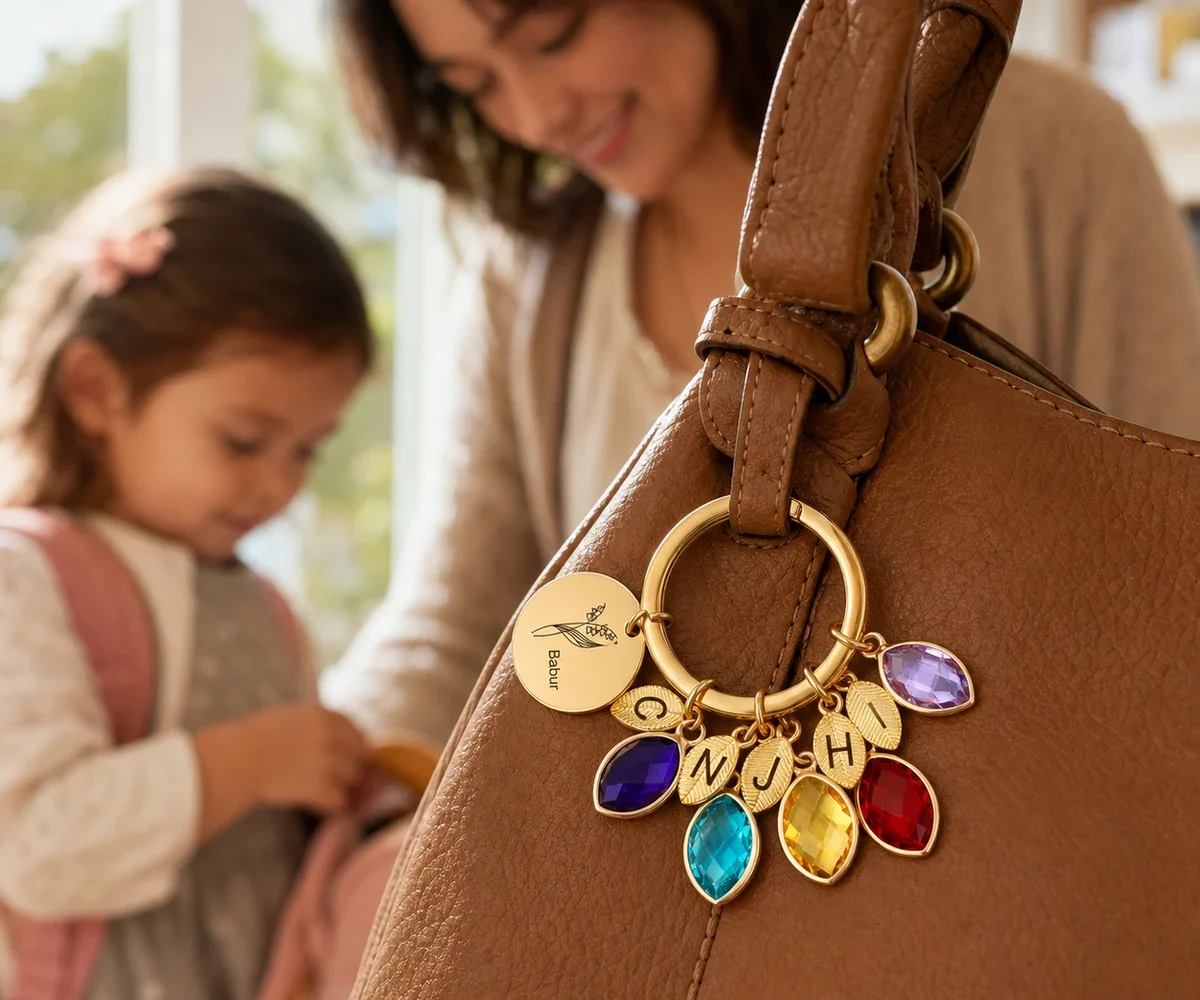
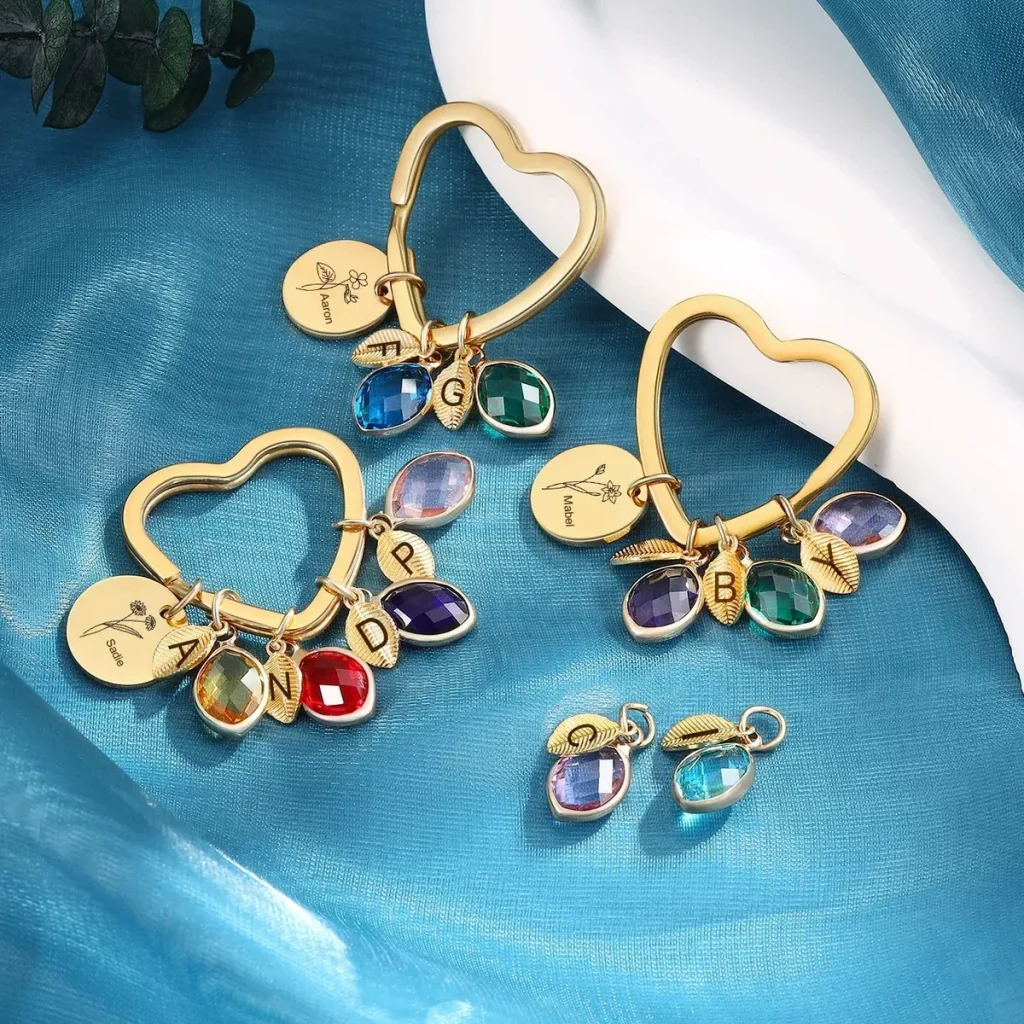
The Family Branch Birthstone Bangle can be configured as an adjustable bangle, round keyring, or heart keyring. It supports one to five engraved name leaves, each paired with a simulated birthstone accent. A center disc message is handled through the current Special Note workflow.
That structure works for one verified set of up to five people. The leaves identify the individuals, while the center disc can carry a short, accurate theme such as an approved family surname, place name, or branch label. Do not use the center to claim “original family,” “complete lineage,” or another conclusion the research cannot prove.
Choose the format for the recipient’s actual habits. A bangle suits someone who wants a wrist piece; a round or heart keyring may suit a historian who prefers a carried object. The format does not change the one-to-five-person research boundary.
Create an audit trail before checkout
Use a compact transcription sheet:
- Scope statement and inclusion rule.
- Display name for each leaf.
- Source used to confirm each spelling.
- Confirmed birth month for each person.
- Consent or privacy check for living people.
- Short center-disc wording and the evidence behind it.
Keep research citations in the private sheet rather than trying to engrave them. Then follow the current personalization process and copy one approved row at a time. The Special Note is for a concise center instruction, not a place to submit an entire family narrative or an unverified alternative tree.
Common questions
What if the family branch has more than five people?
Narrow the scope to one generation or era, or compare another design in the Amorieva collection. Do not omit people without changing and naming the inclusion rule.
Can I use an approximate birth month?
No. A month-based accent should come from a confirmed month. When the evidence is incomplete, choose a different documented person or a design that does not require that field.
What belongs on the center disc?
Use a short, approved theme that fits the verified set, entered through the current Special Note workflow. Avoid dates, titles, or lineage claims that the research does not support.
Give the historian one accurate, explainable chapter
The most respectful genealogy gift is not the one with the largest claim. It is the one whose boundary, names, and months can be explained from real evidence. Select one branch, generation, or era; protect living people; and keep uncertain research out of permanent text. If a field remains unclear, consult the current Amorieva guidance before turning an archival idea into an order.