Personalized Family Jewelry When Relatives Use Different Surnames
Plan family jewelry across different surnames by using approved display names, one inclusion rule, and an order that does not depend on legal status.
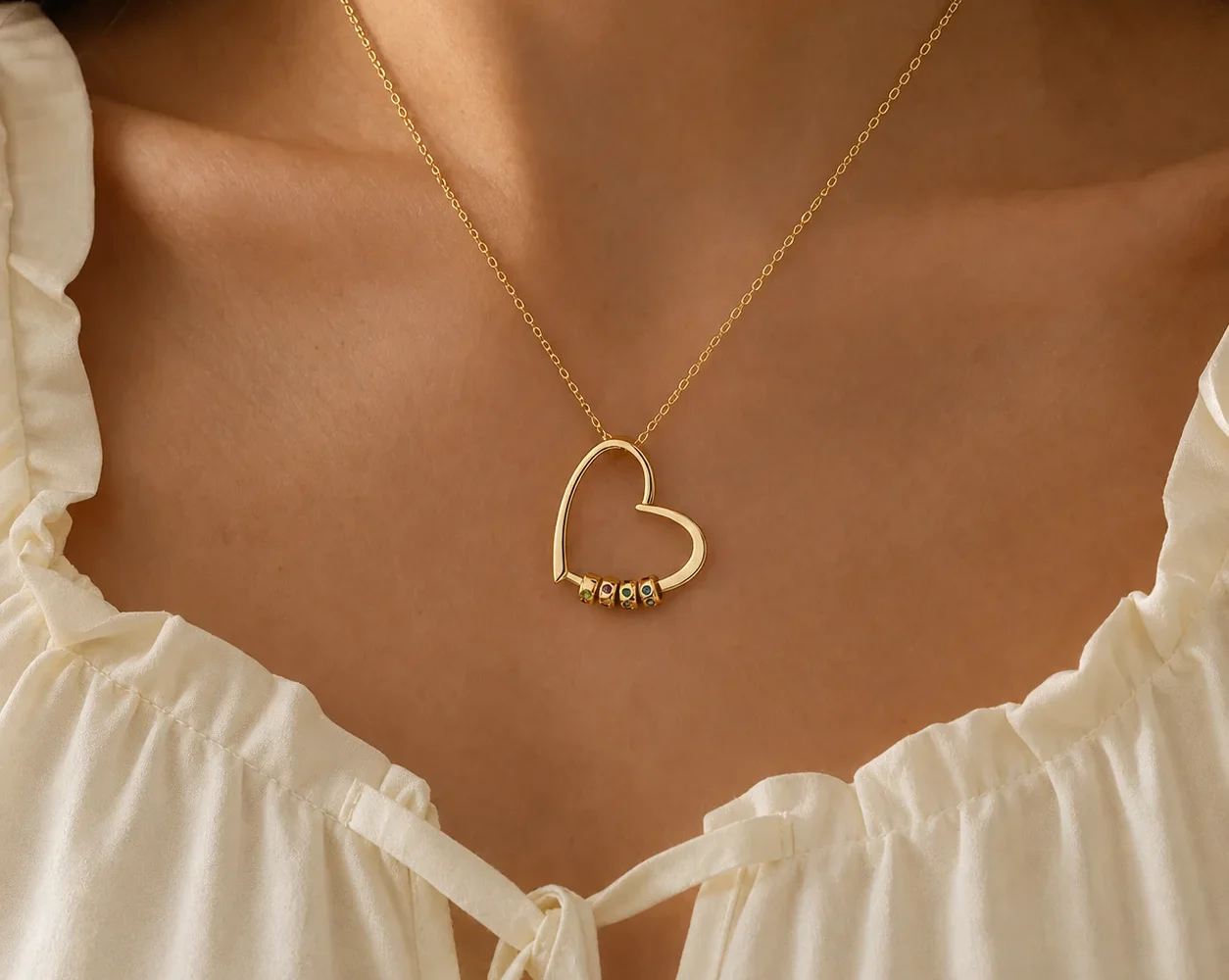
Family jewelry for relatives with different surnames does not need one invented family label. Use each person’s approved first name, nickname, or display name in equivalent positions, then choose an inclusion and ordering rule that does not depend on legal status. The relationships make the family; the engraving only needs to represent them accurately and respectfully.
Define family without a surname test
Different surnames can appear through marriage, remarriage, adoption, cultural naming practices, professional identity, personal choice, or no legal relationship at all. Do not treat one surname as the “main” family and others as additions.
Write one sentence describing inclusion: “This necklace represents the recipient and the seven people she calls her children,” or “This piece includes everyone in the current household.” That rule is more reliable than filtering by last name.
Test the rule against edge cases before finalizing it. Ask whether partners, step-relatives, adult children living elsewhere, or chosen-family members are included. The answer can be yes or no, but it should come from the recipient’s family definition rather than the surname displayed on a legal record.
Amorieva’s focus on names and family connection supports a relationship-led approach. It does not require a shared surname for the personalization to be coherent.
Choose the visible name for each person
Ask what each person is normally called by the recipient. First names often avoid surname conflict, but a nickname, initial, or other display name may be more accurate. Copy unusual spellings and characters from a trusted source.
Do not shorten one person’s name to make the list visually uniform without consent. Do not add a surname to one child merely to distinguish that child from another. If two people share a first name, use an approved differentiator or an ordering rule rather than inventing a label.
Keep legal names in the private worksheet only when they help verify identity. The visible engraving can use the form the family actually recognizes, subject to the current product guidance.
If names use different scripts or accented characters, copy them carefully and verify current support before checkout. Do not remove meaningful characters or transliterate a name merely to make the group appear more uniform. Ask a precise product-field question when compatibility is uncertain.
Use one order independent of legal status
Choose a sequence that applies equally:
- Alphabetical by approved display name.
- Age order, if the family normally uses it.
- Order people joined the household or family circle.
- Recipient first, followed by others through one stated rule.
- A recipient-approved sequence with a written explanation.
Avoid grouping people by surname unless the family explicitly wants branches shown that way. Even then, make sure the grouping does not imply that one branch is more legitimate. Read the final sequence aloud and ask whether each person receives equivalent treatment.
If order is sensitive, alphabetical display names are often easy to explain. Neutral does not mean emotionally empty; it means the arrangement does not smuggle legal rank into the gift.
For branch grouping, make a private map that shows why each name sits where it does. Then review the visible sequence without surnames. If the order becomes impossible to understand when surnames are hidden, the grouping may rely too heavily on legal labels for a first-name design.
Circulate one final list to the contributing family members and ask them to confirm only their own names plus the inclusion rule. Appoint one editor to resolve conflicts so the product form does not accumulate several incompatible versions.
Match the group to a name-bead structure
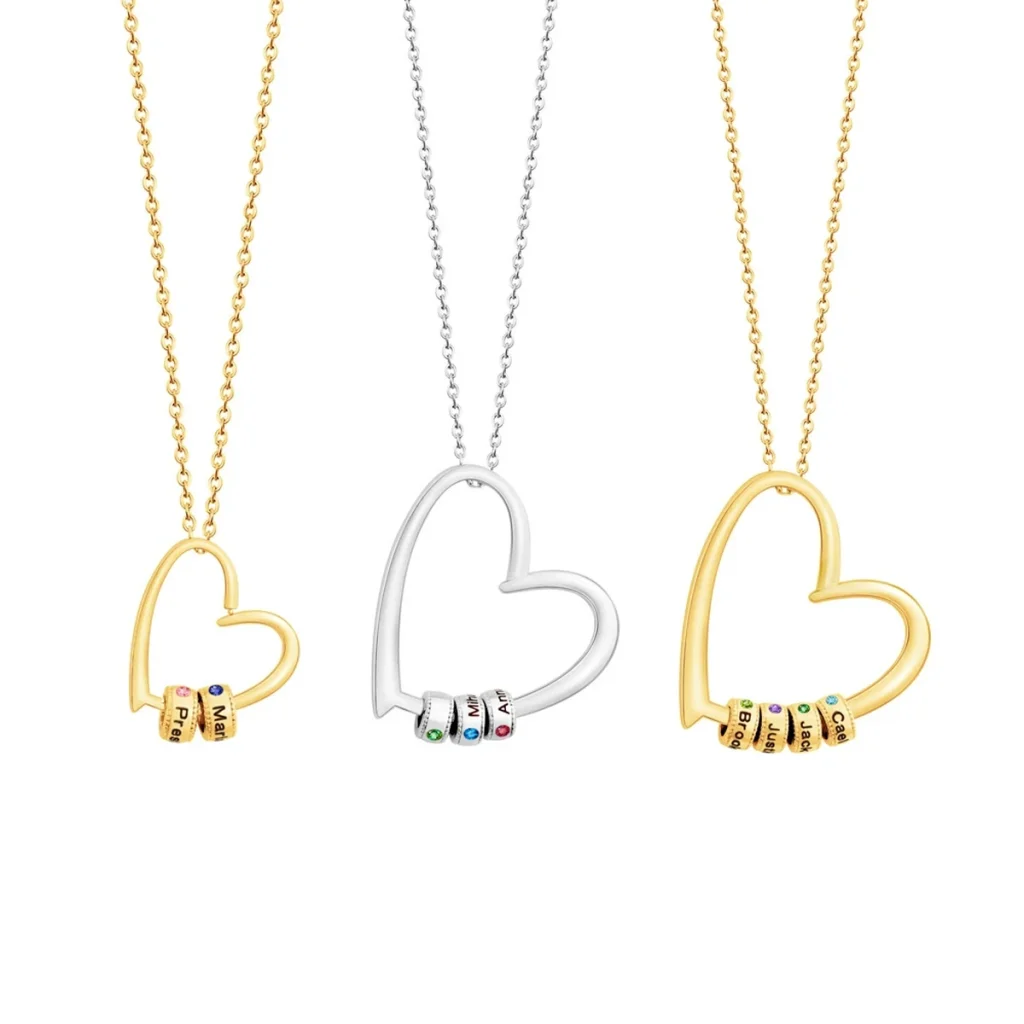
The Gathered Hearts Name Necklace supports one to eight engraved name beads. Its petite pendant is approximately 22 mm for one to four beads, and its classic pendant is approximately 33 mm for five to eight. Current choices include three plated tones and polished or crystal-accent bead styles. It has no birth-month field.
One bead per display name can give people with different surnames the same visual grammar. Count the confirmed list before selecting petite or classic, and do not add a family surname to the pendant when it does not represent everyone.
Keep tone and bead accent as recipient-style decisions, not tools for marking surname groups. Giving one branch polished beads and another a different treatment would imply a distinction the current one-style configuration is not designed to encode.
Follow the personalization process overview for spelling and field checks. If more than eight people need individual names, use the name-count guide to reconsider structure rather than omitting someone based on surname.
Common questions
Should I engrave the recipient’s surname on every bead?
Not when it is inaccurate for the people represented. Individual approved names can create a coherent family piece without repeating one legal label across everyone.
How do I distinguish two relatives with the same first name?
Ask for approved nicknames, initials, or another familiar display form and verify current field support. Do not invent a surname-based distinction the recipient does not use.
Can different surnames be grouped by family branch?
Yes, if that reflects the recipient’s own understanding and does not rank branches. State the grouping rule and preserve equal visual treatment for every included name.
Let names connect rather than classify
A family piece does not need to resolve naming history into one label. Define who belongs, use the display names people recognize, and order them through a rule independent of legal status. Individual beads can hold different names within one shared heart, making the common element the relationship rather than the surname.