A Decision Tree for Choosing Personalized Family Jewelry
Use a simple decision tree to narrow family jewelry by wearer count, names, birth months, format, sizing certainty, and current product capacity.
A personalized family jewelry decision tree should eliminate designs that cannot support the intended story before it compares style. Begin with the number of wearers, then the number of names, whether confirmed birth months are required, the preferred format, and sizing certainty. Stop at any branch that depends on an unavailable field or unknown fact; do not solve a product mismatch with a Special Note.
Branch one: one wearer or a shared set?
Most family pendants, rings, and wrist pieces collect several people into one item for one wearer. A puzzle necklace divides two or three interlocking pieces among separate wearers. Decide which relationship the gift should express.
If one person will wear the whole story, continue to family count. If two or three people each need a piece, review a shared-set structure. Do not buy several copies of a single-wearer layout and assume they will function as a coordinated set without planning each order independently.
Add an early “unknown” branch. When the number of wearers or the recipient’s format preference cannot be confirmed, the tree should pause rather than continue. Ask one focused question, choose a carried format that removes body sizing, or plan the selection with the recipient. A decision tree is allowed to end in “more information needed.”
Branch two: names only or names with months?
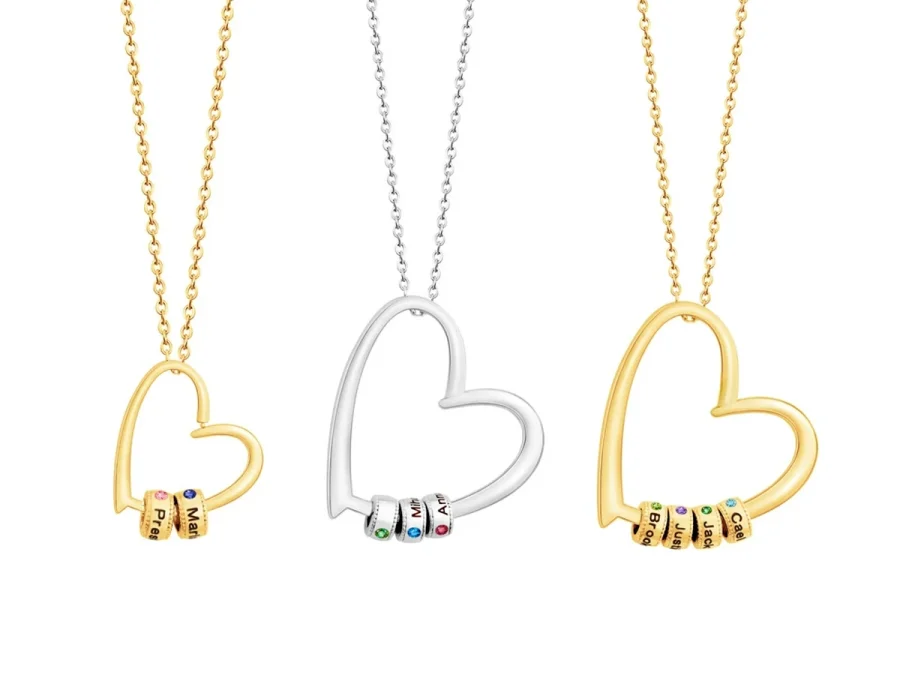
Ask whether birth months are confirmed and genuinely wanted. A name-only choice can avoid uncertain dates or a preference against colored details. The Gathered Hearts necklace supports one to eight engraved name beads, while the Together Heart Puzzle necklace supports two or three engraved pieces. Neither current configuration has a birthstone field.
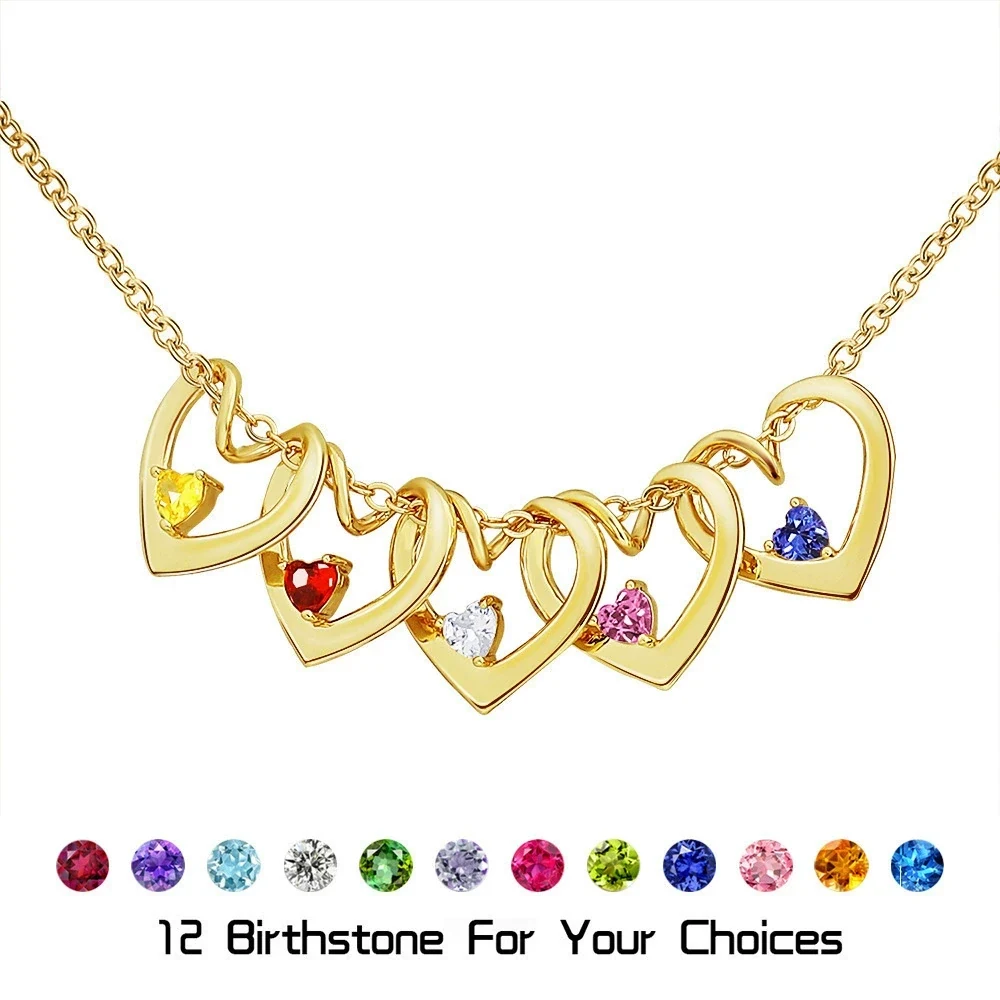
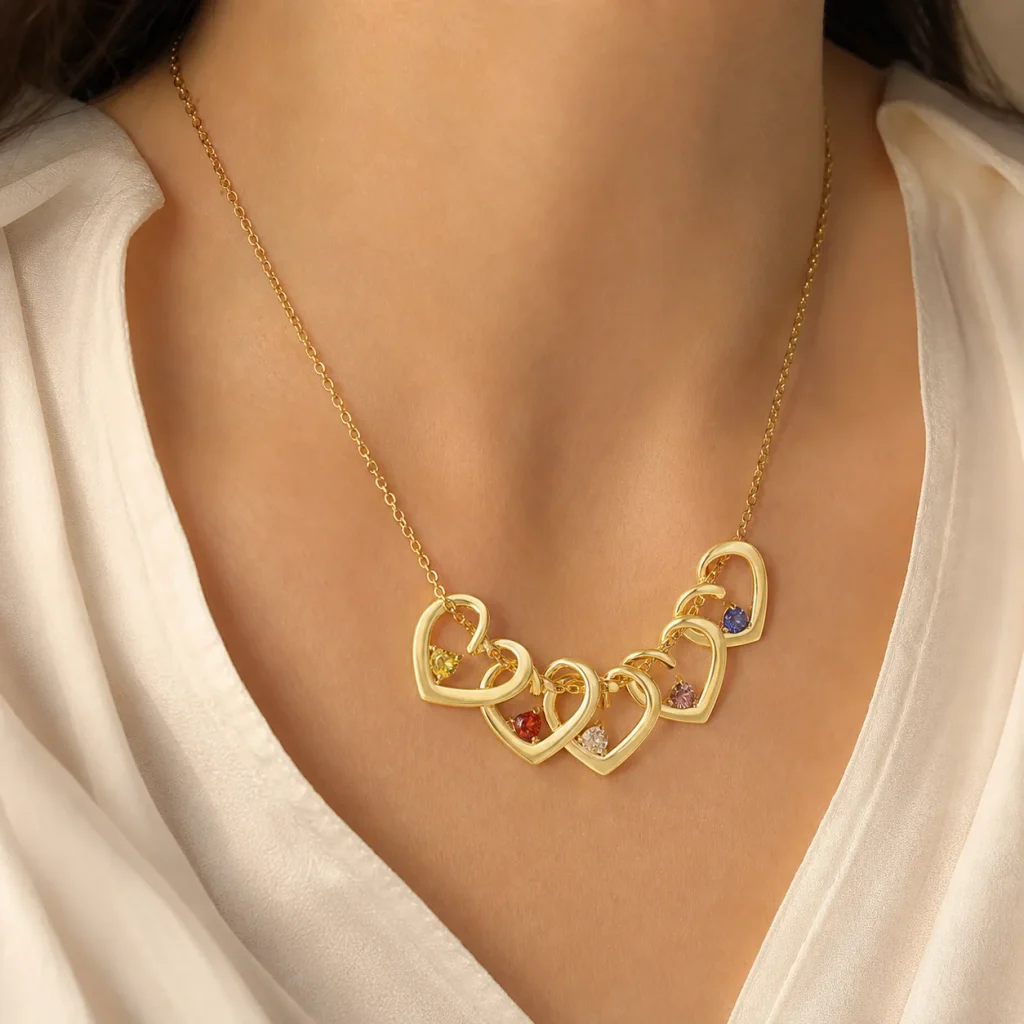
If each person needs a month-linked accent, keep only products that explicitly ask for months. The Twisted Heart Birthstone Necklace supports one to five loved ones, pairing each engraved name with a simulated birthstone selection. It can be ordered in necklace or bracelet format and offers three finish tones.
Branch three: count and layout capacity
Count the approved people rather than the relatives who might theoretically be included. Then compare verified ranges:
- One to five name-and-month pairs: Twisted Heart or Family Branch structures may fit.
- One to six name-and-month pairs: the Family Embrace necklace adds one more position.
- One to eight names without month fields: the Gathered Hearts necklace uses petite or classic bead layouts.
- One to eight simulated birthstone accents with ring sizing: the Family Constellation ring is the relevant current ring structure.
- Exactly two names and months: the Teardrop necklace or Open Heart cuff creates a fixed two-person design.
If the list exceeds capacity, return to format selection through the Amorieva shop. Never merge two names into one field unless the current product instructions explicitly support that presentation.
Branch four: format and fit certainty
Choose a necklace when the recipient already wears pendants and chain length can be compared. Choose a wrist format only when their cuff or bangle habits are known; adjustable does not mean universal fit. Choose a ring only with a confirmed US size for the intended finger. Choose a keyring when body fit is uncertain and the recipient regularly carries one.
At this point, style becomes useful. Compare heart motifs, clustered versus separate elements, pendant scale, and available finish tones. Do not let an appealing image reopen a branch that failed on count, fields, or fit.
Run the tree against one written brief
Create a brief containing wearer count, people, exact names, confirmed months, preferred format, fit evidence, and tone preference. Move through the tree using only that document. Amorieva’s personalization overview helps separate required choices from optional notes.
When two designs survive, compare daily use and how each one organizes people. When none survives, change the brief openly or ask the recipient; do not invent support that the current product page does not provide. Use the Amorieva FAQ for a real field question before deciding a branch is available.
Write the reason beside every eliminated option. “Ring size unknown,” “needs seven names,” or “recipient does not wear cuffs” is more useful than “did not like it.” These notes prevent the planning group from reopening a failed branch later because a new photograph looks appealing.
Common questions
What should be the first decision?
Decide whether one person wears the entire family story or several people share separate pieces. That structural branch removes more irrelevant options than choosing a finish tone first.
Can a Special Note add a missing product option?
Do not assume so. A note may clarify a supported detail, but it should not create another person, month field, size, or format that the current selector does not offer.
What if two products remain equal?
Compare the recipient’s actual wearing habits, fit certainty, and preferred visual organization. A conditional tie is acceptable; there is no need to declare one product right for every shopper.
Let every “no” improve the shortlist
A useful decision tree is valuable because it rejects mismatches early. Each closed branch protects the order from an unsupported field or guess. By the time color and motif enter the discussion, the remaining designs already fit the people, information, format, and daily use the gift requires.